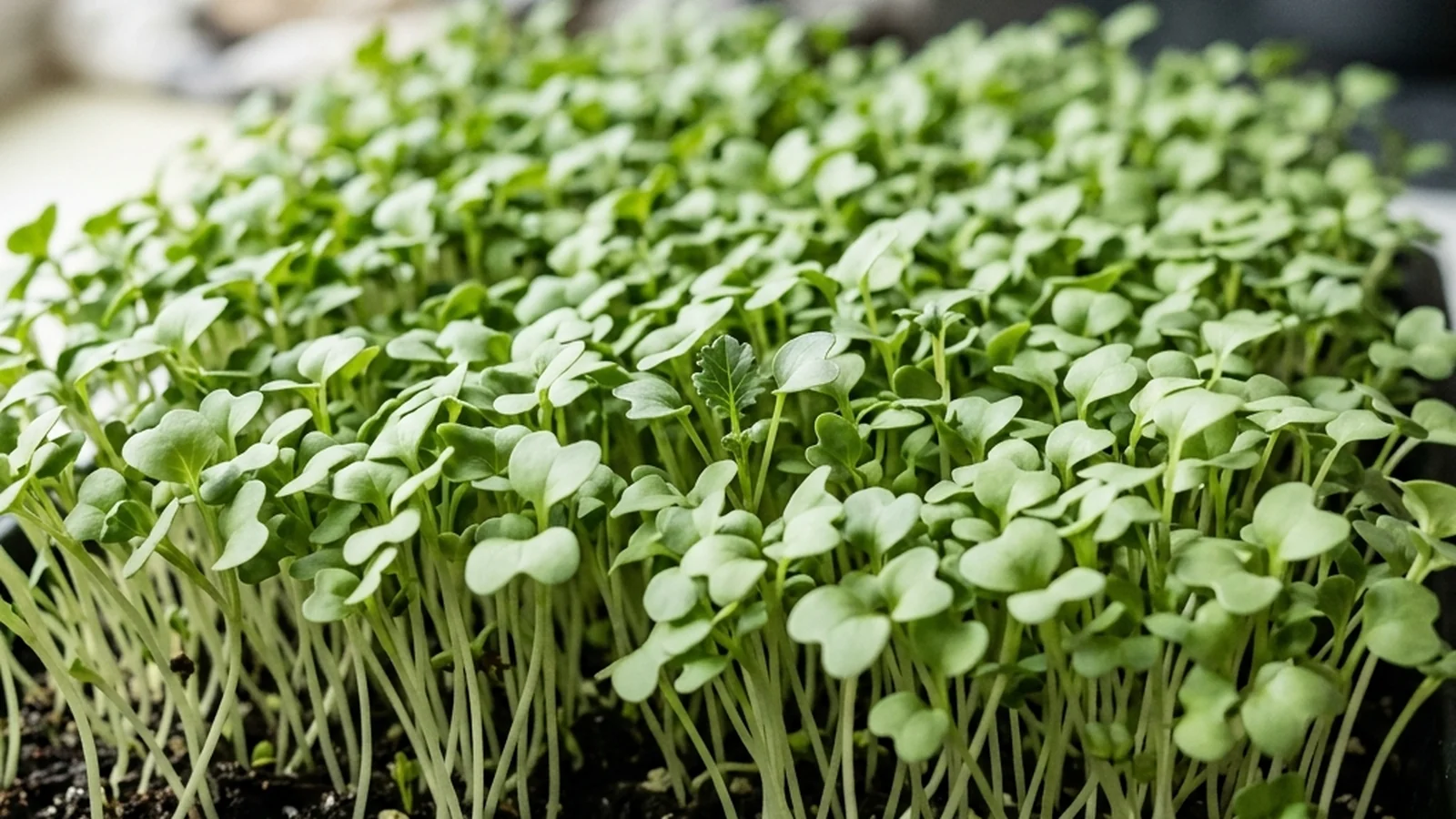
Broccoli microgreens vs. radish microgreens
| Trait | Broccoli microgreens | Radish microgreens |
|---|---|---|
| Days to harvest | 7-8 days, fast brassica group | 7-8 days, fast brassica group |
| Presoak needed | No, small seed | No, small seed |
| Flavor profile | Mild, often described as a light cabbage or mustard note | Sharper, often described as peppery |
| Main reason people grow it | Nutrition interest, glucosinolate content | Speed, a common first tray for beginners |
Broccoli microgreens are ready to harvest 7 to 8 days after sowing, per Penn State Extension’s fast brassica grouping, under typical indoor conditions — soil held around 60-75°F, air at 60-70°F, and light back on within the first few days after germination. That puts broccoli in the same fast brassica group as radish, arugula, kale, and mustard. If you have not grown a tray before, start with the complete beginner method first — the steps below assume you already have a tray, a growing medium, and a light source, and focus on what makes broccoli’s timeline, and its appeal, specific to this crop.
Broccoli’s draw is not speed. It is the compound class the crop is known for, and a flavour mild enough to go into more dishes than radish will.
The broccoli microgreens timeline, day by day
Use the table as a planning range, then adjust for your own soil temperature, light, and seed lot.
| Day | Stage | What is happening | What to do |
|---|---|---|---|
| Day 0 | Sow | Seed goes onto moist mix and is pressed in for contact | Sow about 1/8 in. deep, mist the surface, cover for blackout |
| Days 1-3 | Blackout | Seed germinates in the dark; soil held near 60-75°F | Keep the tray covered with a solid lid and a light weight; check moisture daily |
| Days 3-4 | Transition | Sprouts lift the cover; stems are pale and stretched from the dark | Uncover and move to light, or continue with a short second blackout stage |
| Days 4-6 | Greening under light | Cotyledons expand and turn green; the first true leaf begins to show | Bottom water, keep airflow across the canopy, provide light |
| Days 7-8 | Harvest | Canopy reaches 2-4 in. with true leaves just emerging | Cut at the base with clean scissors, rinse, refrigerate promptly |
Two sources frame the fast end of this range: Penn State Extension places broccoli in the fast brassica group at 7-8 days, and Penn State’s step-by-step guide describes germination happening under cover within the first few days. On the slower end, a University of Tennessee Extension publication describes microgreens generally reaching harvest in 10-14 days under optimal conditions, and UC Cooperative Extension in Sonoma County frames a home-windowsill expectation of 2-3 weeks to reach 2-3 in. tall. Where these disagree, the reason is light and temperature, not a different definition of “done” — a bright window in a cool room runs slower than a dedicated grow light over soil held in the 60-75°F range.
Why the timing varies: temperature, light, and seed lot
Three variables move the broccoli timeline more than anything else.
Soil and air temperature. Penn State Extension puts germination soil temperature at 60-75°F and air temperature at 60-70°F. Run colder than that and germination and early growth both slow down; run warmer and you also raise the risk of mold and damping-off, since warm, humid, covered trays are exactly the conditions those pathogens favor.
Light once sprouts appear. The UC Master Gardener Program of Sonoma County says natural light needs to reach the tray for 6-8 hours a day once sprouts have emerged. Under a grow light, the same guidance describes a fixture held 6-12 in. above the canopy on a timer running 12-16 hours. A weak or distant light source does not stop growth, but it produces pale, stretched seedlings that take longer to reach a harvestable true leaf, which is the etiolation pattern covered in more detail in microgreens light requirements and a simple setup.
Seed lot and germination vigor. Seed age, storage conditions, and supplier all affect how evenly and how fast a batch germinates. This is not a figure any extension source quantifies for broccoli specifically, so treat it as a reason your tray might run a day or so off the table above, not as a sign something is wrong.
Utah State University Extension gives broccoli 8 to 12 days under its own protocol — a per-crop figure that sits between Penn State’s brassica grouping and Tennessee’s general 10-14 days.
Setting up the tray: soil, depth, and no presoak
Broccoli seed is small, and that changes two decisions from what you might do with a larger seed like sunflower or pea.
The UC Master Gardener Program of Sonoma County recommends sowing it about 1/8 in. deep into a fine, evenly moist growing medium and pressing gently for contact, rather than burying it. Utah State Extension’s protocol soaks only pea and sunflower and sows broccoli, along with every other crop in its table, dry — so there is no presoak step to add here. For the cross-crop picture on which seeds actually call for soaking, see how soaking works across different microgreen seeds.
Blackout: how long, and why the two-stage method may not fit broccoli’s schedule
Blackout covers two purposes: keeping the seed bed humid enough to germinate evenly, and, in a second stage some growers add, encouraging stems to stretch a little before cutting, which can make harvesting easier.
Stage 1: dark and humid for germination
UC ANR’s Coastal Gardener describes covering the seeded tray with a solid tray plus a light weight for 2-3 days. Utah State Extension’s own broccoli protocol gives a close but not identical figure — 2-4 days covered — for the same initial dark phase. This is the stage most guidance agrees on, and it is also the stage that matters most for even germination.
Stage 2: the optional stretch, and why it competes with broccoli’s clock
Once sprouted, the same Coastal Gardener guidance describes flipping the cover upside down and keeping the tray dark for 1-2 more days to encourage stretching. That second stage is worth naming as optional for a crop on broccoli’s schedule specifically: stack the full 2-3 days of stage 1 with another 1-2 days of stage 2, and you have used 3-5 of the total 7-8 days before the tray has seen any light. That leaves as few as 3-4 days of greening before harvest, which is a tight window to develop a full canopy and true leaves. Penn State’s step-by-step guide, by contrast, describes only “a dark environment for a few days” with the cover coming off by around day 3 for the crops it documents. There is no single correct answer here — it is a genuine tradeoff between stem length and total time, so if your tray is already running close to the 7-day mark, shortening or skipping the second stage is a reasonable adjustment. For the blackout schedule compared across every crop in this cluster, see the blackout period by crop.
Seedlings that come out of blackout pale or yellow-looking are going through normal etiolation from lack of light, not disease — they green up once light reaches them.
Light and watering once sprouts appear
Move the tray to light as soon as sprouts are visibly lifting the cover. From here, water from below where you can, pouring into the tray base so the foliage and seed hulls stay drier — see how to bottom water microgreens for the method. A spray bottle is useful before this point, to keep the seed bed moist during germination, but is not the main watering method once the canopy has leaves to keep dry.
Keep airflow moving across the tray once it is uncovered. Stagnant, humid air over a dense canopy is one of the more common paths to mold and damping-off in this stage, independent of how carefully you watered.
Harvest: size, cut, and what happens after
Cut when the canopy reaches 2-4 in. tall with the first true leaves just emerging, cutting at the base with clean scissors rather than pulling. A University of Tennessee Extension publication gives a slightly broader range of 1-4 in. with one to two true leaves formed, which is consistent with the same idea — cut on leaf stage, not a specific day count.
Penn State Extension’s measured yield table covers seventeen varieties, and broccoli is not among them, so plan by tray count rather than by grams of finished greens. Seeding rate is a different figure and Utah State Extension does publish one — 28 g per 1020 tray for broccoli. For handling the cut greens correctly afterward — washing timing, storage temperature, and how long they hold up in the fridge — see how to harvest and store microgreens.
Broccoli is cut at the base, which removes the growing point, so the tray does not produce a useful second harvest. If you want a crop that does give a second cut, pea shoots are the documented exception — broccoli is not.
Broccoli vs. radish microgreens: same schedule, different reason to grow them
Broccoli and radish sit in Penn State Extension’s fast brassica group and follow essentially the same 7-8 day window, the same no-presoak rule, and a very similar setup. If you only care about speed, either one gets you a tray in about a week, and the radish microgreens timeline is the more common first choice for that reason — it is often the benchmark beginners use to see how fast a microgreen tray can go from seed to scissors.
Pick on flavour and how you will use them: broccoli is mild enough to go under an egg or into a sandwich daily, while radish’s peppery bite works better as an accent than a daily base. That difference matters more than the day count for a kitchen habit, since the day count is nearly identical either way.
What broccoli microgreens are known for nutritionally, and what is not proven
Brassicas, broccoli among them, contain glucosinolates. Penn State Extension describes these as compounds “considered anti-cancer per excellence.” That is a real, citable basis for growing and eating them.
Beyond the compound class, a 2020 study in the journal Foods measured broccoli microgreens directly, grown hydroponically on fibre pads in a greenhouse trial — sown at 4 seeds per cm², mean air temperature 21.2°C, 55% relative humidity, daily light integral 5-19 (mean 15) — conditions well outside a home windowsill. Per 100 g fresh weight it recorded 2.19-2.41 g protein, 0.44-0.61 g fibre, 4.61-6.51 mg β-carotene and 6.30-6.43 mg α-tocopherol, plus calcium, potassium, magnesium, zinc, iron, copper and manganese. Converted to a percentage of the daily reference value for an 85 g serving, that put broccoli microgreens at an excellent-source level for vitamins A and E and a good-source level for calcium and manganese, by the thresholds the study applies. On its composite nutrient score, broccoli microgreens ranked higher than mature broccoli — though the roughly six-fold figure the same study reports for that comparison belongs to cauliflower, not broccoli. Separately, a 2025 review in PeerJ reports broccoli microgreens carrying more magnesium, manganese, copper and zinc than mature broccoli, a direction rather than a multiple. The evidence on microgreen nutrition covers the measurements and where they still stop.
What the measurements still do not include is a fold-multiple comparing broccoli microgreens to mature broccoli, a sulforaphane concentration, or a health outcome. The “40 times the nutrients” figure that circulates is real but it is not about broccoli — it measured vitamin E in red cabbage, and the broader pattern across vitamins and carotenoids is closer to five times.
Common problems this crop runs into
Because broccoli spends part of its short cycle in a warm, covered, humid blackout, it shares the same failure modes as the other fast brassicas.
Damping-off shows up as seed that rots before emerging, or seedlings that collapse at the soil line after emerging. It is a disease issue, distinct from the food-safety and mold questions below — see damping-off in microgreens for causes and prevention.
Mold versus normal root hairs is a common false alarm on any brassica tray coming out of blackout. White fuzz around roots is often a normal structure, not contamination, but the distinction matters enough to check properly — see microgreens mold vs. root hairs for how to tell them apart before you discard or eat a tray.
Food safety generally matters more for a crop eaten raw and young than it does for a mature vegetable you cook. Seeds, substrate, and water are the main pathogen sources, and correct harvest technique is part of what keeps microgreens lower risk than sprouts. See microgreens food safety and sanitation for the full practice.
Sources
- Penn State Extension — The ABCs of Microgreens
- Penn State Extension — Growing Microgreens
- Penn State Extension — A Step-By-Step Guide for Growing Microgreens at Home
- UC Master Gardener Program of Sonoma County — Growing Microgreens
- UC ANR Coastal Gardener — Your Indoor Winter Garden: Fresh Microgreens for Gloomy Days
- University of Tennessee Extension W1261 — Regulatory Considerations for Marketing Sprouts, Microgreens and Baby Greens
- Utah State University Extension — Grow Your Own Microgreens
- Renna, Stellacci, Corbo & Santamaria (2020), Foods 9(9):1226 — nutrient quality score for broccoli, cauliflower and broccoli raab microgreens
- Kaya & Yardımcı (2025), PeerJ — nutrition, health-claim evidence and food-safety synthesis
- Xiao, Lester et al. (2012), J. Agric. Food Chem. — vitamin and carotenoid concentrations in microgreens
Go deeper on this crop and cluster
Compare broccoli to radish, see the blackout schedule across crops, check what the nutrition evidence actually shows, and handle harvest and storage safely.
Common questions
How long do broccoli microgreens take to grow?
Broccoli is in the fast brassica group, typically ready 7 to 8 days after sowing under indoor conditions with soil around 60 to 75°F. A cooler windowsill or weaker light can push that closer to two to three weeks, since timing is a function of temperature and light, not a fixed clock.
Do you need to presoak broccoli microgreen seed?
No. Utah State Extension's protocol soaks only pea and sunflower and sows broccoli dry, straight onto moist medium.
How tall should broccoli microgreens be at harvest?
Extension sources describe 2 to 4 inches with the first true leaves just emerging as the target, though one source gives a slightly wider 1 to 4 inch range with one to two true leaves. Either way, cut once true leaves appear rather than waiting for a specific day number.
Do broccoli microgreens have more nutrients than mature broccoli?
What is documented is that brassicas, broccoli included, contain glucosinolates, which Penn State Extension describes as compounds "considered anti-cancer per excellence." A 2020 study in the journal Foods measured broccoli microgreens grown hydroponically and found them scoring higher than mature broccoli on a composite index of eleven nutrients, with per-serving levels reaching an excellent-source threshold for vitamins A and E — though the roughly six-fold figure that same study reports belongs to cauliflower, not broccoli. The 40 times figure that gets quoted separately is a real measurement of vitamin E in red cabbage, not a broccoli number, and the measurements that exist stop short of a sulforaphane concentration for broccoli microgreens.
Related guides
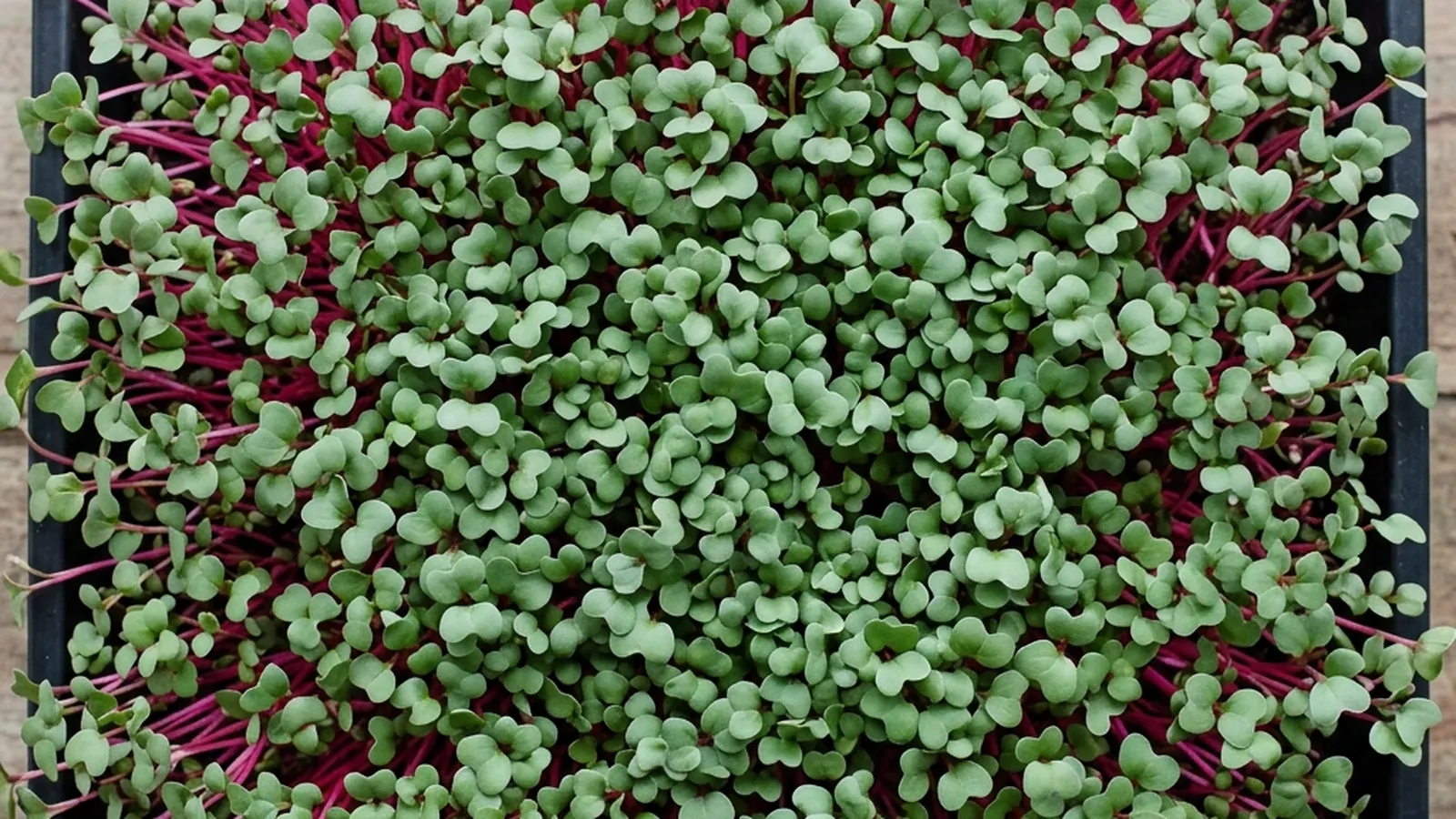
Radish microgreens grow log: a day-by-day timeline
Radish is one of the fastest common microgreens, which is why it works as the benchmark crop for beginners. Here is the realistic week it takes, stage by stage.
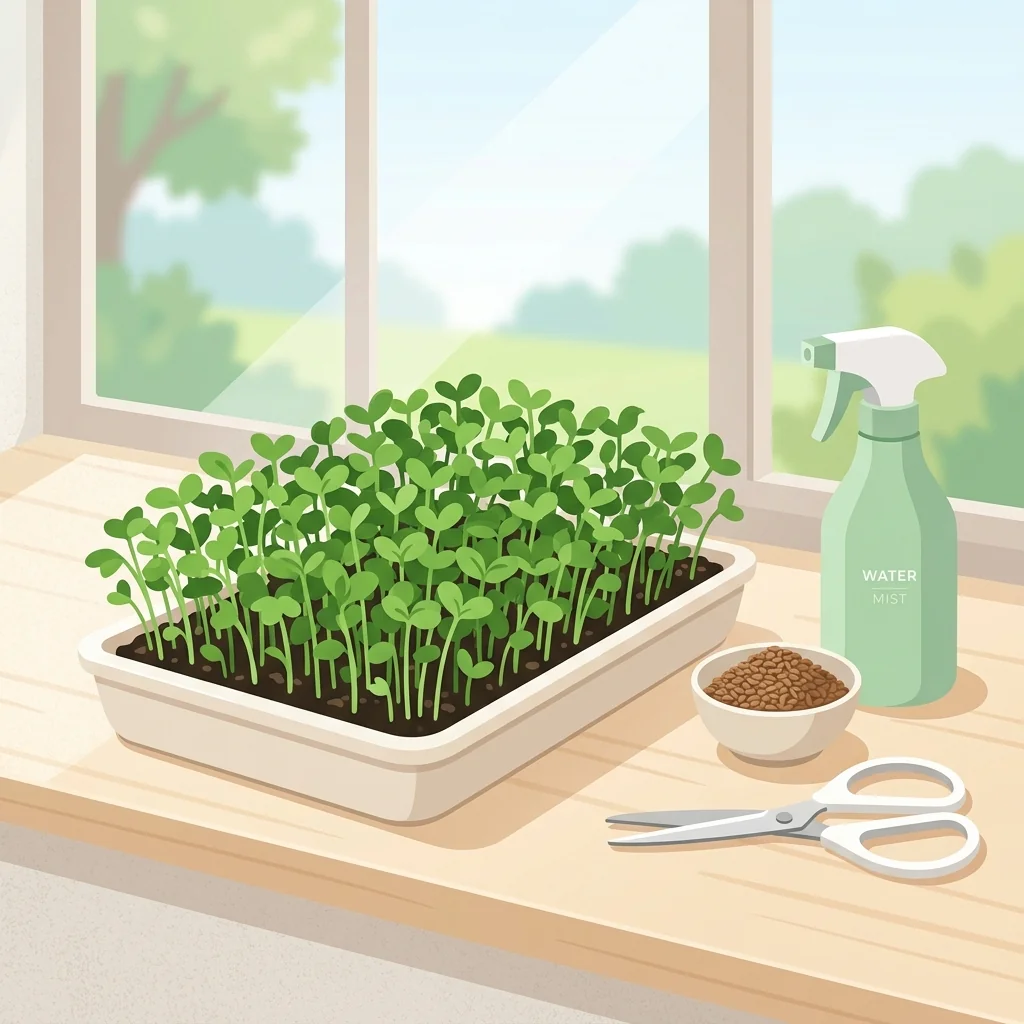
How to grow microgreens at home: a beginner's guide
Microgreens are the fastest crop you can grow indoors. This beginner guide walks through sowing, watering, light, and harvesting your first tray in about ten days.
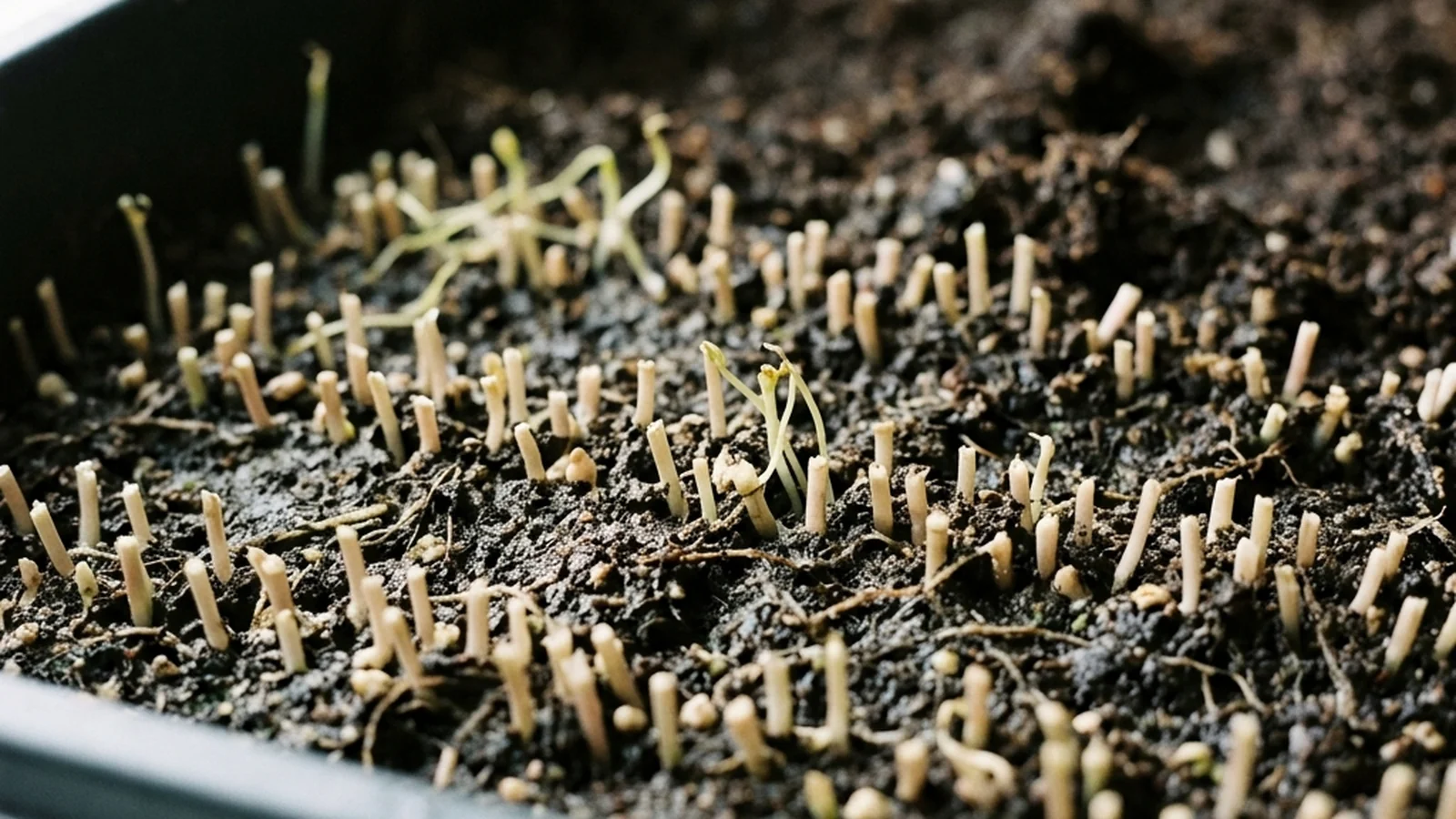
Do microgreens regrow once you cut them?
The cut you make decides everything. For almost every crop it removes the one part of the plant that could grow back.