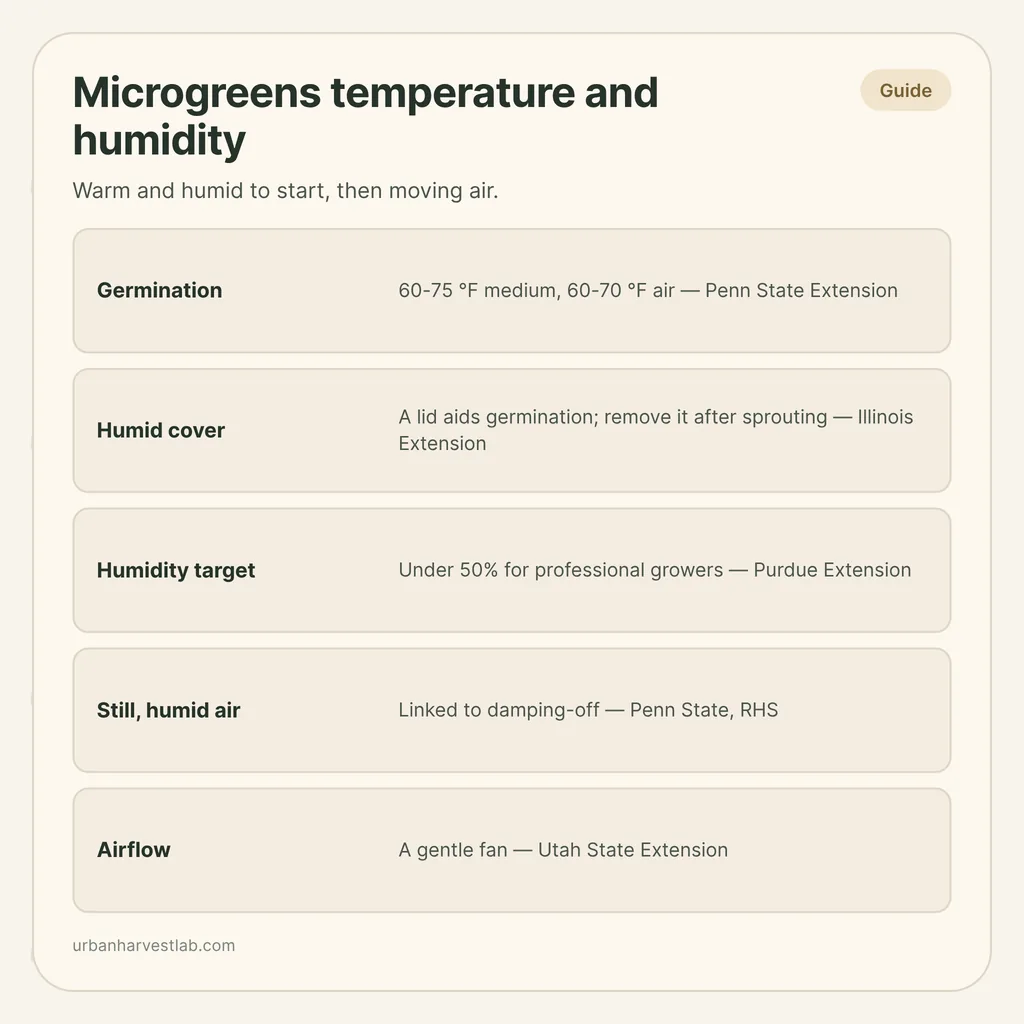
Temperature figures from extension sources, and what each one describes
| Source | Figure | What it applies to |
|---|---|---|
| Penn State Extension | 60-75 °F medium, 60-70 °F air | Ideal conditions for germinating microgreens |
| Illinois Extension | About 75 °F | Ideal soil temperature for germination, with a heat mat or a sunny window under a lid |
| Utah State University Extension | 74 / 72 / 68 °F | Germination / lights on / lights off |
| Purdue Extension | 68-72 °F and under 50% humidity | What professional growers aim for |
Germination wants warmth (about 74 to 75 °F at the medium) under a humid cover, and growth wants ordinary room temperature with moving air. The extension sources agree on the warmth and give almost nothing numeric for humidity, so the useful move is to set the temperature and then manage moisture and airflow by watching the tray.
The temperature figures, and what each one measures
Four extension services publish numbers, and they describe slightly different things. Penn State Extension says the ideal soil temperatures for germinating microgreens are 60 to 75 °F and air temperatures are between 60 and 70 °F. Illinois Extension gives a single point: ideal soil temperature for germination is around 75 °F, and a heat mat is not required, because a container with a plastic lid in a sunny window at room temperature should do the trick. Utah State University Extension is the only one to split the day: 74 °F during germination, 72 °F with the lights on and 68 °F with them off.
Read together, these are not competing. Utah State’s 74 °F and Illinois’s 75 °F sit at the top of Penn State’s medium range, and Penn State’s air range of 60 to 70 °F is the room around the tray, not the tray itself. Illinois suggests a digital thermometer pushed into the medium to check, rather than guessing.
Purdue Extension adds a fourth figure that is easy to misuse: professional growers strive for temperatures of 68 to 72 degrees and less than 50% humidity. That is what a commercial operation aims for across the whole crop. It is not a germination temperature and not a rule for a kitchen shelf.
Two things follow in practice. First, a tray at 70 °F is not failing; it is inside Penn State’s air range and only a few degrees under Utah State’s 72. Second, if seed has not come up, check the medium temperature before anything else. The not-germinating guide walks the full order of causes.
Humidity: use it early, then take it away
The only numeric humidity target in these sources is Purdue’s under 50% for professional growers, and Purdue does not give home growers a number. What home growers get from the extension pages is a sequence.
Illinois Extension says a plastic lid or covering over the container will increase humidity and aid germination, and that after the microgreens sprout it is no longer needed. Illinois also describes covering the seed with a moistened paper towel or cloth, or stacking a second tray on top, and checking daily by lifting the cover. Once roots reach the soil, the seedlings start to push the towel up and the cover comes off. How long that takes depends on the crop; the blackout period by crop has the days.
So the humid phase is short and deliberate. A lid left on a tray full of green seedlings is no longer helping germination; it is holding moist air against the stems.
Why still, humid air is the thing to avoid
Penn State Extension says damping-off is most severe under conditions of excessive soil moisture and high humidity, and advises avoiding overseeding and properly spacing plants to improve air circulation and reduce humidity. The RHS says damping off can affect most seedlings, particularly under conditions of high humidity, poor air circulation and if seed is sown too thickly, and its control advice includes keeping seedlings well ventilated to reduce humidity and sowing thinly to avoid crowding.
Those are the same three levers every time: less standing moisture, fewer seedlings per square inch, and moving air. Penn State’s microgreens guide ties watering to mold in the same way, advising water only when necessary, avoiding excess moisture and allowing drainage to prevent mold development, with bottom watering to limit contact between water and the greens. The bottom-watering how-to covers the technique.
Temperature matters here too, from the other direction. The RHS says damping off is especially damaging in spring when light levels and temperatures are low and seedlings grow slowly, but may occur at any time of year. A cold room does not cause the disease, but it keeps seedlings small and vulnerable for longer, which is another reason to hold the warmth through germination.
When something white or fuzzy does appear, the first job is telling mold from harmless root hairs, which the mold versus root hairs page sorts out. If seedlings are collapsing at the base, read damping-off in microgreens.
Airflow without a draft
Utah State University Extension says plants need constant airflow and suggests a gentle-blowing fan, especially if the plants are near a sunny window. Penn State’s step-by-step guide takes a lower-tech route: opening the window occasionally to enhance air circulation may also be beneficial to avoid excess moisture.
Neither source gives a fan speed, distance or schedule, so adjust by looking at the tray. Leaves should stir slightly; the medium surface should not dry in patches and the seedlings should not bend flat. Purdue’s caution points the other way: home growers should not put plants too close to the temperature variations posed by HVAC systems, or to microclimates near windows. Keep the tray clear of both.
Measuring the room
Since the figures above are for medium and air, you need both readings, and the spot that matters is the tray, not the wall thermostat. A small digital thermometer that also shows relative humidity, placed beside the tray at seedling height, is enough; if you want one, you can browse digital thermo-hygrometers on Amazon. A probe thermometer in the medium answers the germination question directly, as Illinois suggests.
Log the reading with the sow date and the outcome. If trays on one part of the shelf do worse than the rest, the log shows what differs: temperature, airflow or watering. For the rest of the method, the beginner guide puts these settings in sequence.
After harvest
Penn State Extension notes that changing temperatures can result in condensation, which can decrease post-harvest life, and that storing at 41 °F in dark storage can increase shelf life to 10 to 14 days compared with 2 to 4 days in ambient conditions. That is a commercial-handling statement; the harvest and storage guide covers home storage.
Sources
- Penn State Extension: Growing Microgreens
- Penn State Extension: A Step-By-Step Guide for Growing Microgreens at Home
- Penn State Extension: Safeguard Your Seedlings from Damping-Off
- Utah State University Extension: Grow Your Own Microgreens
- Illinois Extension: Growing Microgreens (PDF)
- Purdue Extension: Grow Microgreens at Home
- Royal Horticultural Society: Damping off
Fixing the room, not just the tray
Guides for when a tray has not come up, when white fuzz appears, or when seedlings collapse.
Common questions
What temperature do microgreens need?
Penn State Extension gives 60 to 75 °F for the growing medium and 60 to 70 °F for the air for germination. Illinois Extension names about 75 °F as the ideal soil temperature. Utah State University Extension holds 74 °F during germination, 72 °F with the lights on and 68 °F with them off. These overlap, so a room around 70 °F with the medium near 75 °F sits inside all of them.
What humidity do microgreens need?
Purdue Extension says professional growers aim for under 50 percent humidity. It does not give a home figure. Illinois Extension notes that a plastic lid raises humidity to aid germination and is no longer needed after the microgreens sprout.
Does high humidity cause mold on microgreens?
High humidity is one of the conditions linked to damping-off. Penn State Extension says damping-off is most severe under excessive soil moisture and high humidity, and the RHS lists high humidity, poor air circulation and thick sowing as the risk conditions. Penn State's growing guide also advises avoiding excess moisture and allowing drainage to prevent mold development.
Do I need a fan for microgreens?
Utah State University Extension says plants need constant airflow and suggests a gentle-blowing fan, especially near a sunny window. Penn State Extension suggests opening a window occasionally to improve air circulation. Neither gives a fan speed or placement distance.
Related guides
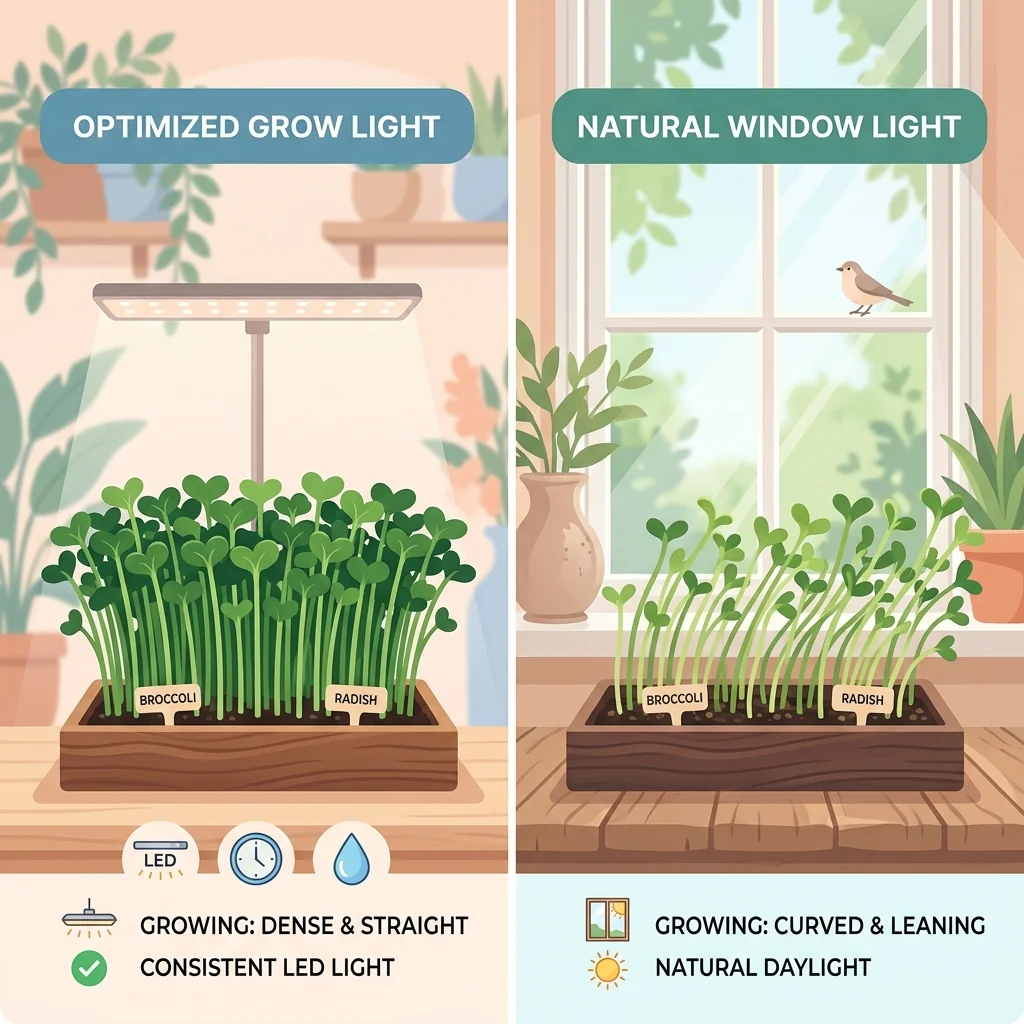
Microgreens light requirements and a simple setup
Microgreens are kept dark to germinate, then need good light to stay short and green. Here is how much light they need and the simplest windowsill or LED setup.
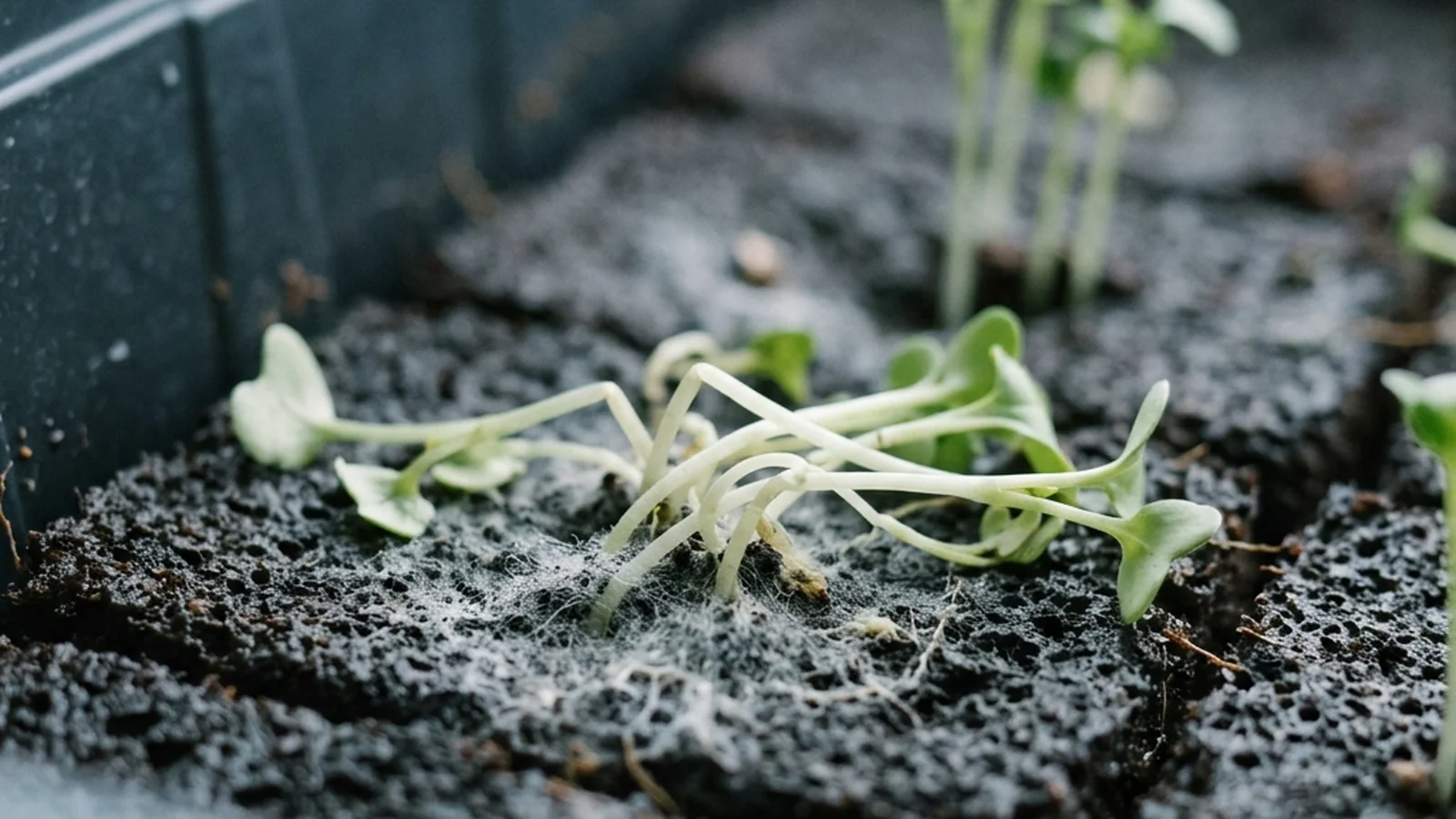
Damping-off in microgreens: symptoms and control
Damping-off attacks the seedling itself, not the tray surface. Here is how to recognize pre- and post-emergence stages and control outbreaks with sanitation, not fungicide.

Microgreens not germinating: find the real cause
A bare tray after a few days is usually not a dead batch. Most cases trace to timing, a cold room, or moisture - work through the list before assuming the seed failed.