Troubleshoot the system before you change the inputs.
Symptoms
- Lower leaves yellow, stems go soft or dark at the soil line, and the plant stays limp after you water it.
- Stems turn brown and brittle in late autumn or winter, but the base of the plant is still firm.
- The middle of the clump is bare or woody and growth only comes from the outer edge of the pot.
- Leaves are dry, crisp and pale, the pot is light, and the soil has pulled away from the rim.
Possible causes
- The mix stays wet between waterings because of a pot without holes, a full saucer, or a dense mix, so the roots are rotting.
- Seasonal dieback: oregano loses its top growth each autumn and regrows from the base, and rain-soaked winter pots then rot the roots.
- An old clump that has filled its pot, with a dead centre and tired outer growth.
- The pot dried out completely during hot weather, which is the less common but real opposite problem.
Quick fixes
- Stop watering, tip the plant out, and check the roots: firm and pale is healthy, dark and mushy is rot.
- Cut away dead or soft stems, repot into a gritty free-draining mix in a pot with drainage holes, and empty the saucer after watering.
- In autumn, leave the base alone and move the pot to a sheltered spot out of the rain; look for new shoots in spring.
- Divide a worn-out clump in spring or after flowering, discarding the dead centre and replanting the healthy outer sections.
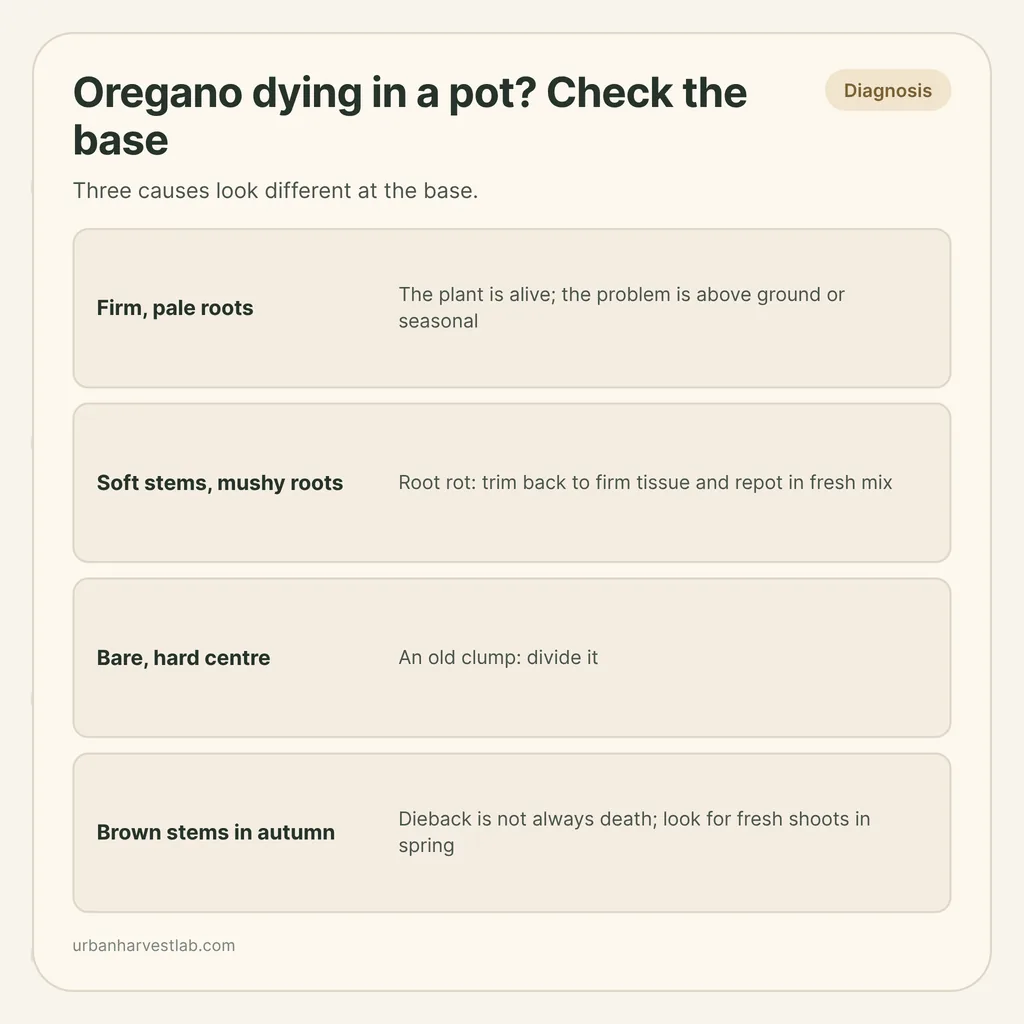
Oregano in a pot usually dies in one of three ways: wet roots, wet winter weather, or an old clump that has worn out in the middle. They look different at the base, so check there before you change anything. The same checks apply to other dry-climate herbs; thyme and rosemary fail in much the same way, and common potted herb problems covers the wider picture.
Start with the base of the plant
Slide the plant out of the pot, or at least push the stems apart and look at the soil line.
- Firm, pale roots and green or woody-but-solid stems at the base: the plant is alive. Your problem is above ground, or seasonal.
- Dark, soft stems at the soil line and brown, mushy roots: root rot.
- Hard, dry, bare wood in the centre with green only at the rim: an old clump.
If the soil is wet a few inches down and the pot feels heavy, you are almost certainly looking at the first case. Overwatered vs underwatered walks through the finger and pot-weight tests in more detail.
Wet roots: the usual cause
The RHS calls oregano a sun-loving, drought-tolerant Mediterranean herb and says that in heavy or damp soil the roots are liable to rot. Illinois Extension puts it plainly: oregano needs full sun and good drainage for best growth and for overwintering. A potted plant fails when the mix holds water for days, which happens with no drainage holes, a saucer that stays full, a dense mix, or a pot much bigger than the root ball.
What it looks like: the lower leaves go yellow and the plant looks tired, so it is easy to think it is thirsty and water it again. UC IPM describes root and crown rot symptoms as leaves that may wilt and turn dull green, yellow, red or purplish, and says that, unlike plants suffering from water stress, they do not recover when irrigated. The wilting looks like thirst. It is not. UC IPM also says these diseases can develop after as little as 4 to 8 hours of soil saturation, so a saucer left full over a rainy weekend can be enough to start it.
What to do:
- Stop watering and let the mix dry. For Phytophthora in garden soil, UC IPM advises letting the soil dry out as much as possible between irrigations in summer.
- Tip the plant out and trim off any dark, soft roots and stems back to firm, pale tissue.
- Repot into fresh mix with a pot that has drainage holes. The RHS suggests a soil-based potting compost with up to 25 percent horticultural grit by volume. A wide, free-draining pot is covered in what size pot oregano needs.
- Water only when the top couple of inches are dry. The rhythm, and why it differs from basil’s, is in how often to water oregano.
Be realistic about the outcome. UC IPM says a plant with a substantial Phytophthora infection rarely recovers. If every root is dark and the crown is soft, take softwood cuttings from any healthy shoots; the RHS lists summer softwood cuttings as one way to propagate oregano. For rot across other plants, see how to save a plant with root rot.
Autumn and winter: dieback is not always death
The RHS classes oregano as a herbaceous perennial, the kind that dies back toward ground level in autumn. So brown, brittle stems after the first cold nights do not necessarily mean the plant has died. Leave the base alone, move the pot out of the rain, and look for fresh shoots in spring.
The RHS singles out wet rather than cold. It says it is important to protect oregano from waterlogging over winter, which will cause the roots to rot, and suggests moving pots to a sheltered spot, such as near a building in a rain shadow. UConn Extension suggests mulching after the first frost and uncovering the plant when new growth appears in spring. Illinois Extension notes that true oregano is marginally hardy in zone 5, and that some types are not as winter hardy and may need to come indoors for the winter. If you are not sure which one you grow, check the plant label. A pot frozen solid after a cold snap is a different problem from a wet one; see frost-damaged container plants.
If the pot is wet in spring and the base is soft, it is rot, not dieback. If the base is firm, wait.
A bare, woody centre: the clump is worn out
Oregano spreads outward. After a few seasons the middle of the clump can thin out and die while the edges keep growing, and the pot fills with roots. Signs your herb is root bound lists the clues: roots at the drainage holes, a pot that dries out faster than it used to, and thinner leaves.
The fix is to divide. The RHS says to divide oregano clumps in spring, or soon after they have finished flowering in late summer or early autumn, and UConn Extension gives about every third year. The RHS’s oregano page gives no method, but its mint page describes the same job: discard any old dead parts in the centre, then pot up the smaller clumps. Oregano spreads the same way, so that method carries over. Full steps are in dividing perennial herbs.
In late spring the RHS also recommends trimming established plants to keep them compact and to remove any dead or straggly stems. That encourages a flush of new growth.
Check these before you give up
- Too dry. A potted oregano can dry out in hot, sunny weather; the RHS says container plants need watering in dry spells because the compost can dry out quickly. A light pot, crisp pale leaves and a gap between soil and pot wall point here, and the plant usually perks up after a soak.
- Flowering. Illinois Extension says allowing the plant to flower will reduce or stop growth completely. If a flowering plant looks tired, cut the flower stems back once the blooms fade, as the RHS advises.
- Feeding. Oregano grows well in fairly poor soil, according to the RHS, but a plant in the same pot for more than a year benefits from a sprinkling of general-purpose granular feed in late spring or early summer.
Sources
Oregano care once it is back on track
Watering rhythm, pot size and dividing are covered in full on their own pages.
Common questions
Why is my oregano dying in its pot?
Three causes cover most cases. Soil that stays wet rots the roots; normal autumn dieback leaves brown stems on a plant that is still alive at the base; and an old clump dies out in the centre. Check the base and the roots before you decide which one you have.
Will my oregano come back after it turns brown in winter?
Often, yes. The RHS describes oregano as a herbaceous perennial, the kind of plant that dies back toward ground level in autumn. If the base is firm and the pot has not been sitting in rain, wait until spring and look for new shoots. If the base is soft and dark, the roots have rotted.
Can I save oregano with root rot?
Only if some firm, pale roots remain. UC IPM notes that a plant with a substantial Phytophthora infection rarely recovers. Cut away dead growth, repot into fresh free-draining mix, and take softwood cuttings in summer from any healthy shoots as insurance.
How do I revive an oregano plant that is bare in the middle?
Divide it. The RHS says to divide oregano clumps in spring or soon after flowering in late summer or early autumn. Lift the plant, discard the dead centre, and replant the healthy outer sections in fresh mix.
Related guides
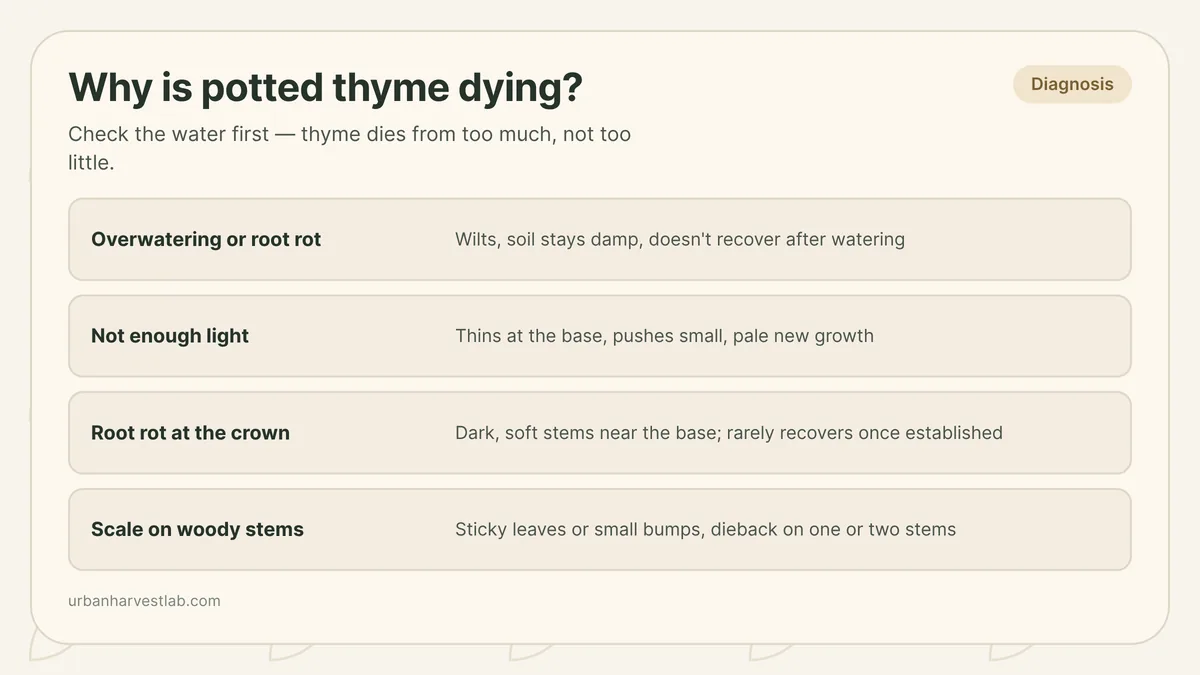
Why is potted thyme dying? Start with the water, not the leaves
Thyme fails indoors far more often from a soggy pot than a dry one. Check the root zone first, then work through light, rot, and pests in that order.
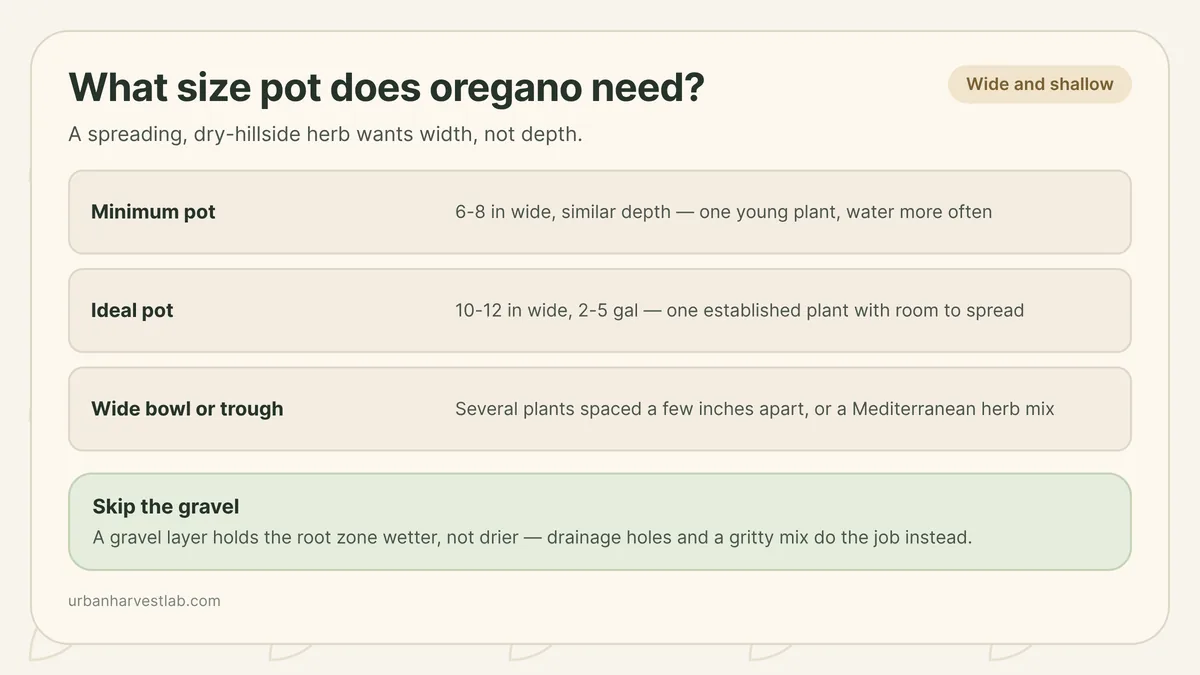
What size pot does oregano need? Wide, shallow, and free-draining
Oregano spreads outward more than it grows downward, so a wide, shallow pot with fast drainage suits it better than a deep, narrow one.
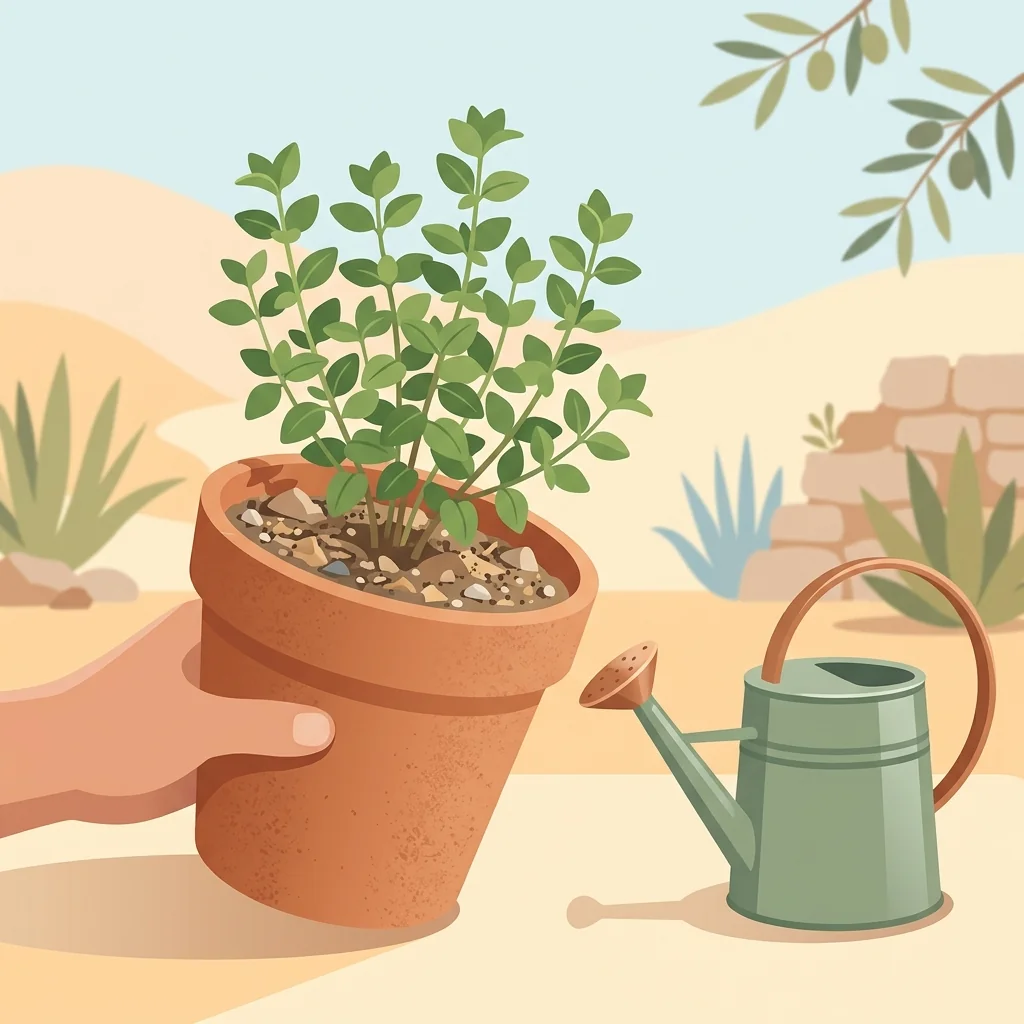
How often to water oregano: every 7 to 10 days in a pot
Oregano is a Mediterranean herb that prefers dry, gritty soil. Overwatering is the fastest way to kill it. Water only when the soil has dried out, not on a schedule.