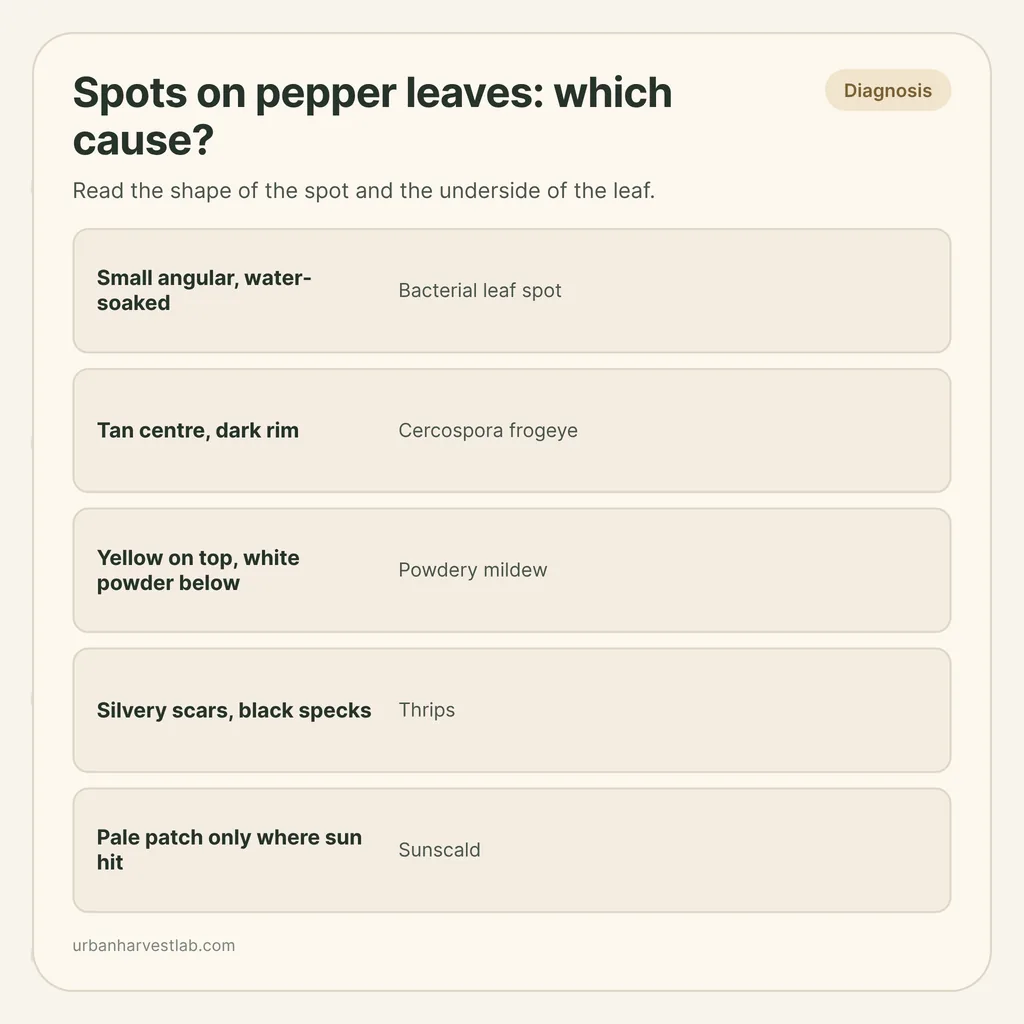
Troubleshoot the system before you change the inputs.
Symptoms
- Small angular spots, water-soaked at first and later brown with a gray-tan centre, on leaves that may then yellow and drop.
- Round tan to white lesions with a dark border, often with a yellow edge, that dry and crack in the middle.
- Diffuse yellow patches on top of the leaf with white powder on the underside.
- Silvery or scabby scars with black specks, or papery white patches only on the side that faced the sun.
Possible causes
- Bacterial leaf spot, spread by splashing water and sometimes carried on seed or transplants.
- Cercospora frogeye leaf spot in hot, humid, wet weather.
- Powdery mildew growing on the underside of the leaf.
- Thrips feeding, or sunscald after a move from indoors or filtered light into full sun.
Quick fixes
- Turn several leaves over and check the underside for water-soaked spots, white powder or black specks.
- Water the soil, not the leaves, and keep splashing off the foliage.
- Remove badly spotted leaves from dry plants and clear fallen leaves.
- Harden off new plants over about two weeks so sun does not scorch the leaves.
Spots on pepper leaves: what each look points to
| What you see | Likely cause | First move |
|---|---|---|
| Small angular spots, water-soaked then brown with gray-tan centres, worse after rain | Bacterial leaf spot | Water at the soil, remove badly spotted leaves, clear debris |
| Round tan or white lesions with a dark rim and yellow edge, cracked centres | Cercospora (frogeye) leaf spot | Cut watering on foliage, remove debris, improve airflow |
| Diffuse yellow patches on top, white powder underneath | Powdery mildew (Leveillula) | Check the underside of several leaves to confirm |
| Silvery, scabby scars with black specks | Thrips | Shake a leaf over white paper and look for slim insects |
| Papery white or tan patch only where sun struck, green tissue beside it | Sunscald | Shade for a few days and harden off properly next time |
Spots on pepper leaves are usually bacterial leaf spot, Cercospora frogeye, powdery mildew, thrips or sunscald, and the shape of the spot and what is on the underside of the leaf tell you which. Small angular spots that start water-soaked point to bacteria. A tan centre ringed in dark brown points to frogeye. Yellow patches on top with white powder below mean mildew.
Pick three or four affected leaves from different parts of the plant, turn them over, and read the table above against what you see. The sections below explain each one and what to do. If the leaves are yellowing without clear spots, start with pepper leaves turning yellow, and for twisting or rolling use pepper leaves curling.
Bacterial leaf spot: angular, water-soaked, worse after rain
Clemson Extension names bacterial wilt and bacterial leaf spot as the two most troublesome pepper diseases in the home garden, so this is the first suspect.
UC IPM says the leaf spots first appear as small, angular spots on the underside of the leaf, about 0.25 inch across, water-soaked at first and later brown. University of Maryland Extension describes spots on the upper surface that are small and water-soaked, with small pimple-like spots below, and adds that they eventually develop gray to tan centres with darker borders. Leaves may then turn yellow, then brown, and drop.
Two things make it likely. One is the weather: UC IPM says bacterial spot is favoured by high relative humidity and free moisture on the plant, and develops most rapidly at 68 degrees Fahrenheit or above, with symptoms showing 5 to 15 days after infection. University of Maryland Extension adds that lesions enlarge in warm, humid weather and that hot, dry weather slows the spread. The other is how it arrives. Both extensions say the disease can come in on seed or transplants, and University of Maryland Extension says it is spread by splashing rain and by working with wet, infected plants.
It can reach stems and fruit as well. UC IPM describes raised cankers on stems and circular, brown, raised fruit spots with a cracked, roughened surface. University of Maryland Extension says those fruit spots do not affect eating quality, and also notes that severely infected leaves drop, which leaves fruit exposed to sunscald.
What to do
No spray reverses spots already on a leaf. The aim is to slow it. University of Maryland Extension’s list for gardeners is to choose resistant varieties, buy disease-free seed and transplants, avoid overhead watering, mulch to keep soil from splashing, remove and discard badly infected plant parts and clear all debris at the end of the season. It also suggests spraying fixed copper every 10 to 14 days to slow spread. UC IPM is more cautious: copper is justified only under high pressure, and resistance to copper is known in California populations. If you use any spray on peppers, read the label for that crop first.
In a pot, that translates to watering at the base, spacing plants so leaves dry fast, and not leaving fallen spotted leaves on the surface. Buying transplants without spots or lesions, as Clemson advises when you inspect them at purchase, is the cheapest prevention. University of Maryland Extension also gives a seed treatment of a 2 minute soak in a 10 percent chlorine bleach solution, one part bleach to nine parts water, followed by a thorough rinse and drying before planting.
Cercospora frogeye: tan eyes with a dark rim
Ohio State describes frogeye lesions as circular or oblong, tan in the centre, surrounded by a necrotic border, and often with yellowing tissue around them. As they expand, concentric rings may appear, and the resemblance to a frog’s eye gives the disease its name. NC State Extension says it starts as small, round, water-soaked spots that become tan to white lesions with a darker border, and that the middle of the lesion dries and cracks.
Compare that with bacterial spot, described by UC IPM as angular. The two can look alike early on, when both are just water-soaked dots, so check again after a few days and see whether a tan, dried centre develops.
Weather is the clue. NC State says the fungus prefers hot, humid conditions and is common where night temperatures stay near 70 degrees Fahrenheit. Ohio State says it is favoured by warm, wet conditions and that spores spread by air, rain, overhead irrigation, tools and equipment. NC State says it survives on crop debris, and Ohio State says it survives at least a year on residue. NC State notes severe infection can cause defoliation and sunscald on fruit.
The garden moves that apply to a pot are the same as for bacteria: keep water off the leaves (Ohio State recommends drip irrigation where possible), remove debris, and handle the plant only when it is dry. Any fungicide for peppers is a matter of the product label.
Powdery mildew: look underneath for the powder
Pepper powdery mildew does not look like the white dusting on squash. Cornell says the white powdery growth occurs only on the underside of leaves and turns brown rather than staying white. On top you see diffuse yellow spotting. It is easy to mistake for a nutrient problem or a leaf spot, and Cornell says it can be difficult to detect. Affected leaves tend to drop, as with bacterial leaf spot.
New Mexico State University Extension says the fungus can cause disease across a wide range of conditions, with infection and disease development at their best between 60 and 80 degrees Fahrenheit and humidity above 85 percent. It is most severe on older leaves just before fruit set, and early heavy infection can strip plants of leaves. The check is simple: if yellow patches on top line up with a pale bloom underneath, you have it. For treatment ideas on a related problem, see powdery mildew on container herbs.
Thrips: silver scars and black specks
Thrips are slim insects, so the damage is what you see first. UC IPM lists scabby, silvery to dark brown discoloration on leaves, with dark specks of excrement on fruit or leaves, and says feeding is usually accompanied by black varnish-like flecks of frass. Distorted or curled new growth is another sign, which is why thrips can also appear under pepper leaves curling. Identification and control are in thrips on herbs.
Sunscald on leaves: pale patches only where the sun hit
If the spots appeared a few days after you moved plants outdoors or into a brighter spot, think sun. The University of Delaware, quoting a University of Maryland specialist, says an area of the leaf turning papery white or tan is usually the first sign of scald, that only the parts in direct sun are scalded, and that the tissue beside it stays bright green. Plants raised in filtered light are not ready for the extra UV and heat, and the leaf tissue dries out quickly.
Penn State Extension says plants taken straight from the house may brown or turn white from direct sunlight and wind, and advises starting to harden off at least two weeks before transplanting. The routine is in hardening off seedlings. Scorched leaf tissue will not recover, so judge the plant by the leaves that grow next.
A short check on a spotted pepper
- Pick leaves from low, middle and top of the plant, and turn them over.
- Angular water-soaked spots, or pimples below: bacterial spot. Tan, ringed lesions with cracked centres: frogeye. White powder under yellow patches: mildew. Black specks and silvery scars: thrips. A pale patch only on the sunny side: sunscald.
- Water the soil at the base from now on, and give crowded pots room.
- Take off badly spotted leaves while the plant is dry, discard them, and avoid handling the plant when it is wet.
- Re-check in a week. New leaves that grow clean mean the plant is outgrowing it; spreading spots on new growth mean the cause is still active.
Seeing the same black spots on herbs? See black spots on herb leaves. Tomatoes share bacterial spot, and brown spots on tomato leaves separates it from blight and septoria.
Sources
- University of Maryland Extension, “Bacterial Leaf Spot on Peppers”
- UC IPM, “Bacterial Spot” in peppers
- Clemson Cooperative Extension, “Pepper”
- NC State Extension, “Cercospora Leaf Spot (Frogeye Leaf Spot) on Pepper”
- Ohio State University, “Cercospora Frogeye Leaf Spot of Pepper”
- Cornell Vegetables, “Powdery Mildew of Pepper”
- New Mexico State University, “Powdery Mildew on Chile Peppers” (H-248)
- UC IPM, Pest Notes: Thrips
- University of Delaware Cooperative Extension, “Sunscald on Vegetable Leaves”
- Penn State Extension, “Transplanting Annuals into the Garden”
Related pepper guides
Yellowing, curling and spotted leaves on peppers and other plants.
Common questions
What causes spots on pepper leaves?
The usual causes are bacterial leaf spot, Cercospora (frogeye) leaf spot, powdery mildew, thrips feeding and sunscald. University of Maryland Extension describes bacterial spot as small water-soaked spots on top and pimple-like spots underneath. Ohio State describes frogeye lesions as tan in the centre with a dark border. The underside of the leaf separates most of them.
Can I eat peppers from a plant with leaf spot?
University of Maryland Extension says the small, raised, rough spots bacterial spot causes on fruit do not affect eating quality. The extension pages on the other causes do not address eating the fruit, so cut away any spotted or rotten tissue and judge the fruit by how it looks and smells.
Should I pick off spotted pepper leaves?
Removing badly infected leaves is part of University of Maryland Extension advice for bacterial spot, and clearing debris at the end of the season matters because the disease overwinters in crop residue. Work on dry plants, because the bacteria spread when people handle wet, infected foliage.
Will copper spray cure bacterial spot on peppers?
Copper slows spread rather than curing existing spots. University of Maryland Extension suggests fixed copper every 10 to 14 days to slow it. UC IPM says copper is justified only under high disease pressure and that resistance to copper is known in California populations. Follow the label for peppers.
Related guides

Pepper plant not producing: why flowers drop and no fruit forms
Flowers that open and fall without setting fruit point to temperature, nitrogen, water, shade or wind. Work through them in order and match each to what you see.
Thrips on herbs: identify the damage and stop it
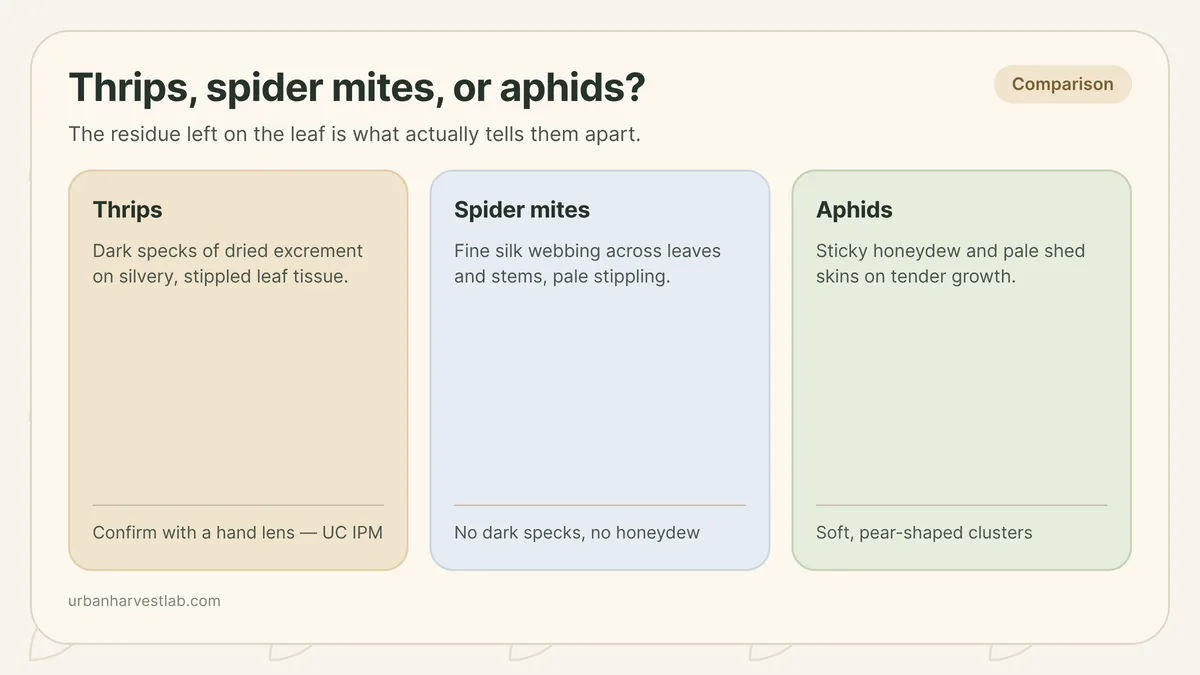
Thrips leave silvery, stippled leaves and dark specks of excrement rather than webbing or honeydew, and confirming the insect matters more than guessing from the damage alone.
Powdery mildew on container herbs: diagnosis and control
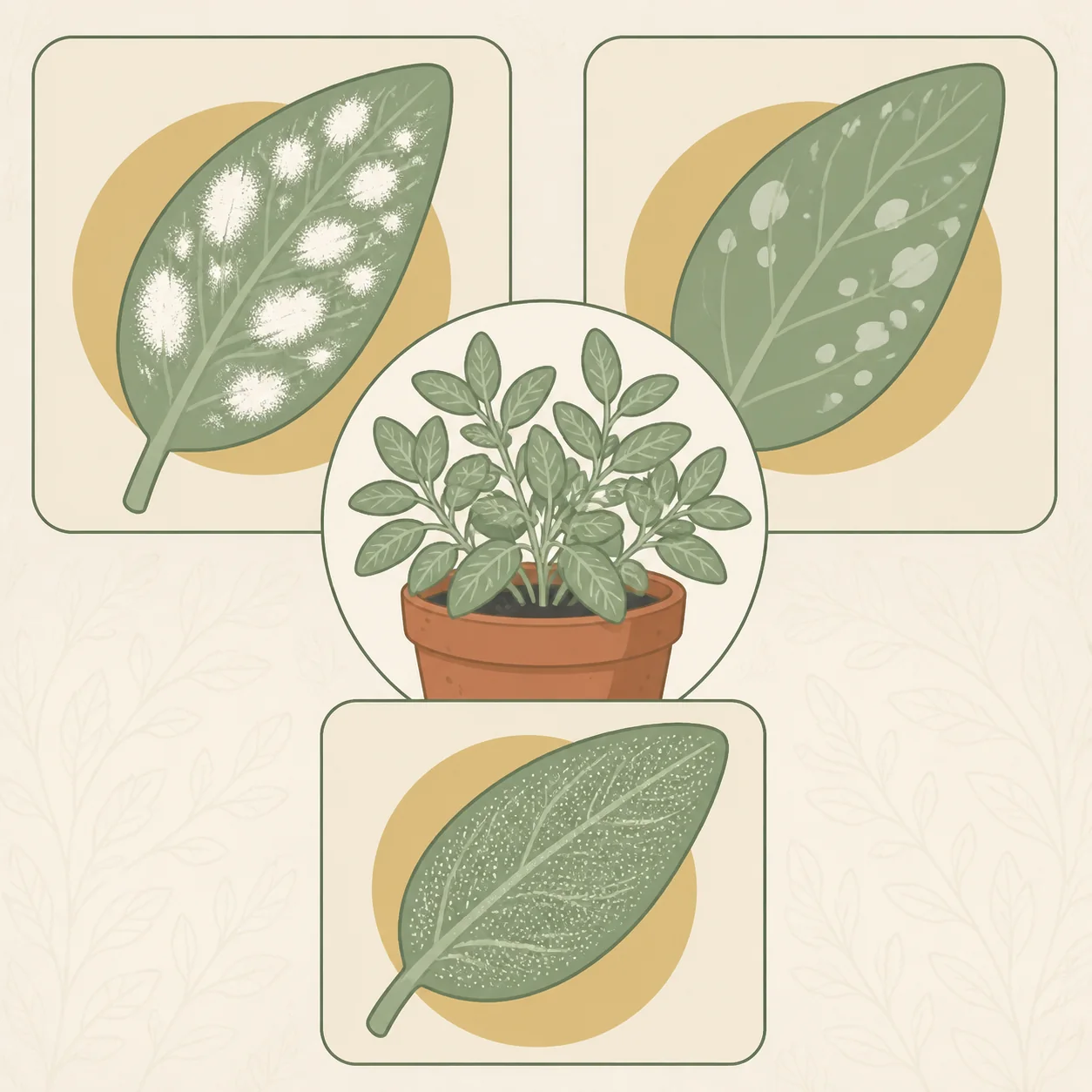
A white mark is not automatically mildew. Confirm whether patches recur and spread on living tissue before changing the entire care routine.