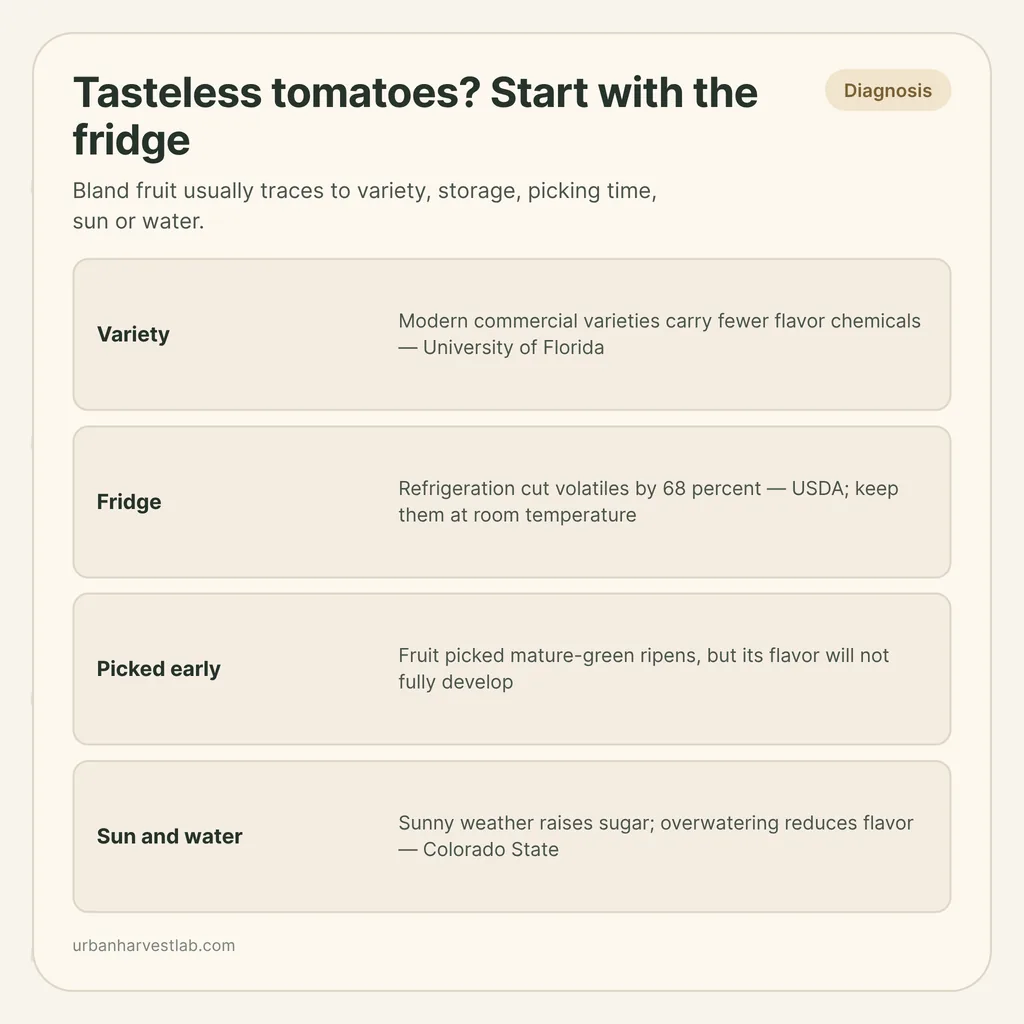
Troubleshoot the system before you change the inputs.
Symptoms
- Fruit looks ripe and is the right color, but tastes watery, flat or like nothing in particular.
- Tomatoes taste fine straight off the plant but dull after a few days in the kitchen.
- A whole season of fruit is bland, or only fruit from one stretch of weather.
Possible causes
- A variety bred for yield, uniformity or shipping rather than taste.
- Fruit chilled in the refrigerator, or ripened below about 50 F.
- Fruit picked at mature green or breaker stage rather than colored on the plant.
- A dull, cool stretch of weather, or a pot that gets only a few hours of sun.
- Overwatering around ripening.
Quick fixes
- Keep ripe tomatoes on the counter, not in the refrigerator.
- Let fruit color on the plant where you can, and pick when fully colored.
- Water steadily and let the mix dry slightly between waterings rather than keeping it soggy.
- Move the pot to the sunniest spot you have.
- Next season, grow a variety chosen for flavor.
Bland tomatoes usually come from one of five things: a variety bred for yield rather than taste, cold storage after picking, fruit picked before it colors on the plant, dull weather or too little sun, and too much water. The fridge and the variety are the easiest to check.
Tomato flavor is not one thing. USDA Agricultural Research Service tests with taste panels found tomatoes needed a certain amount of acid to taste adequate, and that the more sugar they held, the better they tasted. Aroma compounds sit on top of that. Lose any layer and the fruit tastes flat, which is why a tomato can look perfect and taste of nothing.
Variety sets the ceiling
A University of Florida team measured flavor chemicals in 398 modern, heirloom and wild tomato accessions. In their 2017 Science paper they report that modern commercial varieties contain significantly lower amounts of many of the important flavor chemicals than older varieties. Colorado State Extension makes the same trade-off from the gardener’s side: some people give up the disease protection of hybrids for the flavors of heirloom varieties.
So if every fruit on a disease-resistant hybrid tastes mild, the plant may be doing exactly what it was bred to do. In a pot, a compact variety is a practical way to try a more flavorful type, and the guide to dwarf tomatoes for small balconies covers which fit.
The refrigerator takes aroma, and ripe fruit does not recover
This is the cause you can fix today. University of Florida researchers report that flavor-associated volatiles are sensitive to temperatures below 12 °C (about 54 °F), and that their loss greatly reduces flavor quality. Some of the genes behind volatile production recover after the fruit returns to 20 °C, but some do not.
The USDA numbers are blunt. In a test of 60 tomatoes, refrigeration greatly reduced 25 of 42 aroma compounds and cut volatile levels overall by 68 percent. The USDA’s conclusion is to store tomatoes at room temperature. Its earlier research adds that once tomatoes have ripened, chilling them can suppress flavor volatiles beyond repair.
Colorado State Extension is less absolute about a ripe tomato: it says ripe fruit may be stored in the refrigerator for a few days. Treat that as a way to save fruit you cannot eat in time, not as a storage plan. The same extension notes that fruit ripened below 50 °F turns out bland, so a cold windowsill or garage is no better than the fridge.
Picked too early
Colorado State Extension says tomatoes with a pink blush (the breaker stage) ripen off the vine without any loss of flavor. Fruit picked at the shiny mature-green stage will ripen, but its flavor will not fully develop. Picking at the first blush is a fair trade when birds, sunscald or a frost forecast threaten the crop. In a normal summer, leaving fruit to color on the plant keeps all the flavor. The ripeness guide shows what a ready tomato looks like, and the page on green tomatoes that will not ripen covers what to do at the end of the season.
Dull weather and too little sun
In the USDA’s seven-year comparison of 38 tomato types in Florida, fruit harvested in June had more sugar and fruity volatiles than fruit harvested in December, probably because it received more sunshine. You cannot change the weather. You can change the pot’s position. UF/IFAS Gardening Solutions says tomatoes need at least four to six hours of sun a day. If your balcony is shaded for part of the day, measure how much sun it really gets before blaming the plant.
Too much water
Colorado State Extension’s irrigation guide says overwatering some vegetables, tomatoes included, can reduce their flavor and texture. It also says many vegetables turn strong-flavored or stringy under water stress, so the goal is steady moisture rather than a deliberate drought. Pots are where this goes wrong: a gardener sees a wilted plant on a hot afternoon, soaks the pot again and again, and keeps the mix wet for weeks.
For fall ripening, the same extension suggests holding back slightly on watering to speed ripening. Treat that as a light touch, not a dry-down. The watering guide for container vegetables explains how to judge when a pot actually needs water.
Feeding
Colorado State Extension says that under high nitrogen the vines grow excessively large at the expense of fruit production. A plant that is all leaf has little fruit to carry flavor. Feed by the label and the fertilizer schedule for container vegetables.
Which cause fits
- Tastes fine at picking, flat two days later: storage. Move fruit to the counter.
- Every tomato from one plant is mild, in any weather: variety. Try another next year.
- Flavor comes and goes with the weather: sun and cold. Move the pot, and wait for warmer fruit.
- Fruit was picked pale and ripened inside: early picking.
- Watery flesh in a pot kept wet: overwatering. Let the top of the mix dry slightly between waterings.
Sources
- Zhang et al., Chilling-induced tomato flavor loss (PNAS 2016, University of Florida)
- Tieman et al., A chemical genetic roadmap to improved tomato flavor (Science 2017, University of Florida)
- USDA ARS: Two Approaches to Enhancing Tomato Flavor
- USDA ARS AgResearch Magazine: Recipe for Flavorful Tomatoes
- Colorado State Extension: Growing Tomatoes (GardenNotes 717)
- Colorado State Extension: Irrigating the Vegetable Garden (GardenNotes 714)
- Colorado State Extension: Ripening Tomatoes Indoors
- UF/IFAS Gardening Solutions: Tomatoes
Tomato ripening, watering and feeding
Related guides for picking at the right time, watering pots and feeding fruiting vegetables.
Common questions
Why do my homegrown tomatoes taste bland?
The usual causes are the variety, refrigeration, picking before the fruit has colored on the plant, dull weather and overwatering. Storage and variety are the easiest to check.
Does refrigerating tomatoes ruin the flavor?
It reduces it. USDA Agricultural Research Service tests found refrigeration cut overall aroma volatiles by 68 percent compared with room-temperature storage, and ripe fruit cannot be restored afterwards. Colorado State Extension says a ripe tomato can go in the refrigerator for a few days if it must, but flavor is better when it stays on the counter.
Can I make a bland tomato taste better?
Not once it is picked. Flavor is built on the plant from sugar, acids and aroma compounds. Sunshine, steady watering and a flavorful variety in the next planting make the difference.
Is it the variety or my growing?
Both matter. A University of Florida study of 398 tomato accessions found modern commercial varieties have significantly lower amounts of many key flavor chemicals than older varieties. If a flavorful heirloom also tastes flat in your pot, look at sun, water and storage.
Related guides
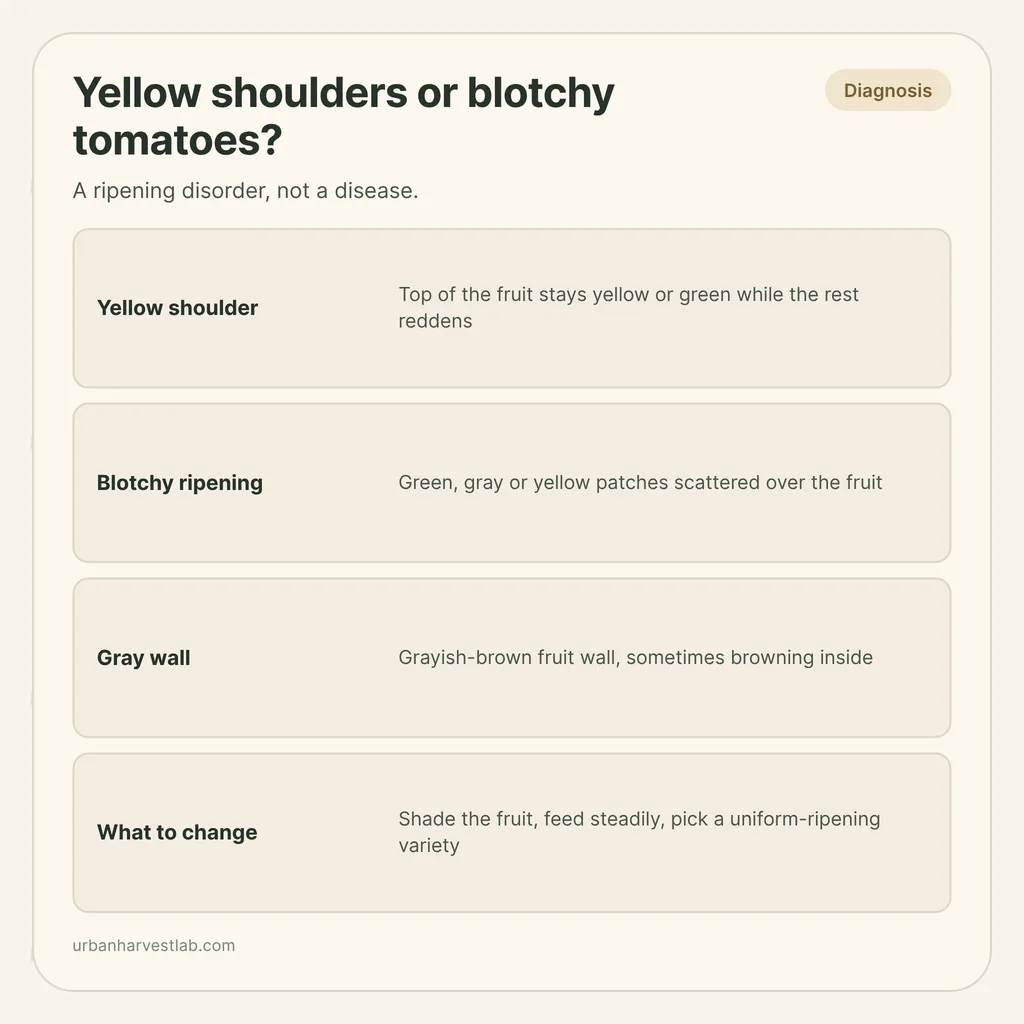
Tomatoes with yellow shoulders or blotchy color? Heat, potassium and variety
A tomato that reddens everywhere except the top, or ripens in gray and yellow blotches, has a ripening disorder. Heat, low potassium in the plant and the variety all play a part, and the fruit that is already marked will not recover.
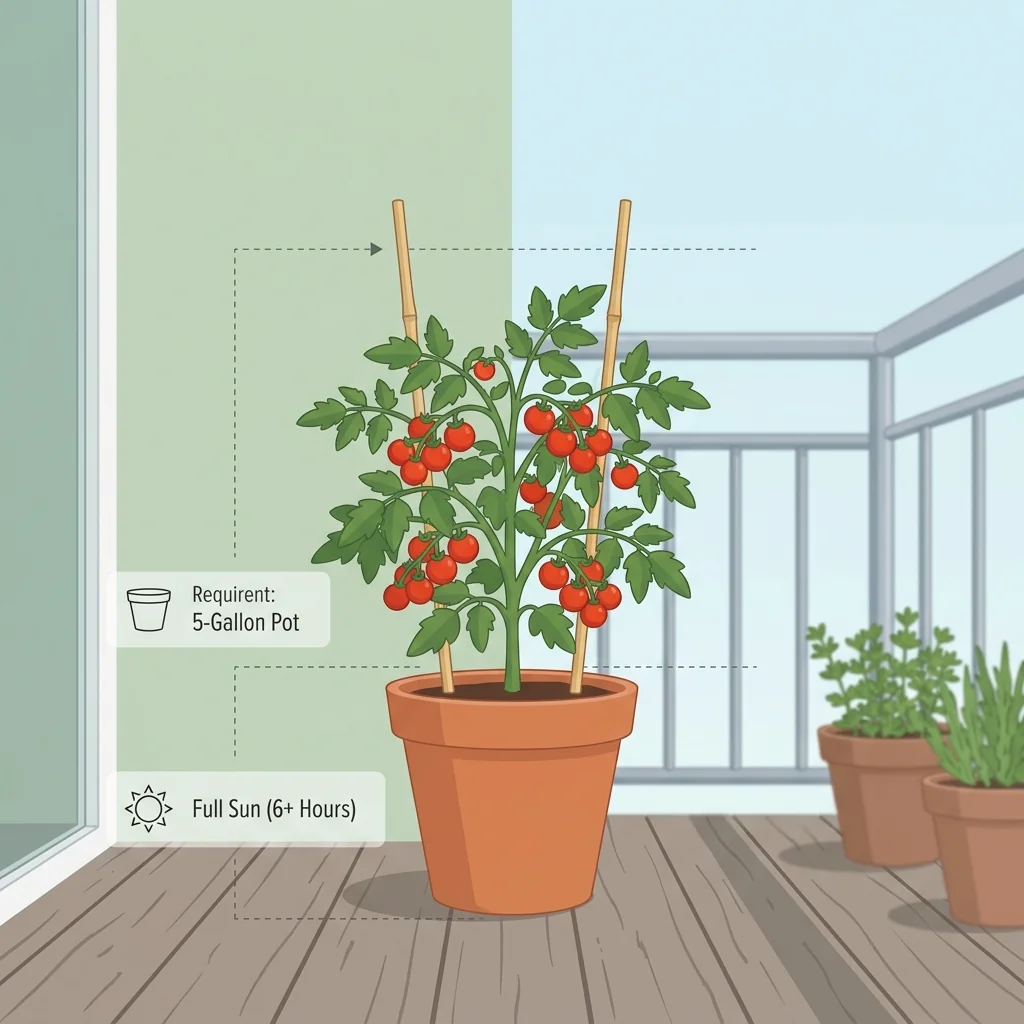
How to grow dwarf tomatoes in pots on a small balcony
Traditional tomato plants grow into massive, untameable 8-foot jungle vines that require giant cages and take over your entire balcony. But with modern 'micro-dwarf' or patio tomato varieties, you can grow heavy yields of sweet cherry tomatoes on a plant that stays under 2 feet tall. Here is the dwarf tomato container blueprint.
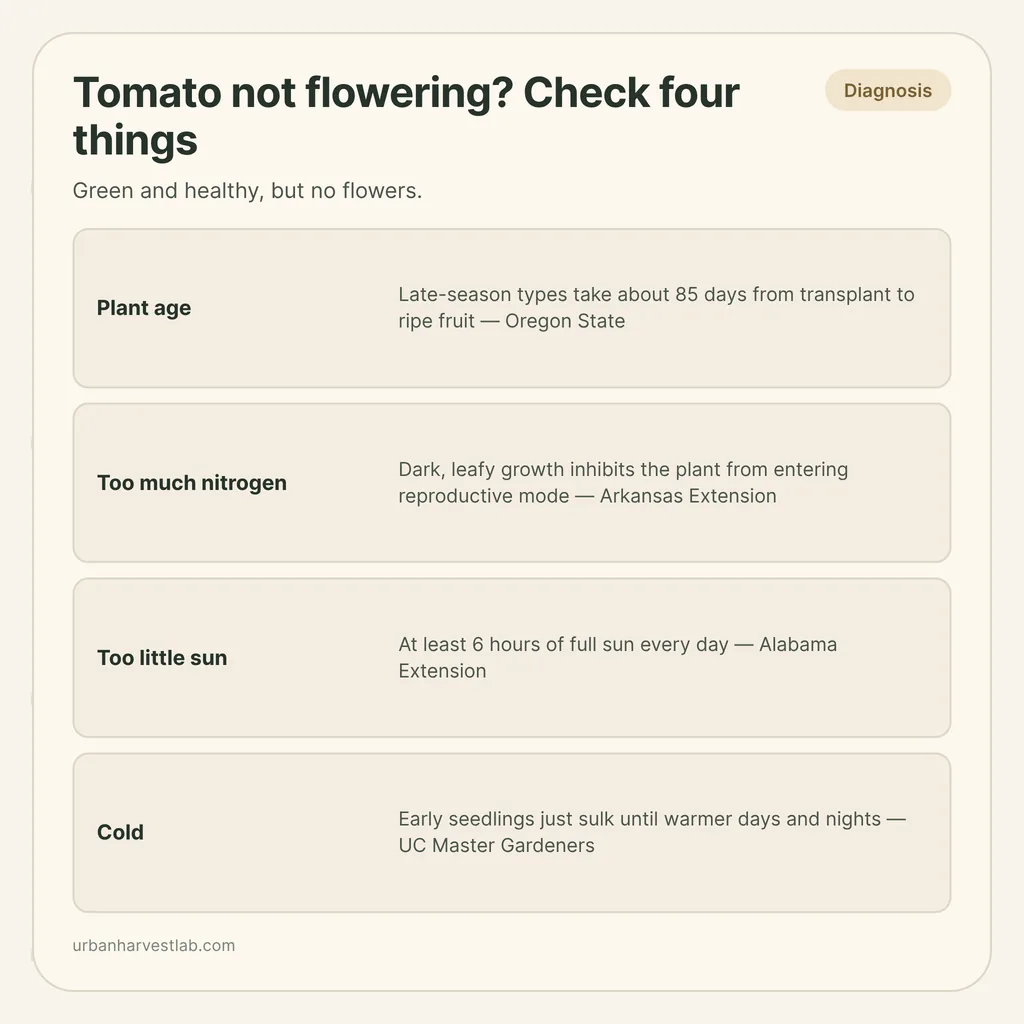
Tomato plant not flowering: young, shaded, overfed, or stalled
Green, healthy and flowerless: the usual causes are age, light, nitrogen and temperature. Here is how to tell them apart and what to change.