Comfrey tea next to other feeds you can make or buy
| Feed | What is documented | Dosing |
|---|---|---|
| Comfrey tea (leaves steeped in water) | RHS: usually high in potassium; strength varies; weaker than bought feeds | RHS: dilute 1:10, apply liberally and frequently |
| Comfrey rotted without added water | RHS: fresh leaves are around 90 percent water, so none is needed | RHS: dilute 1:20 |
| Comfrey mulch or compost-heap addition | RHS Wisley advisor: shredded as mulch, or added to compost | No dilution; no smell in the compost route |
| Bought fish emulsion or seaweed | A label with a printed analysis | Follow the label |
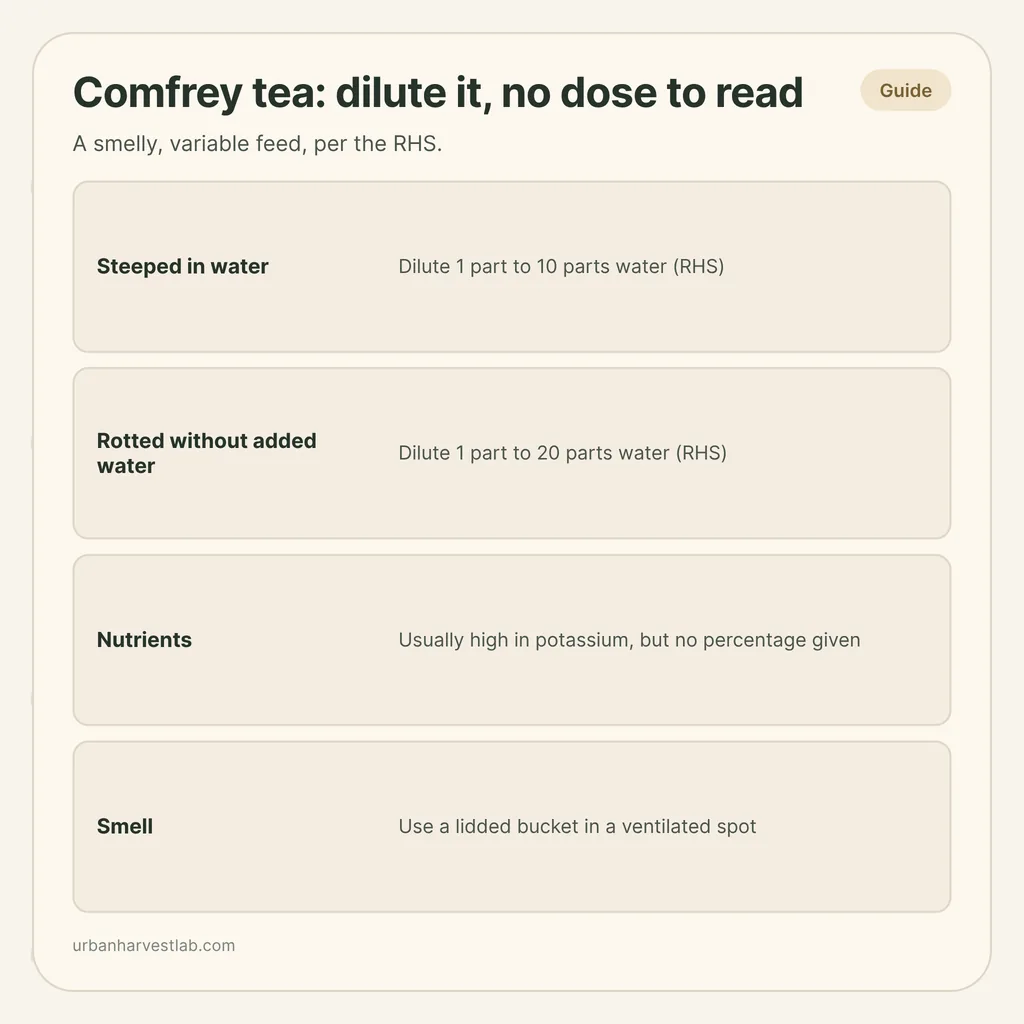
Comfrey tea is a black, foul-smelling liquid made by rotting comfrey leaves in water, and the Royal Horticultural Society’s method is to leave them for around three weeks, then dilute one part liquid to ten parts water. The RHS calls comfrey usually high in potassium, but it publishes no nutrient percentage for the finished liquid, so treat it as a mild, variable feed rather than a measured one.
If your container plants need a reliable, labelled feed, start with choosing a fertilizer for potted herbs. Comfrey tea is a supplement for people who already have a plant to cut, not a reason to buy one.
The RHS method, step by step
RHS Wisley horticultural advisor Caroline Mazzey describes the liquid feed as “a black ooze with a powerful stink”. The RHS suggests collecting green material from mid-summer to early autumn, when nutrient and mineral content is at its highest. That is when a comfrey plant is worth cutting. The steps:
- Wearing gloves and ideally long sleeves, cut the comfrey to the ground with shears or secateurs.
- Squash the leaves into a bucket without completely crushing them, and cover with water.
- Weigh the leaves down with a brick or similar so they stay submerged.
- Leave for around three weeks, until the liquid is black and smelly.
- Dilute about one part to ten with water and use it liberally when watering. Use it up promptly, because it does not store well.
The RHS’s separate homemade-fertiliser guide adds that fresh green leaves are already around 90 percent water, so a feed made from fresh material does not strictly need added water. In that case the liquid is more concentrated, so the RHS dilutes it further: one part liquid to twenty parts water. Material made with water, such as dried leaves or pellets, gets one to ten. The same guide says rotting can take a few days to several weeks depending on temperature and material, so check the bucket weekly rather than trusting a calendar.
The potassium claim, and why there is no dose to read
The RHS says comfrey is usually high in potassium, especially when grown in clay soils. Its Wisley advisor notes that ‘Bocking 14’, the cultivar the organic grower Lawrence Hills picked from his trials as the best for plant feed, has the highest content of nitrogen, phosphorus and potassium, and that it rarely sets seed, which matters if you do not want it spreading.
Neither RHS page gives a percentage for comfrey leaf or for the finished liquid, and the guide says outright that the nutrient content of homemade feeds varies. That is why the dilution is a rule of thumb and the target is a colour: aim for a liquid that, once diluted, looks like weak tea.
So there is no NPK to plug into a calculator. If you need to compare strengths, the fertilizer dilution calculator works from a printed label, which this feed does not have. The same gap applies to other kitchen-made feeds, as the banana peel water page shows.
Using it on pots and edibles
The RHS says to drench the roots of annual bedding, plants in containers and edible crops such as tomatoes and strawberries. It also says homemade plant-based feeds are weaker than bought fertilisers, so apply them liberally and frequently. Established trees, shrubs and perennials do not need regular liquid feeding.
Two cautions from the same guide:
- Do not apply homemade feed with a sprayer as a foliar feed, to avoid inhaling microbes.
- Wear gloves or wash your hands thoroughly afterwards, and do not eat or drink while handling it.
In a pot, a stronger mix has nowhere to go. Salt from any fertilizer can accumulate in a container, so if leaf tips brown or growth stalls after feeding, the signs of overfertilizing are worth checking before you assume the plant wants more. Between feeds, flushing salt buildup is the fix.
Smell, storage and the balcony problem
The RHS warns that the contents are often strong smelling, and tells you to prepare the feed in a well-ventilated area. For an apartment that means a bucket with a tight lid, kept outside, and a decision about where you stand when you open it. The Wisley advisor notes that diluting it also makes it go further and smell less potent.
For comfrey specifically, the Wisley advisor says to use it up promptly because it does not store well. The RHS’s general homemade-fertiliser guide sets the outer limit for plant-based feeds: aim to use them within three months, although in a cool, dark place they can keep for up to a year in a rinsed, lidded milk or juice container. If the container bulges, release the gas slowly by unscrewing the top, then reseal.
If you do not want the bucket at all, the Wisley advisor offers two routes without a bucket: shred the leaves as a mulch around hungry plants, or add them to the compost heap. She calls the compost route her preferred method, because it is quick and captures the nutrients without a smell.
Comfrey tea versus the other feeds
Comfrey tea is a plant-based steep. Compost tea is a different preparation with its own evidence question, and fish emulsion and seaweed are bought products with printed analyses. Whether a homemade feed beats a synthetic one in a pot is a separate argument, covered in organic versus synthetic fertilizer.
Sources
Other ways to feed a container
Comfrey tea is one homemade feed among several, and each has a different evidence base.
Common questions
How do you make comfrey tea fertilizer?
The RHS packs cut comfrey leaves into a bucket without crushing them, covers them with water, weighs them down with a brick and leaves them for around three weeks, until the liquid is black and smelly. Strain it, then dilute before use.
How much should you dilute comfrey tea?
The RHS gives one part to ten parts water for comfrey steeped in water. For plant material rotted down without added water it gives one part to twenty. Either way, aim for a diluted liquid the colour of weak tea.
What is the NPK of comfrey tea?
Neither RHS page gives a percentage. The RHS says comfrey is usually high in potassium and that nutrient content varies from batch to batch, so there is no figure to put on a label or dose by.
Can you use comfrey tea on potted plants and vegetables?
Yes. The RHS says homemade feeds suit plants in containers and edible crops such as tomatoes and strawberries, applied as a root drench. Do not spray it on leaves, because the RHS warns against inhaling microbes.
Related guides

Does compost tea work? What the evidence says for pots and edibles
Compost tea promises disease control and a microbe boost, but controlled trials are few and mixed, and additives can grow Salmonella and E. coli. Here is what holds up.
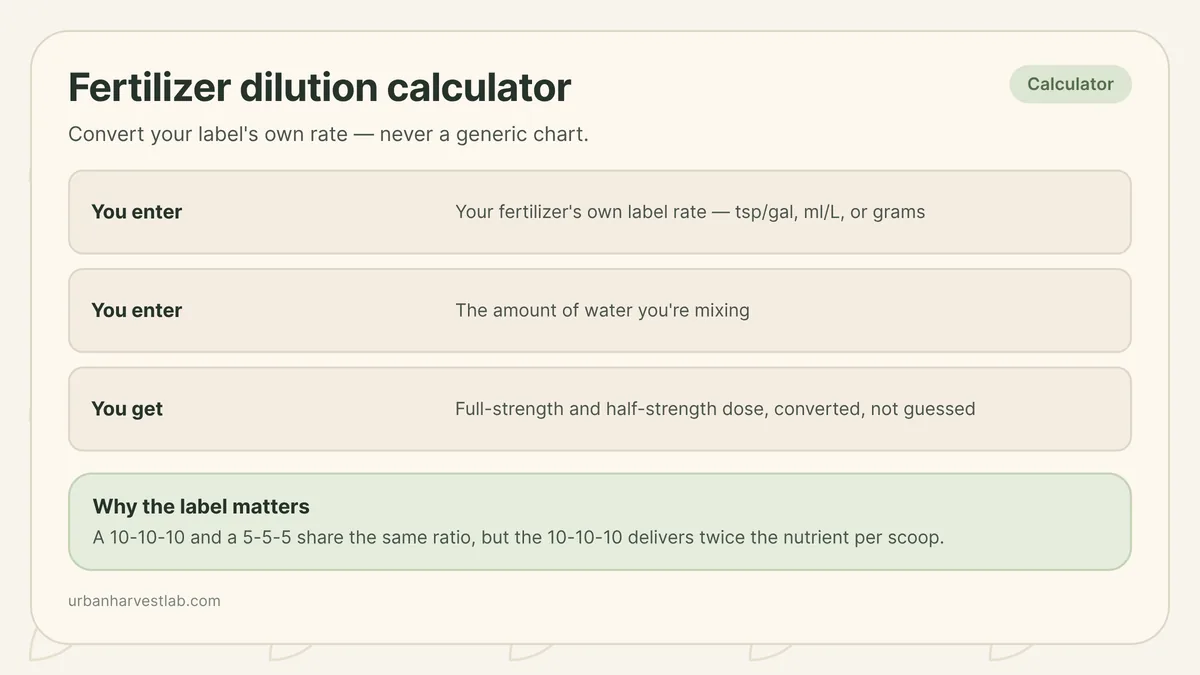
Fertilizer dilution calculator: label rate to ml/L, tsp/gal, and half strength
A calculator that converts a fertilizer's own label rate into ml/L, tsp/gal, or a half-strength dose for the water you're mixing, plus the manual conversion if you'd rather check it by hand.
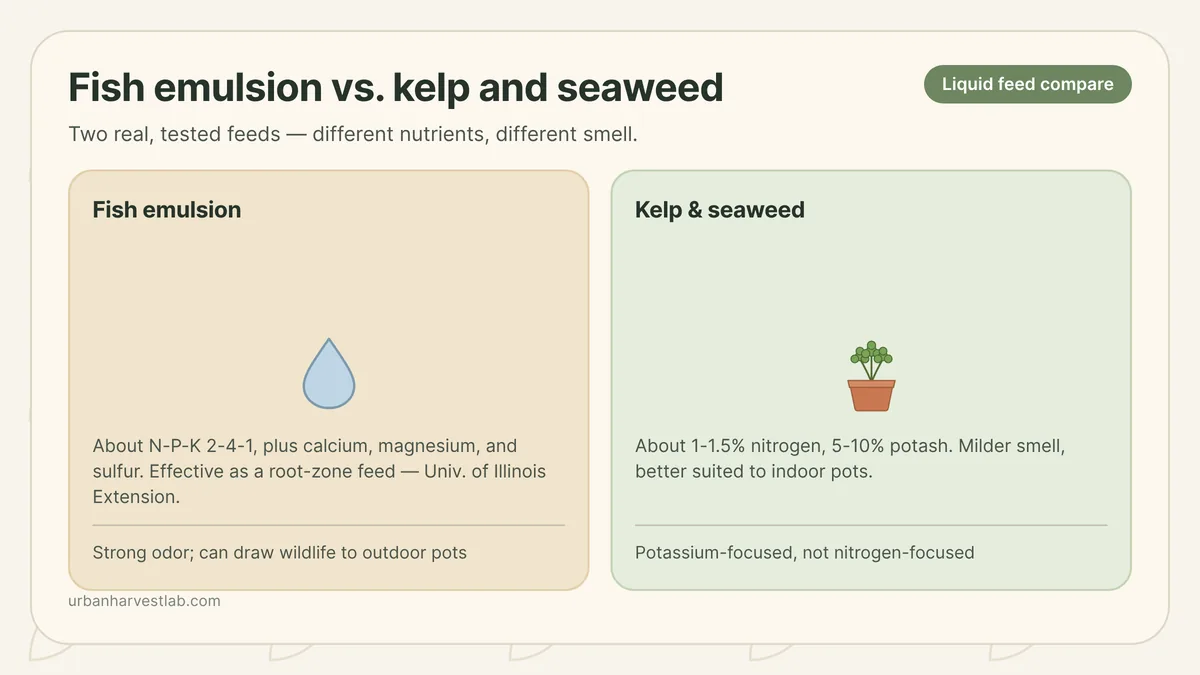
Fish emulsion and seaweed for herbs: what they actually do
Fish emulsion and seaweed products are genuine fertilizers with a documented N-P-K profile, but two of their most repeated claims do not hold up under testing, and the smell changes where you should use them.