Troubleshoot the system before you change the inputs.
Symptoms
- A sour, swampy or sulfur-like smell comes off the surface when you lean in or lift the pot.
- The mix stays wet or the pot stays heavy long after the last watering.
- Leaves yellow or wilt even though the mix is wet.
- Roots lifted out of the pot are soft, dark and smell unpleasant.
Possible causes
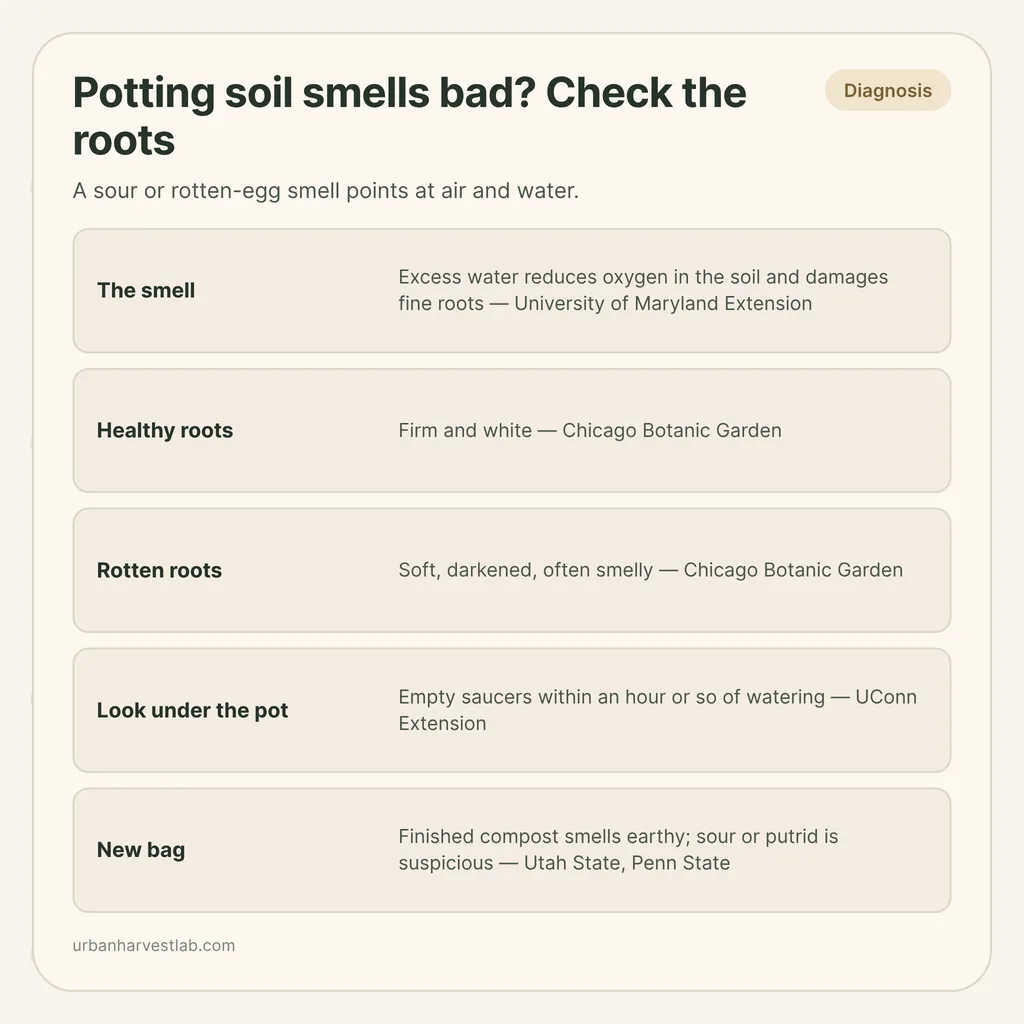
- Waterlogged mix: University of Maryland Extension says excess water reduces oxygen in the soil and damages fine roots.
- Water left standing in the saucer or cachepot, which UConn Extension says keeps the medium saturated.
- A pot with no drainage hole, a blocked one, or mix that has packed down and no longer drains.
- Roots that have already started to rot after a long wet spell.
- Compost in the mix that was not finished when it was bagged.
Quick fixes
- Stop watering and empty the saucer.
- Slide the plant out and check the roots: firm and white is healthy, soft and dark is rotting.
- If the roots are mostly healthy, trim out the damaged ones and repot in fresh mix in a pot with a drainage hole.
- If the roots are mostly rotten, follow the root rot steps, or replace the plant.
A sour, swampy or rotten-egg smell from a pot means the mix has run out of air, most often because it is holding too much water. Stop watering, empty the saucer, and slide the plant out to look at the roots: that tells you whether the mix just needs to dry and be replaced, or whether the roots are already rotting. Not sure the plant is overwatered at all? Overwatered vs underwatered lays out the other signs.
What the smell is telling you
A healthy pot smells faintly earthy, or of nothing much. A bad smell is a signal about oxygen.
University of Maryland Extension says excess water reduces oxygen in the soil, which damages fine roots and leaves the plant unable to take up water. UConn Extension describes the same chain in a pot: water that stays in the saucer or cachepot keeps the potting medium saturated and displaces necessary oxygen, so roots die or deteriorate. The RHS says the same thing about garden soil, where oxygen is used up by plant roots and soil microorganisms in prolonged saturated soil.
The smell itself comes from what survives without air. The RHS says a root sample from waterlogged soil will show blue-black roots, a typical sign that may be accompanied by a sour, rotting smell. R. W. Sheard’s turfgrass soil paper, archived by Michigan State University Libraries, names a lack of oxygen in the soil as the basic cause of black-layer conditions and links the “rotten egg” odour to hydrogen sulphide. A rotten-egg note in a pot is the same kind of signal, only on a smaller scale.
Because University of Maryland Extension notes that overwatered plants show the same symptoms as plants with root rots, the smell alone cannot tell you which one you have.
Rule out the likely causes
Work through these in order.
| Cause | What you see | Test |
|---|---|---|
| Too much water, too often | Mix wet below the surface, pot heavy | Finger test and lifting the pot |
| Water standing in the saucer | Water in the saucer or cachepot, wet base | Look under the pot |
| No drainage or packed mix | Water pools on top or drains slowly | Pour in water and watch |
| Rotting roots | Soft, dark roots, wilting despite wet mix | Unpot the plant |
| Unfinished compost in the bag | Sharp smell from a pot you just filled | Smell a handful of fresh mix |
Check how wet it really is
University of Maryland Extension suggests testing the soil with your finger to a depth of about two inches, and says that if the soil is dry it probably needs water. Lifting the pot works too: it says a pot with dry medium weighs much less than one with ample water still in it. A pot that smells bad and still feels heavy and wet has your answer.
Look under the pot
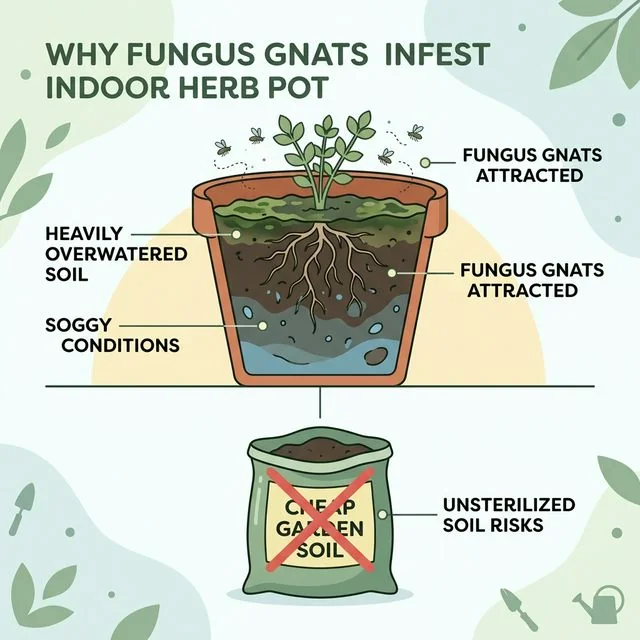
UConn Extension says to empty saucers or cachepots within an hour or so of watering. University of Maryland Extension adds that pouring off water that collects in saucers helps prevent problems with fungus gnats and other insects, so a smelly pot with gnats around it is usually the same overwatering story. See fungus gnats in herb pots for that side.
Check drainage
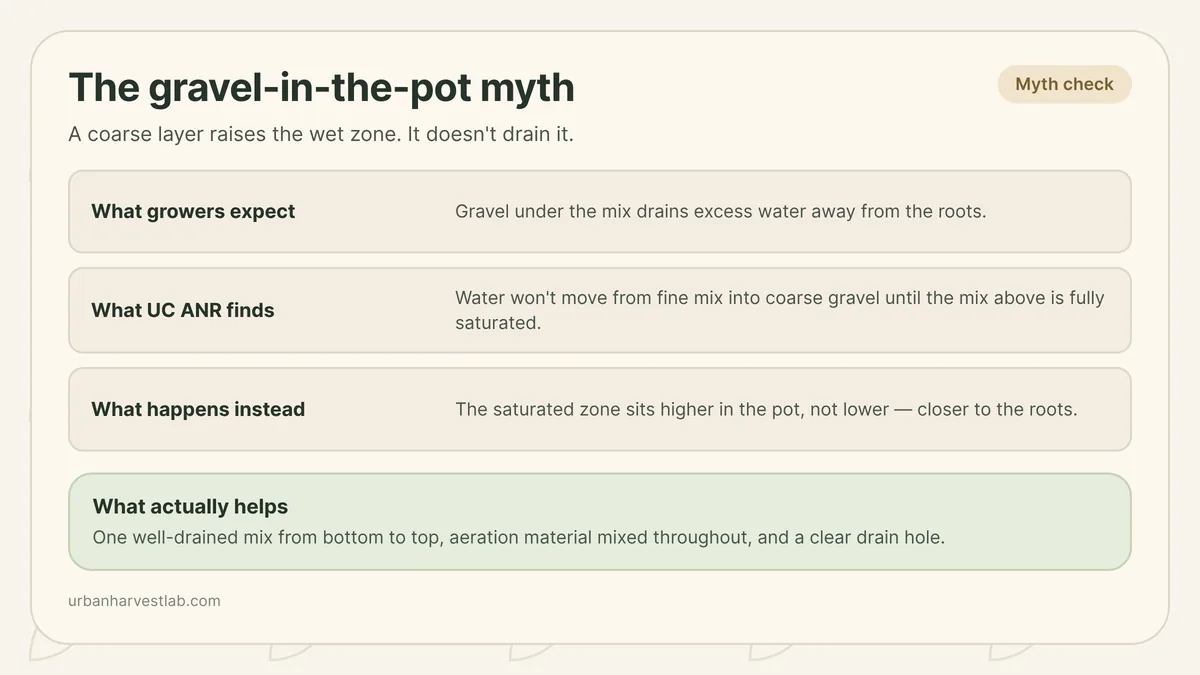
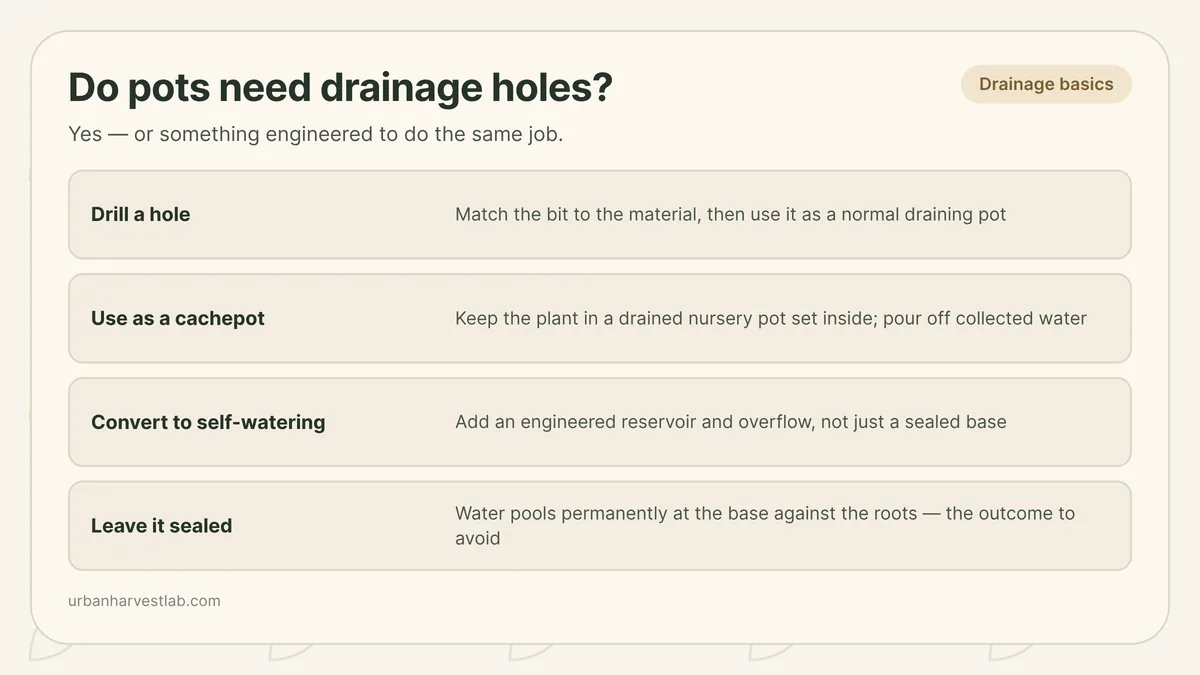
A pot without a drainage hole holds water at the bottom even when the surface looks dry. If your pot has no hole, or the hole is blocked, the drainage holes guide covers the fix. A layer of gravel in the bottom does not stand in for a hole; the gravel-in-the-pot myth explains why.
Unpot it and check the roots
Slide the plant out and look. Chicago Botanic Garden says healthy roots are firm and white; infected or rotten roots are soft, darkened and often produce an unpleasant odor.
- Mostly firm, pale roots: Chicago Botanic Garden says to trim out any damaged ones and remove yellow or dead foliage, then repot the plant using a fresh soilless mix and resume normal care. Do the repot in a clean pot with a drainage hole.
- Mostly soft, dark roots: this is root rot, and how to save a potted plant with root rot walks through the rescue. Chicago Botanic Garden says that if more than 50 percent of the roots are damaged, you might consider discarding the plant.
Either way, the plant goes into fresh mix in a clean pot, which gives it air back.
Can the soil be used again?
If the roots were healthy and the mix was only waterlogged, you can spread the mix out to dry and then judge it for reuse; can you reuse potting soil answers whether it is safe for the next planting. If the mix is merely tired and compacted rather than waterlogged, how to refresh old potting soil covers what to work back in.
Mix that held a rotting root system is a different case from tired mix. If the roots were rotting, discard that mix rather than reuse it; can you reuse potting soil treats root rot as a reason to discard.
When the smell is in a brand-new bag
Mix that contains compost can smell off on day one. Penn State Extension says finished compost has a sweet smell, and that anaerobic, sour or putrid smells are suspicious. It also says unfinished compost may release volatile organic acids that can negatively affect seedling growth and development. A sharp smell from a fresh bag is worth taking seriously for that reason, especially for seedlings. Utah State University Extension says finished compost should look and smell earthy, even when wet, so a mild, earthy smell is fine. Compost choice for edible pots is covered in choosing compost that’s safe for edible containers.
Keep it from coming back
Water when the top two inches are dry, rather than on a schedule. Empty the saucer within an hour or so of watering. Keep drainage holes open. And repot with fresh mix if the plant has sat wet for long enough to smell.
Sources
- RHS, Waterlogging and flooding
- University of Maryland Extension, Symptoms of overwatering indoor plants
- University of Maryland Extension, Watering Indoor Plants
- UConn Extension, Watering Houseplants
- Chicago Botanic Garden, Overwatered Houseplants
- Penn State Extension, Potting Media and Plant Propagation
- Utah State University Extension, Using Compost in Utah Gardens
- R. W. Sheard, Black Layer Formation in Turf (Michigan State University Libraries, Turfgrass Information Center)
Next steps for a smelly pot
Sort out the watering, the roots and the mix once you have found where the smell comes from.
Common questions
Why does my potting soil smell like rotten eggs?
A rotten-egg or sulfur smell points to oxygen-starved mix. A turfgrass soil paper by R. W. Sheard, archived by Michigan State University Libraries, ties the rotten-egg odour to hydrogen sulphide, which forms when soil runs short of oxygen. University of Maryland Extension says excess water reduces oxygen in the soil, and the RHS notes that waterlogged roots may come with a sour, rotting smell. Unpot the plant and check the roots before you decide anything else.
Does a sour-smelling pot mean root rot?
No. A sour smell shows the mix is waterlogged, which is the condition that leads to rot, but the roots tell you whether rot has set in. Chicago Botanic Garden says healthy roots are firm and white, while rotten roots are soft, darkened and often smell unpleasant.
Can I save the plant or do I need to throw out the soil?
If the roots are mostly healthy, Chicago Botanic Garden says to trim out damaged roots and repot in fresh soilless mix. It says that if more than 50 percent of the roots are damaged you might consider discarding the plant. The wet, smelly mix itself is the part to replace.
Does fresh bagged potting soil ever smell bad?
A mild earthy smell is normal. A sour or putrid smell is the warning sign Penn State Extension gives for unfinished compost, which is one possible ingredient in a bagged mix, and Penn State says unfinished compost may release volatile organic acids that can hold back seedling growth, so keep a sharp-smelling new bag away from seedlings.
Related guides
The gravel-in-the-pot myth: why it doesn't improve drainage
Putting gravel or rocks under potting mix feels like it should help drainage, but it creates a wetter zone right where roots grow, not a drier one.
Why fungus gnats keep coming back in herb pots
Fungus gnats are the absolute bane of indoor gardeners. If a cloud of tiny black flies eradicates your peace every time you walk past your basil plant, you are treating the symptom, not the cause.
Do pots need drainage holes, and how to add one safely
A pot with no drainage hole is not a design quirk you can water around. Here is why that matters, how to drill one safely by material, and how to use a hole-less pot the right way instead.