
Seed packet words and what they tell you
| Word on the packet | What it describes | What it does not tell you | Source |
|---|---|---|---|
| Patio, dwarf, midget | Plant size: very compact vines | Whether it is determinate, or how big the fruit is | University of Maryland Extension; Illinois Extension |
| Determinate | Growth habit: grows to a set size, sets fruit, then declines | Exact height; newer types may grow taller | Clemson; Illinois Extension; Oregon State |
| Indeterminate | Growth habit: keeps growing until frost or disease | Nothing about fruit size | University of Maryland Extension; Oregon State |
| Semi-determinate | Habit between determinate and indeterminate | A set height | Oregon State |
| Bush | Compact, non-vining growth in beans, cucumbers and squash | Yield or pot size on its own | Clemson; University of Maryland Extension |
| Cherry | Fruit size | Plant size: Tiny Tim to Sweet 100 | University of Maryland Extension |
“Patio,” “dwarf” and “midget” tell you the plant is small. “Determinate” and “bush” tell you it stops growing at a set size instead of climbing. They are different questions, and a packet can answer one without the other. For a pot, you want a plant that is both compact and sized for your space, so read for both words, then check the plant’s expected height.
Start with the tomato, because it is where the vocabulary is thickest. The full walkthrough for the smallest types is in growing dwarf tomatoes in pots. The rest decodes the label on any crop before you buy.
Three separate questions on one packet
A packet usually answers three things, each with its own word:
- How big does the plant get? Patio, dwarf, midget, compact, bush.
- How does it grow? Determinate, semi-determinate, indeterminate.
- How big is the fruit? Cherry, grape, slicer, paste.
Mixing them up is how people end up with a “cherry tomato” that fills a balcony. University of Maryland Extension notes that cherry tomato plants range from dwarf (Tiny Tim) to 7 footers (Sweet 100). Small fruit says nothing about the plant.
Patio, dwarf and midget: size words
University of Maryland Extension says midget, patio or dwarf tomato varieties have very compact vines and are best grown in hanging baskets or other containers. Illinois Extension sorts a “Dwarf/Container” group of tomatoes for containers, hanging baskets and patio locations where space is limited, and says they are not suitable for pruning, apart from the new Husky hybrids.
The range inside that group is wide. Illinois Extension lists Red Robin as a super-dwarf plant 6 inches tall, and Patio Hybrid as strong dwarf plants with relatively large fruit, an ideal container plant. So “patio” on a packet puts a plant in the compact family, not at a particular height. Look up the named variety for its mature size.
Because these are the smallest plants, they are also the ones where the pot guidance changes. The sizes by group are in tomato pot size.
Determinate: a growth-habit word, not a size word
Clemson Extension describes it simply: determinate tomato plants grow to a certain size, set fruit, and then decline. Illinois Extension gives the mechanism: the plant eventually forms a flower cluster at the terminal growing point, so it stops growing in height. Indeterminate plants do not. University of Maryland Extension says their vines continue to grow until frost or disease kills them.
Oregon State Extension adds a third category, semi-determinate, a habit between the two, and says growth habit determines the size of the plant, the pattern of fruit ripening, and the type of support and pruning it needs.
What determinate means in numbers:
- Oregon State Extension says determinate cultivars tend to be fairly short, 3 to 4 feet tall, and bushy. Illinois Extension says most modern determinate tomatoes easily grow 3 to 4 feet tall.
- Illinois Extension also says newer determinates produce better foliage and may grow taller.
- Penn State Extension recommends 4-foot stakes for determinate varieties and 6 to 7 feet for indeterminate ones.
So a determinate tomato is the middle size, not the smallest. Oregon State Extension calls the smaller-growing determinate cultivars ideal for containers, because they take longer to outgrow a pot. A patio-type determinate is the compact end of that; a full-size determinate such as a paste tomato is still a 3 to 4 foot plant.
Determinate also changes the harvest. Clemson’s variety table marks determinate habit as “concentrated fruit set”, and Illinois Extension says determinates tend to ripen their fruit over a shorter period of time, so successive plantings may be worth doing to keep fruit coming all season. Indeterminate plants spread the crop over months.
Pruning follows habit, too, and it is a common packet-reading mistake. The rules for which shoots to take off are in pruning container vegetables.
Dwarf and determinate are separate traits
A plant can be one, the other, or both. Illinois Extension says some of the extreme dwarf types are determinate as well as dwarf, producing some truly tiny mature plants. That sentence only makes sense if dwarf and determinate are different properties, and they are. A packet that says only “determinate” has told you the plant will stop growing. It has not told you where.
Bush, dwarf-vined and compact in other crops
Outside tomatoes, “bush” does the job of “determinate” and “dwarf” together. University of Maryland Extension says vegetable varieties listed as bush, dwarf or compact can be grown in smaller containers than their full-size counterparts, and suggests looking for those words on catalog and seed packet labels.
- Cucumbers. Clemson Extension says bush varieties produce well in a limited amount of space and are a good alternative when trellising is not possible. University of Maryland Extension lists “dwarf-vined or bush types” among the cultivars available. Pot guidance is in cucumber container size.
- Summer squash. Clemson Extension says some varieties have a bush-type of growth instead of the vining habit, which is useful in small gardens. See zucchini in a container.
- Beans. Bush beans stand on their own while pole beans climb. University of Maryland Extension also describes half-runner beans as a growth habit between bush and pole. The choice is covered in beans in containers.
The common thread is that a bush plant needs less support and less room. It says nothing certain about yield per pot or about the pot size, which depends on the crop and the variety.
How to choose for a pot
Work in this order:
- Set the height you can live with. A railing-height planter on a windy balcony wants the small end. A tall, sunny wall can take a determinate 3 to 4 footer or a trellised vine.
- Pick the size word to match. Patio, dwarf or midget for the smallest space, hanging baskets and windowsills. Determinate for a standard pot with a stake. Indeterminate only if you can give it a tall support and a large pot.
- Decide how you want the harvest. Determinate gives a shorter, concentrated crop; indeterminate gives a long one.
- Look up the named variety. The word on the packet puts a plant in a group. The variety’s mature height tells you whether it fits. A seed company or an extension variety table will give it.
- Size the pot to the group, not the crop. Volumes for each tomato type are in tomato pot size, and depth across crops is in container depth for tomatoes, peppers and herbs. For other crops that suit a small space, see best vegetables for small balconies.
If a seed packet is vague, that is a signal to search the variety name rather than guess from the picture on the front.
Sources
- University of Maryland Extension, Growing Tomatoes in a Home Garden
- University of Maryland Extension, Growing Vegetables in Containers and Salad Tables
- University of Maryland Extension, Growing Cucumbers in a Home Garden
- University of Maryland Extension, Growing Beans in a Home Garden
- Oregon State University Extension, Grow your own tomatoes and tomatillos (EC 1333)
- University of Illinois Extension, Hort Answers: Tomato
- Clemson Cooperative Extension HGIC, Tomato
- Clemson Cooperative Extension HGIC, Cucumber
- Clemson Cooperative Extension HGIC, Summer Squash
- Penn State Extension, Stake your Tomatoes
After you pick the variety
Pot size, depth and a full dwarf tomato walkthrough for the variety you chose.
Common questions
What does patio variety mean?
It is a seed-catalog word for a compact plant bred for containers. University of Maryland Extension describes midget, patio or dwarf tomato varieties as having very compact vines, best grown in hanging baskets or other containers. Illinois Extension lists examples such as Patio Hybrid, Tiny Tim and Red Robin, the last a super-dwarf plant 6 inches tall.
Is a determinate tomato good for a pot?
Often, but check the height. Oregon State Extension says determinate cultivars tend to be fairly short, 3 to 4 feet, and calls the smaller-growing determinate cultivars ideal for containers. Illinois Extension adds that newer determinates may grow taller, so a determinate label alone does not make a plant balcony-sized.
Is dwarf the same as determinate?
No. Dwarf describes size and determinate describes growth habit. Illinois Extension says some of the extreme dwarf types are determinate as well as dwarf, which shows the two words can appear together but are separate traits. Look for both on the packet when space is tight.
Does bush mean the same thing for beans, cucumbers and squash?
The idea is the same, a plant that grows as a compact bush instead of a long vine, but the benefit differs by crop. Clemson Extension says bush cucumbers produce well in a limited space when trellising is not possible, and some summer squash varieties have a bush-type of growth that is useful in small gardens.
Related guides
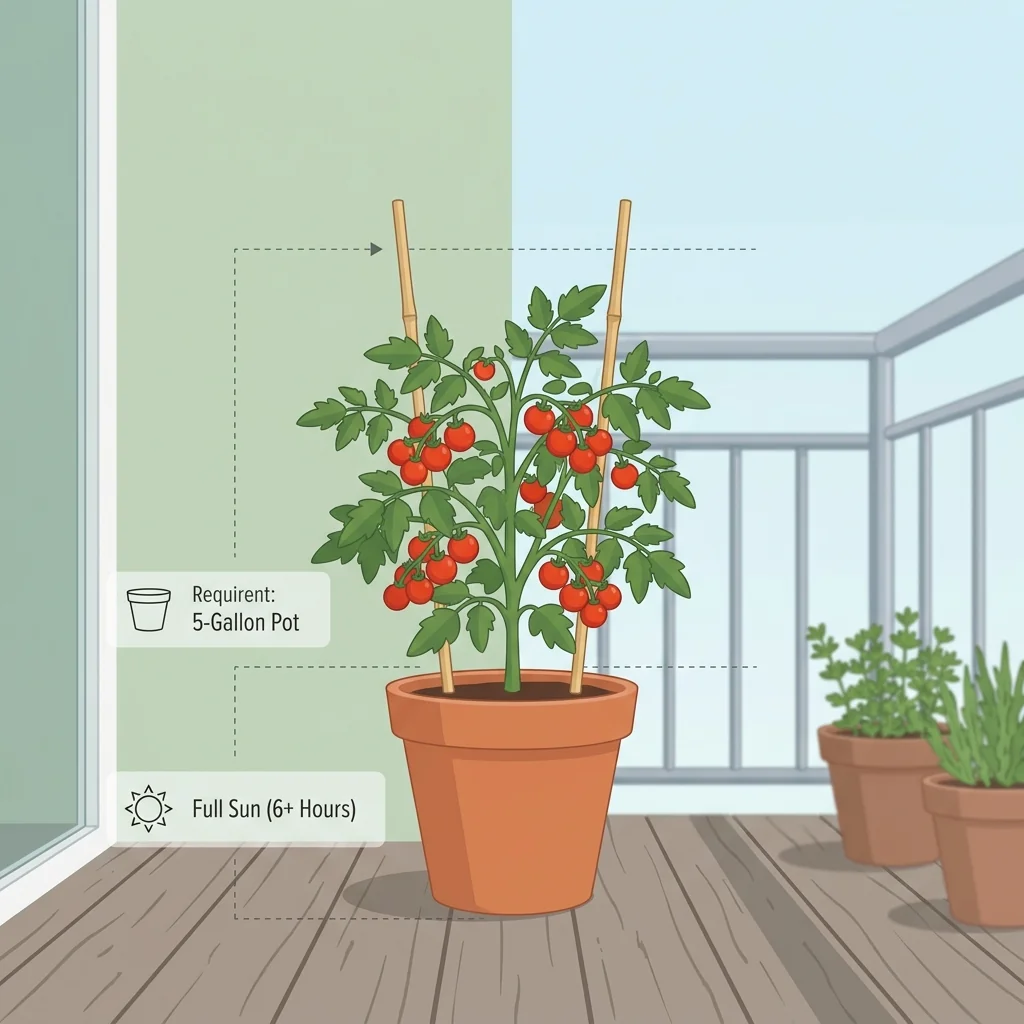
How to grow dwarf tomatoes in pots on a small balcony
Traditional tomato plants grow into massive, untameable 8-foot jungle vines that require giant cages and take over your entire balcony. But with modern 'micro-dwarf' or patio tomato varieties, you can grow heavy yields of sweet cherry tomatoes on a plant that stays under 2 feet tall. Here is the dwarf tomato container blueprint.
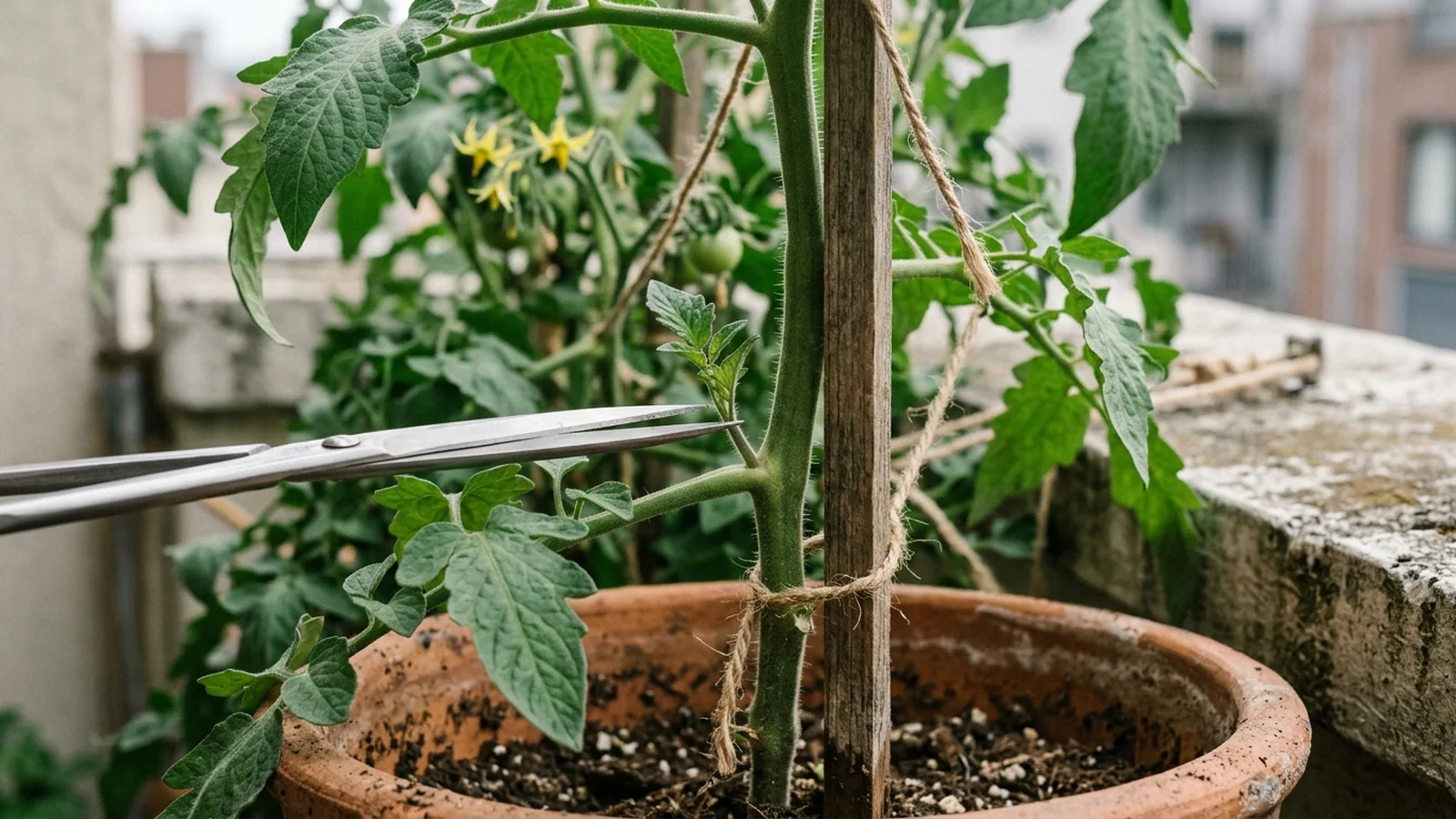
Pruning container vegetables: what to cut, what to leave alone
Cut a leafy herb and it branches back thicker. Cut a container tomato the same way and you are managing how much plant a bucket of potting mix can actually support. Same scissors, opposite goal.
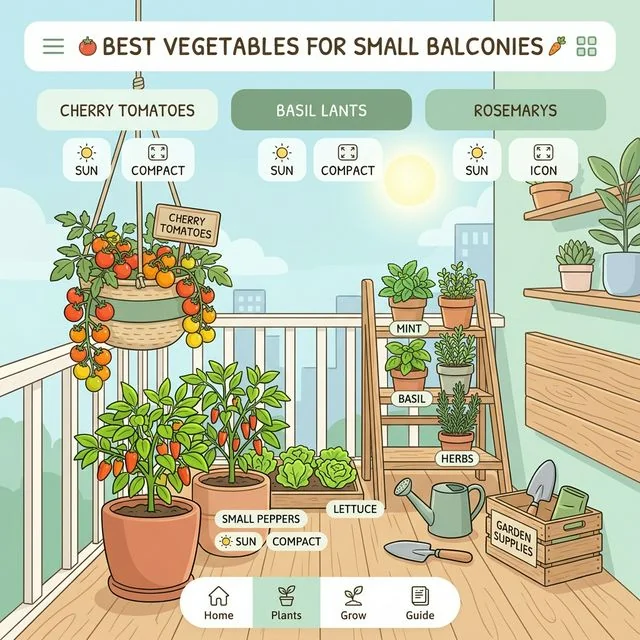
Best vegetables for small balconies: what produces well in tight spaces
Not every vegetable belongs on a balcony. These are the crops most likely to reward limited square footage without turning watering and support into a daily headache.