Container Depth for Tomatoes, Peppers, and Herbs: How Much Root Space Matters
Container size is one of the highest-leverage decisions in small-space gardening. When root volume is too small, every other care task becomes harder.
Good container choices reduce stress on both plants and growers. These guides cover root volume, drainage, material tradeoffs, and how planter choices affect watering frequency and crop performance.
Container growing depends on physical structure more than most beginners expect. This hub organizes container guidance around root space, drainage, crop fit, and the decisions that make container gardens easier to maintain.
These grouped sections mirror the main topic hub so archive pages still support topic discovery and internal linking.
Begin with realistic container sizing and the crops that fit compact planters well.
Container size is one of the highest-leverage decisions in small-space gardening. When root volume is too small, every other care task becomes harder.
A practical starter plan for growing basil, parsley, mint, chives, and other herbs on a balcony without turning the setup into a maintenance burden.
These guides connect container choices to medium structure, balcony crop plans, and everyday upkeep.
Container plants need air space, drainage, and predictable structure. That is why raised bed soil and in-ground blends usually disappoint in pots.
Not every vegetable belongs on a balcony. These are the crops most likely to reward limited square footage without turning watering and support into a daily headache.
Use these pieces when containers are drying unevenly, roots are stressed, or plant vigor starts slipping.
Yellow basil rarely has a single universal cause. The pattern of yellowing, the growing medium, and the recent care routine usually tell the story.
Slow hydroponic lettuce is usually a systems problem, not a mystery deficiency. The goal is to find the bottleneck without overcorrecting five variables at once.
These guides help bridge container growing with indoor support systems and tighter environmental control.
The best grow light for herbs is the one that matches your footprint, crop density, and tolerance for heat and visual clutter. This guide focuses on fit before hype.
A longer light schedule is not always a better one. Herbs need enough daily light, but they also benefit from a stable dark period and realistic fixture placement.
Browse the current library in Containers & Planters. Additional articles can be added to the content collection without changing the page structure.
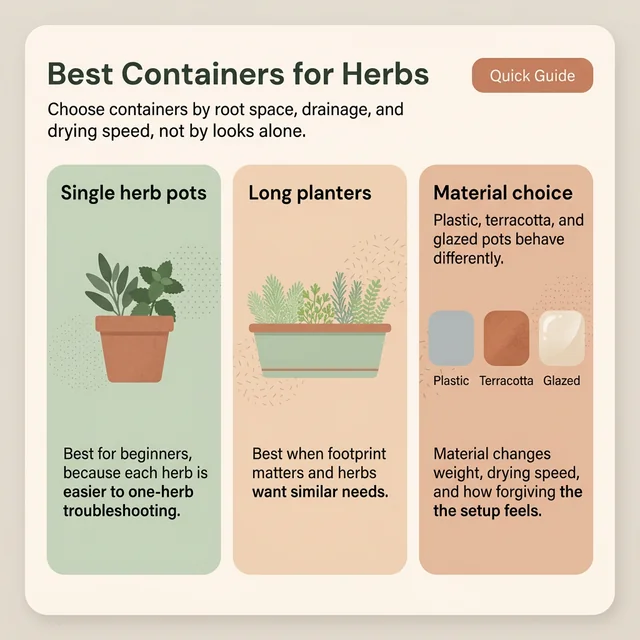
A practical guide to selecting herb containers that make watering easier, reduce root problems, and actually suit apartments, balconies, and windowsills.
Container size is one of the highest-leverage decisions in small-space gardening. When root volume is too small, every other care task becomes harder.