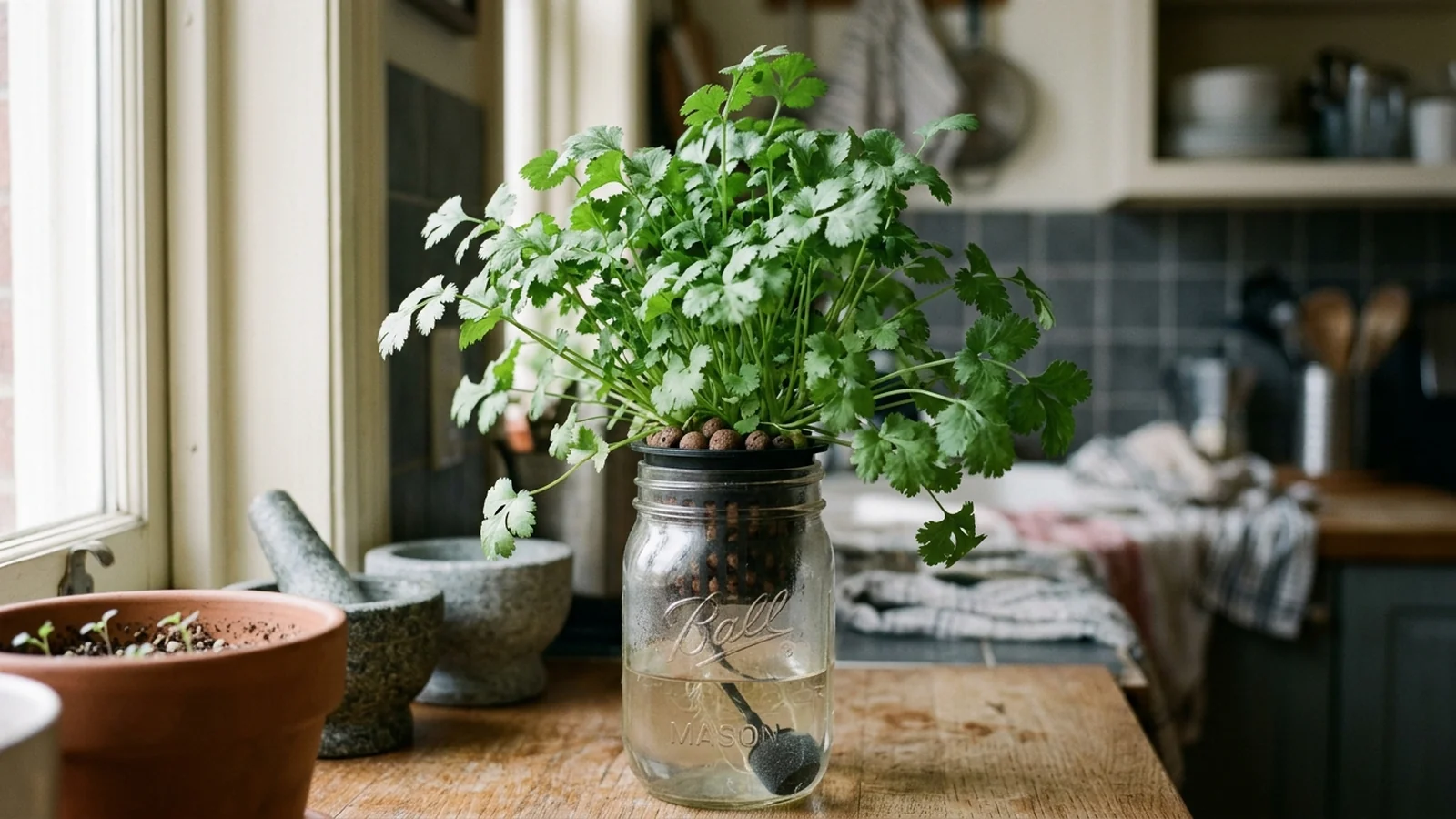
Hydroponic cilantro at a glance
| Variable | Target | Notes |
|---|---|---|
| EC | 1.0-1.6 mS/cm (basil/sage anchor) | Oklahoma State's 27-crop table has no line for cilantro; treat as a starting point |
| pH | 5.5-6.5 | Broad band shared by most soft hydroponic herbs |
| Light | 2-6 h direct sun, or 14-16 h under grow lights | Penn State's low-light herb figure applies directly to cilantro |
| Water temperature | 65-80°F (18-27°C) | UF/IFAS range; Oklahoma State's optimum sits at 72-75°F (22-24°C) |
| Bolting risk | High and fast | Direct-seed and succession-sow rather than fight it |
Cilantro grows well in hydroponics, but it comes with a catch most crop guides skip over: Oklahoma State’s 27-crop table does not measure it the way it measures basil or lettuce. As a starting point, run EC 1.0 to 1.6 mS/cm and pH 5.5 to 6.5, borrowed from the closest sourced herbs, give it Penn State’s low-light herb window, and plan around the trait that actually decides how much you harvest — cilantro bolts faster than almost any other herb in the hydroponic herb line-up.
Where to set EC and pH for cilantro
Oklahoma State University Extension’s HLA-6722 table covers 27 crops and is the most complete per-crop EC and pH reference available; it names basil, parsley and sage individually but does not name cilantro. Neither does UF/IFAS’s small-system hydroponics guide, Penn State’s nutrient-solution recipes, or the University of Minnesota, University of Kentucky, and Virginia Cooperative Extension publications. Mint and arugula have the same blank spot in the same table.
The closest crop the sources do measure is basil. Oklahoma State puts basil and sage at EC 1.0 to 1.6 mS/cm, with basil’s pH at 5.5 to 6.0 and sage’s at 5.5 to 6.5. The table’s fourth herb, parsley, sits notably higher at EC 1.8 to 2.2 mS/cm, pH 6.0 to 6.5 — parsley is cilantro’s nearest botanical relative in that table, but the stronger figure belongs to a coarser-rooted plant, so basil and sage remain the closer match for a soft-leaved, fast-bolting crop like cilantro. The hydroponic parsley guide covers that figure in full. Virginia Cooperative Extension’s broader deep-water-culture figure for leafy greens generally is EC 1.2 to 2.0 mS/cm, pH 5.5 to 6.2. Between the basil/sage anchor and that leafy-green range, 1.0 to 1.6 mS/cm and a pH somewhere in 5.5 to 6.5 is a reasonable place to start a cilantro reservoir, and the full breakdown by crop — including where herbs sit next to leafy greens and fruiting plants — is in the hydroponic EC chart by crop. If you already run basil, the basil EC, pH and light guide is the nearest sourced comparison for what “started too strong” looks like.
On pH specifically, University of Missouri Extension’s rule of thumb is 5.5 to 6.5 for most crops, and Penn State Extension gives a wider 5.0 to 7.0 for hydroponic vegetables generally. Both brackets agree on 5.5 to 6.5, so treat that as safe territory for cilantro and adjust from there based on how the plant responds, the same way you would with any new reservoir setup covered in hydroponic nutrient basics.
Light: moderate, not maximal
Cilantro is not a high-light herb the way basil is. Penn State Extension lists cilantro among the herbs that get by on 2 to 6 hours of direct light rather than the 6 hours most herbs want, or 14 to 16 hours under two 40-watt cool white fluorescent tubes kept 6 to 12 inches from the canopy. So if you are running one light rail over a mixed herb tray, give the cilantro tray position the dimmer edge and save the brightest spot for basil. The duration side of that schedule — how many hours to actually run the light, not just how bright — is covered in how many hours grow lights should run for herbs.
Strong, close light does more for basil than it does for cilantro. Pushing cilantro toward maximum light and warmth to “speed it up” tends to do the opposite of what a grower wants: it pushes the plant toward flowering faster, not toward more leaf.
Water temperature: run it in the general hydroponic range
No cilantro-specific water-temperature study exists, so the reasonable target is the general reservoir range hydroponic crops broadly run at: UF/IFAS Extension gives 65 to 80°F (18 to 27°C) for small hydroponic systems, and Oklahoma State University Extension calls 72 to 75°F (22 to 24°C) optimal. Warmer water holds less dissolved oxygen and raises the risk of root problems in a reservoir that is not well aerated; cold water slows growth without adding any benefit. If roots start looking soft, discoloured, or slimy, that is a root-rot signal rather than a cilantro-specific issue, and the root rot prevention guide covers the diagnosis.
Bolting is cilantro’s real limiting factor
This is the trait that actually separates cilantro from basil, mint, or parsley in a hydroponic system, and it has nothing to do with EC or pH. Cilantro is a short-lived annual built to flower and set seed quickly, and heat, crowding, and general stress all push that clock forward. Lettuce has the same failure mode in hydroponics, covered in depth in why hydroponic lettuce bolts and turns bitter — the mechanism (a plant abandoning leaf growth for reproduction) is the same, but Clemson Cooperative Extension and Oregon State University Extension are the two sources with anything specific to cilantro, and neither attaches a single threshold number the way several sources do for lettuce: Clemson names the onset of summer heat as the trigger, and Oregon State adds day length alongside temperature. The cilantro bolting guide covers that mechanism and how to slow it down in full; treat a precise trigger point as unknown rather than borrowing lettuce’s numbers for a different plant.
What is actionable without that number: Penn State Extension’s range for indoor herbs — at least 65 to 70°F (18 to 21°C) by day and 55 to 60°F (13 to 16°C) at night — is a reasonable air-temperature target for the grow space, since heat is the trigger the sources do agree on. Penn State’s other herb figure applies here too: a low dose of water-soluble fertilizer every two weeks, rather than more frequent feeding that can push growth without doing anything about bolting. Beyond that, stop expecting one planting to produce indefinitely — a cilantro planting has a productive window measured in weeks, not months, whatever you do with the water chemistry.
Start it where it will finish
Cilantro grows a central taproot and handles being moved badly — a trait already well documented for soil-grown cilantro, where the standard advice is to sow direct rather than transplant seedlings. That advice carries over to hydroponics with no changes needed: seed cilantro directly into the net pot, rockwool cube, or plug it will spend its life in, rather than starting it in a nursery tray and moving it into the main system once it has true leaves. Every disturbance to that taproot is one more stress signal on top of heat and crowding, and cilantro already has enough reasons to bolt without adding a transplant to the list.
If you are building a mixed-herb tray and want to know which herbs tolerate that kind of shared setup without one crop dragging the others into trouble, hydroponic herbs: which grow best and how covers compatibility by growth habit, and the same EC-and-pH gap applies to two of its neighbours — hydroponic mint and hydroponic arugula share the same blank spot in the extension table cilantro does.
Keep the harvest coming with succession sowing
University of Minnesota Extension notes that most hydroponic growers take three to five harvests from the same planting before reseeding; cilantro’s flowering clock runs faster than most herbs, so expect the low end of that range rather than the high end. Start the next batch of net pots or plugs before the current planting reaches its last harvest, so a fresh round is already coming into cutting size as the older one bolts. The cilantro bolting guide covers the general timing and spacing behind succession sowing; the hydroponic-specific part is that the reservoir, light, and channel space are already built and waiting, so staggering plugs across separate channels or net-pot lids on a shared reservoir costs a lot less than an idle grow slot would in a garden bed.
If you are still deciding on a system for cilantro or other herbs, the countertop hydroponic herbs guide covers what a small system can and cannot realistically support, including how much turnover a compact tray tolerates.
Common problems
- Pale or slow growth: check light first — cilantro under-lit for its schedule stalls before it shows a nutrient symptom.
- Yellowing leaves with an otherwise healthy reservoir: check pH drift before adjusting EC.
- A sudden central stalk with feathery new growth: that is bolting, not a nutrient or watering problem, and the response is to harvest what is there and start the next round rather than try to correct it.
Sources
- Oklahoma State University Extension HLA-6722 — Electrical Conductivity and pH Guide for Hydroponics
- Virginia Cooperative Extension SPES-464 — Hydroponic Production of Edible Crops: Deep Water Culture (DWC) Systems
- Penn State Extension — Growing Herbs Indoors
- Penn State Extension — Hydroponics Systems and Principles of Plant Nutrition
- University of Missouri Extension G6984 — Hydroponic Nutrient Solutions
- UF/IFAS Extension HS1422 — Growing Lettuce in Small Hydroponic Systems
- University of Minnesota Extension — Small-scale hydroponics
Growing hydroponic cilantro? Also read
These guides connect cilantro's water chemistry gap to the sourced basil numbers, the full crop chart, and the bolting mechanism it shares with lettuce.
Common questions
What EC and pH should I run for hydroponic cilantro?
Oklahoma State University's 27-crop EC and pH table does not name cilantro directly. It covers basil and sage at 1.0 to 1.6 mS/cm, and that is the closest sourced anchor to start from. Keep pH in the broad 5.5 to 6.5 band most soft herbs share, then adjust by how the plant actually responds.
How much light does hydroponic cilantro need?
Penn State Extension lists cilantro among the herbs that get by on 2 to 6 hours of direct light rather than the 6 hours most herbs want, or 14 to 16 hours under grow lights kept 6 to 12 inches from the canopy. Cilantro tolerates the lower end of that range better than high-light herbs like basil.
Why does hydroponic cilantro bolt so fast?
Cilantro is simply a short-lived annual that races toward flowering, and heat and stress speed that clock up. Clemson Cooperative Extension names the onset of summer heat as the trigger, and Oregon State University Extension adds day length alongside temperature, but neither attaches one threshold number the way some sources do for lettuce. The practical response is succession sowing and a cool spot rather than chasing a single figure.
Can I transplant cilantro seedlings into a hydroponic system?
Do it as little as possible. Cilantro grows a taproot and dislikes root disturbance, so start seed directly in the net pot, rockwool cube, or plug it will spend its life in, rather than raising it elsewhere and moving it later.
Related guides
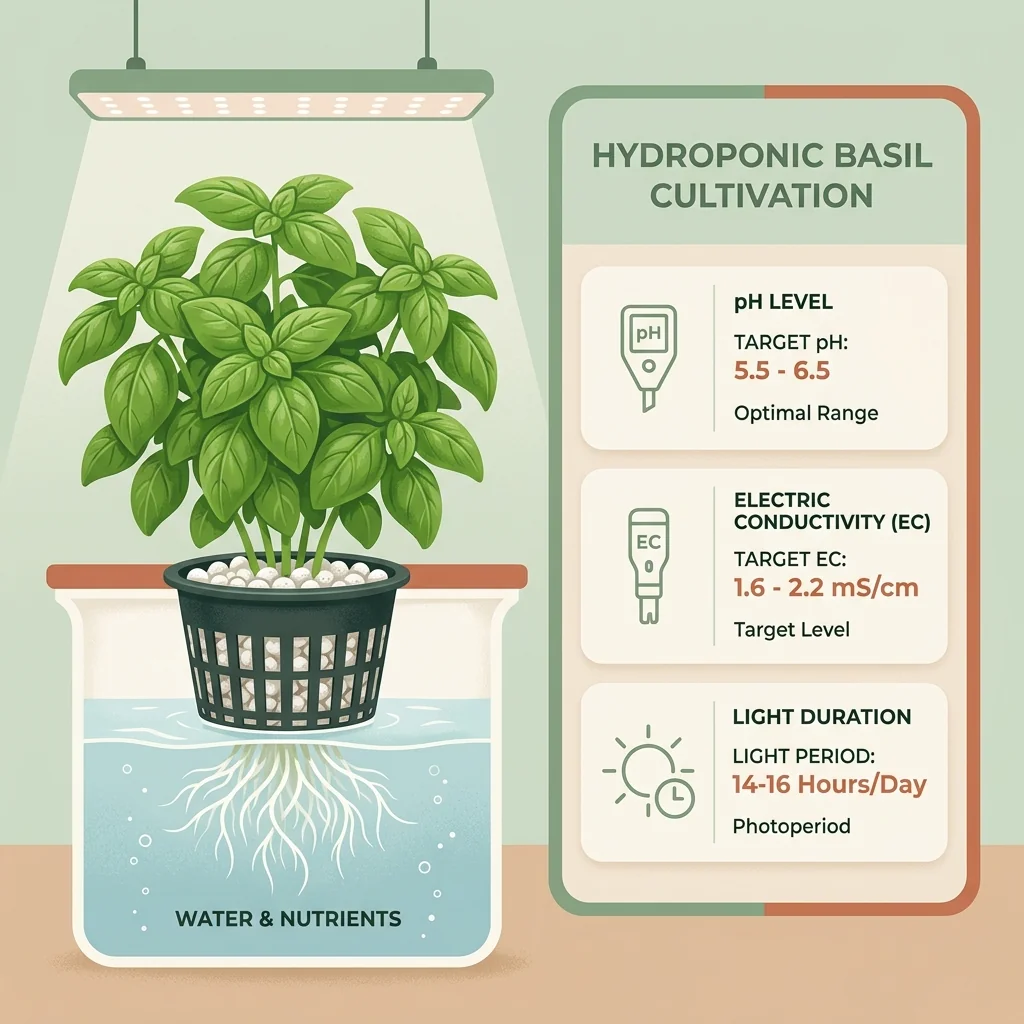
Hydroponic basil: EC 1.0-1.6, pH 5.5-6.5, 14-16 h of light
Basil is one of the fastest, most rewarding hydroponic crops once the water chemistry and light are right. Here are the exact EC, pH, and light targets to hit.
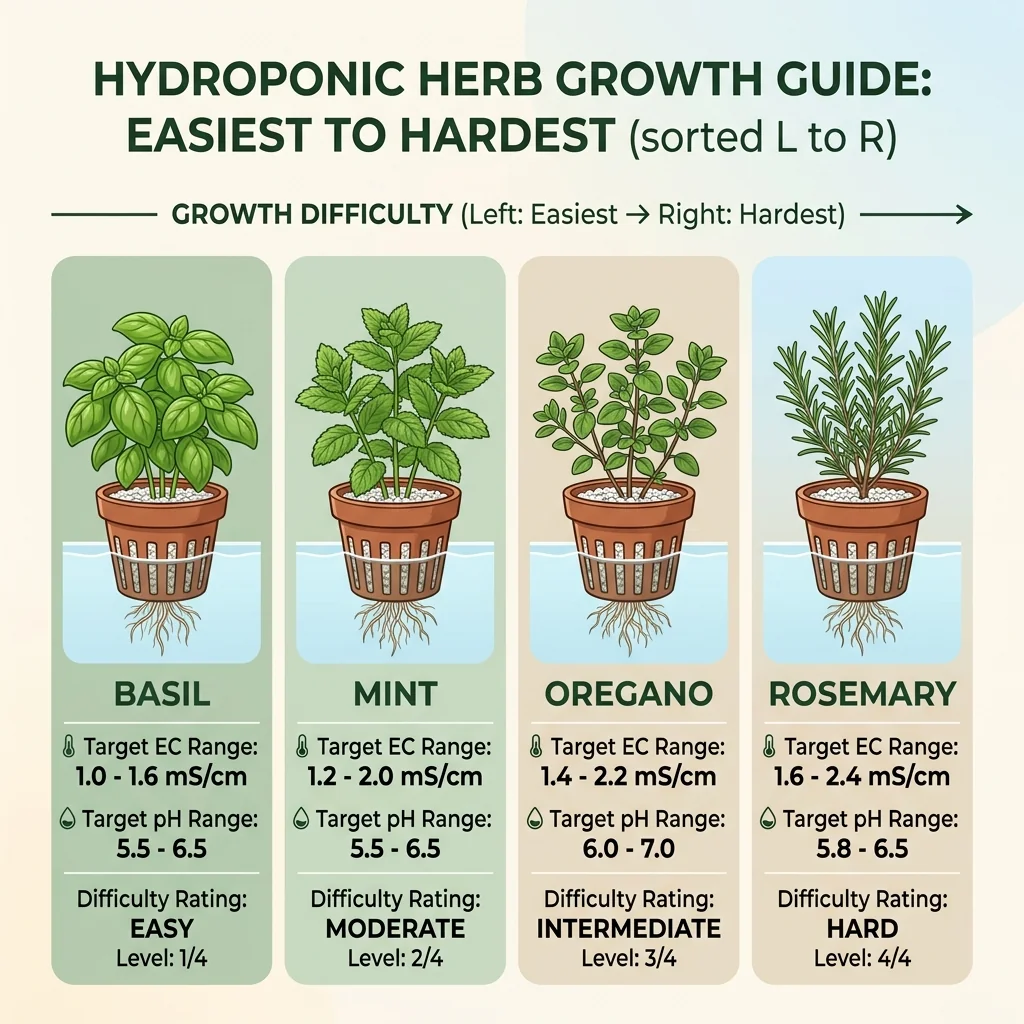
Hydroponic herbs: which grow best and how
Most soft, leafy herbs thrive in hydroponics, while woody Mediterranean herbs are trickier. Here is a ranked guide to which herbs grow best and how to set them up.
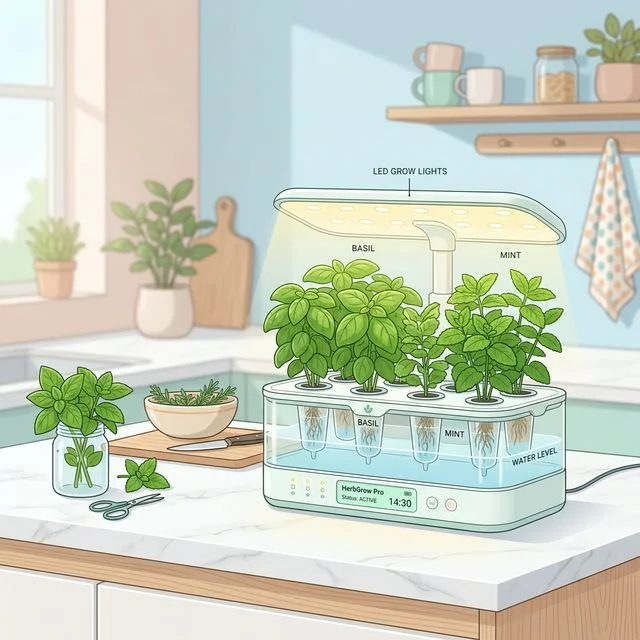
Countertop hydroponic herbs for beginners: what to buy and what to ignore
Countertop hydroponic systems can work very well for herbs, but only if you treat them as small growing systems rather than decorative appliances.