UF/IFAS's tomato nutrient program, the range cucumbers borrow from
| Stage | N (ppm) | K (ppm) | Cucumber note |
|---|---|---|---|
| 1: transplant to 1st cluster | 70 | 120 | UF/IFAS says cucumbers need more nitrogen than this stage alone provides, because they grow faster than tomatoes |
| 5: 5th cluster to termination | 150 | 200 | — |
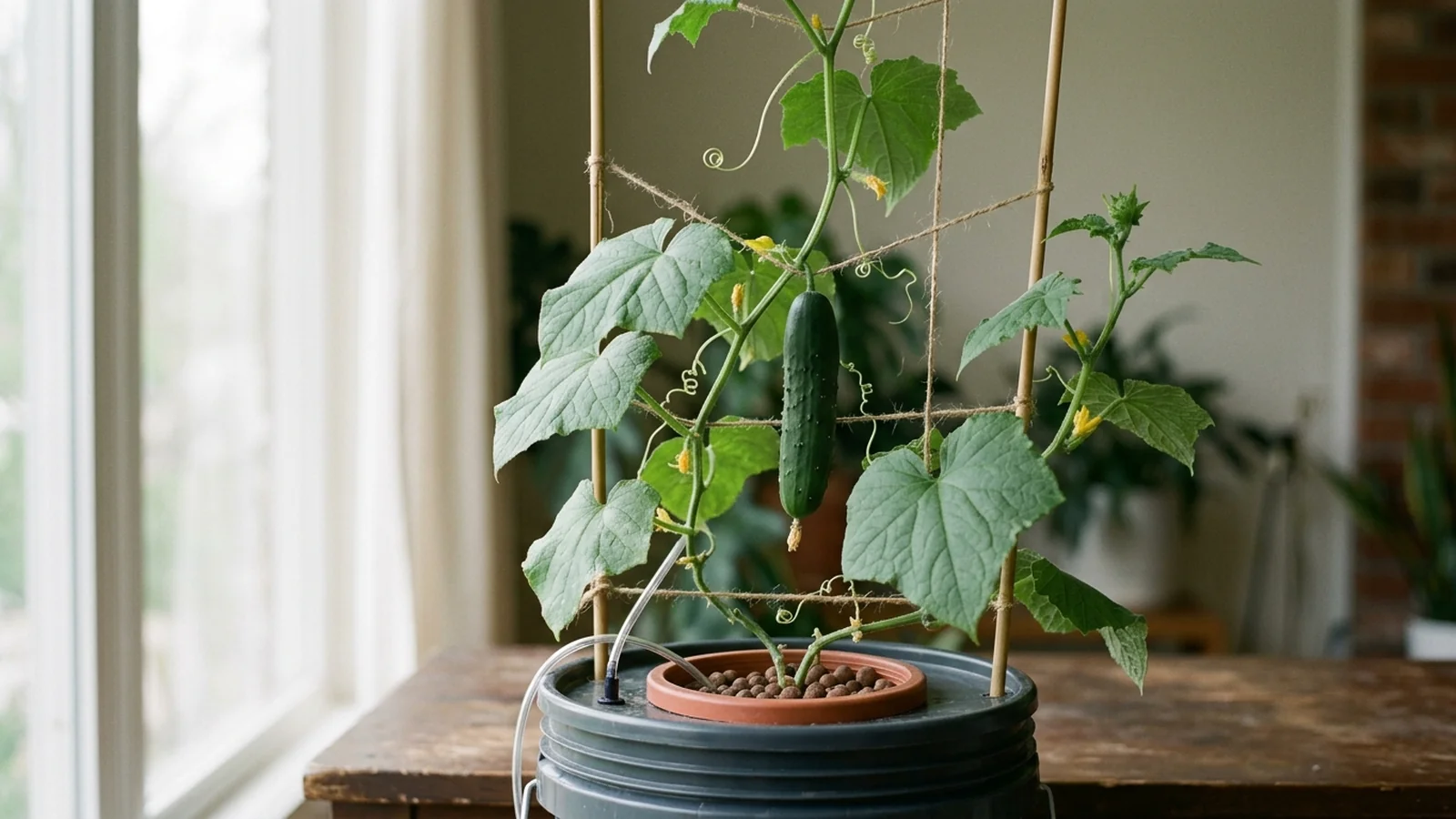
Hydroponic cucumbers want a more acidic solution than almost anything else grown this way, and a plant that will not stay where you put it. Run EC 1.7 to 2.0 mS/cm and pH 5.0 to 5.5, per Oklahoma State University Extension’s crop table, and plan a trellis with real floor space at its base and real vertical clearance above it. The vine, not the reservoir, is what most apartment setups run out of room for. If reservoir chemistry and units are new, start with hydroponic nutrient, EC, and pH basics.
EC and pH for hydroponic cucumbers
Oklahoma State University Extension’s HLA-6722 table, which covers 27 crops, puts cucumbers at EC 1.7 to 2.0 mS/cm and pH 5.0 to 5.5. That is the most acidic pH target in the whole table — lettuce and spinach both run 6.0 to 7.0, and even tomatoes, another fruiting crop, sit at 6.0 to 6.5. A cucumber reservoir mixed to a “normal” hydroponic pH of 6.0 is already outside its target band.
There is a second, conflicting number worth knowing before you mix anything. UF/IFAS Extension’s hydroponic tomato nutrient solution, which the same publication names as a suitable base for cucumbers and peppers, specifies a final delivered solution pH of 5.8 to 6.2. That is roughly three quarters of a pH point above Oklahoma State’s crop-specific band, and the two do not overlap at any point. Neither source is wrong; they are answering different questions. Oklahoma State’s table gives the crop’s own preferred range. UF/IFAS’s figure is the pH its tomato-based feeding program is formulated to deliver. If you are running a dedicated cucumber recipe, aim for 5.0 to 5.5. If you are feeding from a tomato-style program because that is what you already have mixed, expect to run closer to 6.0 and watch the plant rather than chase the tighter number. Full context on adjusting either direction is in how to raise and lower pH in hydroponics.
This site’s own EC chart has carried cucumber at 1.7 to 2.5 mS/cm and pH 5.5 to 6.0, a pH figure with no extension source behind it. Oklahoma State’s HLA-6722 numbers above — 1.7 to 2.0 and 5.0 to 5.5 — are the ones to feed from; the hydroponic EC chart by crop now carries the same OSU figures and shows where cucumber sits against the rest of the table.
The vine is the real space constraint, not the reservoir
Most hydroponic crop guides talk about space in terms of the container: how many litres, how many plants per square foot. That framing works for lettuce, which stays roughly the size of its tray. It does not work for cucumbers. A cucumber is an indeterminate vine — left alone, it keeps producing new growth and keeps climbing, and it does not stop on its own the way a head of lettuce stops at maturity.
That changes what “small space” means for this crop. A single cucumber plant can be grown in one adequately sized container — University of Minnesota Extension’s general rule is to size any hydroponic container to the canopy of the mature plant, not to the seedling in front of you — but the container is rarely the bottleneck. The bottleneck is what happens above it: a vine that will keep reaching upward needs a support structure tall enough to hold it, anchored solidly enough at both ends to carry a fruiting plant’s weight, in a spot with a genuinely clear vertical run from floor to well above head height. A corner that looks spacious for a reservoir and a grow light often turns out to be too shallow, too low, or too close to a doorway once a vine is a few weeks into climbing it.
Plan the floor footprint honestly: room for the container itself, room to walk around it for daily care, and — separately — a run of wall, ceiling hook, or frame the vine can be trained up without crossing a walkway, blocking a window a neighbouring plant needs, or arriving at the ceiling before the season is over. If you are still deciding between systems, NFT vs DWC vs Kratky for beginners covers which setups suit a single larger plant rather than a tray of small ones, and the reservoir size calculator works out the container side of the equation once you know how many plants you are running.
Building a trellis that actually holds a fruiting vine
A trellis for one indoor cucumber needs two solid anchor points, not one, and a reservoir changes where the base one can go. There is no bed of soil to sink a stake into here — the base has to work around the container, the pump, and the tubing running to and from it, rather than through any of them, and the top still has to hold real weight, since a vine carrying several cucumbers is heavier than it looks. Which structure to build once that anchor point is settled — an obelisk set into the growing medium, a free-standing A-frame, or a tension pole wedged between floor and ceiling — is the same decision a container-grown cucumber in soil faces, and a trellis you can build without drilling walks through the options and what each one is rated to hold.
Train the leading stem to the support as it grows rather than waiting for it to flop over and then trying to correct it — a loose loop or clip every so often, adjusted as the stem thickens, keeps it climbing the line instead of wandering into a neighbouring plant’s light. Side shoots multiply fast on a healthy vine; removing the ones you do not want to fruit keeps the plant to one manageable leader instead of a tangle that outgrows the trellis in every direction at once. Expect to check and retrain the vine regularly through the growing season, not just at setup — a cucumber left untrained for a couple of weeks is much harder to bring back under control than one adjusted along the way.
Feeding a fast-growing fruiting crop
Cucumbers are heavier feeders than lettuce or herbs, and the feeding target changes as the plant moves from transplant to full fruiting. UF/IFAS Extension’s stage-by-stage program, built for hydroponic tomatoes in Florida, is the closest published nutrient schedule for cucumbers — the same publication states it directly, calling its tomato solution a suitable base for determining a cucumber nutrient plan. Delivered nitrogen rises from 70 ppm at transplant to 150 ppm by the plant’s final fruiting stage, and potassium from 120 ppm to 200 ppm, over the same five stages. The full programme — phosphorus, calcium, magnesium, sulfur and the micronutrients, all held near-constant across the stages — is laid out for the crop it was built for in growing hydroponic tomatoes indoors.
The one adjustment UF/IFAS calls out by name: cucumbers need more nitrogen early in the season than tomatoes do, because they grow faster. Running a cucumber on the tomato program’s stage-one nitrogen level without raising it tends to show up as a plant that looks a little short on vigor right when it should be putting on its fastest early growth. Because a fruiting cucumber crop runs far longer than a lettuce cycle, expect the same maintenance rhythm University of Minnesota Extension describes for other long-season crops: fast-maturing leafy greens rarely need a full nutrient change-out, but longer-maturing fruiting crops typically need one or two over a season. When to change hydroponic nutrient solution covers the difference between a full reset and a routine top-off, and how to mix hydroponic nutrients covers the mixing order — set EC first, then adjust pH — that applies to any stage of this program.
Light: why cucumbers are not a windowsill crop
University of New Hampshire Extension is blunt about winter light indoors: even lettuce struggles under it, and there is “certainly not enough for plants with higher light requirements like tomatoes or cucumbers.” Growing a fruiting vine indoors through anything but the brightest part of the year means supplemental lighting is not optional the way it sometimes is for herbs on a bright sill.
University of Minnesota Extension groups cucumbers with strawberries, tomatoes, and peppers as summer crops, and treats short-season, non-fruiting crops like herbs and leafy greens as the better choice for indoor winter production. Both sources point the same direction: a cucumber is a crop to run once a strong, dedicated light source and a trellis are already part of the setup, not a first project layered onto a small countertop tray built for greens.
Is a hydroponic cucumber worth it indoors?
Weigh this against what it displaces. A trellised cucumber claims floor space, ceiling height, and a light fixture for months, for one plant, in a way a tray of lettuce or herbs rarely does. If the goal is a reliable, low-drama hydroponic win, countertop hydroponic herbs for beginners or best hydroponic systems for beginners deliver that with a fraction of the footprint. A cucumber is closer in spirit to growing strawberries hydroponically indoors — genuinely rewarding, but a project crop that asks for more light, more attention, and in this case, considerably more room than the reservoir alone suggests. Plan the trellis before the seed goes in, not after the vine runs out of places to climb.
Sources
- Oklahoma State University Extension HLA-6722 — Electrical Conductivity and pH Guide for Hydroponics
- UF/IFAS Extension CV216/HS796 — Nutrient Solution Formulation for Hydroponic (Perlite, Rockwool, NFT) Tomatoes in Florida
- University of Minnesota Extension — Small-scale hydroponics
- University of New Hampshire Extension — Hydroponics at Home
Before training a cucumber vine indoors
These guides cover the system, reservoir, and nutrient decisions a vining fruiting crop needs before it starts climbing.
Common questions
What EC and pH do hydroponic cucumbers need?
Oklahoma State University Extension's 27-crop table puts cucumbers at EC 1.7 to 2.0 mS/cm and pH 5.0 to 5.5, more acidic than most of the other crops in the same table. UF/IFAS Extension's hydroponic tomato program, which it names as a suitable base for cucumbers, targets a final solution pH of 5.8 to 6.2 instead, so treat 5.0 to 5.5 as the crop-specific target and adjust from there if you are feeding from a tomato-style program.
Can I feed hydroponic cucumbers with a tomato nutrient program?
UF/IFAS Extension states that its hydroponic tomato nutrient solution is a suitable base for cucumbers and peppers, with one adjustment: cucumbers need more nitrogen early in the season than tomatoes do, because they grow faster. Starting a cucumber on the tomato program's early-stage nitrogen level without that adjustment tends to leave the plant short of nitrogen just as it is building the most leaf.
How much space does a hydroponic cucumber actually need indoors?
University of Minnesota Extension sizes a hydroponic container to the canopy of the mature plant and names a 5-gallon bucket or a plastic storage bin as a workable home for one, so the water side is small. What runs out is the space above it: a cucumber is an indeterminate vine that keeps climbing until something stops it, so the real requirement is floor space for a trellis base plus clear, unobstructed vertical room overhead, not a container sized to the seedling in front of you. University of Minnesota, Oklahoma State, UF/IFAS and University of New Hampshire Extension do not publish a floor-area figure for an indoor cucumber trellis, so plan by trellis height and footprint and set the anchor points before the seedling goes in, not after the vine outgrows a shelf.
Is hydroponic cucumber a good crop for a hydroponics beginner?
Not usually. University of Minnesota Extension lists cucumbers as a summer, high-light crop rather than a starting point, and University of New Hampshire Extension is direct that winter light indoors is not enough for a crop with cucumber's light requirement without supplemental lighting. Lettuce and herbs are the easier first hydroponic project; treat cucumber as a second-system undertaking once a trellis and a strong light source are already in place.
Related guides
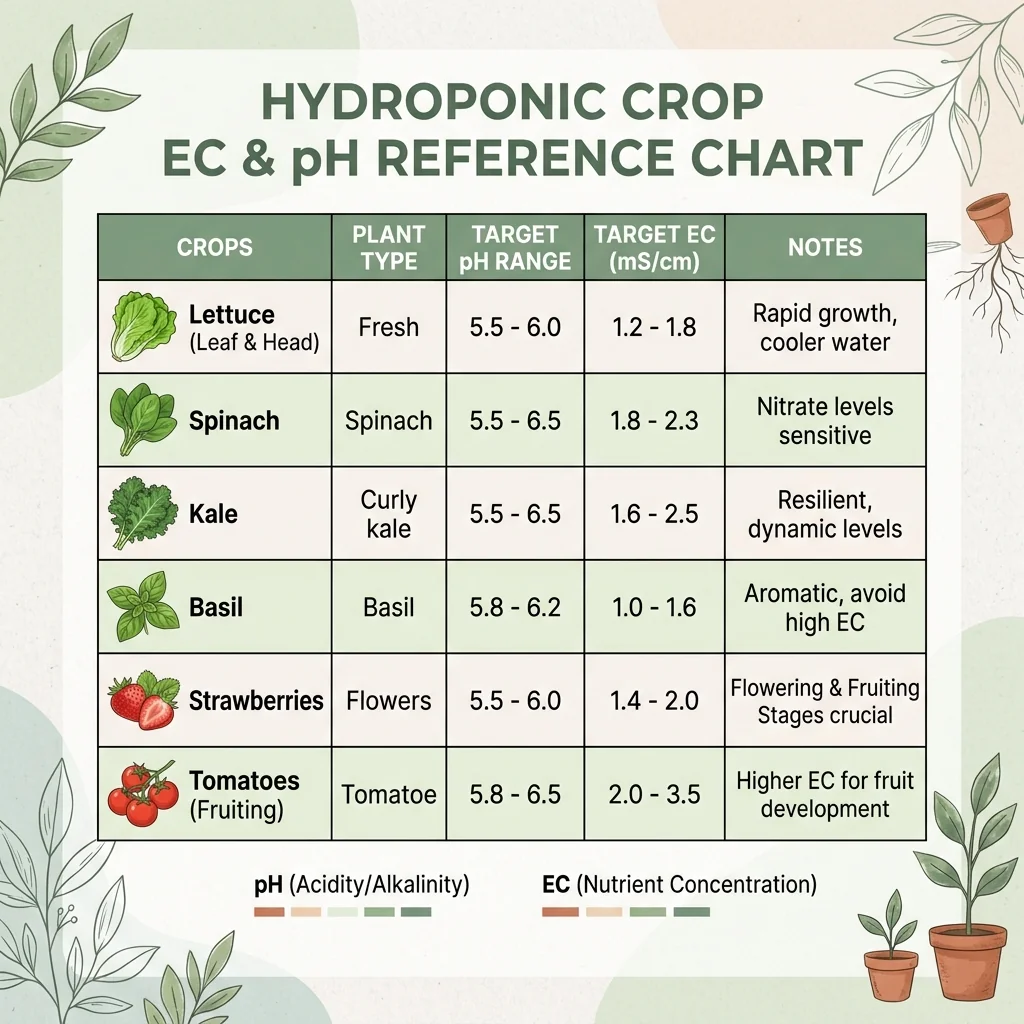
Hydroponic EC chart by crop (not just lettuce)
One reference chart for the EC and pH targets of common hydroponic crops, from leafy greens and herbs to fruiting plants, plus how to use the numbers safely.
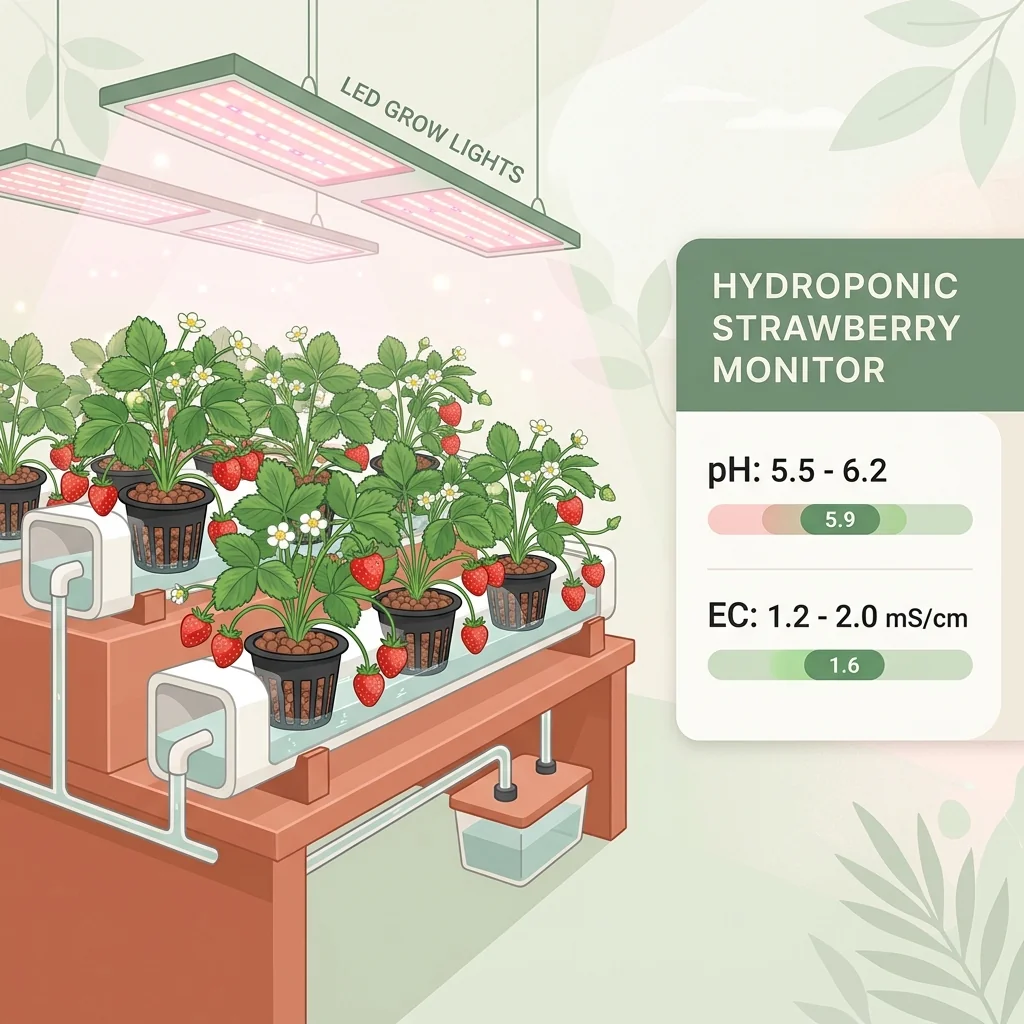
Hydroponic strawberries indoors: is it worth it?
Indoor hydroponic strawberries are rewarding but demanding: they need strong light, hand pollination, and patience. Here is an honest look at whether it is worth it.
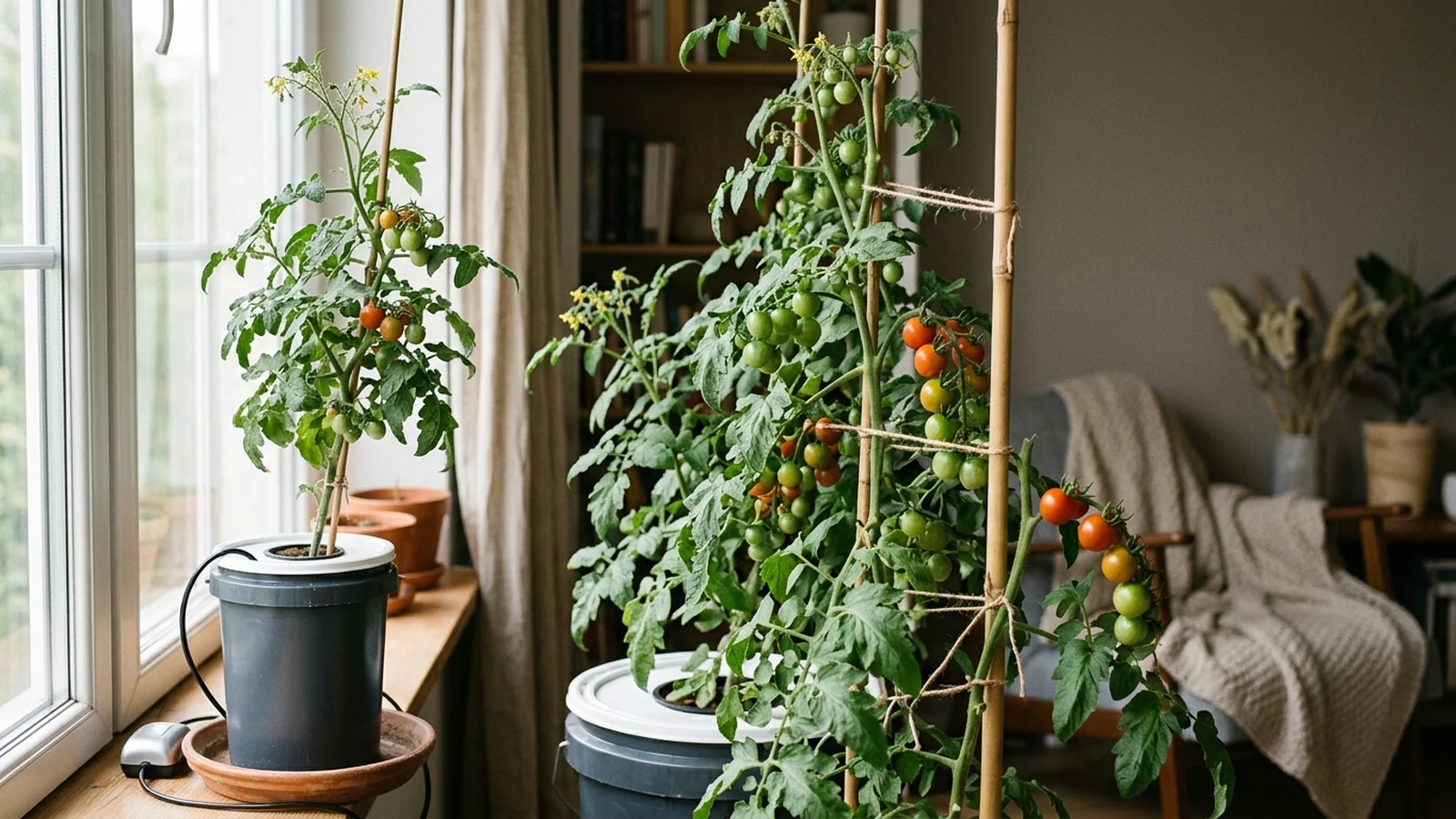
Growing hydroponic tomatoes indoors: system, EC, and light
Tomatoes are the first fruiting crop most hydroponic growers try indoors, and the jump from lettuce is bigger than it looks. Here is the system, the EC program, and what to expect.