
Cress microgreens are a peppery, small-seeded crop that Mississippi State Extension places in its 10 to 15 day group, so expect about two weeks from sowing to a cut, not a few days. They grow on soil, on a grow pad or on paper, which is why it is the classic paper-towel crop, but the paper version is a short crop and the soil version is the one that gives a proper tray.
If you have not grown a tray before, the beginner method covers the whole routine, and cress slots into it.
How long cress takes
Mississippi State Extension arranges its crops by growth rate from sowing. Radish and pea shoots sit in the 7 to 10 day group. Cress sits in the 10 to 15 day group, next to arugula, broccoli and cabbage, and amaranth leads a slower 16 to 25 day group.
That puts cress in the fast half but not at the front. Penn State Extension gives 7 to 21 days as the range for microgreens overall, and cress sits inside it. What moves a tray within the range is warmth and light: Tennessee Extension says microgreens grown indoors prefer 65 to 78 °F, and a cold shelf pushes the date out. Penn State’s harvest guidance is to cut at the base, just above the medium, when the first true leaves are just showing.
Utah State’s per-crop table does not list cress, so it gives no covered time for it. The blackout guide gives the figures for the crops that are in it, and Illinois Extension’s cue works for any seed: cover with a damp paper towel, lift it daily, and take it off once the seedlings push it up.
Seeding rate and yield
Mississippi State Extension gives 2 to 3 teaspoons of cress seed with an expected yield of 3 to 5 ounces. Its listing states no tray size, so treat the teaspoons as a starting point and not a rule for your container. For a fixed tray, Penn State Extension says 10 to 15 g of seed per standard 12 x 20 in. ten-row tray, and 10 to 12 small seeds per square inch as the density for small seed.
Penn State also measured yield. In its greenhouse trial, Persian cress gave 164 g per ten-row tray, level with basil at 165 g and above the 136 g average across crops. Those are greenhouse averages over many cycles with no supplemental light, so a windowsill tray will differ. The yield guide lays out the full table and how to scale it to your tray.
Spread the seed as evenly as you can. Tennessee Extension warns that clumped seed leads to overcrowding, and Penn State’s damping-off page names overseeding as a risk, so a thick, even layer is the goal and a heap is not.
Soil, pad or paper
Cress is small enough to sow on the surface and water in. Tennessee Extension says small seeds such as arugula, kale and broccoli germinate well uncovered as long as the substrate stays moist, and Illinois Extension advises against covering seed with potting soil because it sticks to the leaves. Tennessee suggests a misting nozzle after seeding so the seed does not shift.
Cress seed turns slippery when wet. The soil-free guide advises skipping gel-forming seeds like cress on a pad until you are comfortable, because the gel holds surface moisture and can mold. That makes soil the safer first surface for cress, and it applies to paper as much as to pads. The surfaces also differ in what they feed the crop.
| Surface | What it gives you | What to watch |
|---|---|---|
| Seed-starting mix | Moisture and, in many mixes, a small starter charge | Bits of mix can cling to leaves at harvest |
| Grow pad | A clean cut with no mix on the plants | Tennessee says pads supply no nutrition; mold risk from the wet seed coat |
| Paper towel | Cheapest, fastest to set up | Dries out quickly, no nutrition, short window; mold risk from the wet seed coat |
Tennessee Extension says paper and other pads let microgreens grow without peat or particles sticking to the plants, and that on a pad you need to add soluble fertilizer to the water, because these materials do not provide nutrition. Purdue Extension says a microgreens crop needs no fertilizer because the seed holds what it needs to reach the first true leaves. Both are true for different lengths of crop: a cress tray cut early lives on the seed, and one grown on needs feeding. If you do try a pad despite the mold caution above, the soil-free guide covers pad trays in full.
Keep the surface damp, not wet. Penn State and Illinois both prefer bottom watering because it keeps leaves dry, and the bottom-watering guide shows the method. On paper, mist lightly and check daily, since a thin damp sheet dries faster than a tray of mix.
The beginner crop guide groups cress with other gel-forming seeds best left until after an easier first tray, and the soaking guide lists them as a seed not to presoak.
Harvest, flavor and storage
Cut about 1/4 to 1/2 in. above the surface, which is the range Illinois and Purdue Extension both land in. Tennessee Extension notes that cress gives a stronger flavor than milder crops and is often used in smaller quantities, so a modest tray goes a long way on sandwiches and eggs.
White fuzz at the base of a cress tray may be root hairs rather than mold, and the mold versus root hairs guide shows how to tell them apart. Purdue Extension adds that microgreens get more bitter the longer they grow, which is another reason to cut cress on time. For storing the cut crop, Purdue says unwashed in the fridge lasts about a week, and the harvest and storage guide covers washing and shelf life.
Cress grown to full size
Left to grow, garden cress becomes a different crop. The University of Arkansas Extension calls garden cress a hardy, cool-season salad green in the mustard and turnip family, also called peppergrass, to be picked when leaves are 3 to 5 inches long. That is a garden plant, not a microgreen tray. Cress that grows in water as a true aquatic plant is watercress, a separate species covered in hydroponic watercress.
Sources
- Mississippi State University Extension: Microgreen Varieties for the Mississippi Gardener
- University of Tennessee Extension W346-J: Small-Scale Microgreen Production
- Penn State Extension: Growing Microgreens
- Illinois Extension: Growing Microgreens
- Purdue Extension: Grow Microgreens at Home
- University of Arkansas Extension: Garden Cress
Grow cress well
Cress is sown thickly and kept moist. These guides cover the surrounding method.
Common questions
How long do cress microgreens take to grow?
Mississippi State Extension lists cress in its 10 to 15 day group, with radish and pea shoots faster at 7 to 10 days. Penn State Extension gives 7 to 21 days as the range for microgreens in general, so cress sits inside it. Temperature and light move the date.
Can you grow cress microgreens on paper towels?
Yes, for a short crop, but cress seed turns slippery when wet and can mold on paper, so soil is the safer first surface. Tennessee Extension lists paper among the pads used for microgreens, and notes that pads carry no nutrition, so a paper tray gets only what the seed holds unless you add fertilizer. Cut it early rather than trying to grow it on.
How much cress seed do I sow?
Mississippi State Extension gives 2 to 3 teaspoons for cress, with an expected 3 to 5 ounces of greens, but its listing does not state a tray size. Penn State Extension gives 10 to 15 g of seed per 12 x 20 in. ten-row tray and 10 to 12 small seeds per square inch as a general guide.
Is cress the fastest microgreen?
Not in the extension tables. Mississippi State Extension puts radish and pea shoots in a faster 7 to 10 day group and cress in the 10 to 15 day group, alongside arugula and broccoli.
Related guides

Soaking microgreen seeds: which crops need it, and for how long
Soaking is not a step every crop needs. Two extension sources cover it — one general rule and one per-crop protocol — and they agree with each other.
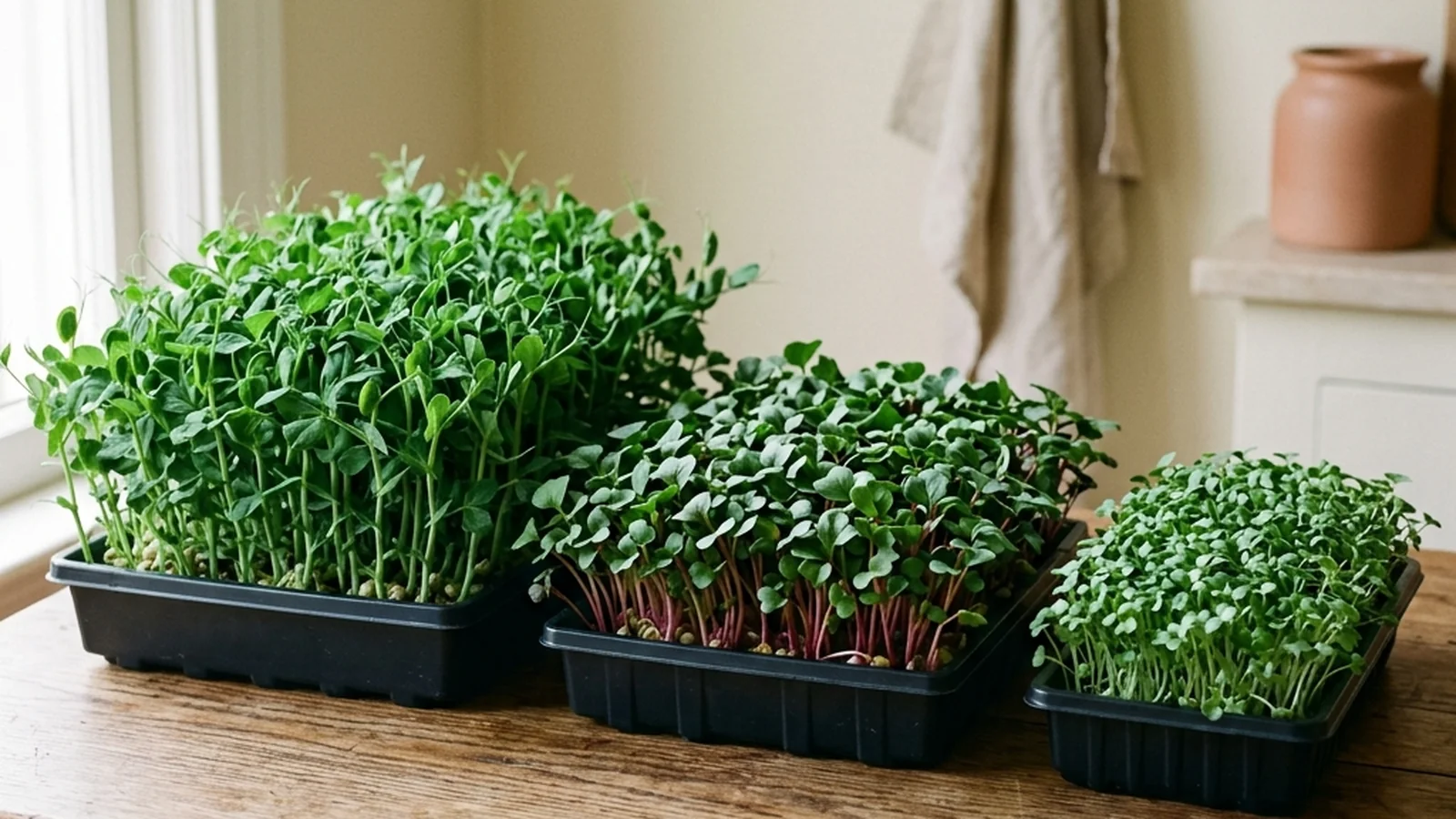
How much microgreens yield per tray, by crop and tray size
One tray of microgreens can weigh anywhere from 47 to 201 grams at harvest depending on the crop, and the tray size behind that figure matters as much as the crop itself.
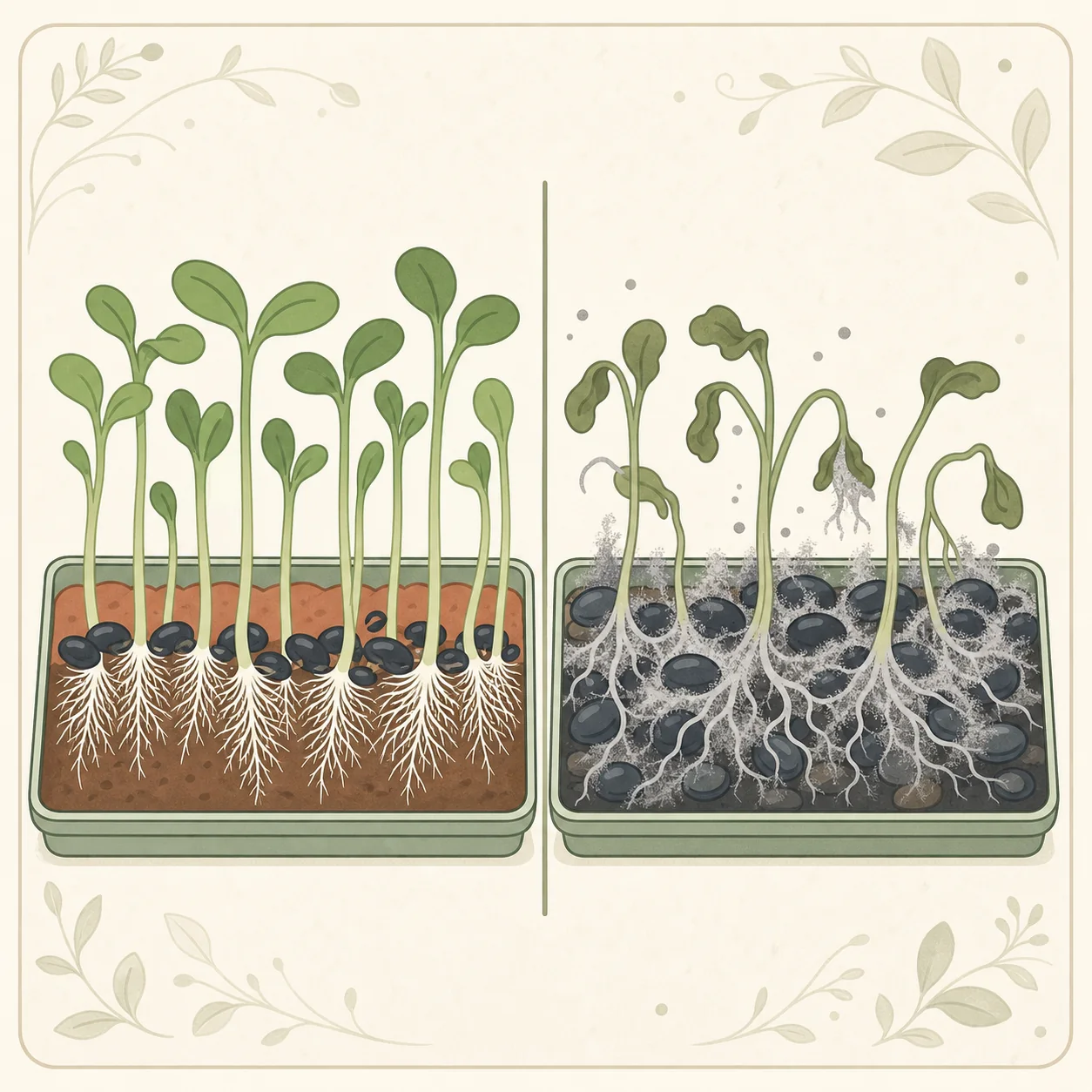
Microgreens mold or root hairs? How to tell safely
White fuzz around newly emerged roots is often normal root hair growth. Irregular spread, bad odor, slime, or collapsing stems changes the decision.