
Beets in a pot: the numbers that matter, by source
| Stage | Figure | Source |
|---|---|---|
| Seed spacing at sowing | 2 inches apart, covered with 1/2 inch of fine soil | University of Maryland Extension |
| Thin when | Seedlings about 2 inches tall | University of Maryland Extension |
| Final spacing | 3 inches in all directions | University of Maryland Extension; Utah State Extension |
| Germination | 10 to 15 days (Maryland); 7 to 14 days (Utah State) | Both |
| Best germination temperature | 55 to 75 °F | Utah State Extension |
| Days to roots | 50 to 60 days (Maryland); 60 to 80 days (Utah State) | Both |
| Pull roots at | 1 to 3 inches across | University of Maryland Extension |
| Pick leaves at | 4 to 6 inches tall | Utah State Extension |
Sow beet seed about 2 inches apart in a pot 6 to 8 inches deep or more, thin to 3 inches apart once seedlings reach about 2 inches tall, and keep the soil evenly moist, following University of Maryland, Utah State and University of Kentucky Extension. You get edible thinnings within weeks, leaves along the way, and round roots in roughly two months. For other compact vegetables that fit the same space, see best vegetables for small balconies.
Why a beet pot comes up crowded
What looks like one beet seed is a dried fruit with several embryos inside. University of Maryland Extension puts it plainly: beet seed is “a fruit or seed ball with several embryos,” so two or three seedlings often come up from a single spot. Seed sold as monogerm carries one embryo per fruit, and University of Maryland Extension says that unless you buy it, you will need to thin.
That is the one step that sets beets apart from most container vegetables. Skip it and the pot fills with a thicket of thin stems that Utah State Extension says leads to poor root development, because over-crowding limits how large each root can grow.
The same multi-seeded structure explains the uneven, clumpy emergence in beet microgreens, where it matters far less because the plants are cut young.
Choose the pot
University of Kentucky Extension groups beets with radishes, chard, kale, lettuce and onions as crops that grow in a container 6 to 8 inches deep. University of Maryland Extension lists half a gallon as the minimum container volume for beets, and warns that root crops need enough room to mature. University of Illinois Extension recommends a pot at least 10 inches across for beets, the same size it gives onions and leafy greens.
Those are floors. A round beet is not a carrot, so you do not need the depth that long carrots need, but a wide pot holds more plants and dries out more slowly than a narrow one. Use holes or slits so excess water drains; see the drainage guide. For how many plants a given pot carries, plants per container has the sums.
Light is forgiving. University of Maryland Extension says beets tolerate partial shade and grow well with 4 to 6 hours of direct light a day, which opens up balconies that tomatoes would reject.
Sow
Time matters because beets like cool weather. University of Maryland Extension says to sow several weeks before the last spring frost, through the summer, and up to 6 weeks before the first killing frost in autumn; it calls the plant semi-hardy, able to take light frost but not heavy frost or freezing.
Temperature is the limit on the other end. Utah State Extension reports that seeds germinate best at 55 to 75 °F, that temperatures above 80 °F reduce germination, and that plants grow best when it stays under 85 °F. A south-facing pot in July is the situation to avoid.
- Fill the pot with moist potting mix and level the surface.
- Optionally soak the seed. University of Maryland Extension says soaking in warm water for 24 hours aids germination.
- Space seeds 2 inches apart in all directions and cover with 1/2 inch of fine soil (University of Maryland Extension). Utah State Extension plants 1/2 to 1 inch deep.
- Keep the surface evenly moist. Utah State Extension warns that crusting soil limits emergence.
Expect seedlings in 10 to 15 days according to University of Maryland Extension, or 7 to 14 days according to Utah State Extension.
Thin: the step that decides the roots
When seedlings are about 2 inches tall, pinch or snip the extras at the soil line until each one stands 3 inches from its neighbours in every direction. That is the final spacing from both University of Maryland Extension and Utah State Extension. Snip rather than pull, since pulling can disturb the roots of the plant you are keeping.
Do not bin the thinnings. University of Maryland Extension says they can be used in salads. It also says the final thinning can wait until the small beets are big enough for the table, so you can pull the extras as baby beets instead of snipping them as seedlings.
Water evenly
Utah State Extension says moisture fluctuations cause root cracking, slow leaf development and low yields. Water stress during the first six weeks can lead to premature flowering, and hot weather with water stress can make roots woody.
Check with a finger: Iowa State Extension waters containers when the mix is dry at a depth of 1 to 2 inches. Frequency then follows pot size and weather; how often to water container vegetables covers the rhythm. A mulch layer slows the drying, and Utah State Extension notes that mulch helps conserve soil moisture.
Early sowing carries one more risk. Utah State Extension says beets need some chilling to form flower stalks, and planting too early can trigger it.
Feed
University of Maryland Extension lists beets as having a high requirement for nutrients. In a pot you supply all of it, and the container vegetable fertilizer schedule sets up a routine.
Both Utah State and University of Maryland extensions single out boron. Utah State Extension says black, sunken spots on or in the root generally indicate low boron, and University of Maryland Extension notes that sandy soils may be deficient. The borax rate University of Maryland Extension publishes is for garden beds by the square foot, so if you see those spots in a pot, do not scale it down by guesswork; start by checking your mix and fertiliser.
Harvest roots and greens
Leaves come first. Utah State Extension says to harvest beet leaves when they are 4 to 6 inches tall, and says beet tops provide more minerals and vitamins than the root. Take a few outer leaves from each plant and leave the centre intact so the root keeps growing.
For roots, University of Maryland Extension expects harvests within 50 to 60 days of direct seeding and says to pull them at 1 to 3 inches across. Utah State Extension gives 60 to 80 days depending on variety and notes that roots get more fibrous as they get larger. Smaller is the safer side. For how a ripe vegetable looks across the pot, see when container vegetables are ripe.
A pot of beets finishes in a single window, so stagger sowings. Succession planting in containers shows how, and Utah State Extension mentions sowing beets at 2 to 3 week intervals.
Problems you will meet
- Lacy trails in the leaves. Utah State Extension describes leaf miners as small white maggots that burrow in the leaves. They do not significantly affect yield, it says, but make the leaves less usable. Pick off and bin affected leaves if you want the greens.
- Small, poorly formed roots. Crowding, according to Utah State Extension. Thin sooner next time.
- Split or woody roots. Uneven watering and heat, as above.
- Leaf spots. Utah State Extension links circular leaf spots to foliage that stays wet for long periods, so water the soil, not the leaves.
- Weeds. Beets compete poorly with weeds, says Utah State Extension; pull them by hand and avoid deep scratching that damages roots.
Sources
- Growing Beets in a Home Garden, University of Maryland Extension
- How to Grow Beets in Your Garden, Utah State University Extension
- Growing Vegetables in Containers and Salad Tables, University of Maryland Extension
- Vegetables Grown in Containers Improves Accessibility, University of Kentucky Cooperative Extension
- How to Grow Fruits, Vegetables, Herbs in Container Gardens, University of Illinois Extension
- How to Care for Plants Growing in Containers, Iowa State University Extension
Planning root crops for a small space?
Pot depth, plant counts, watering rhythm and harvest timing for beets and the vegetables you might grow beside them.
Common questions
How deep does a pot need to be for beets?
University of Kentucky Extension lists beets among the vegetables that do well in a container 6 to 8 inches deep, and University of Maryland Extension puts the minimum volume at half a gallon. Both are minimums, and University of Illinois Extension adds a width of at least 10 inches across.
How far apart should beets be in a pot?
University of Maryland Extension sows seeds 2 inches apart and finishes at 3 inches in all directions. Utah State Extension also thins to 3 inches. Crowded plants form poor roots, so thin even if it feels wasteful.
How long do beets take to grow in a container?
University of Maryland Extension expects germination in 10 to 15 days and roots within 50 to 60 days of sowing. Utah State Extension gives 60 to 80 days depending on variety. Leaves can be picked earlier, at 4 to 6 inches tall.
Can you eat beet leaves and thinnings?
Yes. University of Maryland Extension says thinnings can go in salads, and Utah State Extension says young leaves may be cooked and eaten, harvested at 4 to 6 inches tall. Leave enough leaf on each plant that the root keeps growing.
Related guides
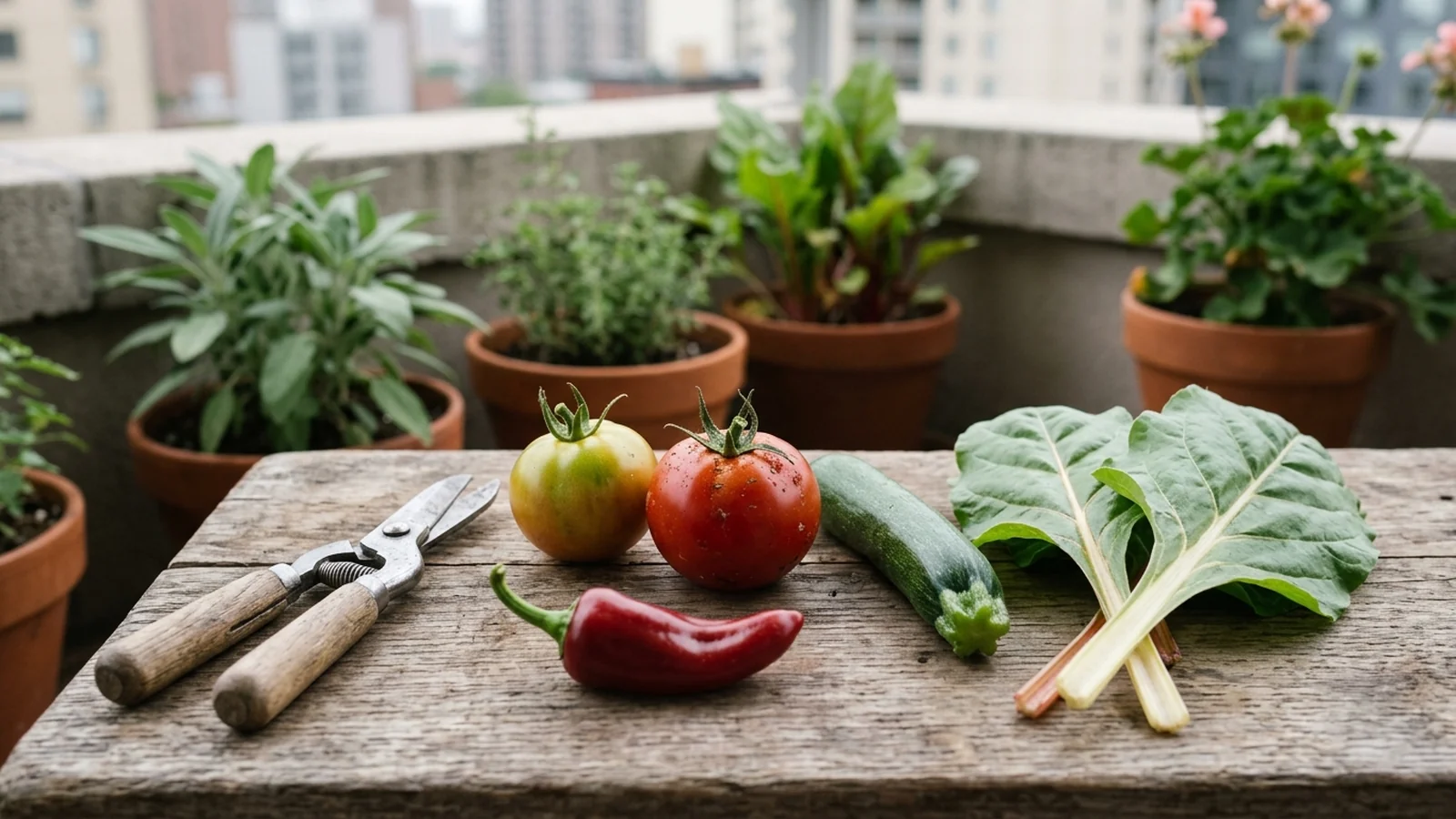
When container vegetables are ripe, crop by crop
A tomato tells you it's ready with color and give. A zucchini tells you with size and how easily it lets go. The signal is different for every crop, and waiting costs more when the plant only has a pot's worth of reserve behind it.
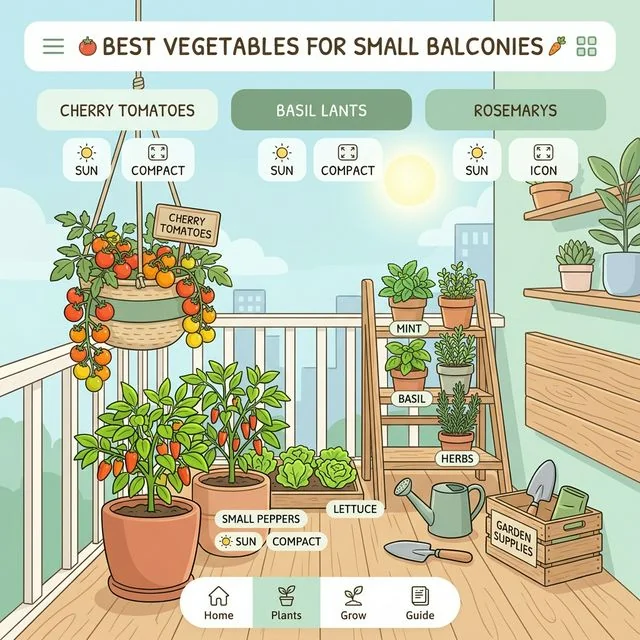
Best vegetables for small balconies: what produces well in tight spaces
Not every vegetable belongs on a balcony. These are the crops most likely to reward limited square footage without turning watering and support into a daily headache.
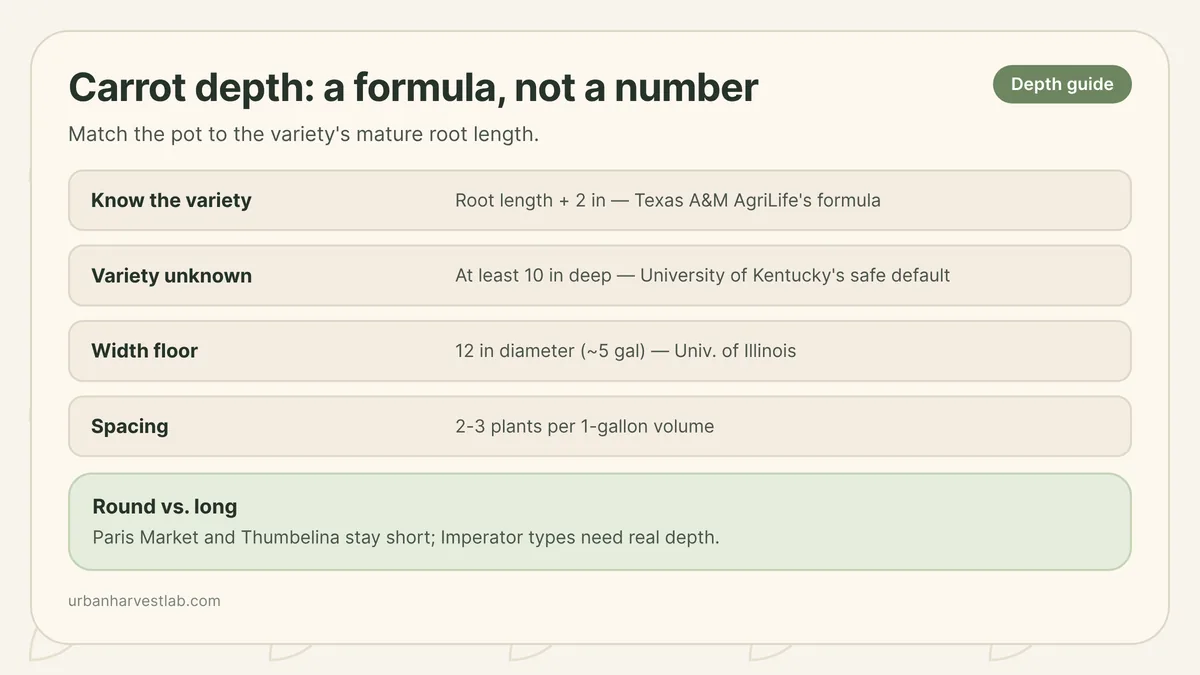
Growing carrots in containers: how deep the pot needs to be, by variety
A round baby carrot and a long, tapering Imperator need very different container depths. Match the pot to the variety instead of guessing one number for every carrot.