Balcony Herb Garden for Beginners: A Simple Setup That Actually Works
A practical starter plan for growing basil, parsley, mint, chives, and other herbs on a balcony without turning the setup into a maintenance burden.
A practical topic hub for urban gardening, from balconies and patios to compact edible layouts, crop selection, and small-space systems.
A practical starter plan for growing basil, parsley, mint, chives, and other herbs on a balcony without turning the setup into a maintenance burden.
Not every vegetable belongs on a balcony. These are the crops most likely to reward limited square footage without turning watering and support into a daily headache.
Urban gardening works best when it is treated as design rather than aspiration. The challenge is rarely a total lack of information. It is that people are given isolated tips instead of a reliable framework for making choices in small spaces. A balcony, patio, or windowsill growing setup succeeds when light, container size, watering rhythm, and crop selection are planned together.
In practice, urban gardening covers a wide range of setups: balcony planters, patio containers, windowsill herbs, compact raised beds, indoor shelf gardens, and hybrid systems that move plants between seasons. The common thread is constraint. Space is limited, root volume matters more, and maintenance tolerance is usually lower because the growing area sits inside normal life rather than outside it.
That is why Urban Harvest Lab treats urban gardening as a systems topic. If the crop list is too ambitious for the light, or the containers are too small for summer conditions, the problem is structural before it is technical.
Most early mistakes come from overbuilding. New growers often buy too many containers, choose crops that need more sun than the site receives, or use decorative pots that look good but dry too quickly. Another common failure is ignoring the day-to-day routine. A beautiful small-space setup can still collapse if the watering schedule becomes annoying after ten days.
The strongest beginner approach is smaller and calmer. Start with a limited crop list. Choose herbs or compact vegetables that suit the actual light profile. Use containers that make moisture management easier instead of prettier. Then expand only after the first system stays stable for a few weeks.
Urban gardening in containers usually comes down to four operational levers:
Everything else is secondary until those are right. Fertilizer matters, but not before the medium and container size are correct. Product recommendations can help, but not before the layout and crop selection make sense.
This hub is organized so readers can move from broad decisions into focused problem solving. If you are starting from zero, begin with beginner guides and setup guides. If you already have containers running, use the troubleshooting section. If your outdoor space shifts indoors seasonally, the advanced section helps bridge container gardening and light-supported growing.
The goal is topic authority through clarity, not volume. Each linked guide should connect to the next useful question instead of functioning as an isolated article.
These grouped sections keep the hub useful for beginners, active growers, and readers solving a specific problem.
Start here if you need a realistic entry point for balconies, herbs, or compact edible planting.
A practical starter plan for growing basil, parsley, mint, chives, and other herbs on a balcony without turning the setup into a maintenance burden.
Not every vegetable belongs on a balcony. These are the crops most likely to reward limited square footage without turning watering and support into a daily headache.
These pieces help you choose containers, growing media, and crop mixes that are sustainable to maintain.
Container size is one of the highest-leverage decisions in small-space gardening. When root volume is too small, every other care task becomes harder.

Container plants need air space, drainage, and predictable structure. That is why raised bed soil and in-ground blends usually disappoint in pots.
Use these guides when balcony herbs or compact crops start drifting off course.
Most potted herb problems are not isolated mysteries. Yellow leaves, wilting, and weak growth usually trace back to light, drainage, containers, or routine drift.
Yellow basil rarely has a single universal cause. The pattern of yellowing, the growing medium, and the recent care routine usually tell the story.
A longer light schedule is not always a better one. Herbs need enough daily light, but they also benefit from a stable dark period and realistic fixture placement.
Once the basics are stable, these guides help you extend production or improve indoor support systems.
The best grow light for herbs is the one that matches your footprint, crop density, and tolerance for heat and visual clutter. This guide focuses on fit before hype.
Countertop hydroponic systems can work very well for herbs, but only if you treat them as small growing systems rather than decorative appliances.
This hub keeps the full category inventory crawlable in one place, with the archive route available for a cleaner list view.
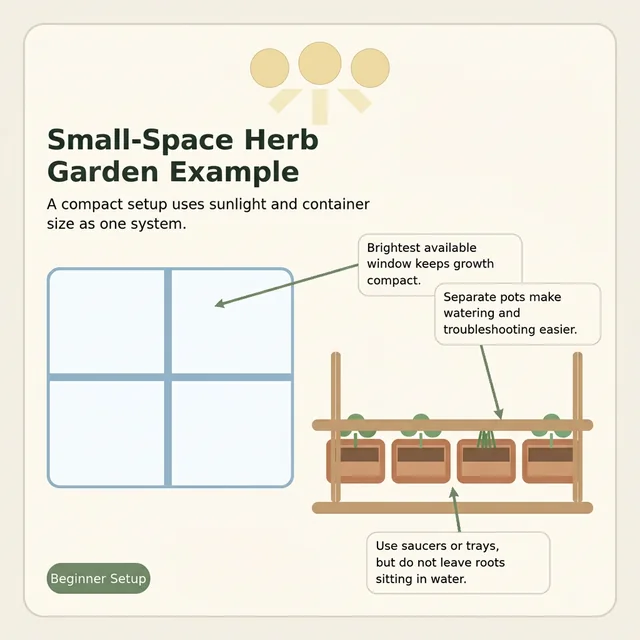
A calm, practical guide to starting a herb garden on a balcony, windowsill, or bright indoor corner without overbuying or overcomplicating the setup.
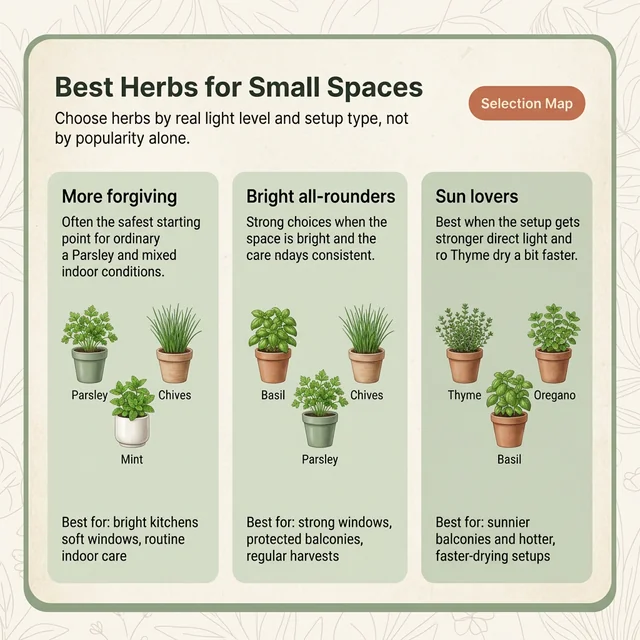
A practical guide to the herbs that actually perform well in compact homes, with selection logic for bright windows, balconies, and more forgiving low-space setups.
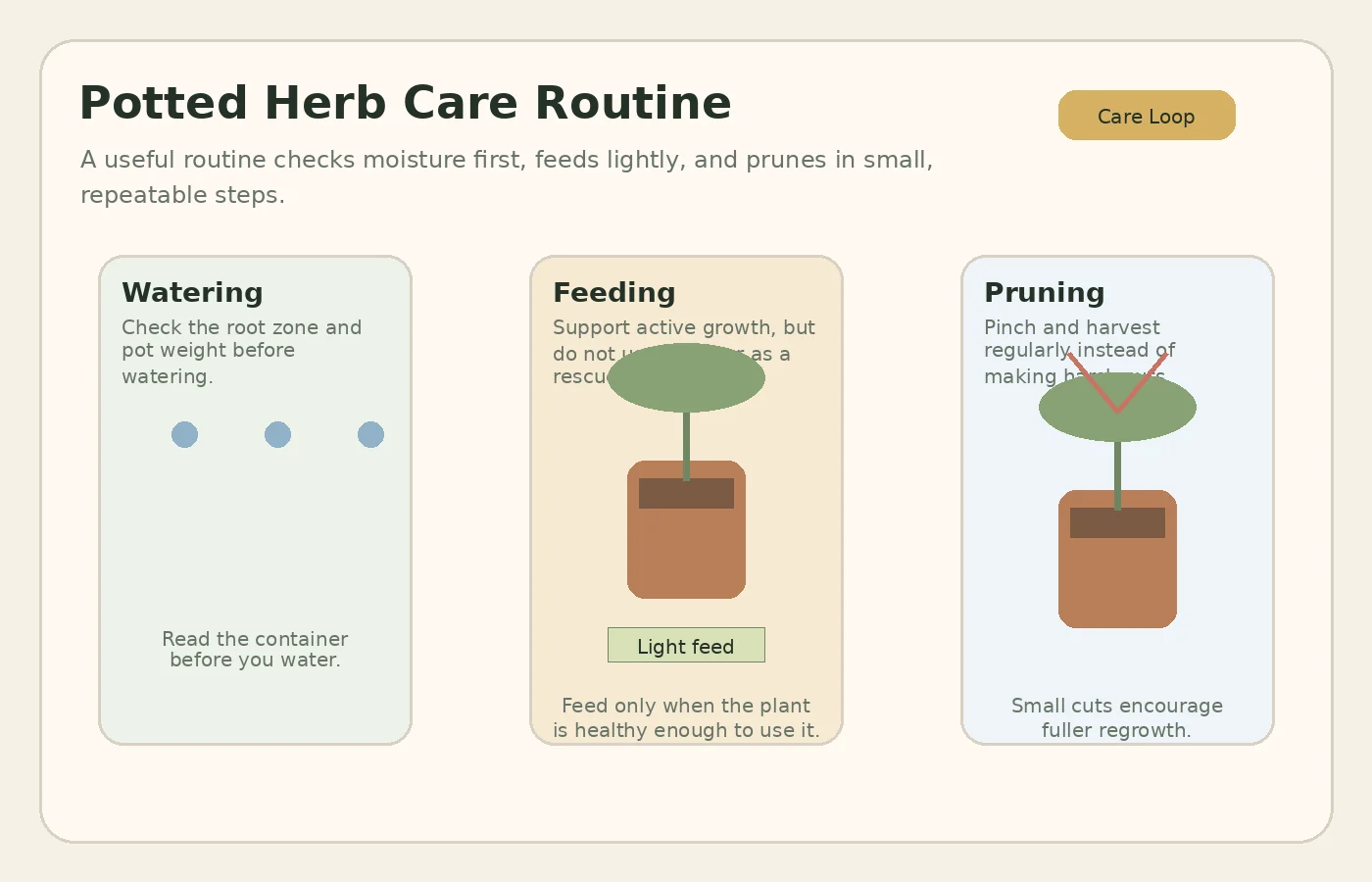
A calm, science-based guide to keeping basil, parsley, mint, thyme, chives, and other potted herbs healthy without turning the routine into guesswork.
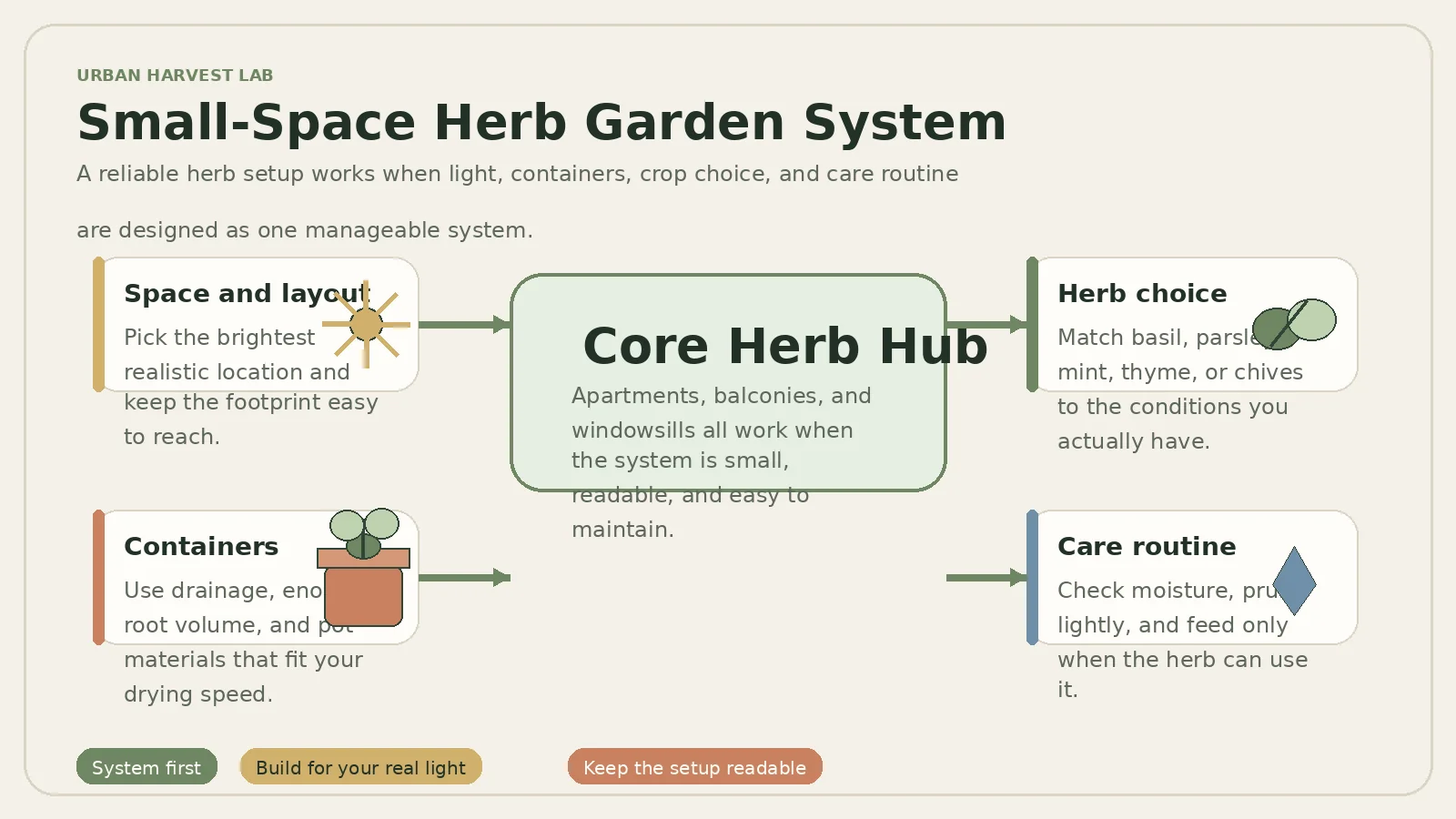
A navigation hub for apartment, balcony, and indoor herb gardening that connects the core setup, herb selection, light, container, and care guides in the right order.
A practical starter plan for growing basil, parsley, mint, chives, and other herbs on a balcony without turning the setup into a maintenance burden.
Not every vegetable belongs on a balcony. These are the crops most likely to reward limited square footage without turning watering and support into a daily headache.