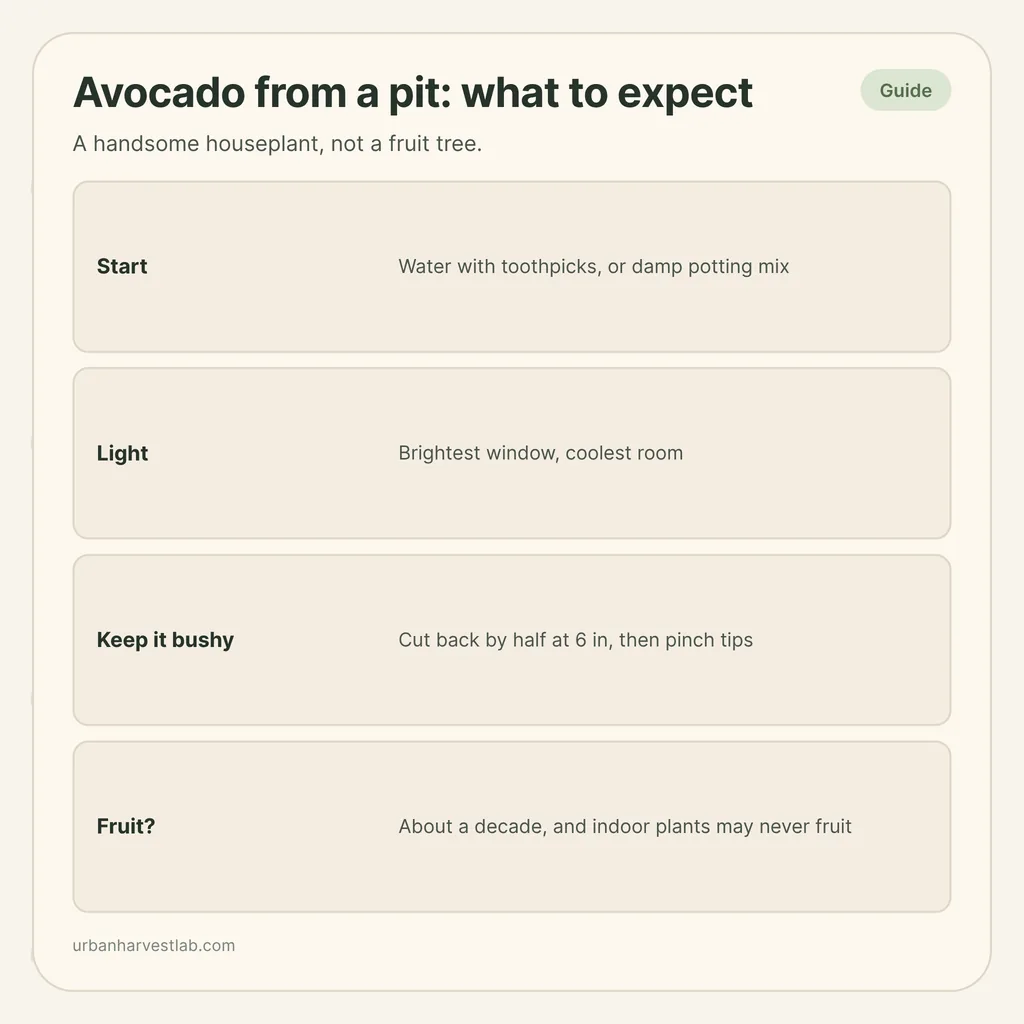
How to grow an avocado from a pit, and what to expect from it
Toothpicks or soil, how long it takes to sprout, and how to keep a leggy seedling bushy. Also the part most guides skip: why the fruit rarely comes.
This is the plain utility list for every published urban gardening guide. For the main topic page with curated pathways, featured entry points, and broader context, use the primary hub.
Urban gardening is not one technique. It is a set of design decisions around light, root volume, watering, and crop choice inside constrained spaces. This hub organizes the topic into beginner guidance, setup decisions, troubleshooting, and more advanced optimization.
Browse the full set of published guides in Urban Gardening. This archive stays intentionally simple so it does not compete with the main hub.
Toothpicks or soil, how long it takes to sprout, and how to keep a leggy seedling bushy. Also the part most guides skip: why the fruit rarely comes.
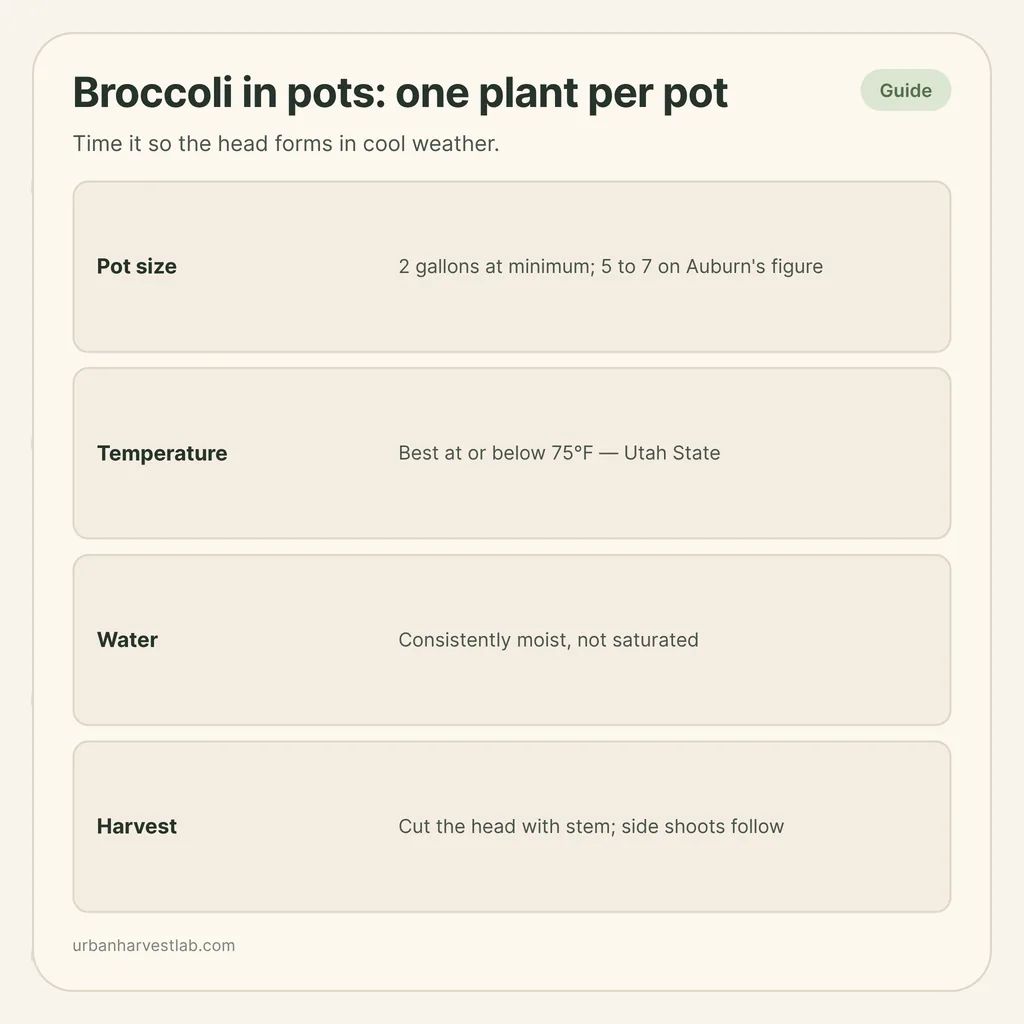
Broccoli works on a balcony if you give each plant its own pot, aim for cool weather, and cut the main head so the side shoots can follow.
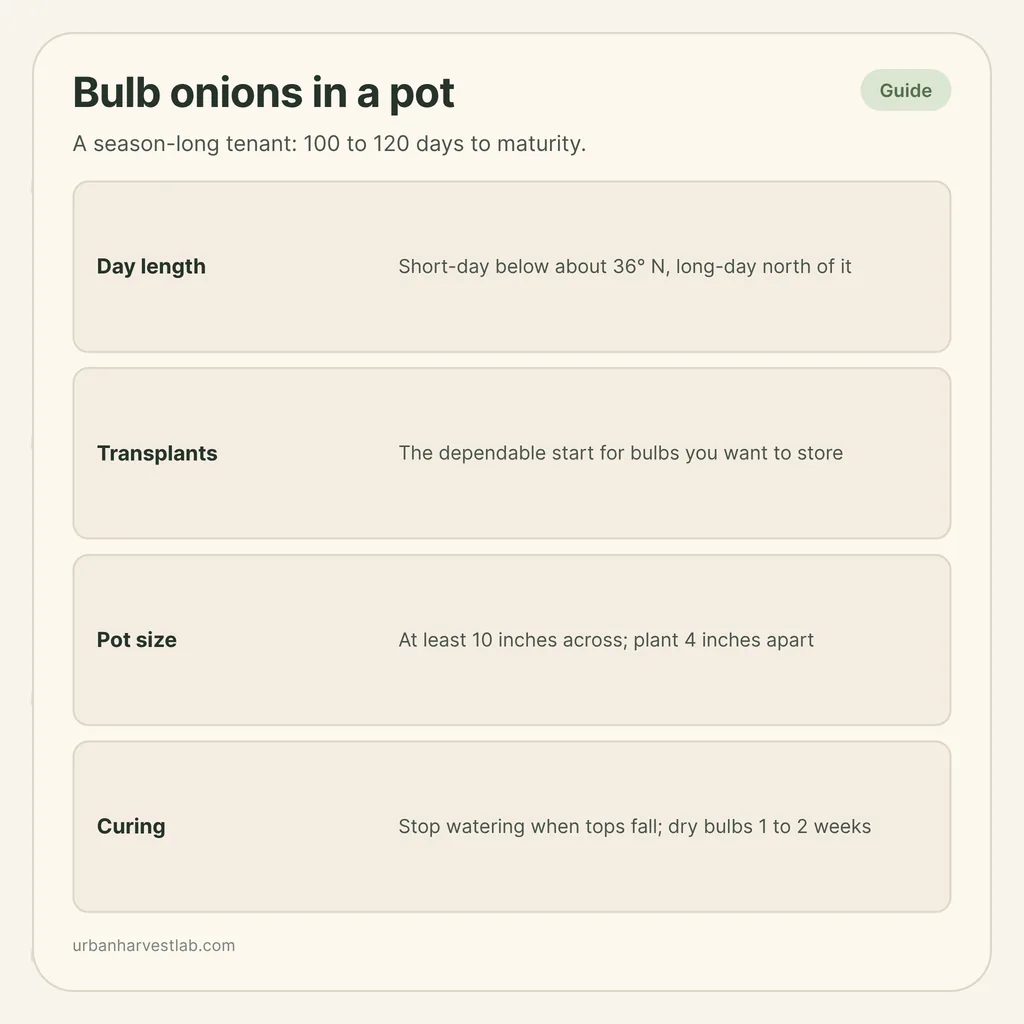
A bulb onion decides when to swell based on day length, not on how big your pot is. Pick the right type, plant transplants, and the container work is simple.
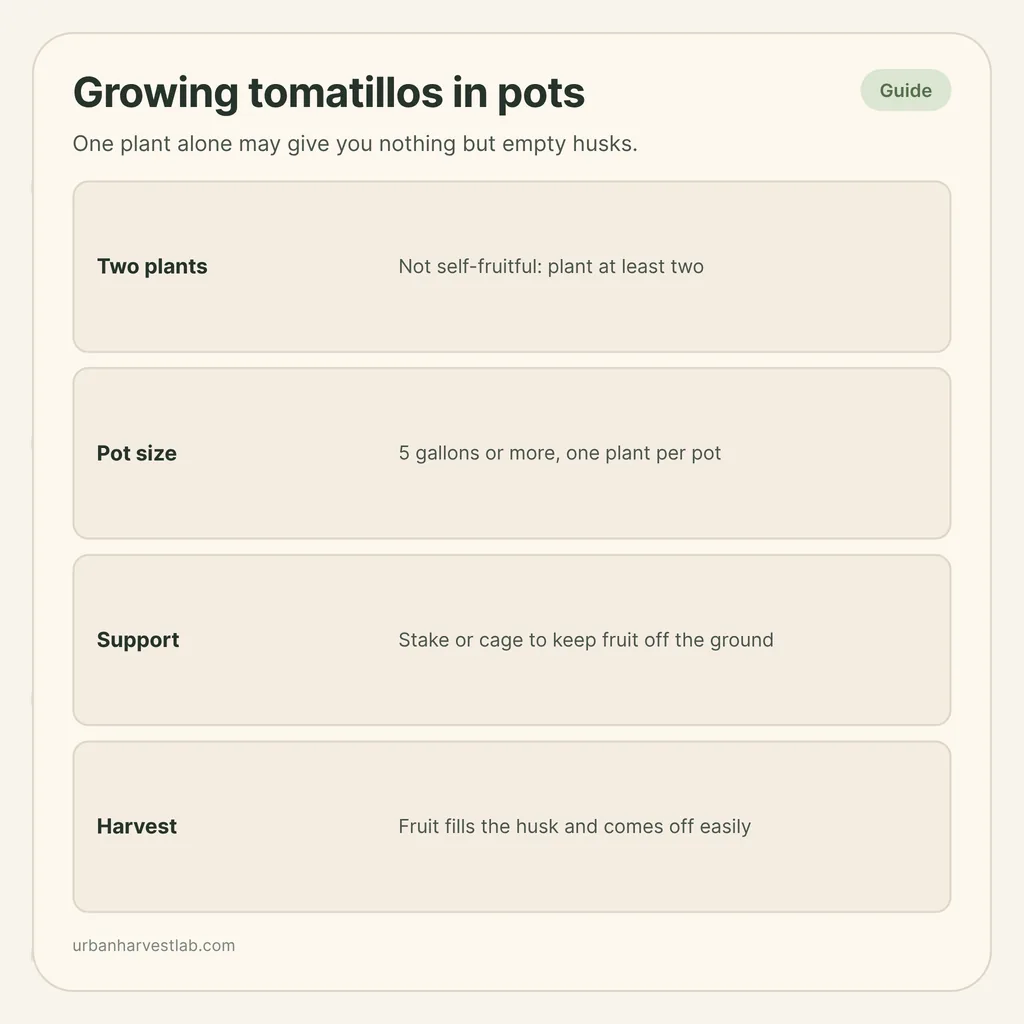
A single tomatillo in a pot flowers happily and gives you papery husks with nothing inside. Grow two, give each a cage, and pick when the fruit fills its husk.

Basil is sold as one plant but behaves like several. Here is how to choose between Genovese, Thai, lemon, purple and dwarf types when you only have room for a pot or two.

Bay laurel suits a pot because it grows slowly, but slow is not the same as stuck. Here is what a container bay needs, how to prune it, and what to do about scale and winter.

Blueberries are fussy about acidity, not about space. Here is the pot size, the mix, the pollination partner and the watering that keep a container bush fruiting.

Not every pot deserves a spot on the windowsill. Here is how to decide what comes in, clear the pests, and get the plants through the light drop.

Chamomile is easy in a pot once you pick the right type and leave the seed uncovered. Here is how German and Roman differ, how to water, and when to pick and dry the flowers.

Chervil is a cool-season herb that bolts in heat and sulks when moved. Sow it where it will grow, give it shade and steady water, and resow in small batches.

Four words on a seed packet decide whether a plant fits your balcony, and they do not mean the same thing. Here is what each one tells you and what it leaves out.

A crowded perennial herb does not need a bigger pot. Split the clump, discard the tired centre, and replant the healthy sections in fresh mix.

A potted dwarf lemon can fruit on a windowsill, but only with strong light, careful watering and a paintbrush. Here is what each stage needs, winter included.

A few edible flowers do well in containers. The real question is safety: what you can eat, where it was grown, and what to leave on the plant.

A fig in a container needs a big pot, strong sun, regular water and a dormant winter in an unheated, frost-free spot. Here is how to size, prune and overwinter it.

Ginger and turmeric are tropical rhizomes that a pot makes manageable anywhere. The trick is warmth at the start, patience while they sprout, and a long season before harvest.

A kit is the easiest way to grow mushrooms indoors: soak, mist, wait for pins, then cut. What to do on each step, what a bad block looks like, and how to store the harvest.

A hanging basket frees floor space but dries out faster than most containers. These are the edibles that cope, the ones that do not, and a watering routine that keeps the basket alive.

Hardening off is a week or two of gradually longer, sunnier days outside before a seedling is planted out for good. Enter your planting-out date and get the day-by-day schedule.

A jar with no hole turns every watering into a gamble. Here are the three setups that work, the one that mostly does not, and which herbs to put in each.

A leek is a slow, shallow-rooted crop that earns its white stem from soil piled around it. In a pot that means planting deep, leaving headroom, and keeping the mix evenly moist for months.

Lemon balm is a mint-family herb that behaves differently from mint: it spreads by seed, not runners. A pot keeps it in bounds if you cut it back before the seed forms.

Lemongrass is a tropical grass that a pot keeps portable. Start from a grocery stalk, give it sun and heat, and move it inside when autumn turns cold.

Marjoram is oregano's milder, sweeter cousin, and in most climates it is a tender plant you treat as an annual. Here is how to start it, pot it, harvest it and decide whether to keep it over winter.

Most melon vines are too big for a balcony. A bush or small-fruited variety, a large pot, a trellis with fruit slings and a paintbrush make it workable.

A container raspberry lives or dies on three choices: which type you buy, what holds the canes up, and which canes you cut. Here is each one, with the pot sizes and cane counts the extension services give.

A rhubarb planting stays productive for 8 to 15 years, according to Michigan State Extension, so the pot, the winter and the patience matter more than any feeding trick. Here is what a container changes, and what it does not.

Tomatoes, peppers, beans and peas are the easiest vegetables to save seed from, as long as the variety is not an F1 hybrid. Here is how to do each one from a pot.

Covers add a few degrees on cold nights and far more heat on sunny days. Here is what each device buys you on a balcony, and how to pick one you can manage.

Leftover seed is usually still good, but how long depends on the crop and where it sat. Here are the sourced ranges, how to store packets, and a test that runs for the germination time on the packet.

Shiso grows quickly in a container, but it flowers as nights lengthen and then drops seed everywhere. Here is how to start it, keep it bushy and control the volunteers.

Sorrel is a perennial that returns each spring and gives lemony leaves from spring to autumn. Here is how to keep it in a pot, pick it young and use it sensibly.

Stevia seed germinates poorly, the leaves are sweetest before the plant flowers, and the plant will not survive a freezing winter outdoors. Here is how to handle all three in a pot.

Sweet potatoes are a warm, patient crop, and a deep pot on a hot balcony suits them. Here is how to start slips, plant them, know when to dig and cure the roots.

Tarragon seed usually gives you the bland Russian type, and French tarragon hates wet feet. Here is how to buy the right plant, pot it, propagate it and carry it through winter.

Seed packets ask you to sow thick and then remove most of what comes up. Here is when to do it in a pot, how to cut without hurting the keepers, and what to do with the extras.

A wall of pockets looks like free growing space. Whether it is depends on how often you can water, how much light the wall gets and what you plant in it.

Arugula is quick, cool-loving and easy in a container. What goes wrong is heat: plants bolt and the leaves turn sharp. Here is how to sow, pick and time it.

Bush beans crop in a burst from a small pot with no support. Pole beans climb a trellis and keep producing for longer. Here is how to choose, plant and pick each one in a container.

A beet seed is really a cluster of seeds, so a pot sown once comes up crowded. Thinning on time, and watering evenly, is what turns that crowd into round roots.

Bok choy suits a balcony pot better than most brassicas, but only in cool weather. Here is the pot, the spacing, the sowing window and the bolting fixes.

Eggplant is the heat-lover of the container garden. One plant, a 5-gallon pot, a warm spot and a cage cover most of it. The rest is timing, steady water and a gentle tap on the flowers.

Kale suits containers: it is shallow-rooted enough for a modest pot, shrugs off frost, and gives leaf after leaf if you pick from the bottom.

Peas are a cool-season crop that suits a pot well, as long as the support goes in at sowing and the plants finish before summer heat arrives.

Radishes are one of the fastest crops you can grow in a pot, and the one that most often goes wrong in the same way: big leaves, no root. Here is what to change.

Chard is one of the few vegetables that rewards a small pot for months. The trick is cutting the right leaves, keeping the pot evenly moist, and planning for what summer heat does to it.
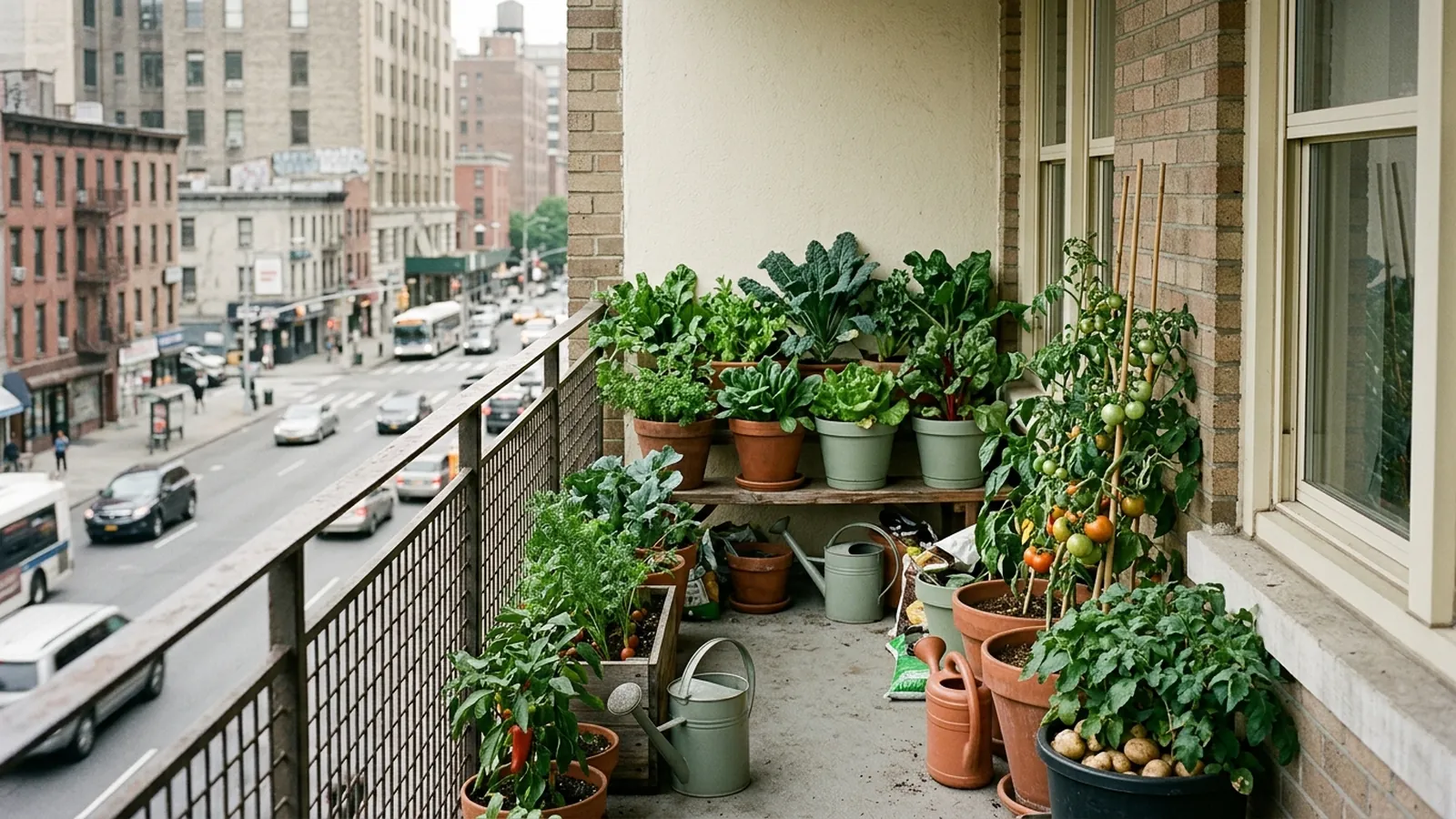
Almost every published answer to this question is about lead in urban ground soil. A balcony starts from a bag of potting mix, which moves the question from what roots take up to what settles on leaves — and flips the usual advice about which crops are the safe ones.
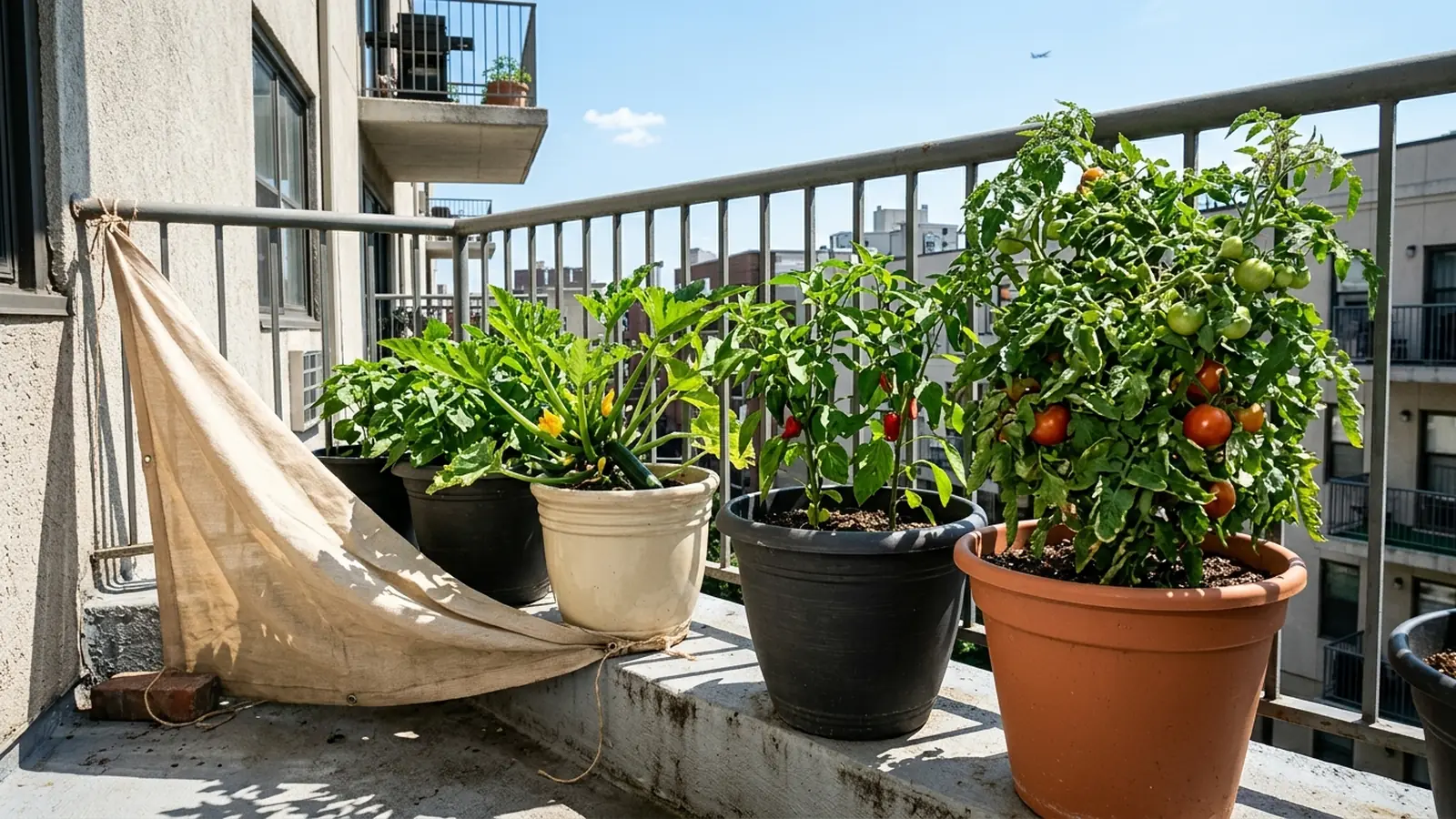
A balcony that tracks 6 or more hours of direct sun can carry the fruiting crops every shadier balcony has to skip. The trade is a container that heats up far faster than garden soil, and managing that trade is the real work.
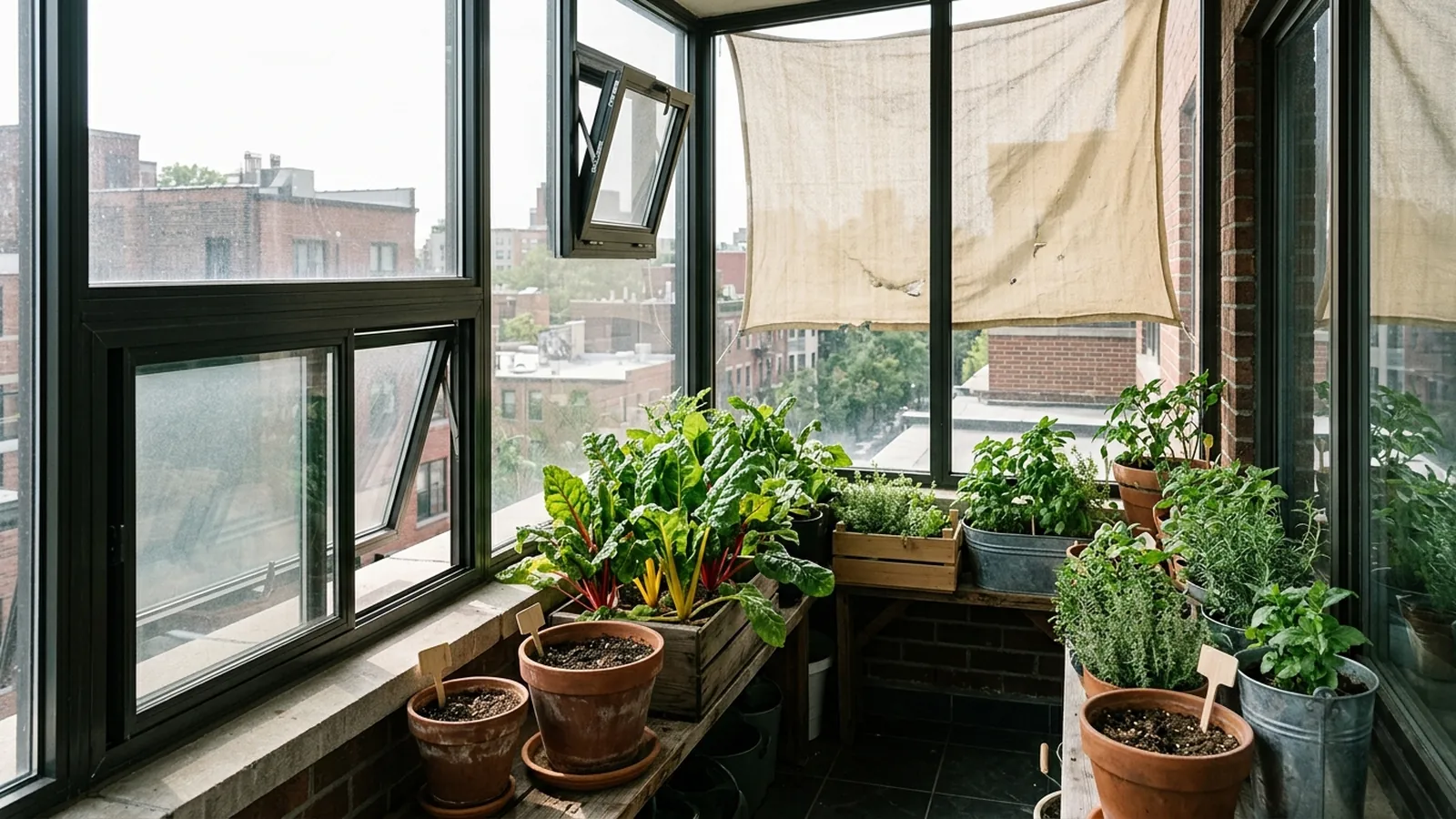
Glaze in a balcony and you have built a small greenhouse with no roof vent. That one structural fact decides how it overheats in July, why shade has to go outside the glass, and why it can still be growing chard in December.
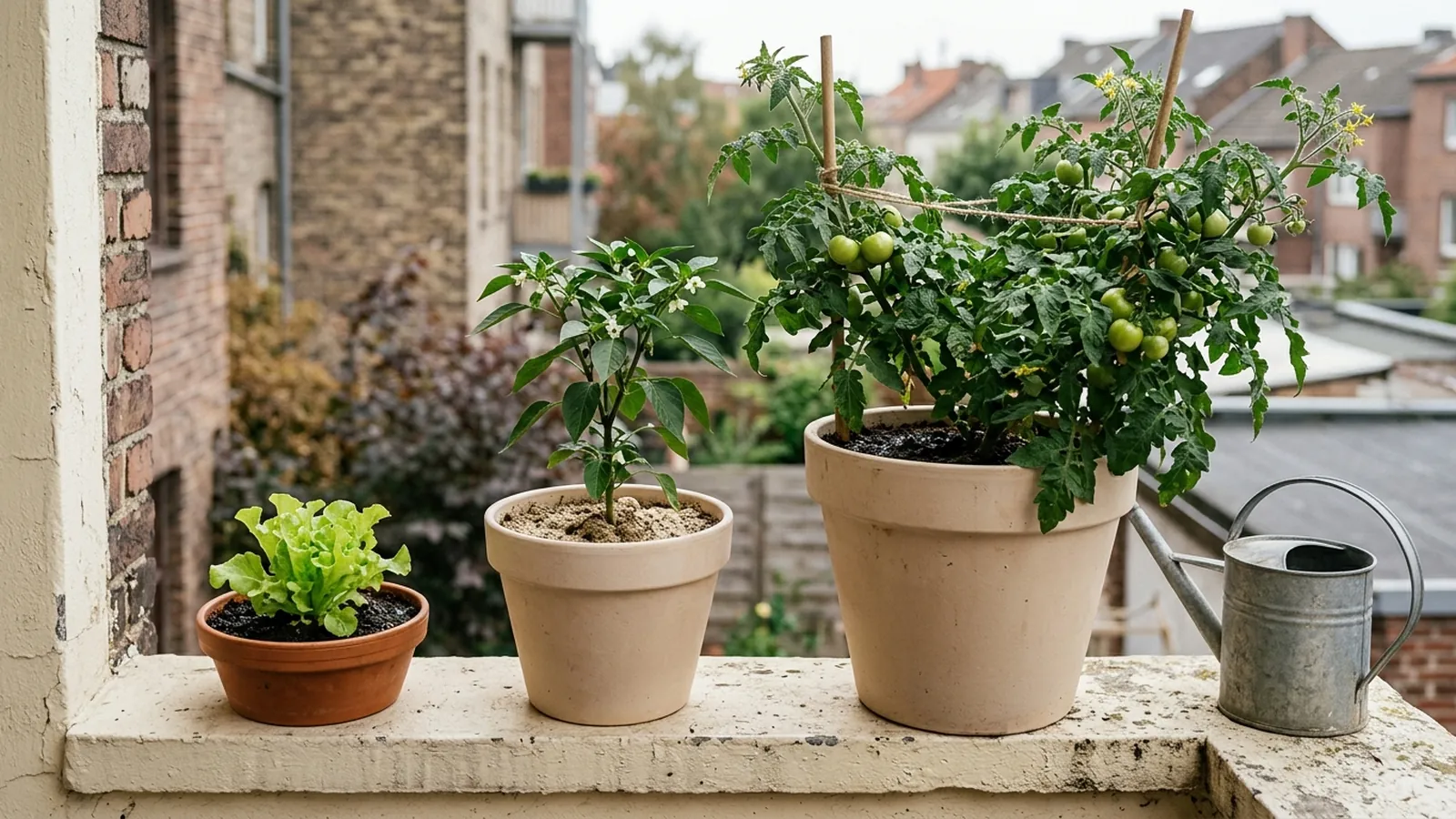
A pepper in a 2-gallon pot in May and the same pepper in the same pot in August are two different watering problems. Once you can see why, the question stops being how often and becomes how much mix you gave the plant, and what it is carrying right now.
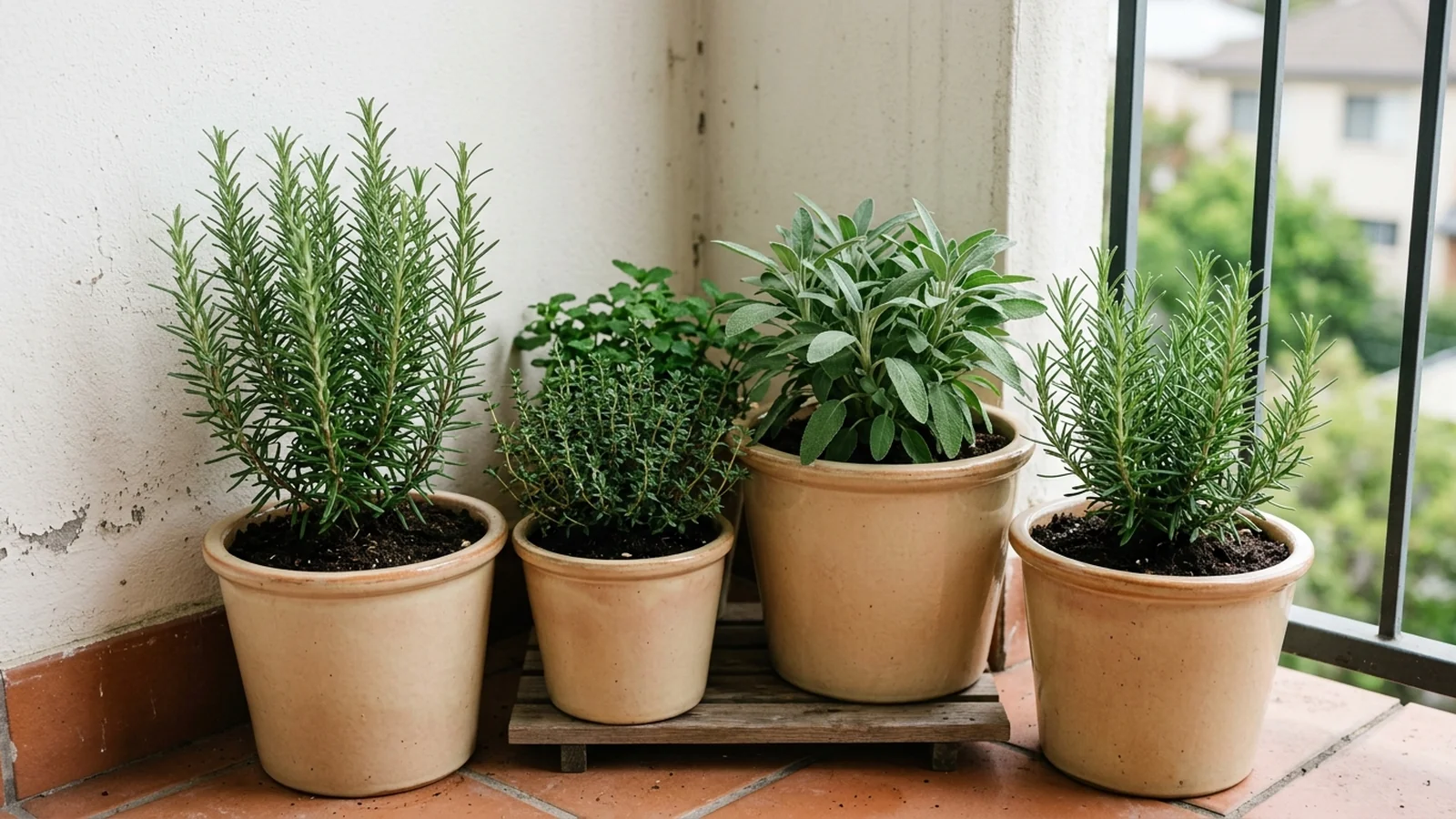
No potted edible plant survives on nothing. But some tolerate a missed watering far better than others, and a system built around that gap is what actually holds up for someone who travels every few weeks.
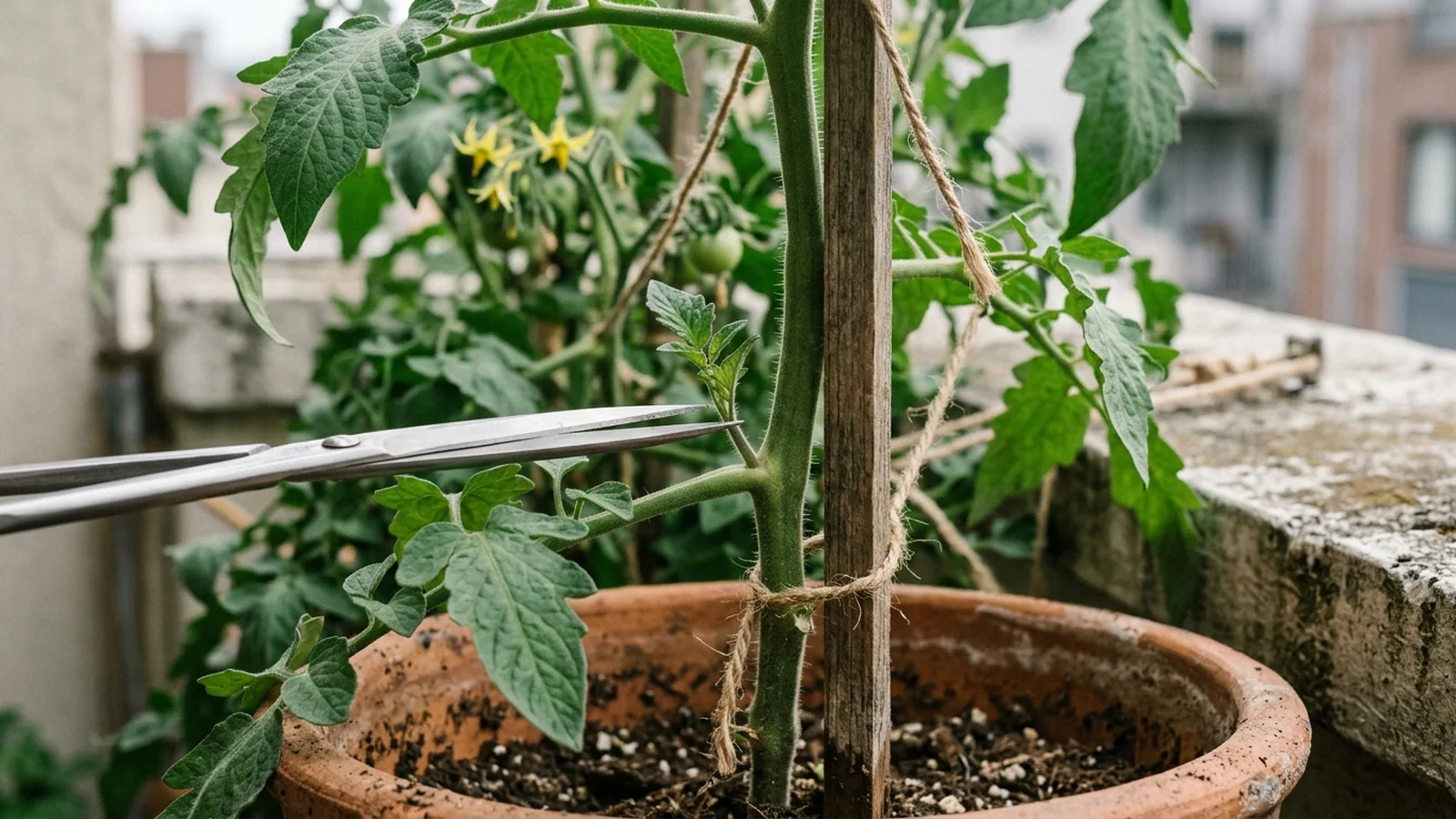
Cut a leafy herb and it branches back thicker. Cut a container tomato the same way and you are managing how much plant a bucket of potting mix can actually support. Same scissors, opposite goal.
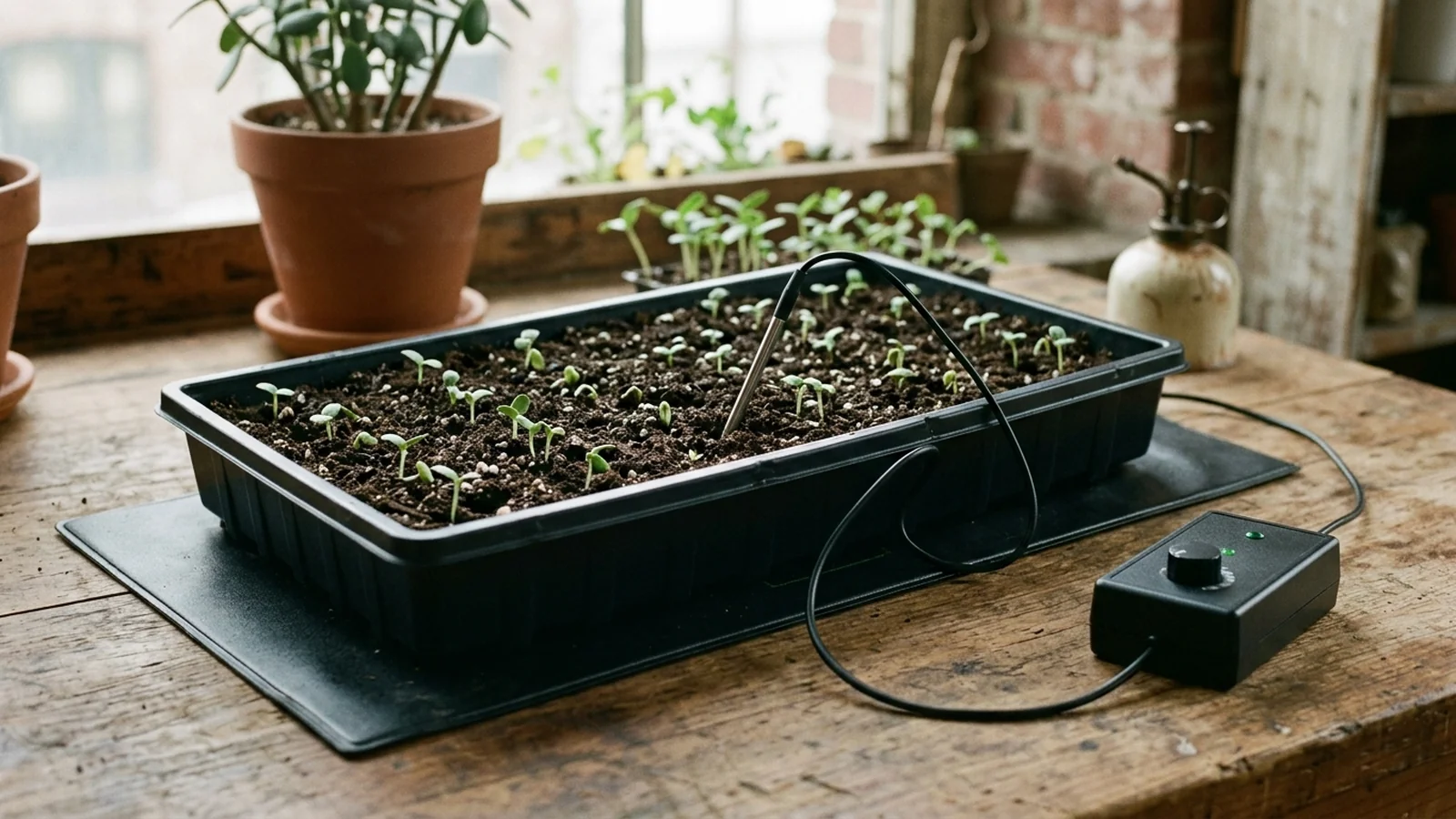
A heat mat's whole case rests on one fact: germination responds to the temperature of the mix, not the air around it. Without a thermostat that fact works against you as easily as for you.
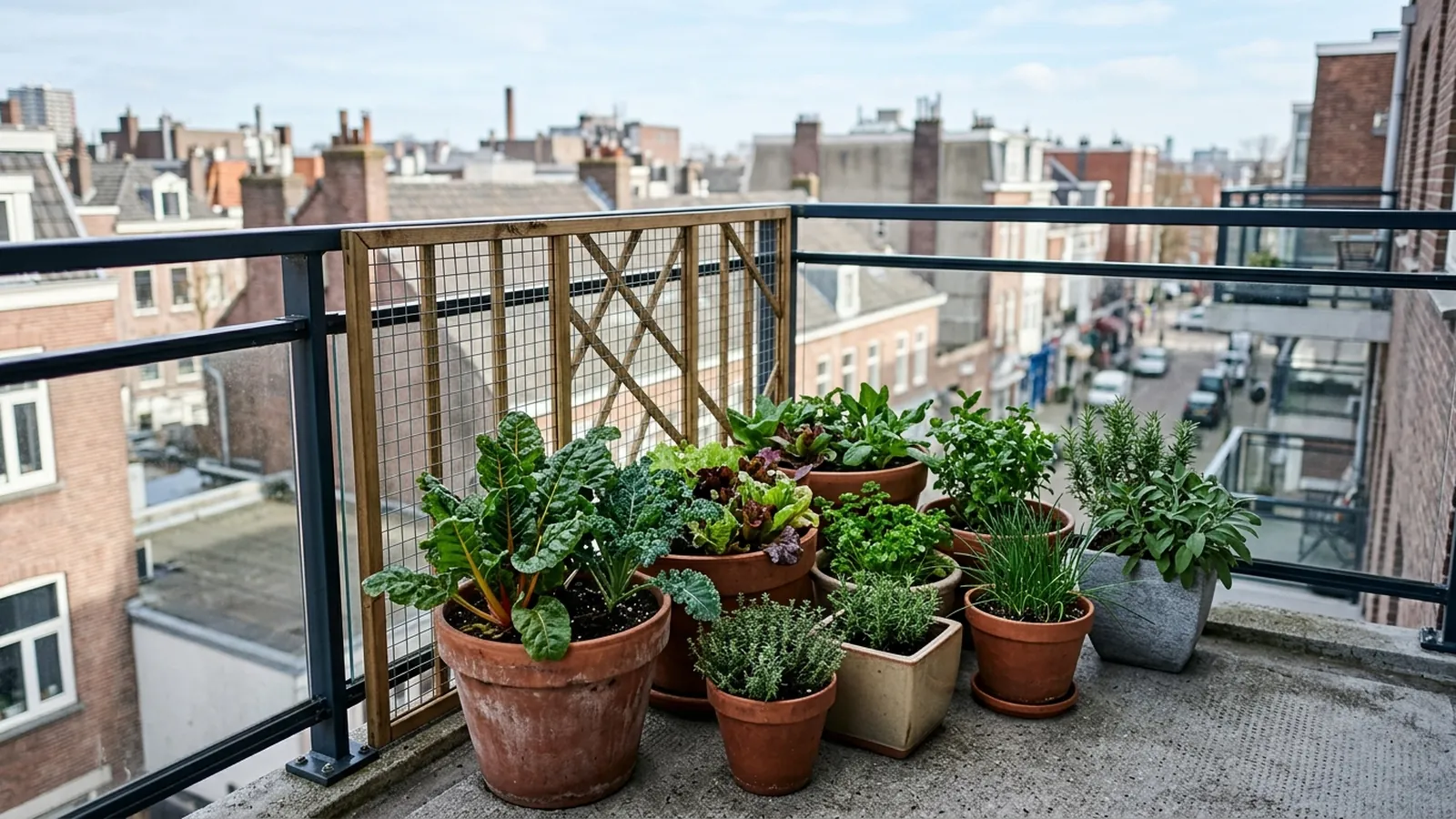
Chicago gives a container garden a real six-month outdoor season and a real zone split — the airport station reads a full zone and a half colder than a lakefront balcony. Here is how to read both honestly instead of picking one reassuring number.
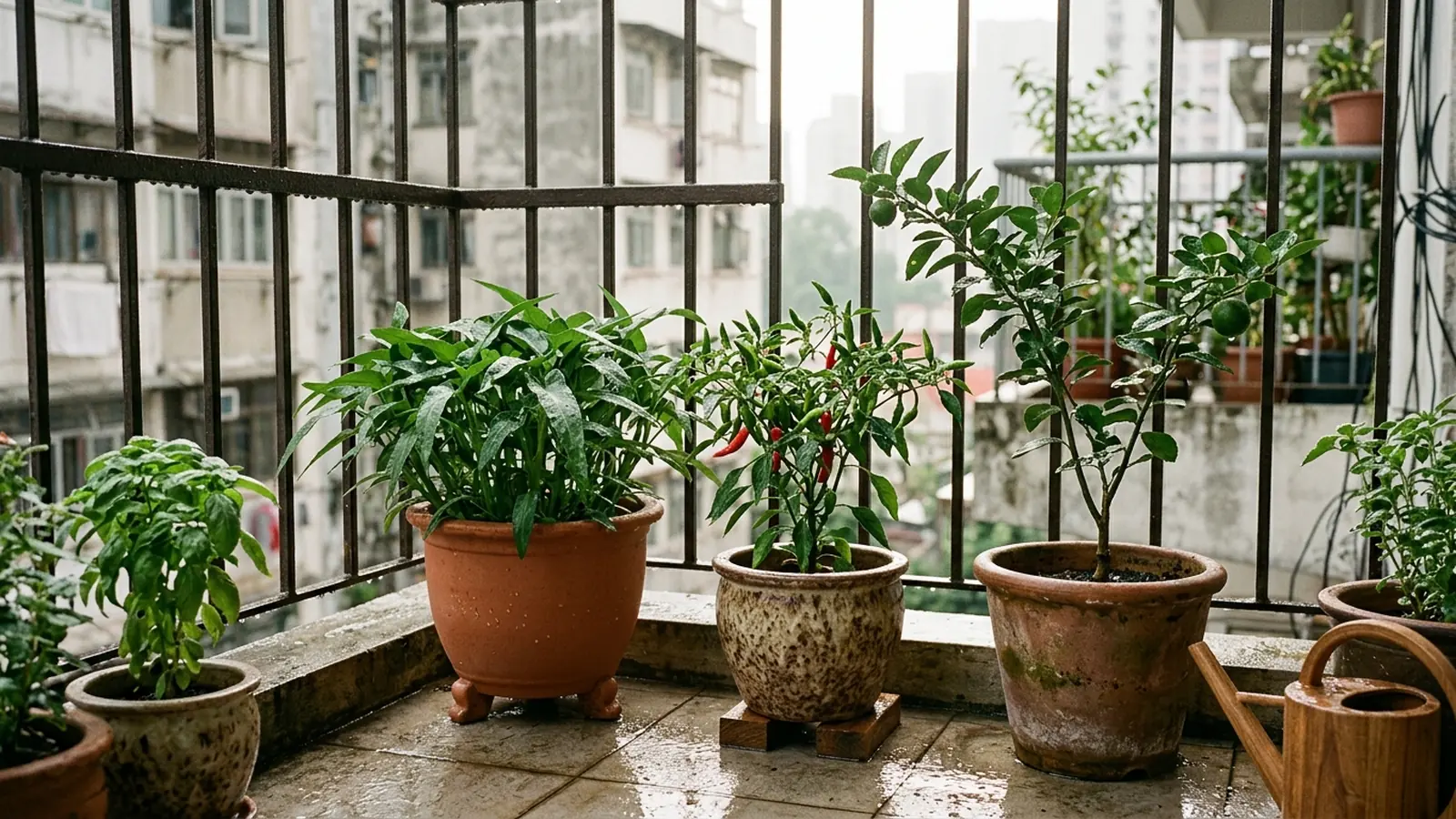
There is no frost date to circle on a Miami calendar. The real deadline is summer, when heat and heavy rain turn drainage into the decision that makes or breaks a container.
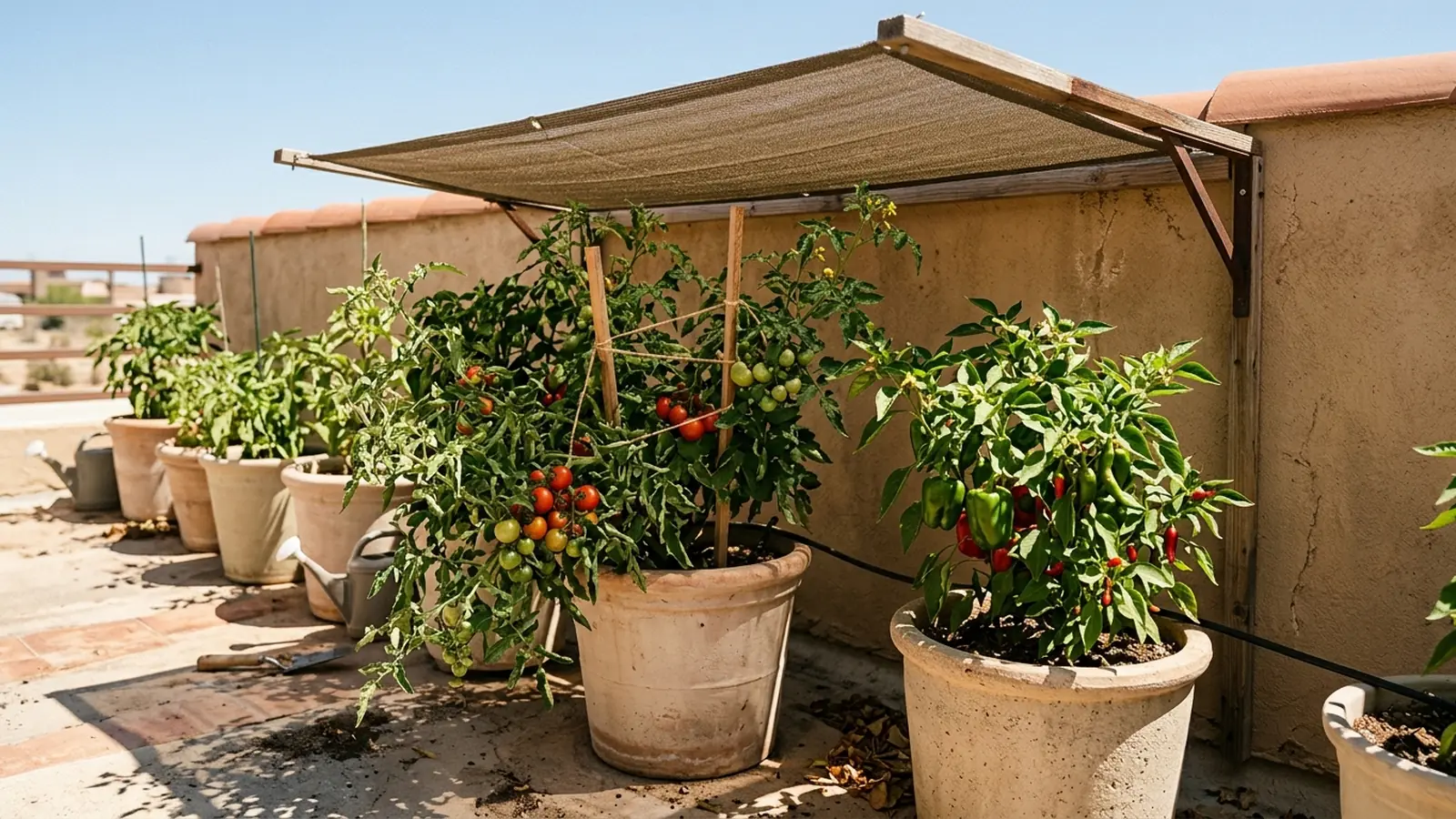
In Phoenix, the plant is rarely the first thing to fail — the pot is. Here is how to plan around two real growing windows, get the containers through the summer between them, and stop root-zone heat and salt buildup from doing the damage a 'just water more' routine misses.
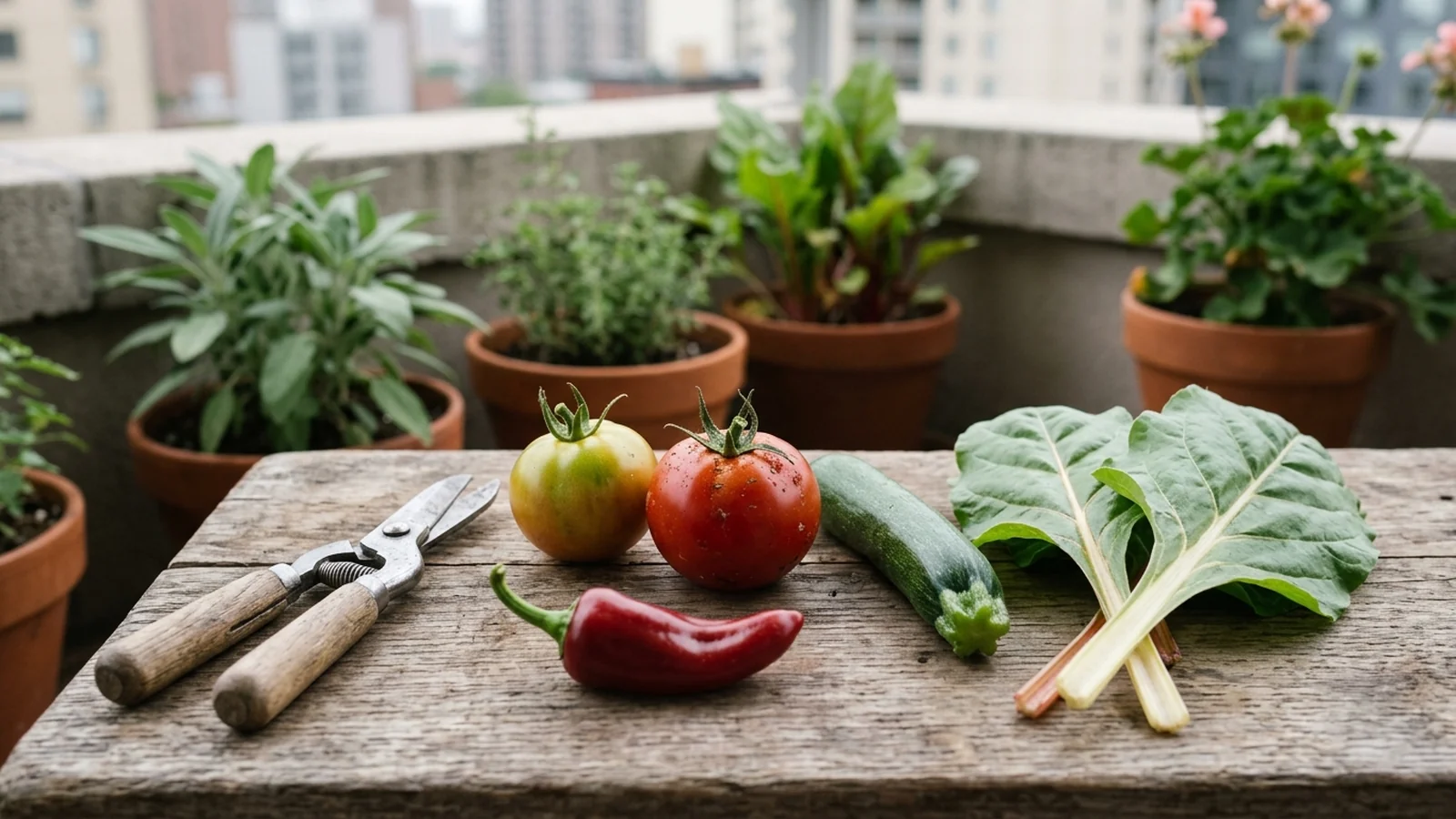
A tomato tells you it's ready with color and give. A zucchini tells you with size and how easily it lets go. The signal is different for every crop, and waiting costs more when the plant only has a pot's worth of reserve behind it.
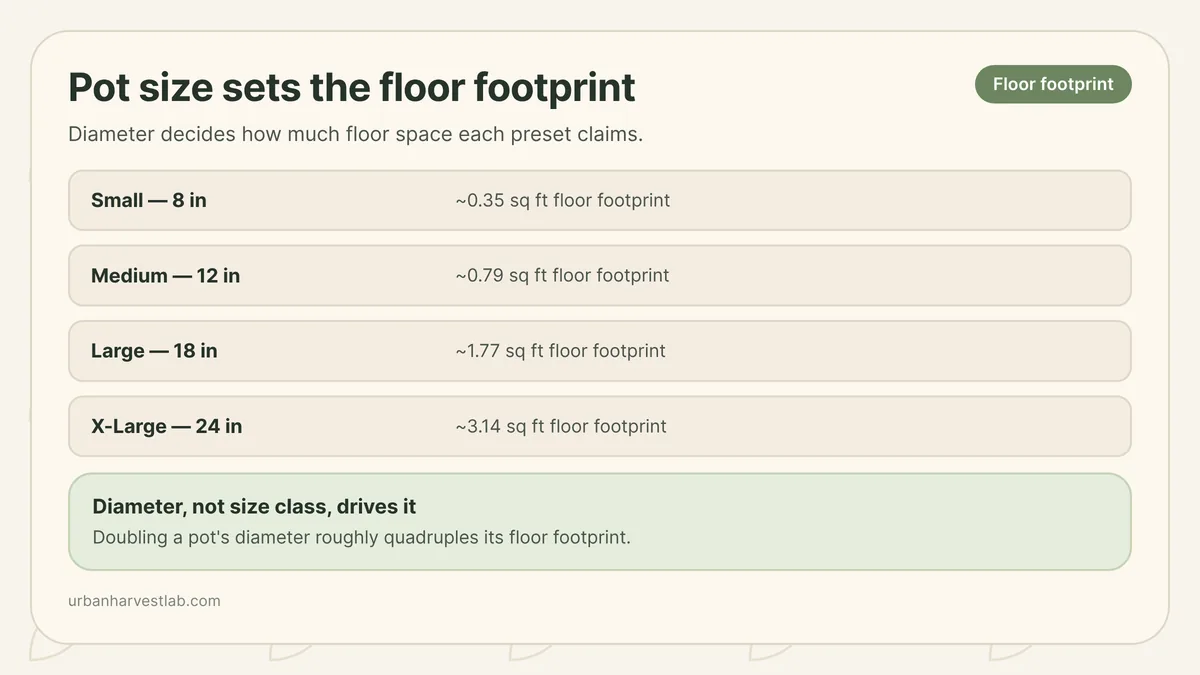
Type in width, depth, and orientation, then drop pots onto a to-scale diagram to see what actually fits and roughly how much sun it gets.
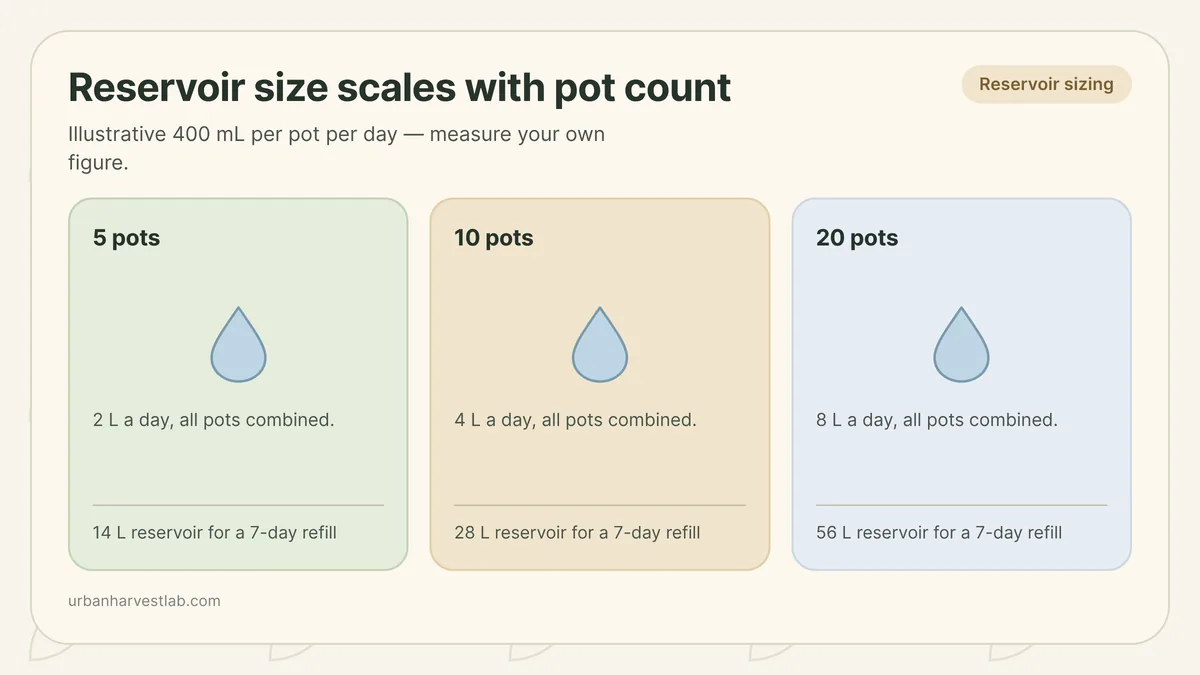
A gravity-fed drip system with its own reservoir waters a whole row of balcony pots without a hose bib. Here is how to size the emitters and the tank from your own numbers.
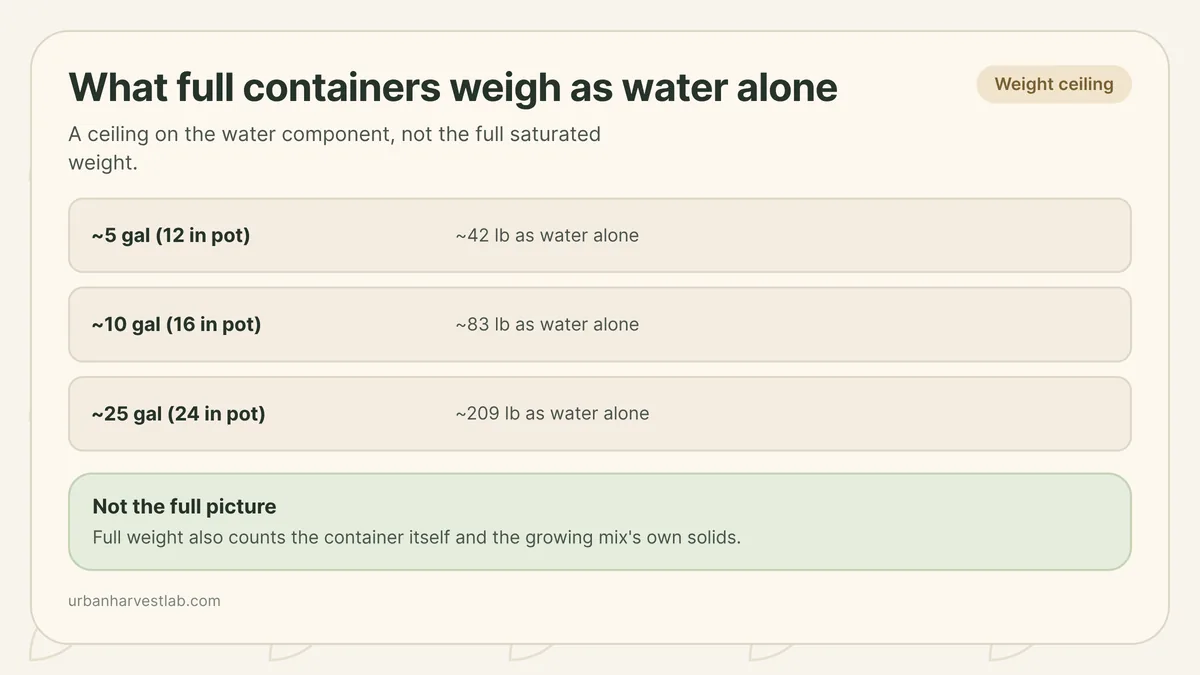
A balcony's real weight allowance comes from its own structural documentation, not a one-size figure online. What you can calculate yourself is exactly how much your containers weigh once every one of them is soaked through.
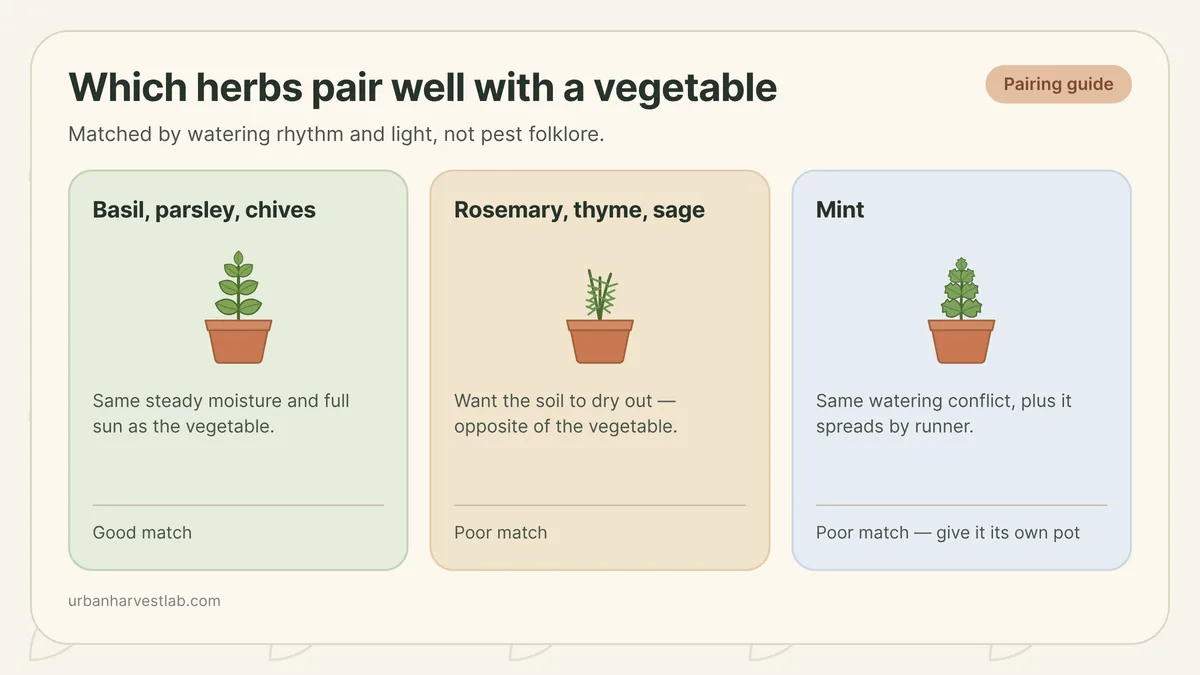
A tomato or pepper can share a large pot with certain herbs, but the deciding factors are water, light, and root space, not the pest-repellent pairings companion-planting charts repeat.
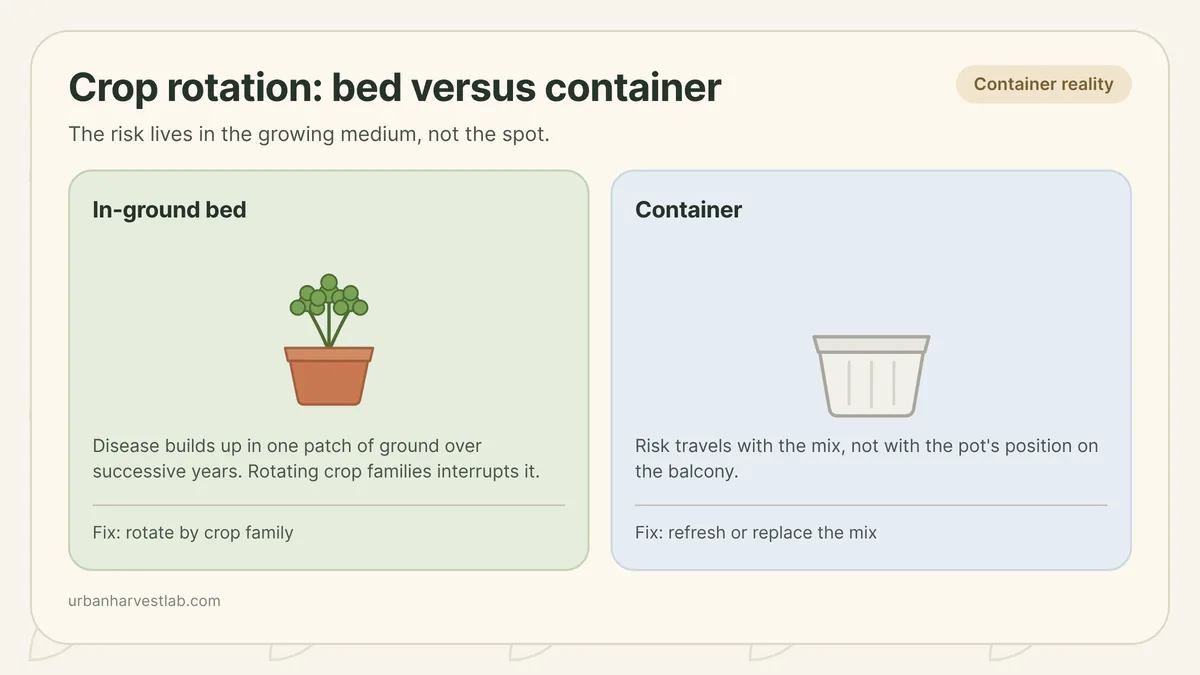
The rotation habit that protects an in-ground vegetable patch does not transfer cleanly to a pot, because the thing it was protecting against lives in the soil, not the spot.
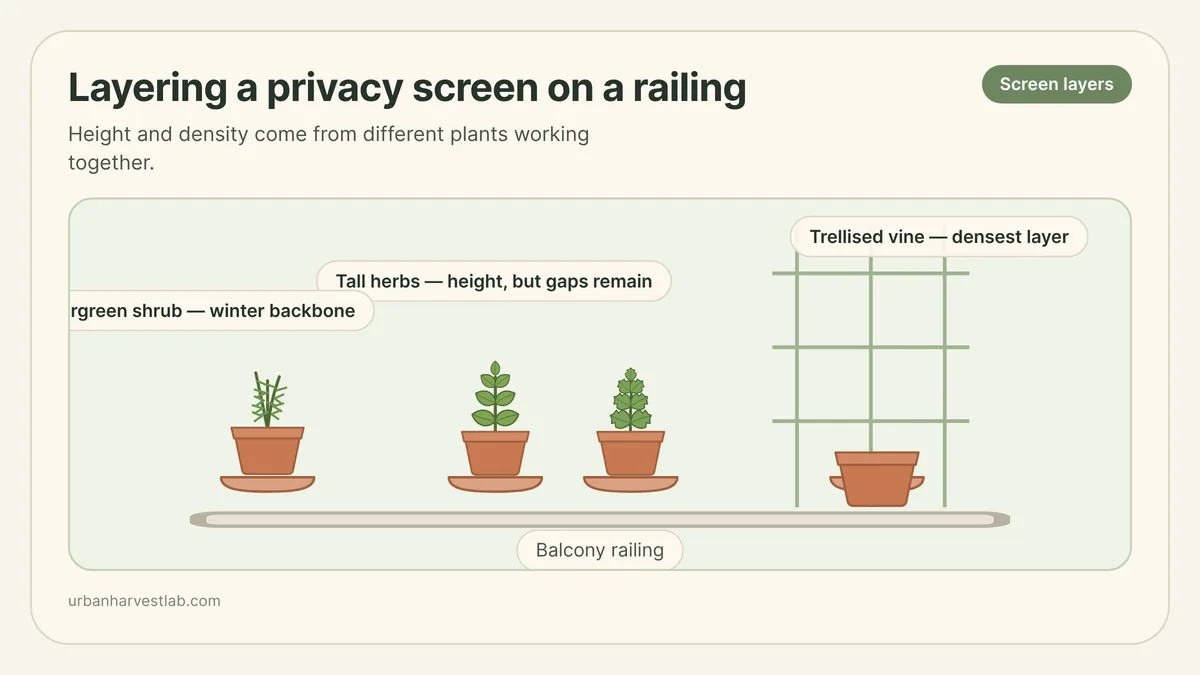
A privacy screen needs height and density working together, and most balcony pots only ever supply one of the two. Here is which edible plants actually close a sightline, and which just look like they will.
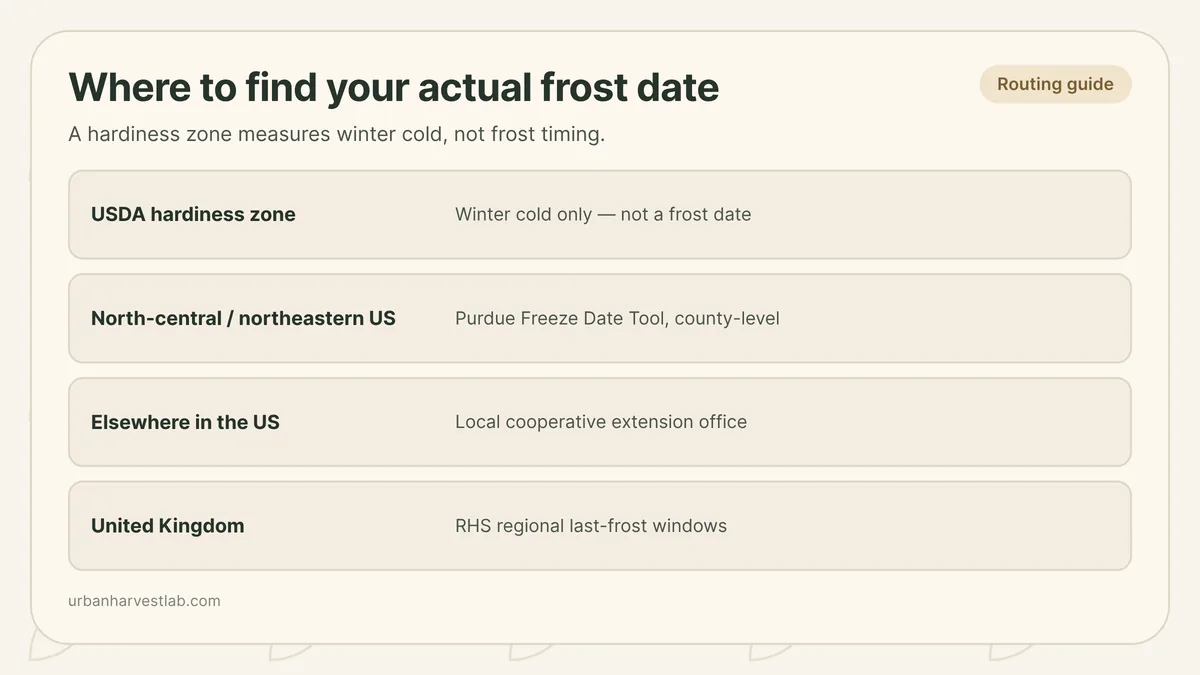
Your hardiness zone tells you how cold winter gets, not when frost starts or ends. Look up the zone's temperature band, then use the tools built to answer the date question directly.
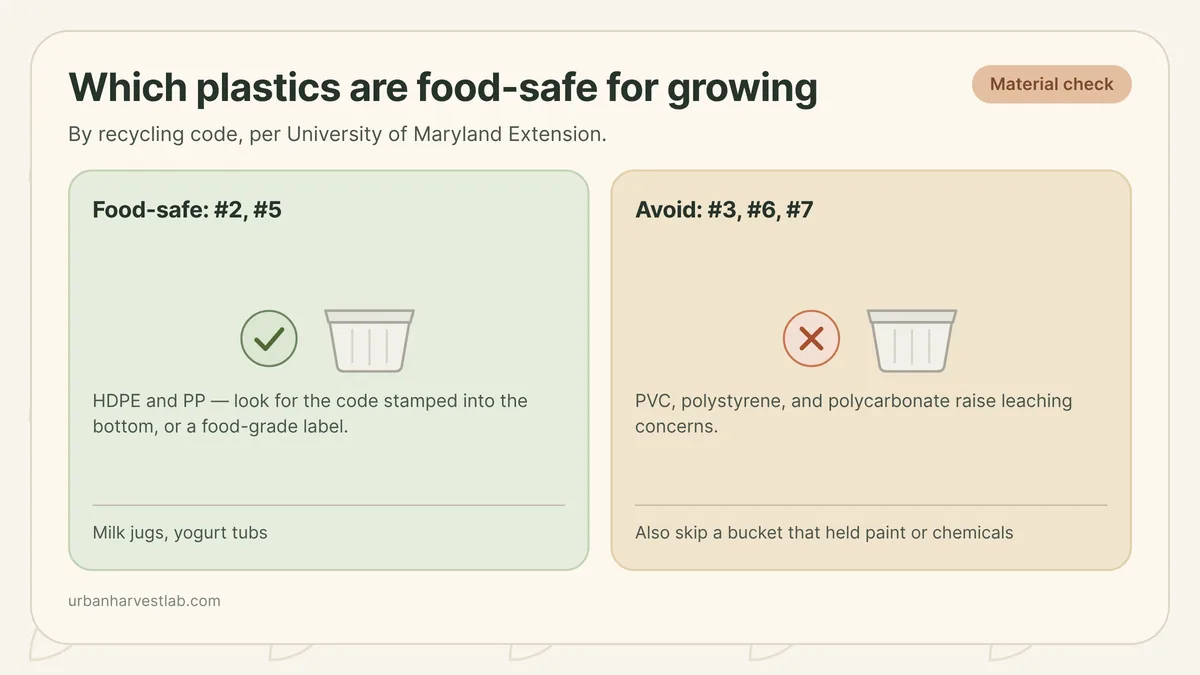
A container's recycling code and its history both decide whether it's safe to grow food in -- and the two questions have different answers.
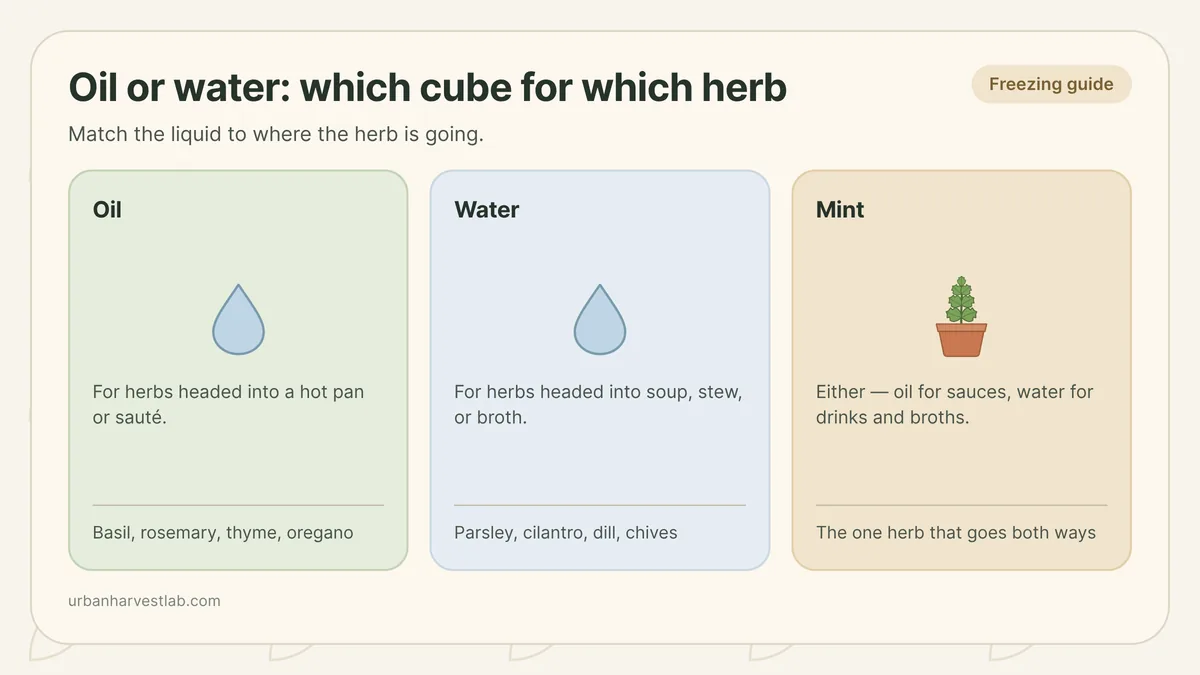
An ice-cube tray turns a fistful of chopped herb into pre-portioned cooking cubes. The details that decide whether it works are how much herb per well, oil or water, and how long you can trust the result.
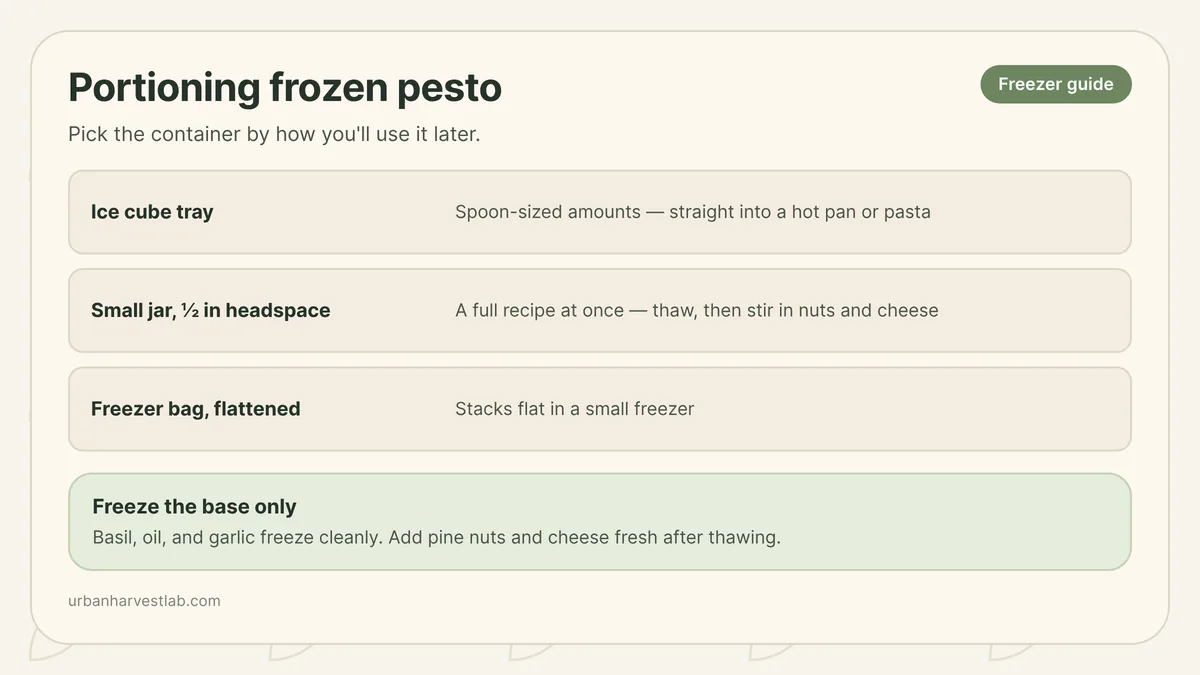
A big basil harvest turns into pesto fastest, but the freezer treats pine nuts and cheese worse than it treats the basil itself. Leave both out until it thaws, and a portion keeps its flavor for months.
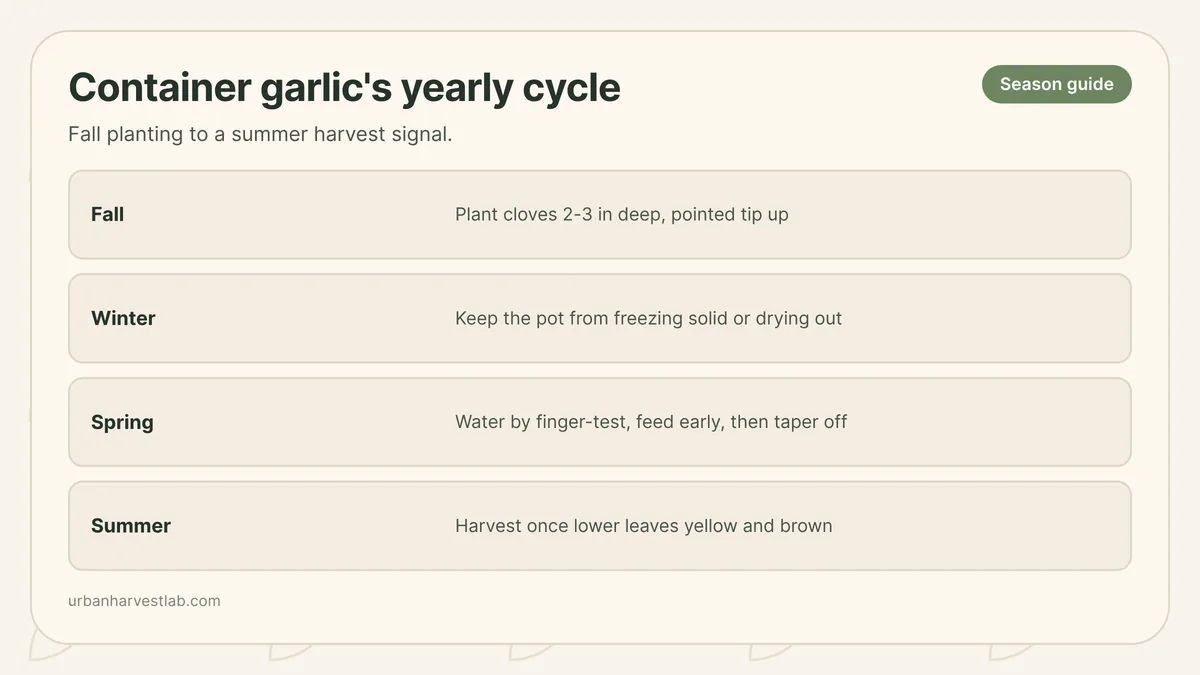
Container garlic runs the same yearly cycle as garlic in the ground, but a pot freezes and dries out faster than garden soil. Here is the full process, season by season.
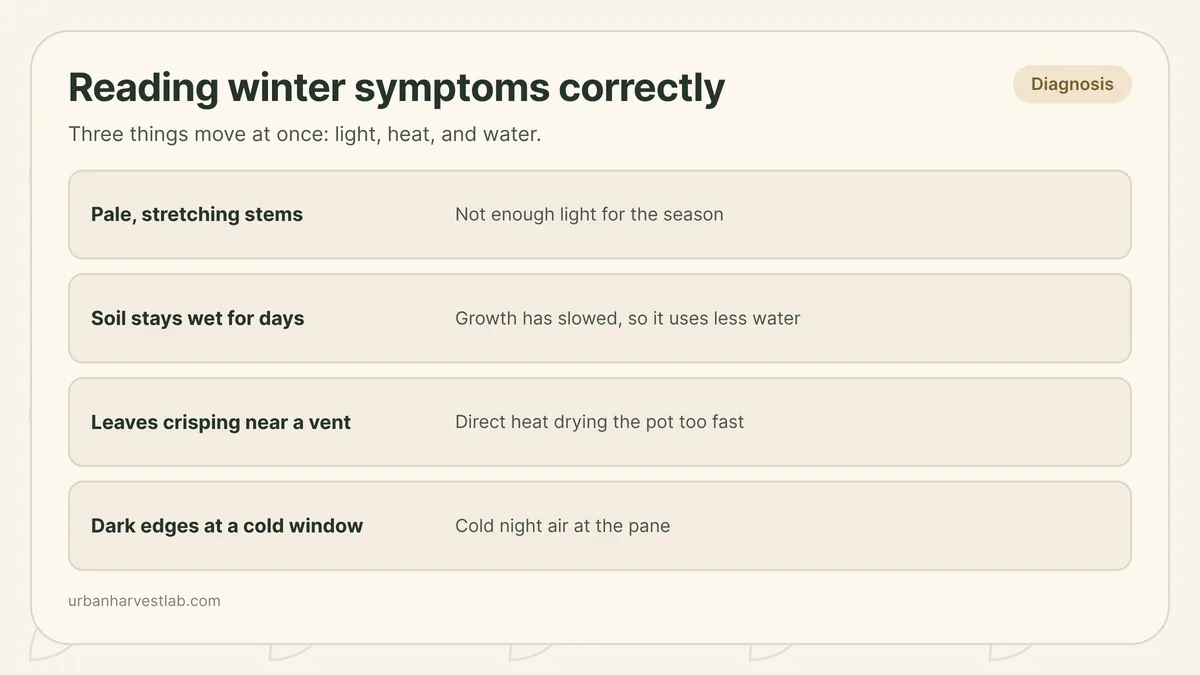
A kitchen windowsill that carried herbs all summer often starts failing in November, and it is rarely one single cause. Light, heated air, and watering all shift at the same time.

Watering more is only one piece of getting containers through a heatwave. This is the wider plan: cutting the heat load, grouping and staging pots, and reviving one that has already dried out.
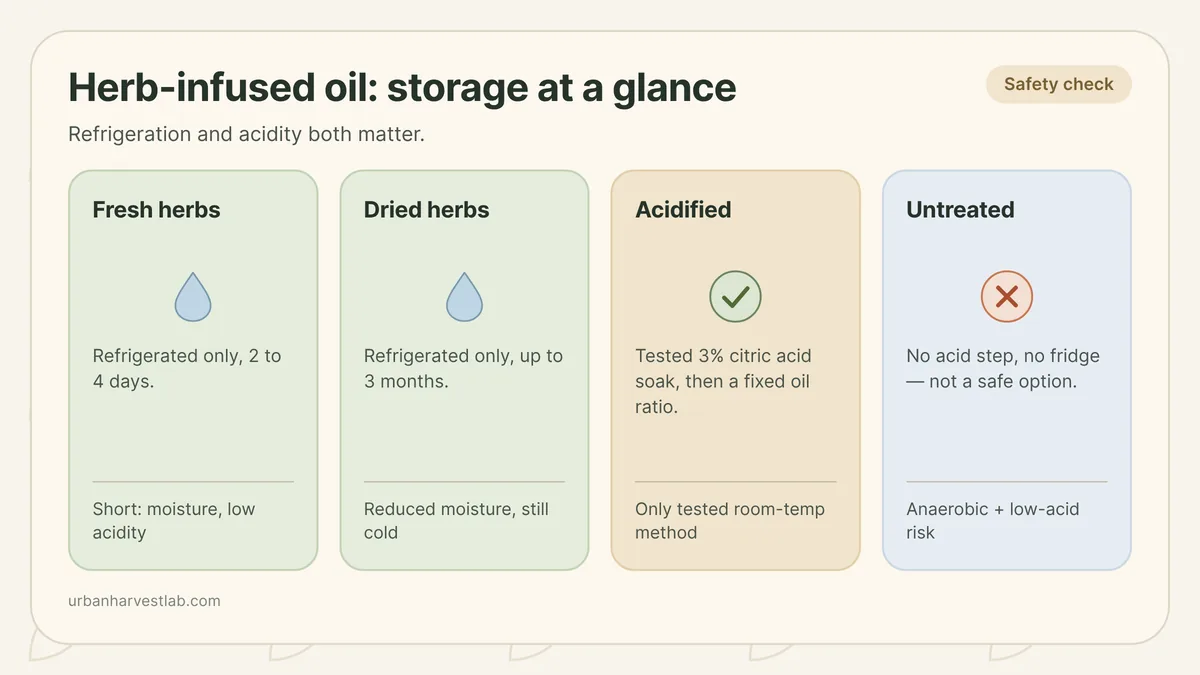
Herb-infused oil is only as safe as its storage temperature and, if it sits at room temperature, whether the herbs were acidified first.
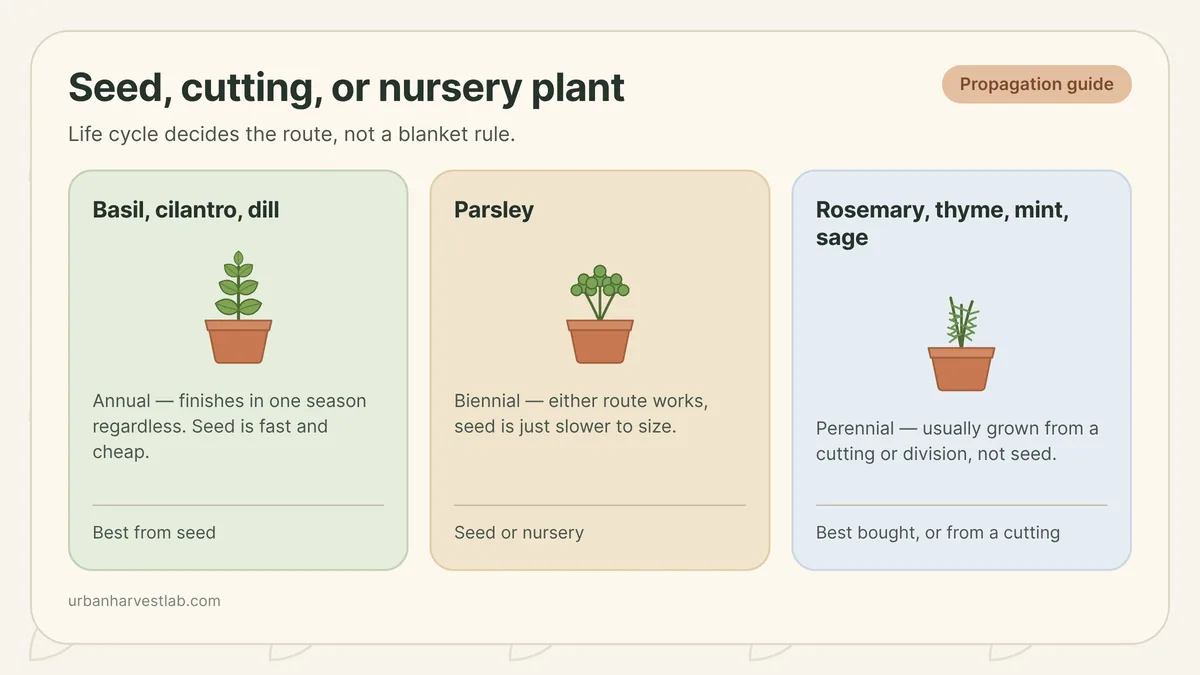
Some herbs finish a whole life cycle from seed in a matter of weeks; others are slow, woody, or simply propagated a different way. The life cycle of the herb, not a blanket rule, is what actually decides which route makes sense.
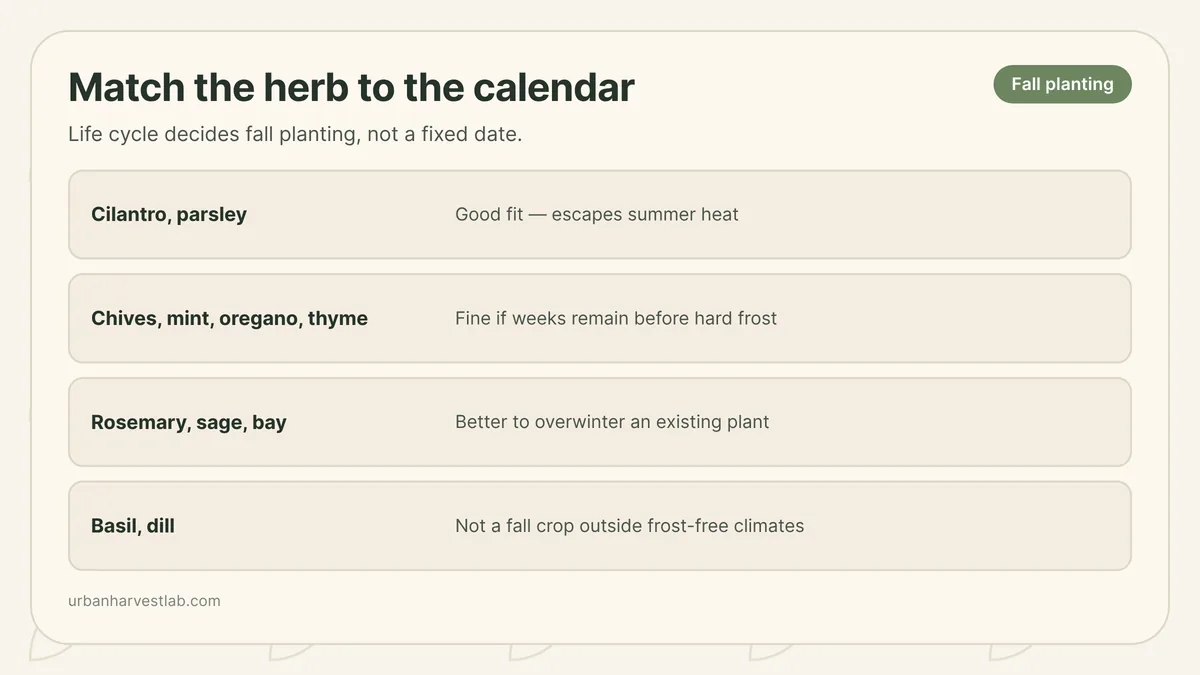
Fall planting suits herbs by life cycle and climate, not by calendar date. Cool-season herbs, cold-hardy perennials, and heat-loving annuals each answer the question differently.
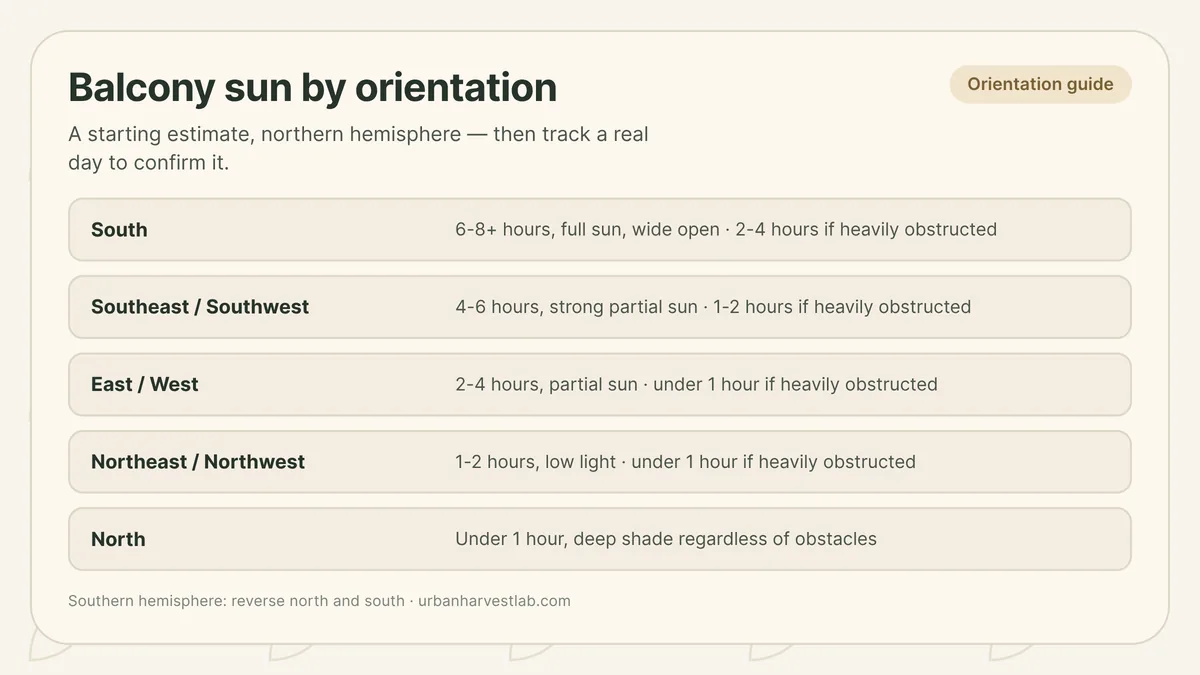
Compass direction and nearby obstacles give a starting range for how much sun a balcony gets. One day of tracking turns that range into a real number.

Frost kills a pepper plant back every winter, but the plant itself is not actually an annual. Here is the tender-perennial method for carrying one over instead of starting from seed again.
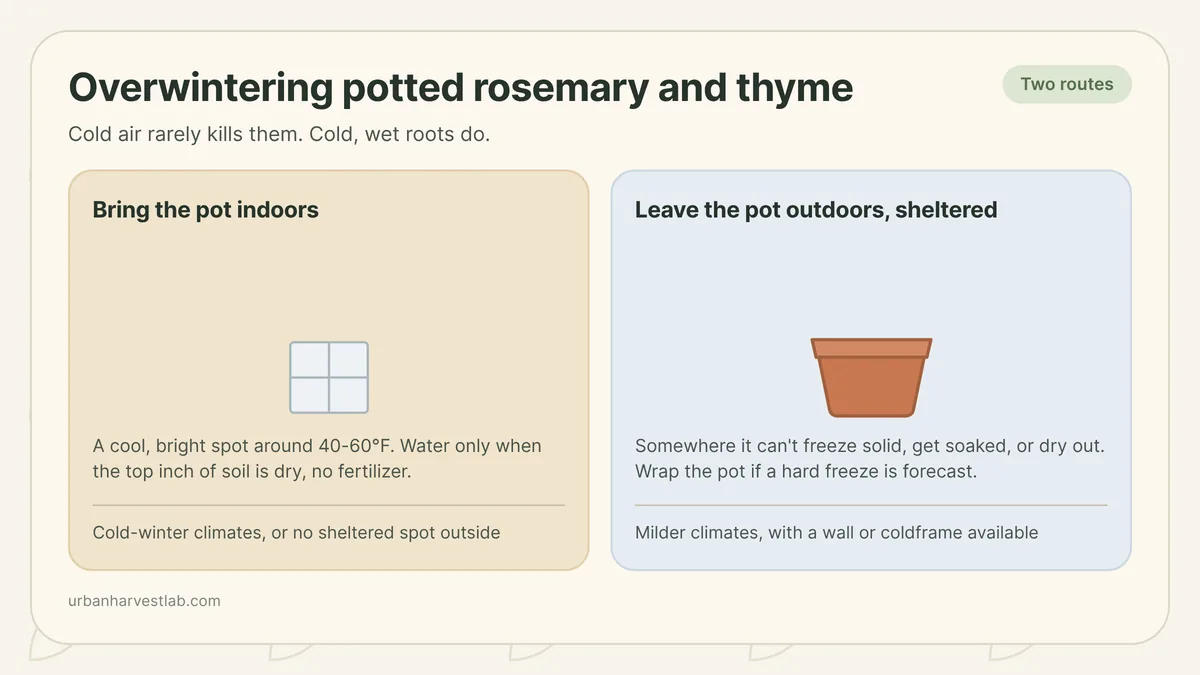
Winter kills more potted rosemary and thyme through mistimed watering and cold-wet roots than through cold air alone. Here is what to do indoors and out.
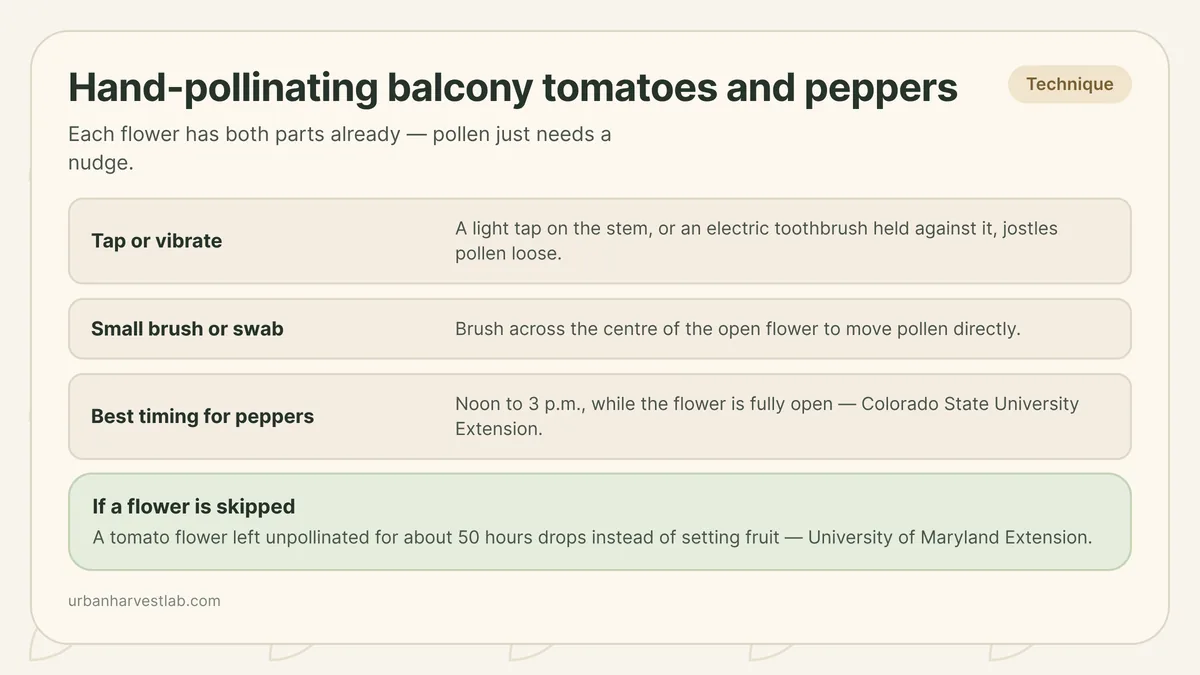
A tomato or pepper flower already carries both male and female parts, but nothing on a balcony reliably moves the pollen between them. This is the tap, brush, or vibrate technique that stands in for a bee.
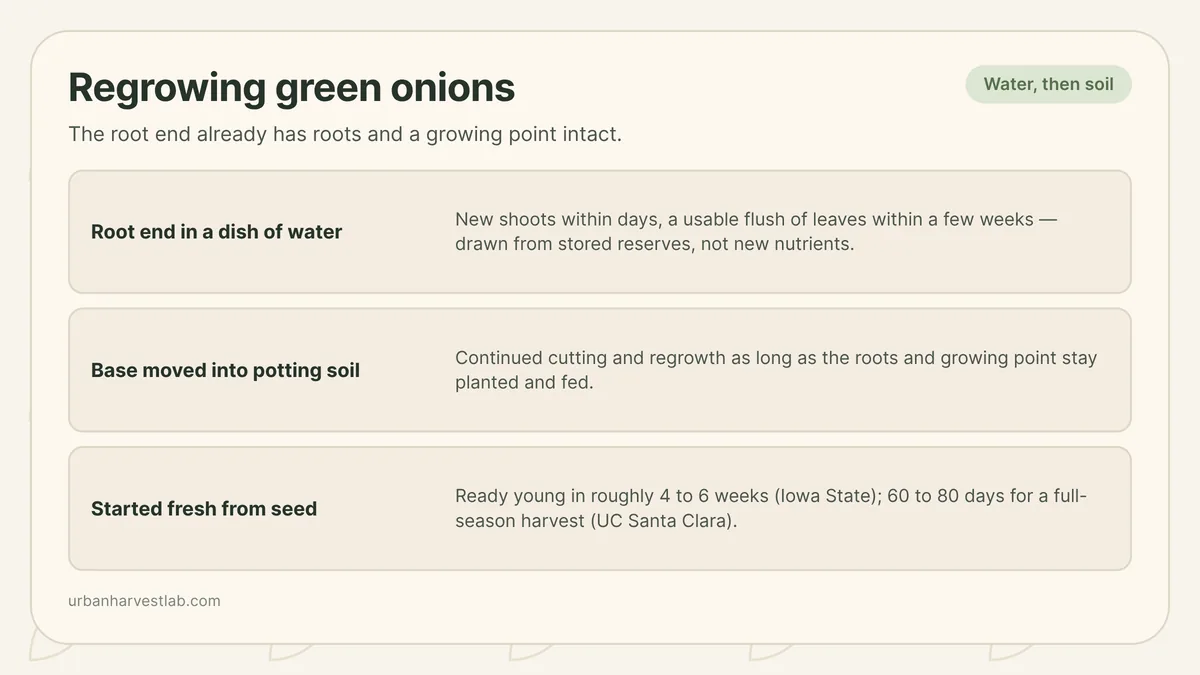
The white root end of a green onion still has its roots and growing point attached, so it resprouts in a dish of water within days. Water alone only carries it so far.
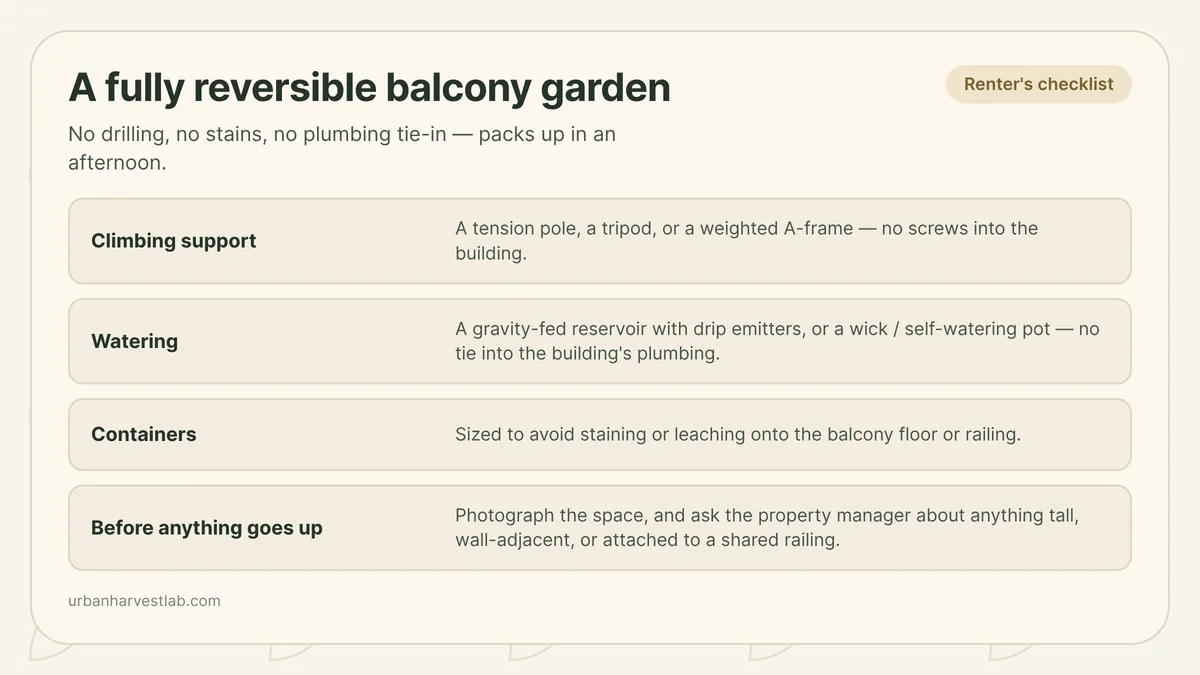
A rental garden holds up under a lease when nothing in it is drilled, stained, or plumbed in permanently -- the container, support, and watering choices that keep it that way, in one before-you-start checklist.
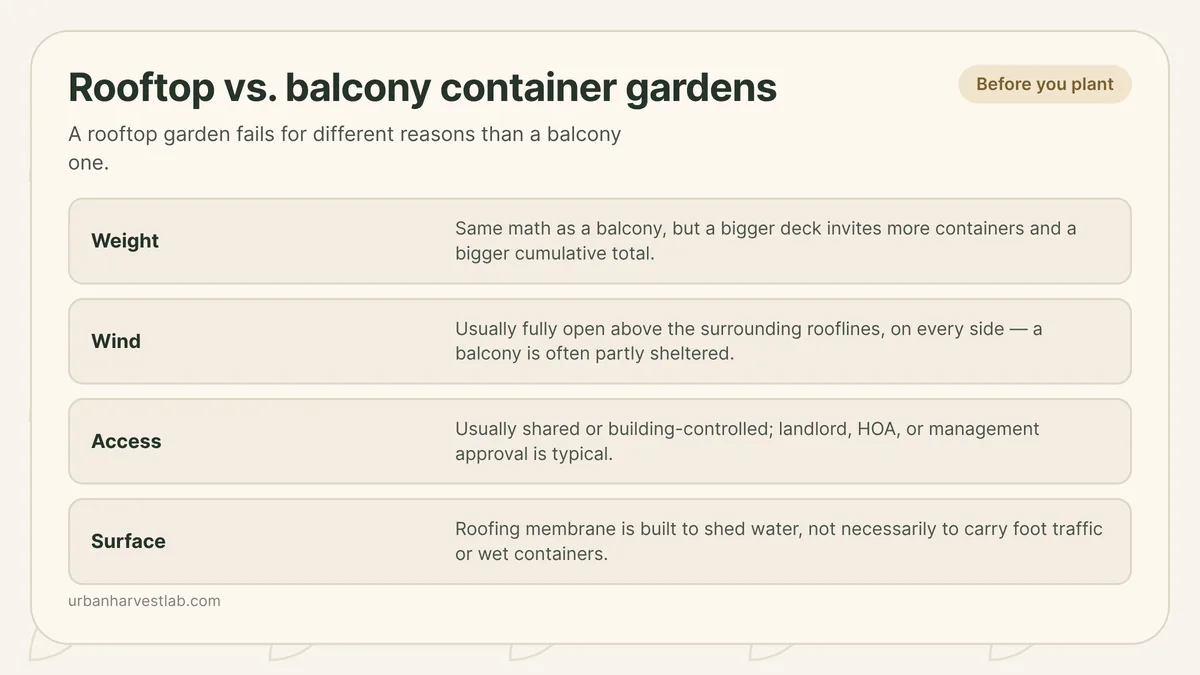
A rooftop looks like a bigger, sunnier balcony, but three things behave differently up there: the weight question gets more urgent, the wind gets worse, and someone else usually has to approve access before a single pot goes up.
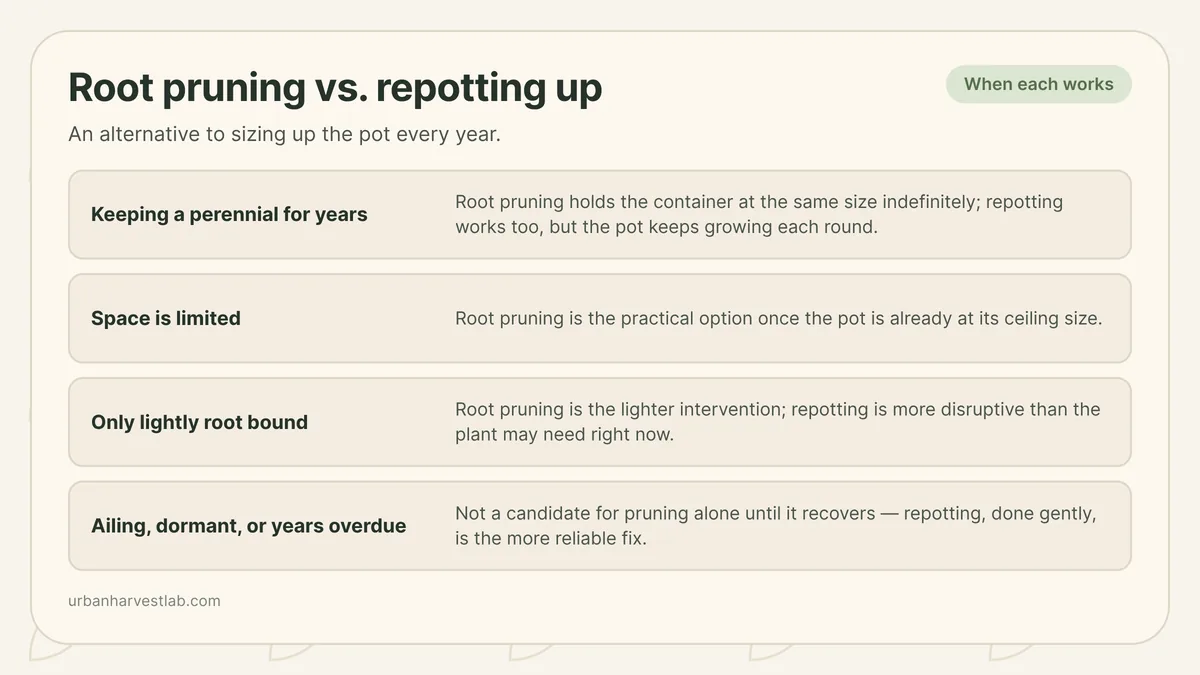
A bigger pot is not the only answer to a root-bound herb. Trimming the root mass and refreshing the soil can hold a perennial in the same container for years, for the herbs it actually suits.
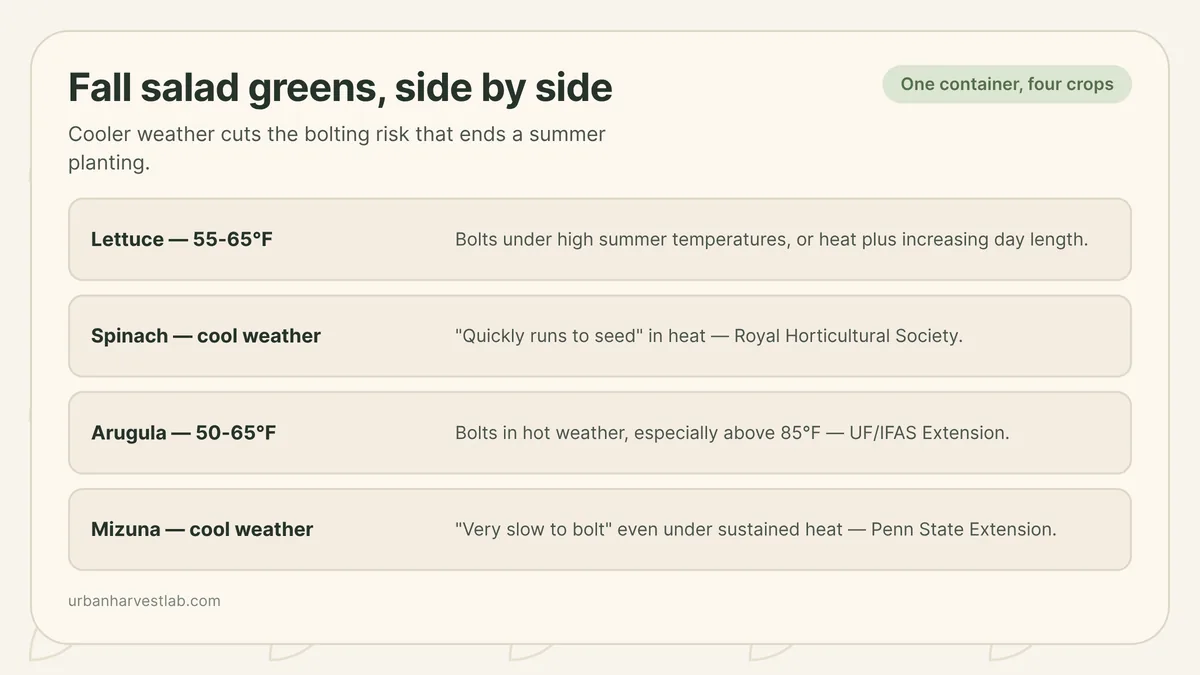
Lettuce, spinach, arugula, and mizuna all share the same summer problem and the same fall fix. Here is how to grow them together once the heat breaks.
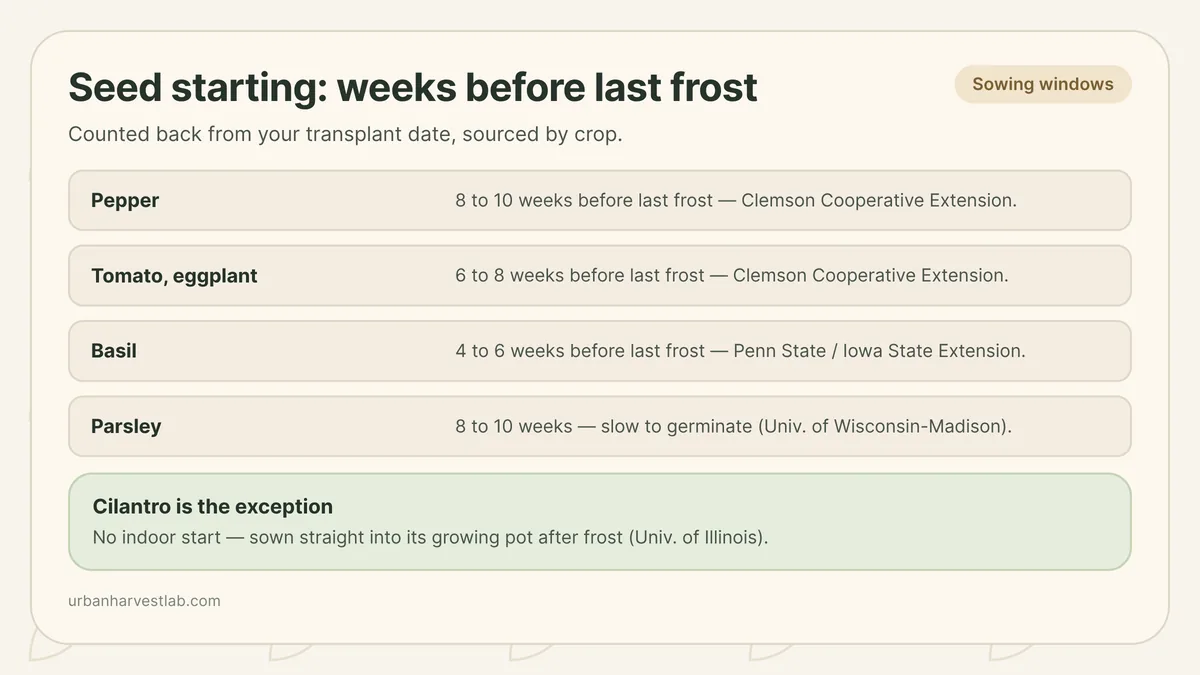
A last frost date is only useful once you count backward from it. This works out that count crop by crop, instead of applying one week figure to everything in the seed drawer.
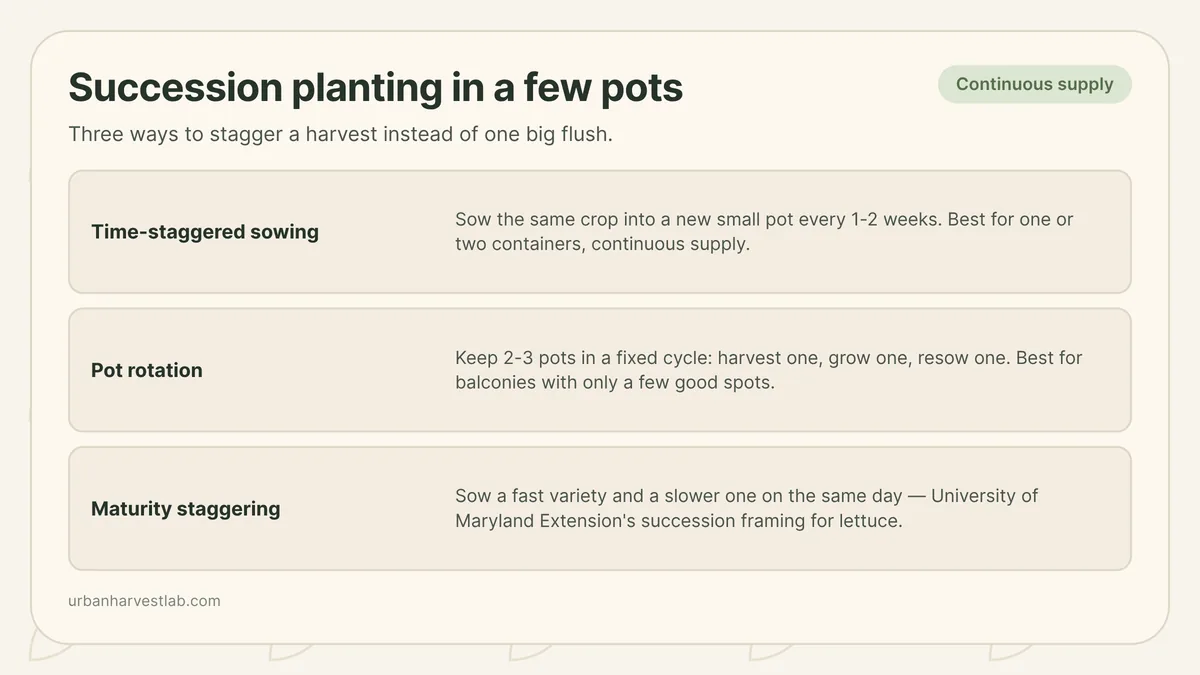
Succession planting in containers is a sowing rhythm: a few pots restarted on a schedule keep producing, where one large planting ripens together and then quits together.
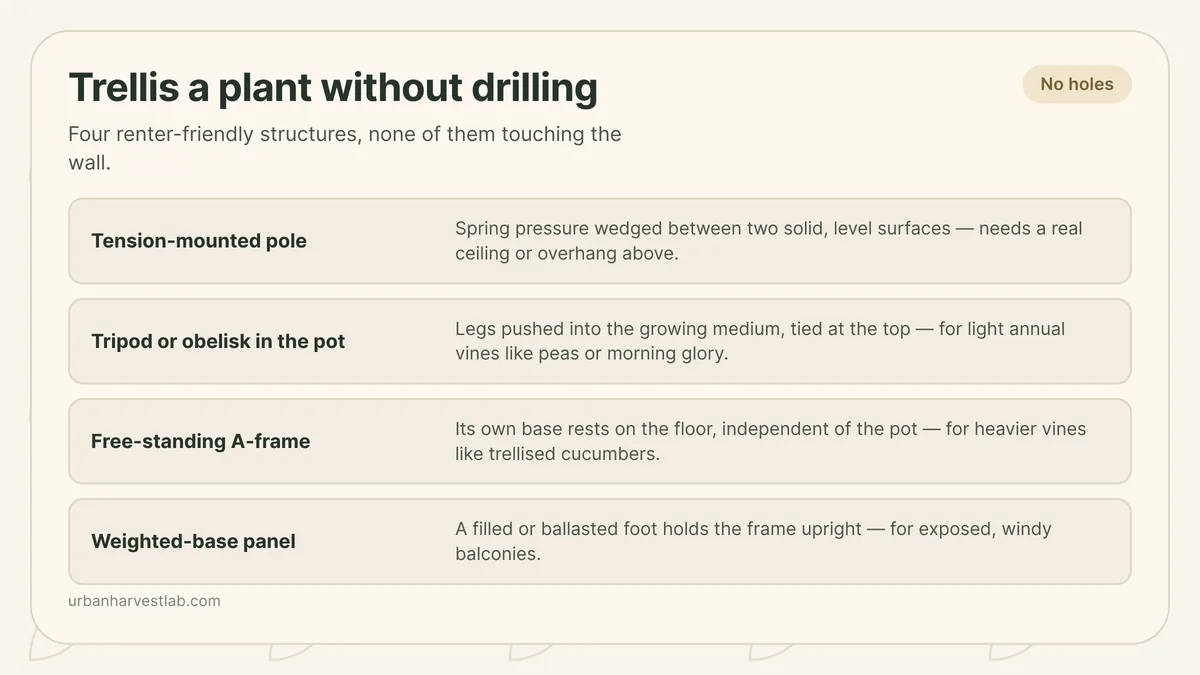
A container has no ground to sink a post into, so a renter-friendly trellis has to get its stability from somewhere else. Four approaches do that without touching a wall, railing, or ceiling.
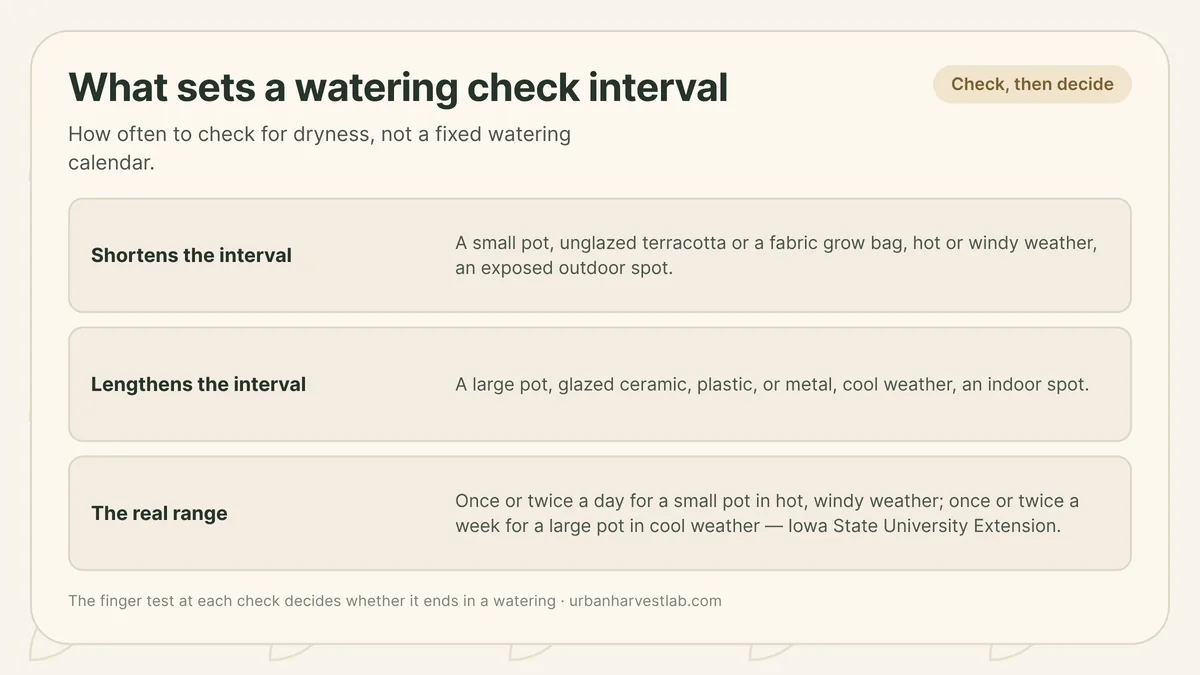
Put in your herb, pot, material, season, and location, and get back a check-interval schedule — a result you can print and tape by the pot. It answers when to test the soil, not when to pour the water.
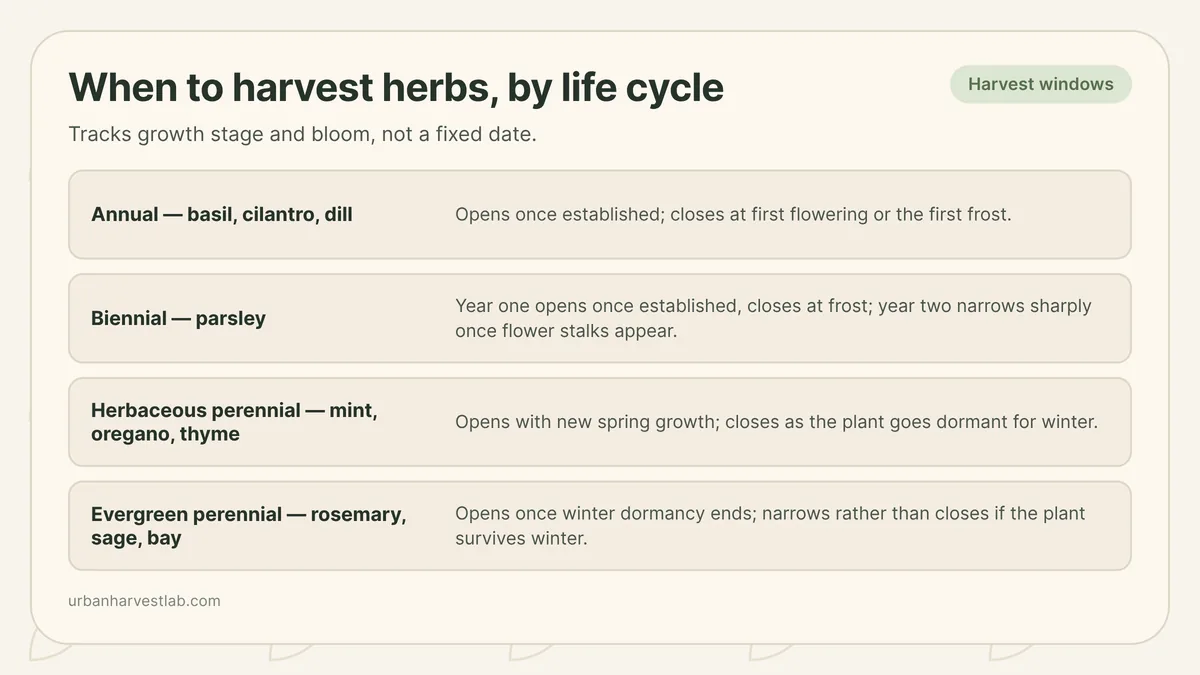
Herb harvest timing is not one fixed date. It follows the plant's life cycle and how close it is to flowering, and that window opens and closes differently for annuals, biennials, and perennials.
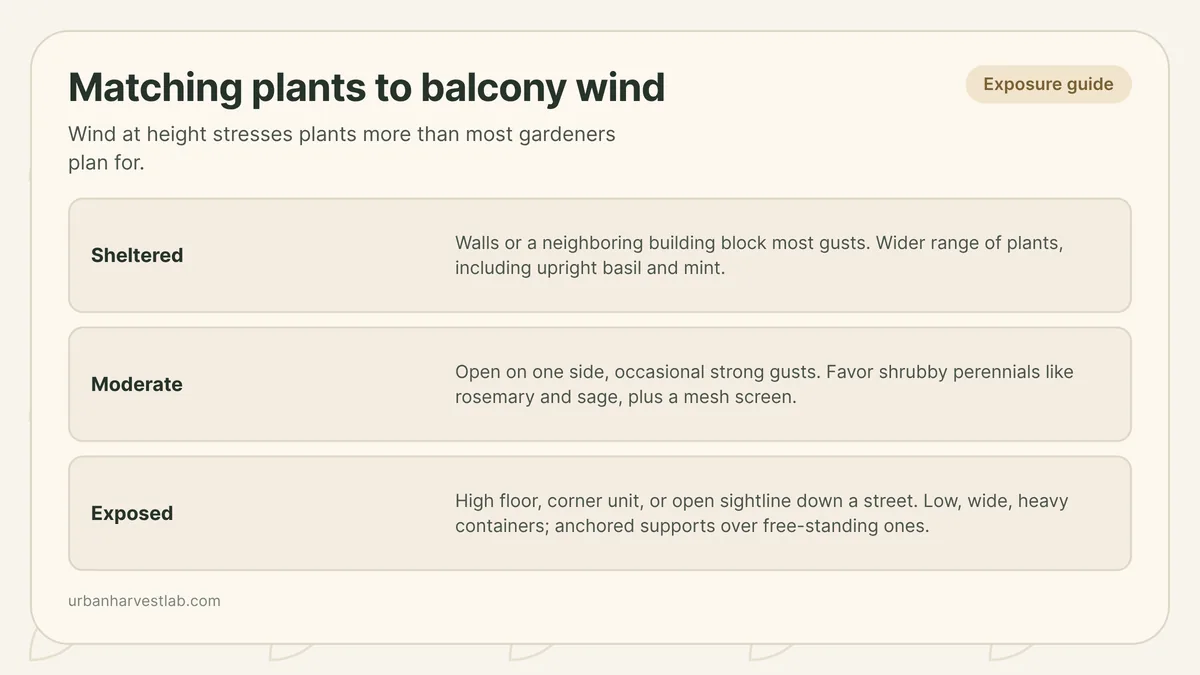
A balcony catches wind differently than a yard does, and the fix is not one trick but three working together: heavier containers, plants suited to an upright or shrubby habit, and a windbreak that softens gusts instead of stopping them dead.
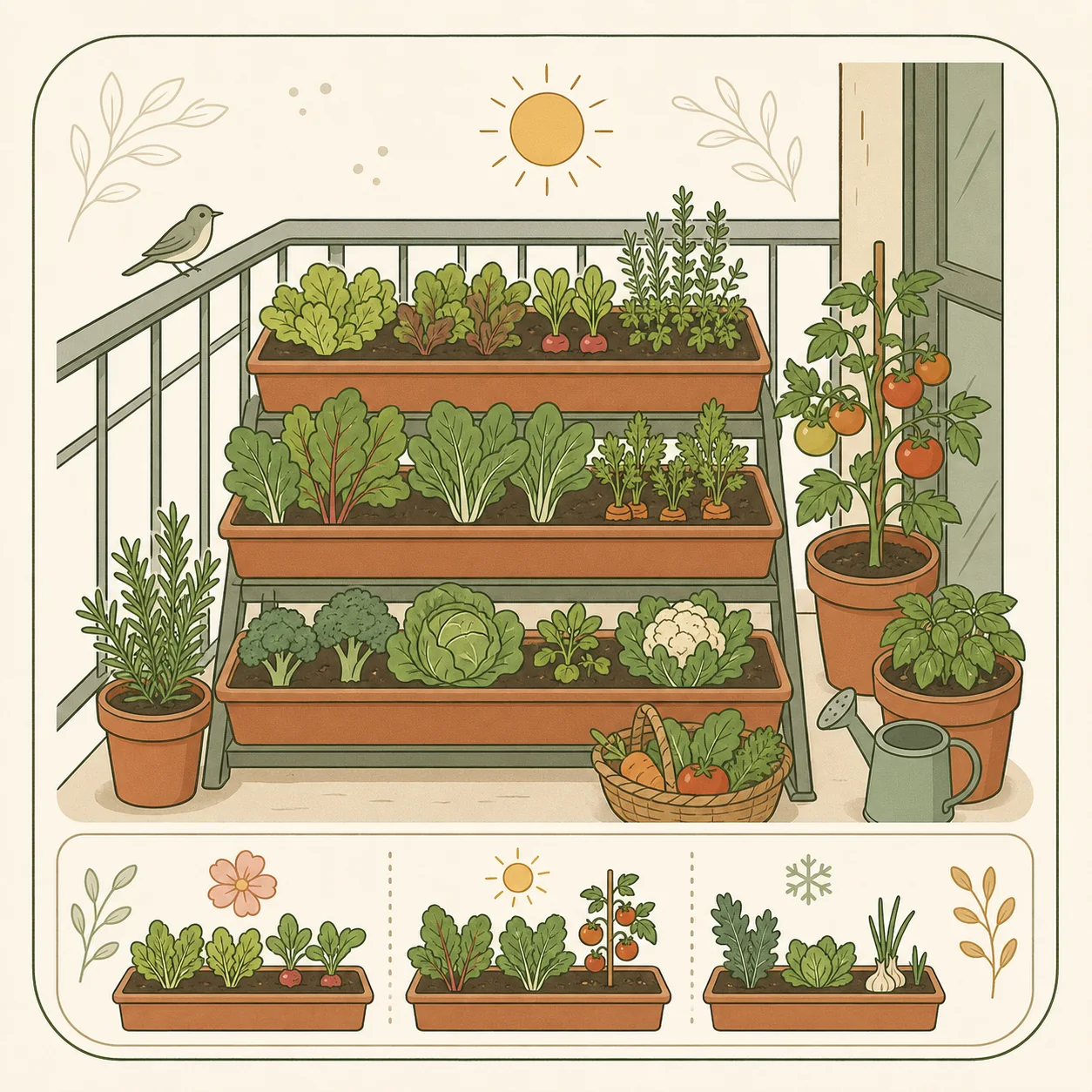
A useful balcony calendar is a set of seasonal decisions, not twelve fixed planting lists. Use temperature, light, and container conditions to decide what happens next.
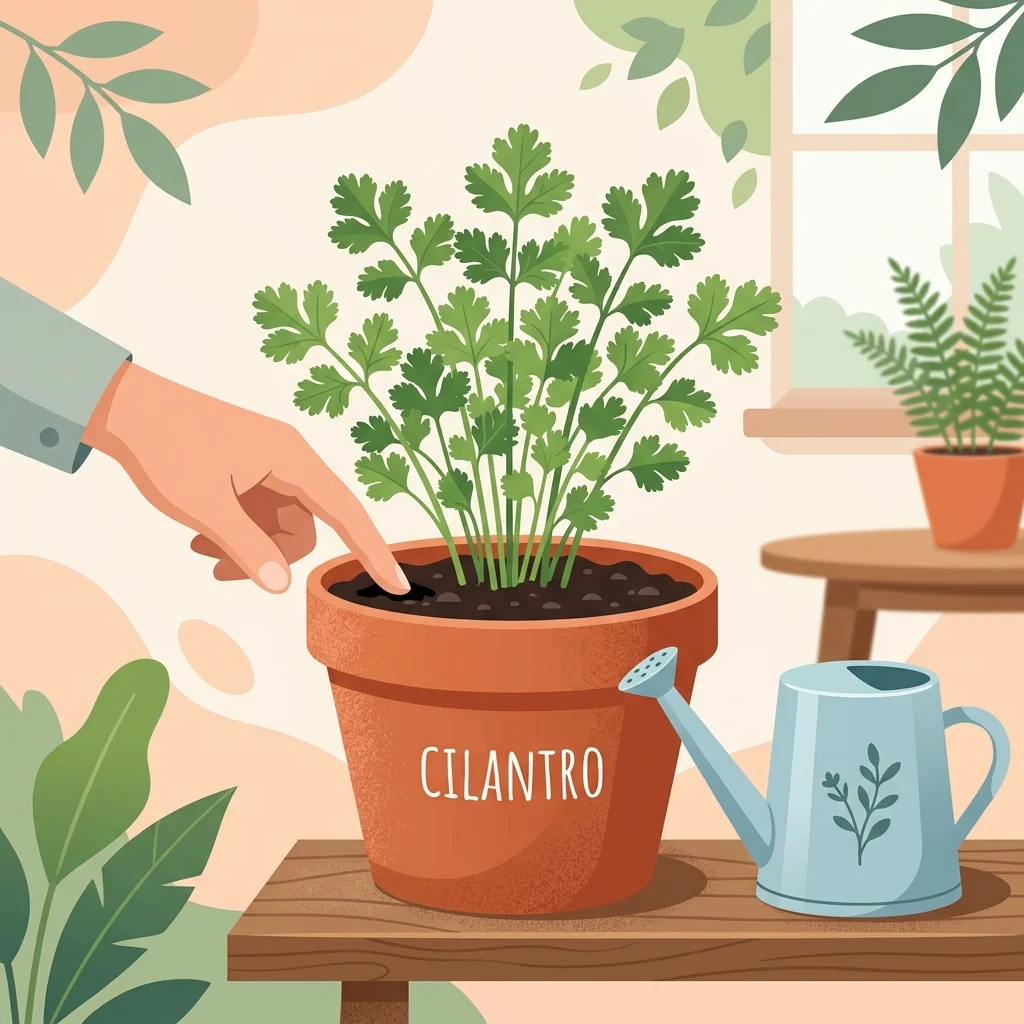
Cilantro wants even moisture and cool conditions, and it bolts when stressed. Water when the top inch dries, and use a deep pot to keep the rhythm steady.
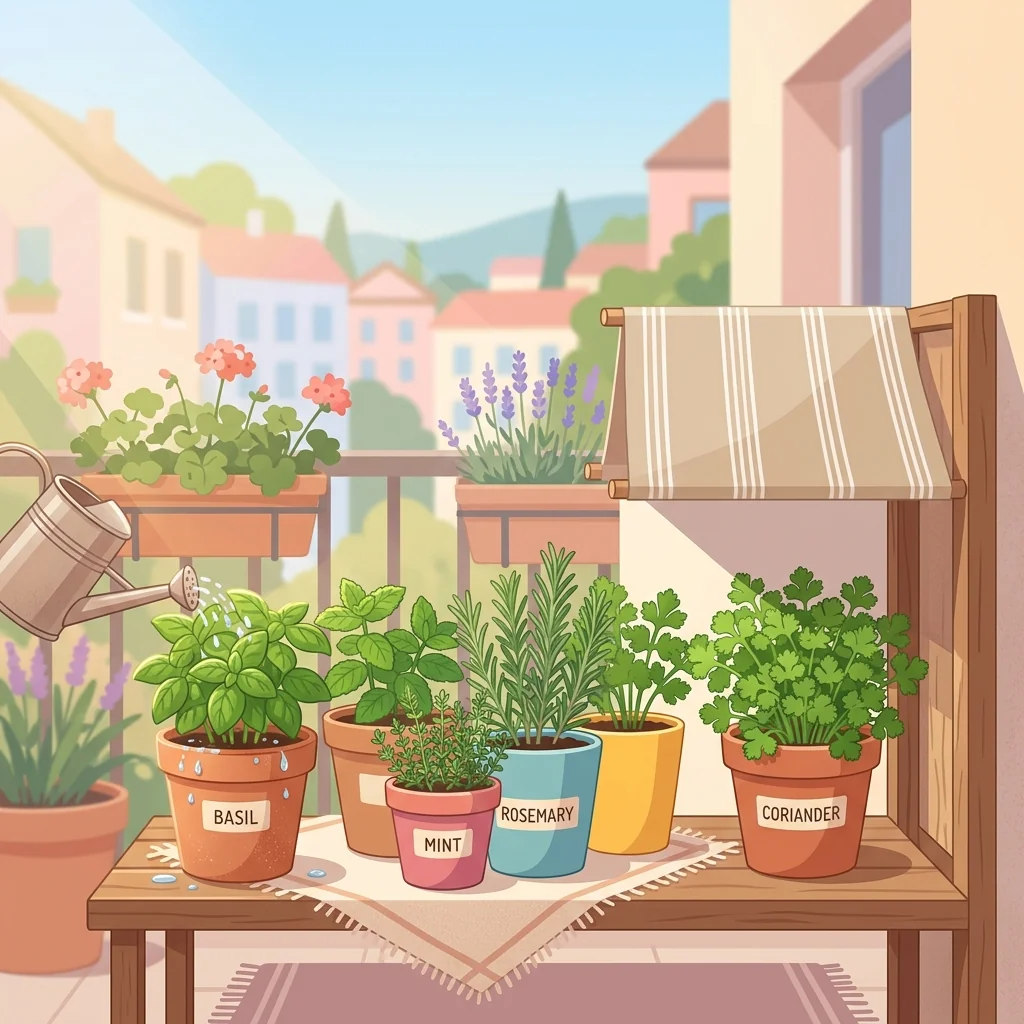
Summer heat can double how fast pots dry out. Here is how often to water each herb in hot weather, plus the shading and mulching tricks that keep pots alive in a heat wave.
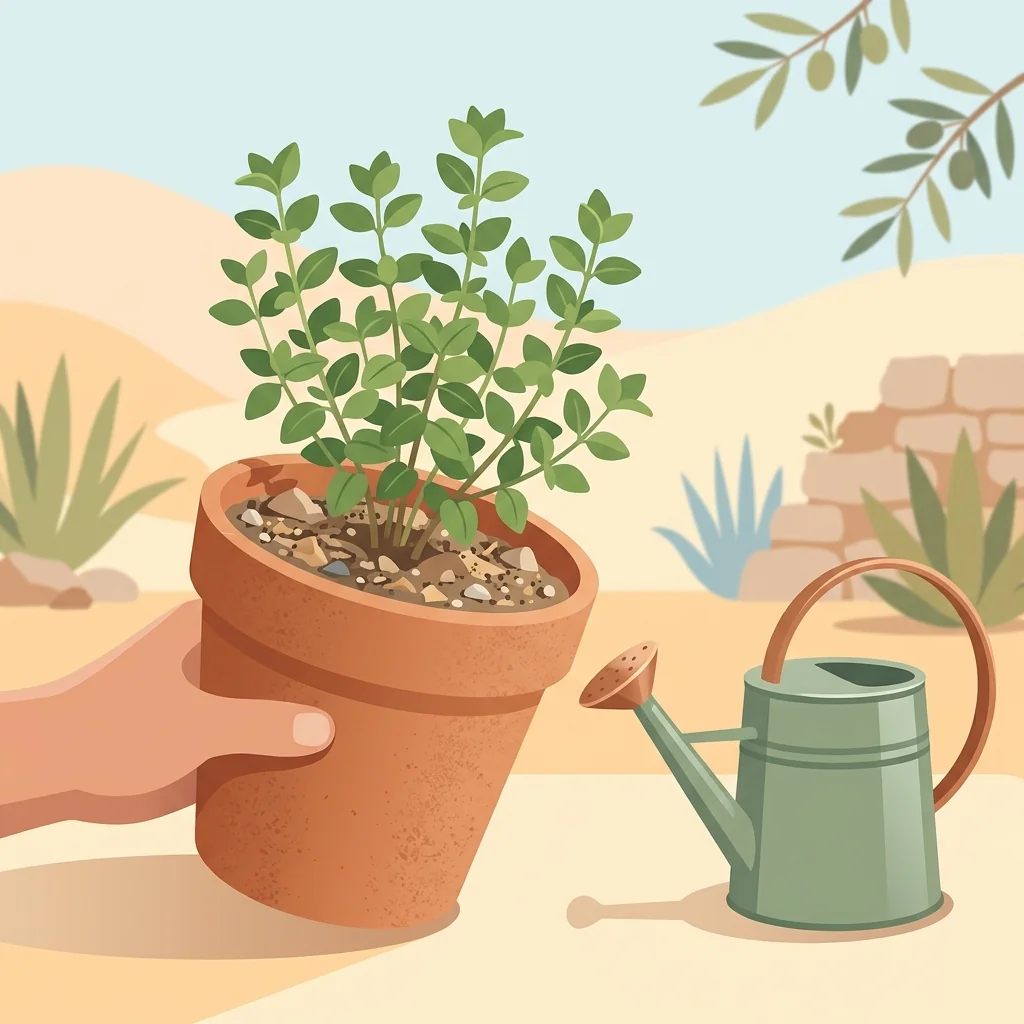
Oregano is a Mediterranean herb that prefers dry, gritty soil. Overwatering is the fastest way to kill it. Water only when the soil has dried out, not on a schedule.
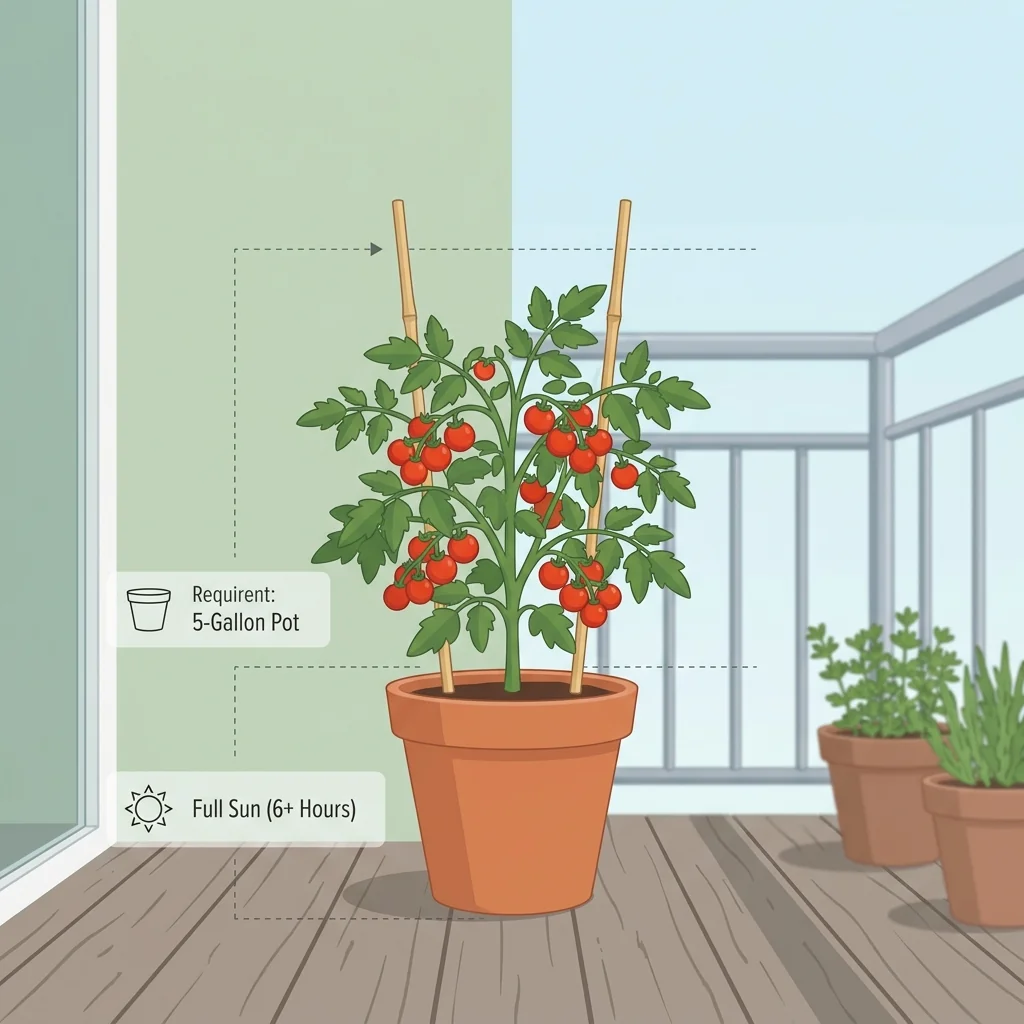
Traditional tomato plants grow into massive, untameable 8-foot jungle vines that require giant cages and take over your entire balcony. But with modern 'micro-dwarf' or patio tomato varieties, you can grow heavy yields of sweet cherry tomatoes on a plant that stays under 2 feet tall. Here is the dwarf tomato container blueprint.
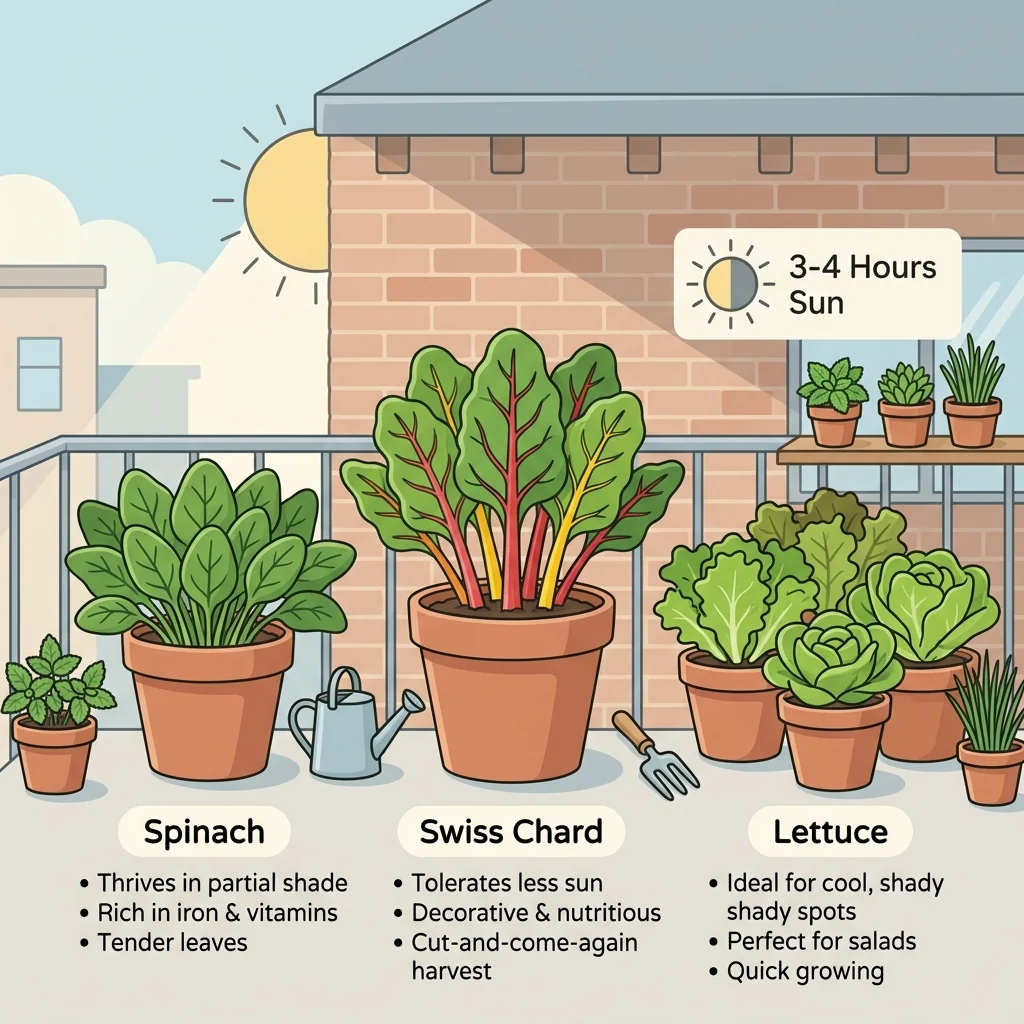
You do not need a baking, south-facing balcony to grow your own food. While sun-loving tomatoes are out, a collection of delicious leafy greens, crisp root crops, and robust herbs will thrive in as little as 3 to 4 hours of indirect light. Here is your shady balcony survival plan.
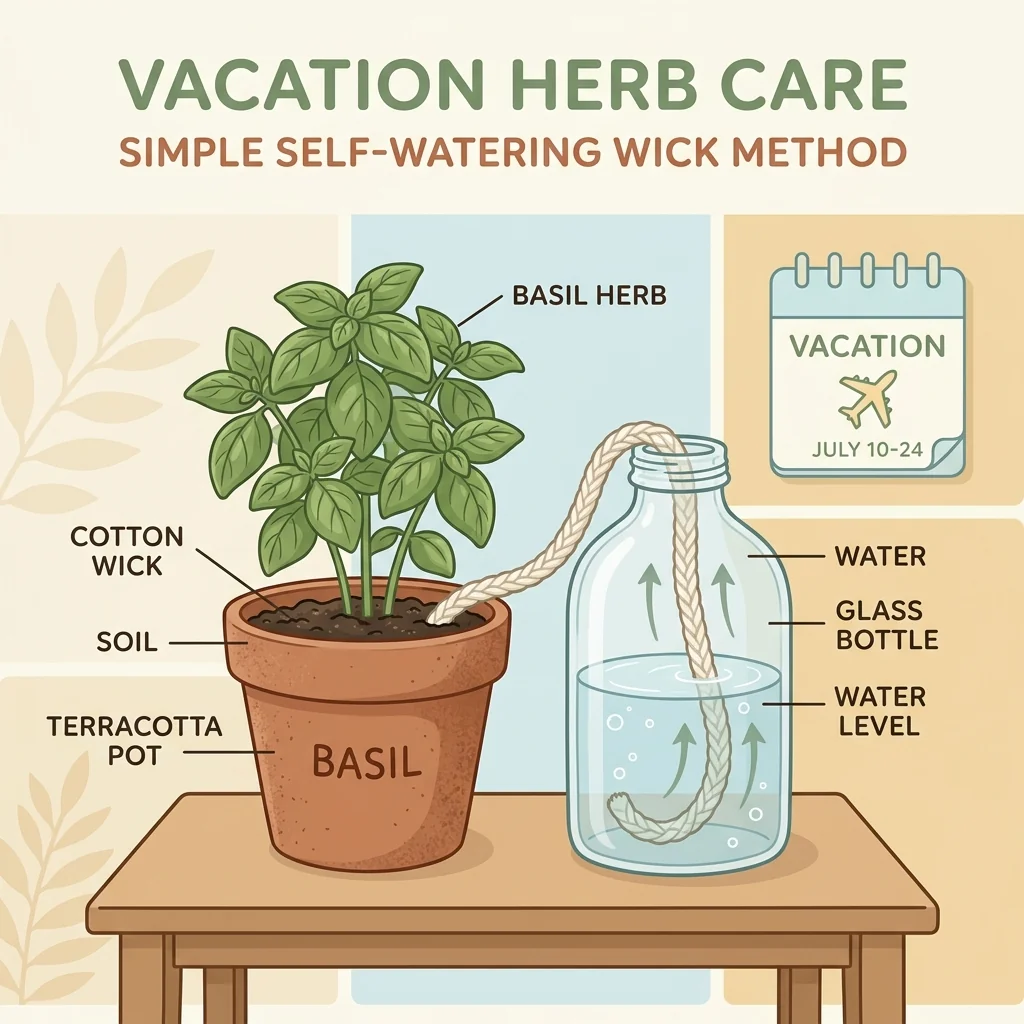
Potted herbs are notoriously sensitive to drying out. If you leave your apartment for a week without a plan, you will return to a graveyard of crispy, brown basil and dead mint. Here are five simple, passive self-watering systems you can build in minutes.
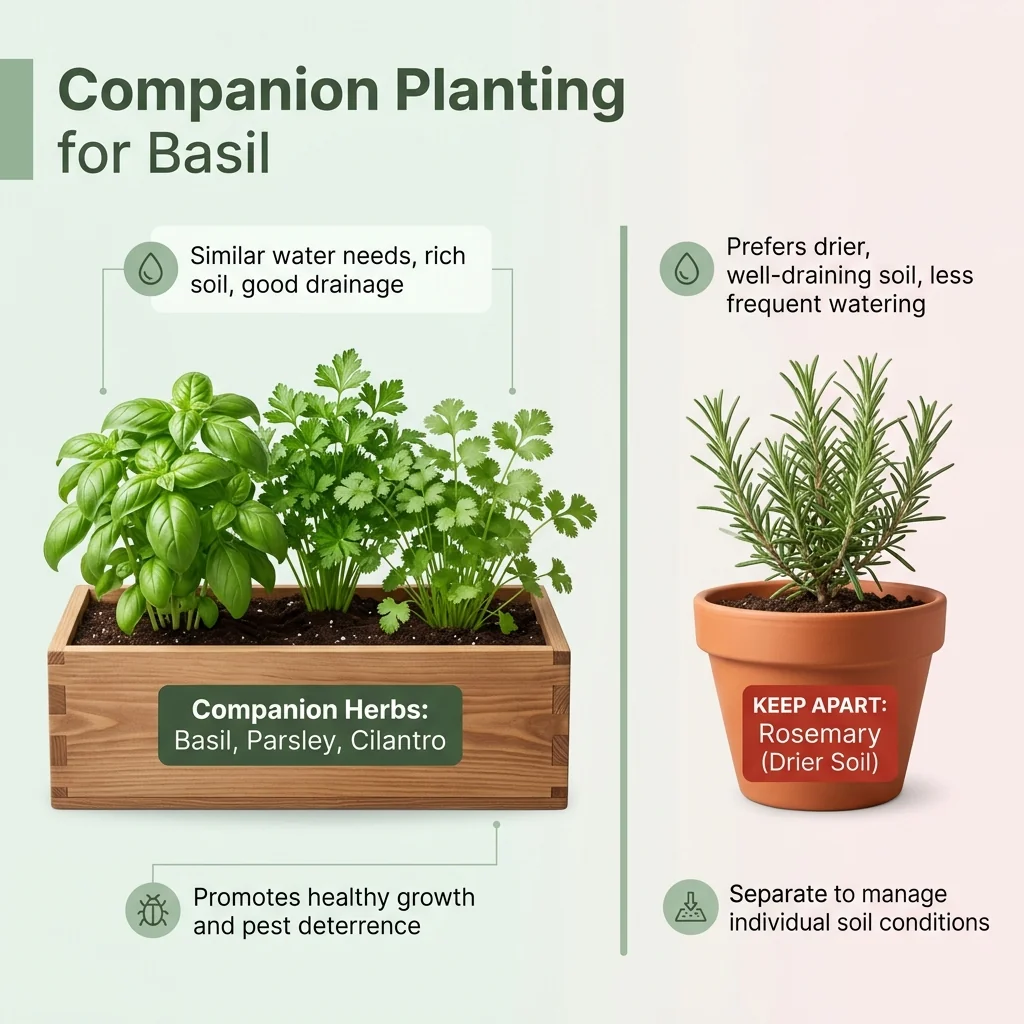
Basil grows happily with other thirsty herbs like parsley, cilantro, and dill, but clashes with drought-tolerant herbs. Here is what to plant with basil and what to skip.
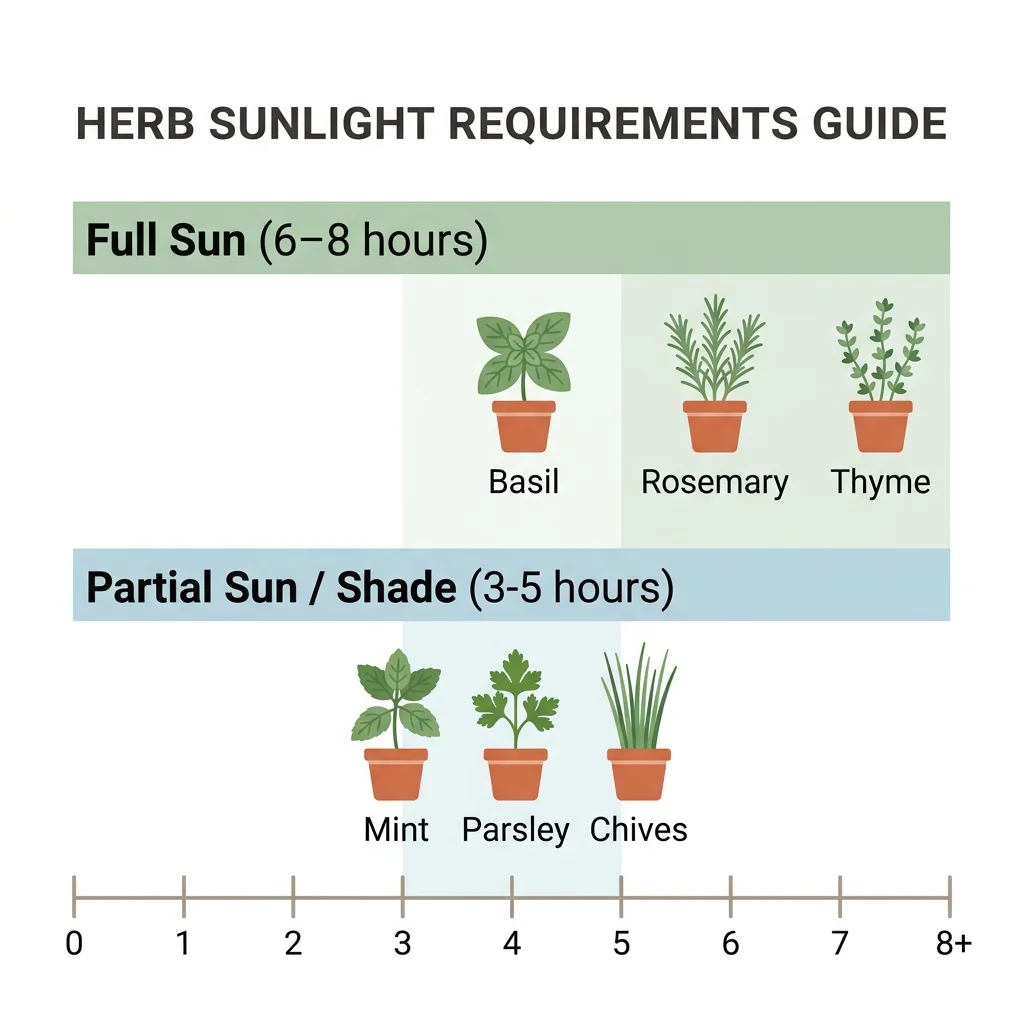
A simple sunlight chart for common herbs, split into full-sun, part-shade, and low-light tolerant, so you can match what you grow to the light your space actually gets.
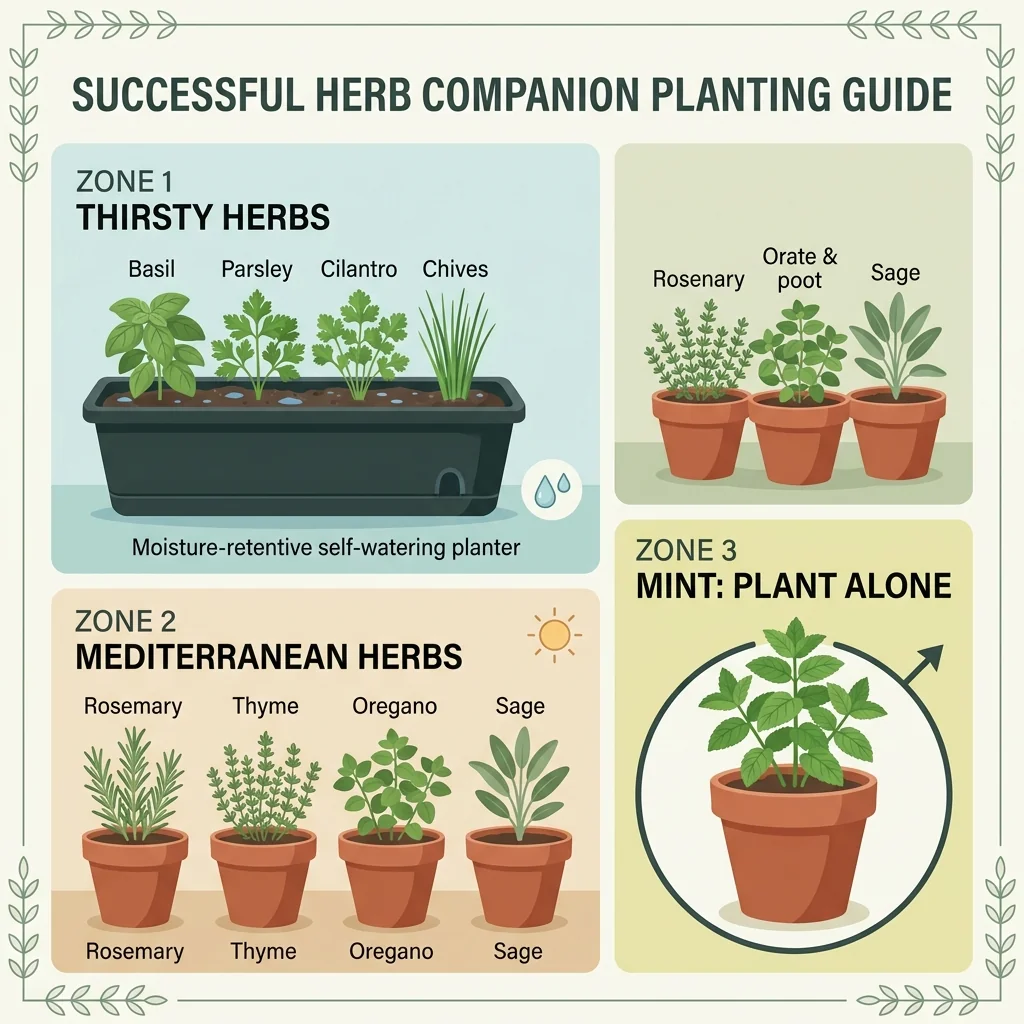
The simple rule for planting herbs together is to match their water and light needs. This chart shows which herbs share a pot happily and which ones to keep apart.
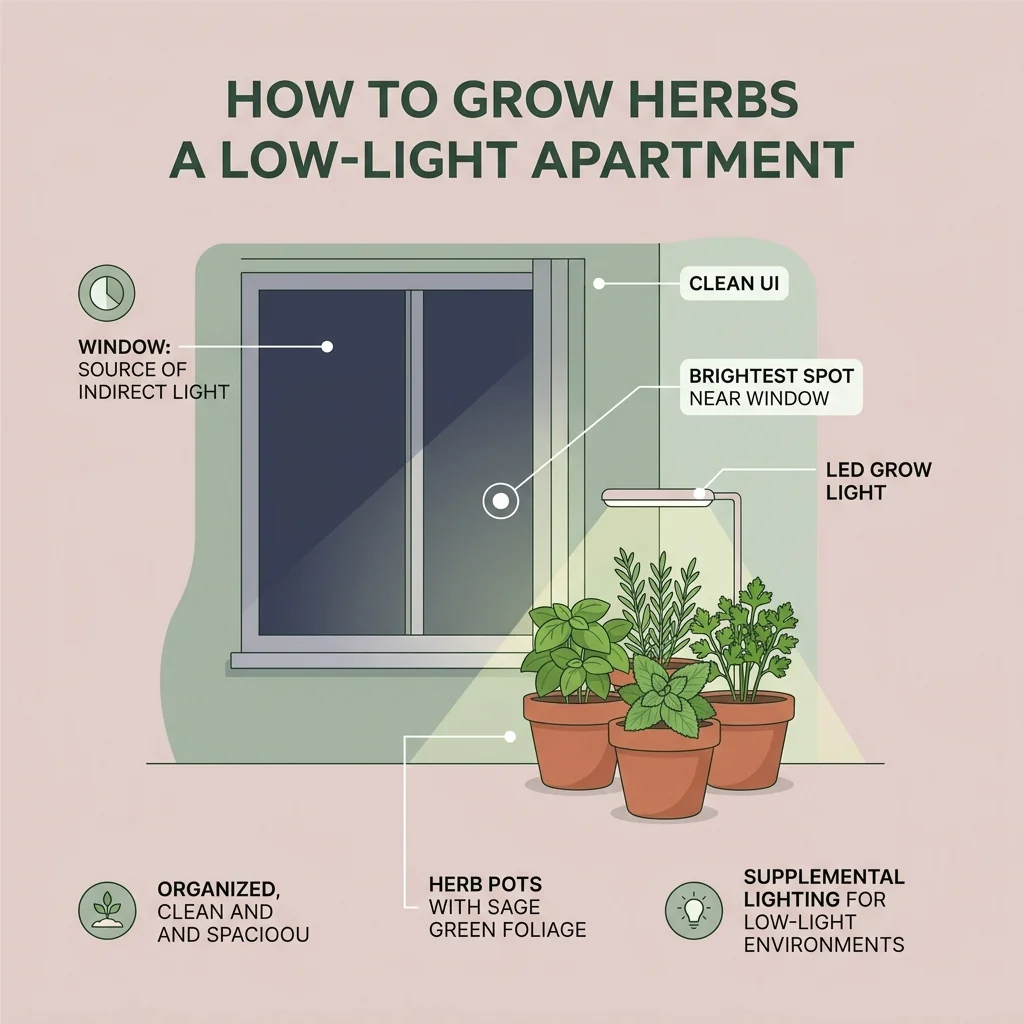
A dark apartment does not rule out herbs, but it changes the strategy. This is a how-to for placement, expectations, and the grow-light decision, not just a herb list.
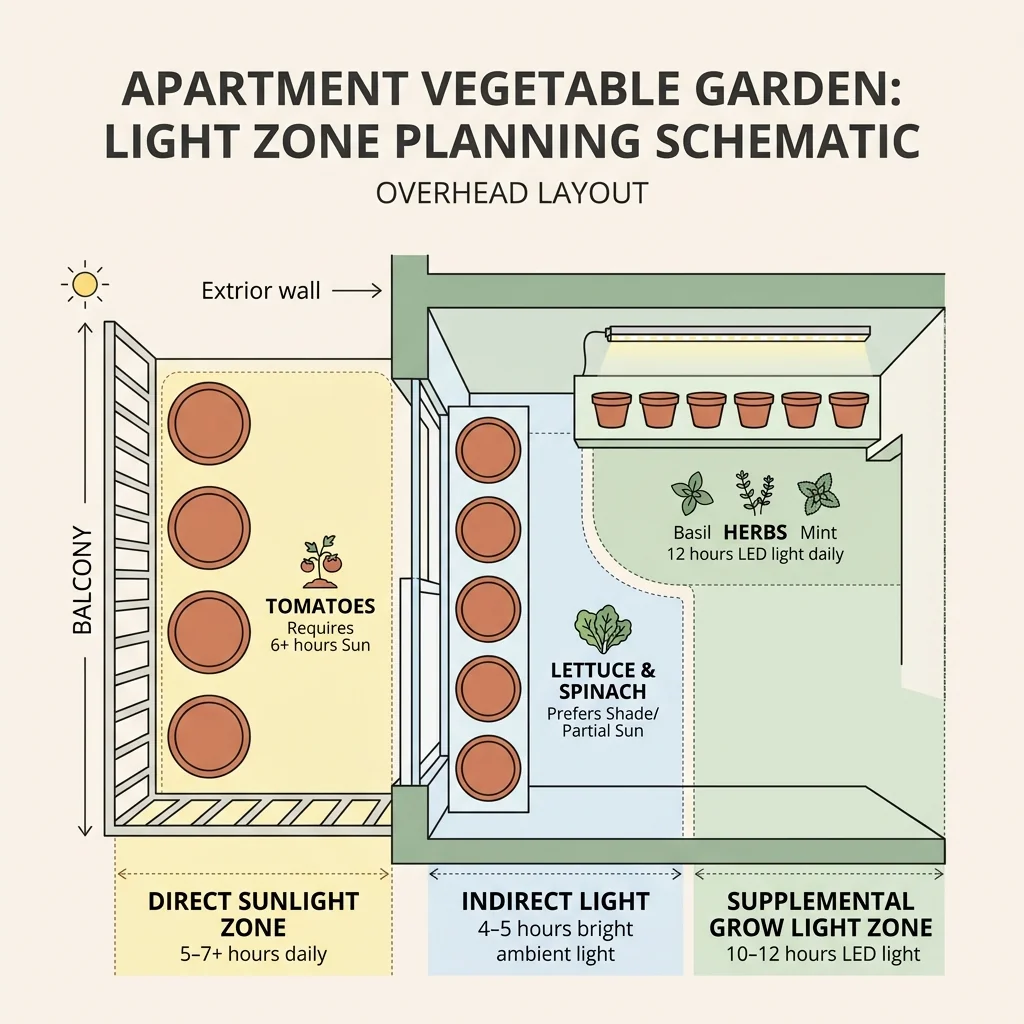
Growing food in an apartment works when light, containers, crops, and routine are planned together. This is a simple, step-by-step plan to start from scratch.
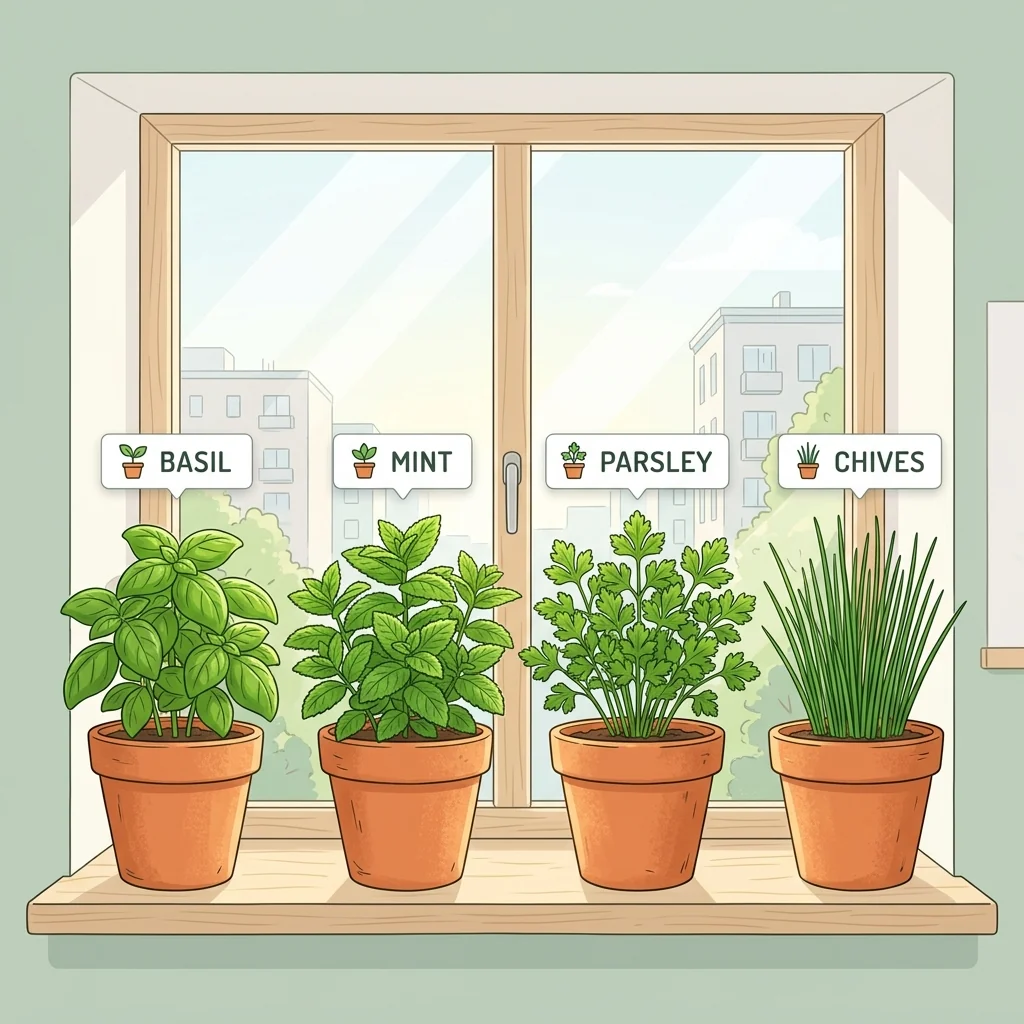
You do not need a yard to grow herbs. These forgiving, compact herbs do well on apartment windowsills and counters, matched to how much light you actually have.
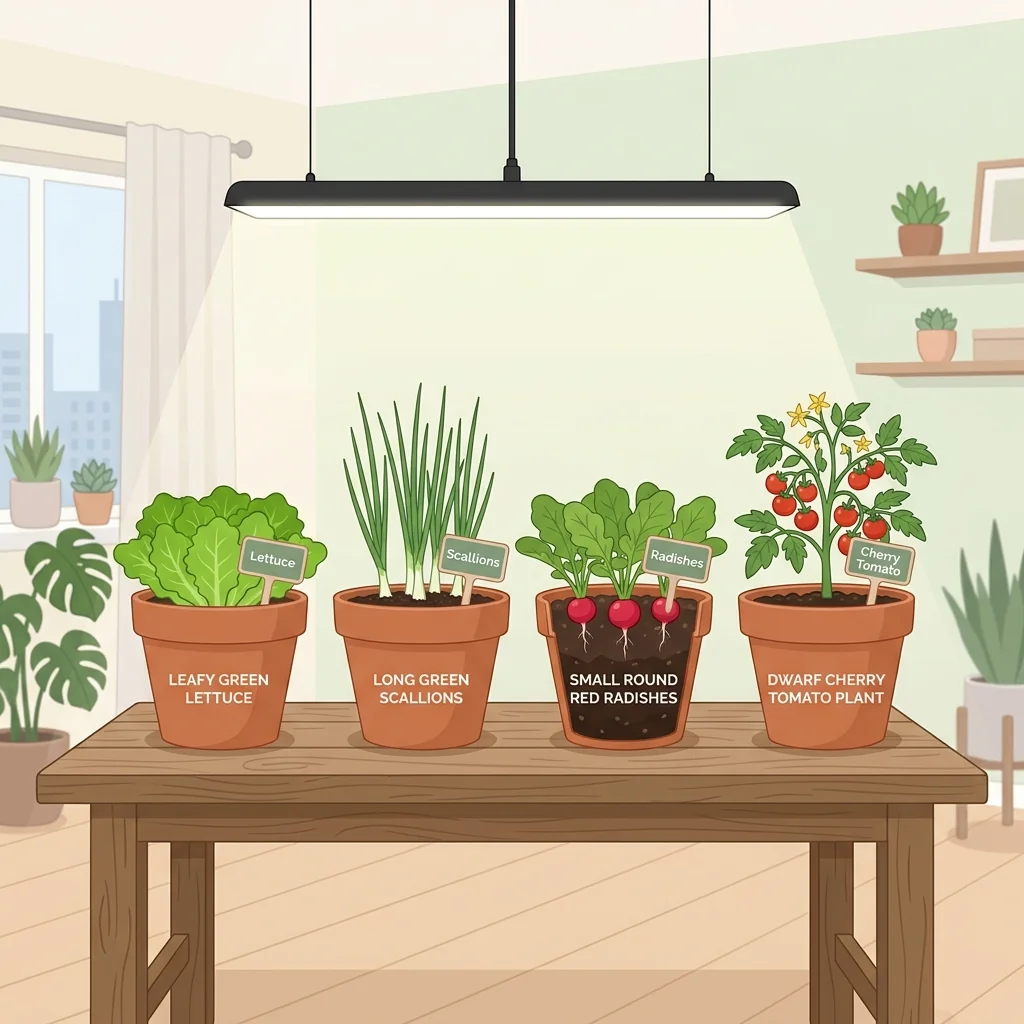
Beyond herbs, plenty of vegetables grow indoors in an apartment. Leafy greens and fast crops are the easy wins; fruiting veg are possible with strong light.
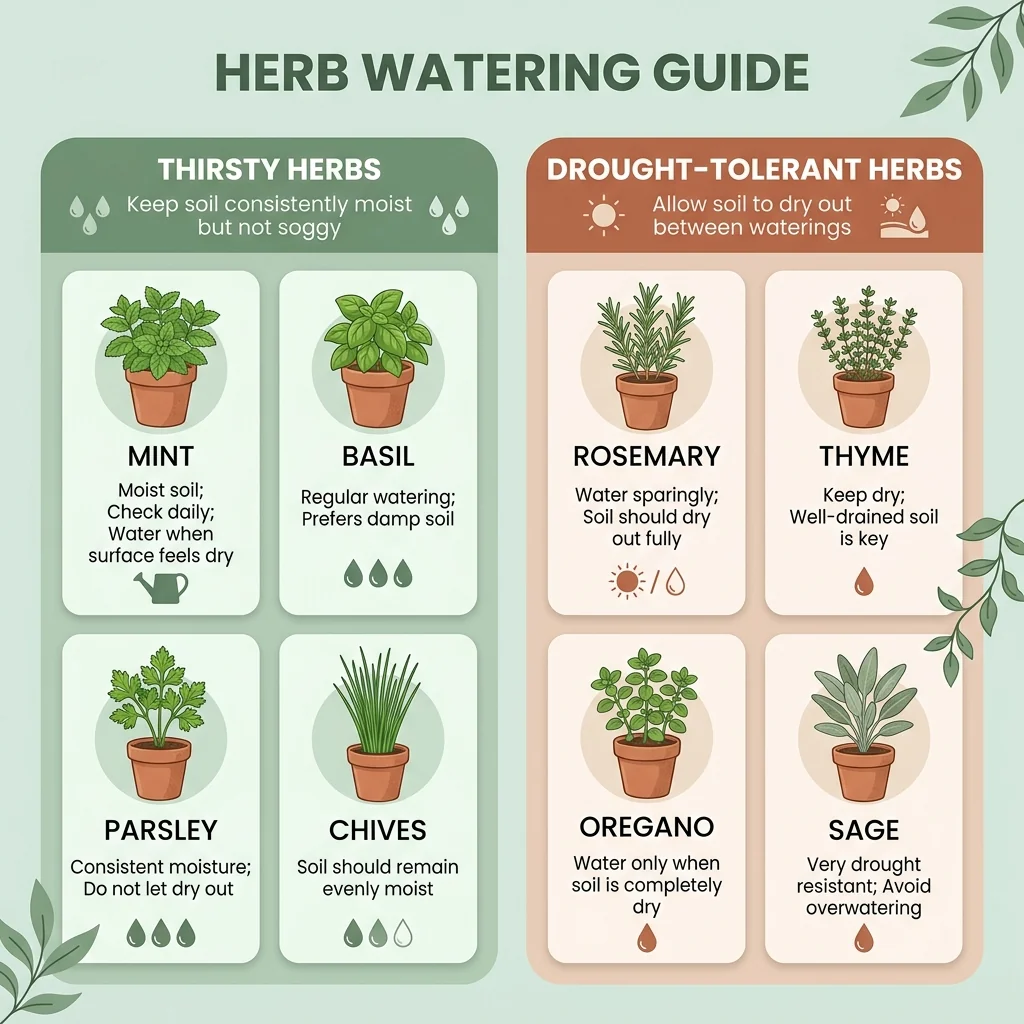
How to water several potted herbs at once: which camp each herb belongs to, which pot to check first, and how to tell a dry wilt from a wet one.
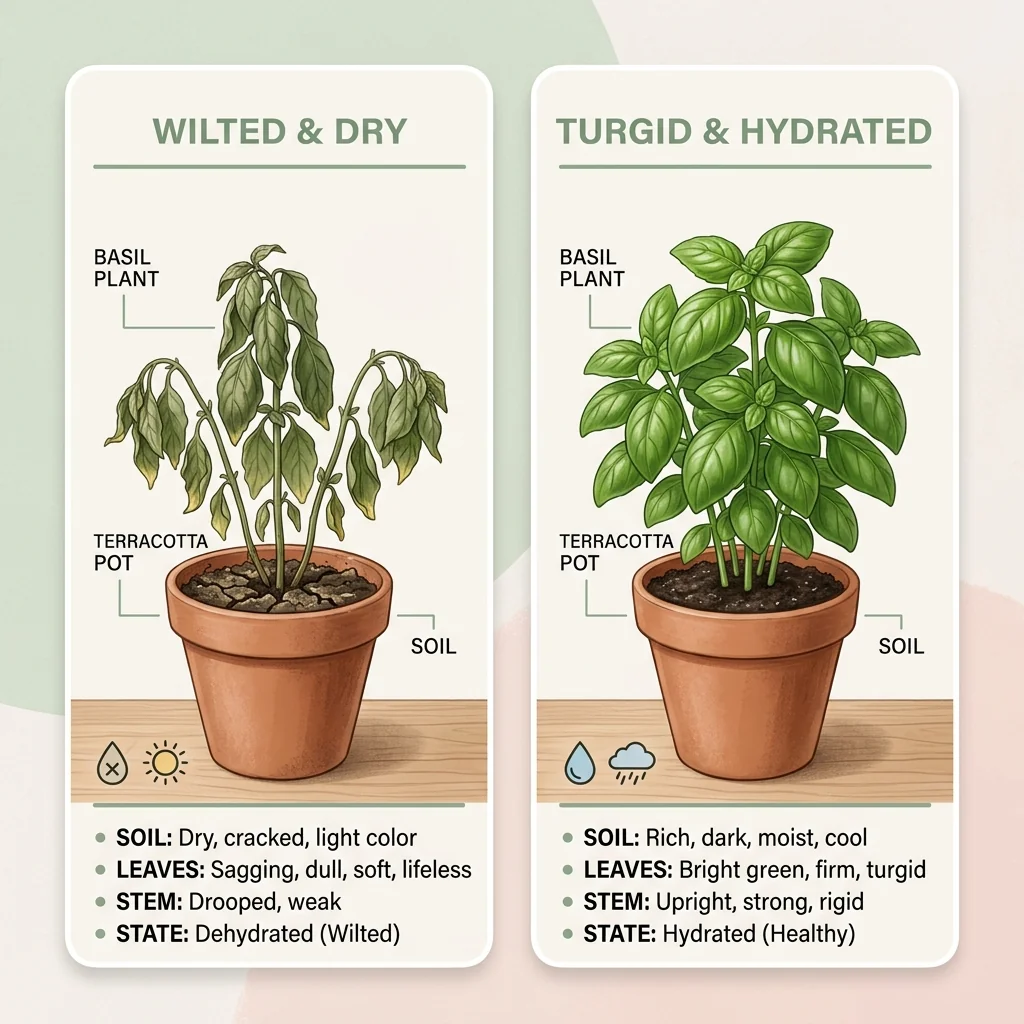
Potted basil often needs water every one to three days, but the reliable trigger is a drying upper root zone plus a lighter pot—not a repeating alarm.
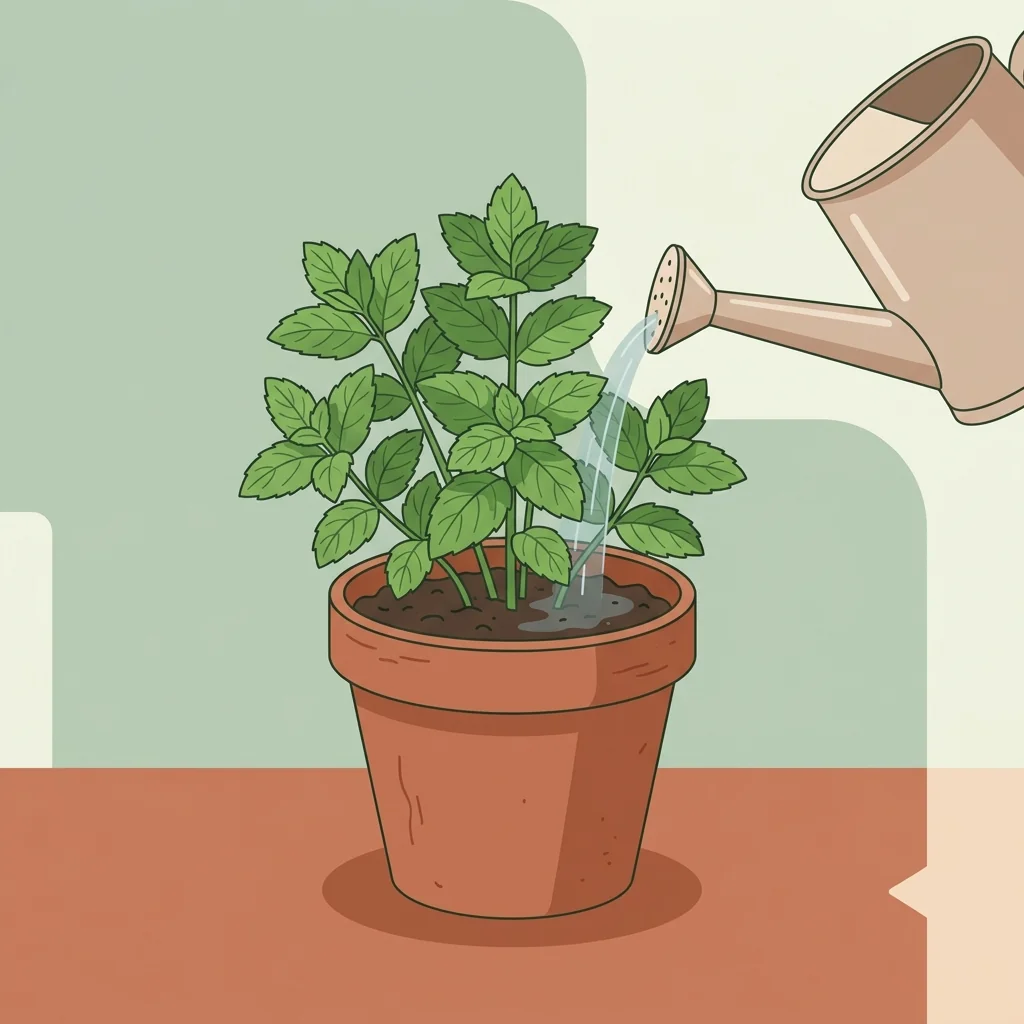
Mint is thirstier than most herbs and sulks when it dries out. Keep the soil lightly and consistently moist, and it will grow as fast as you can pick it.
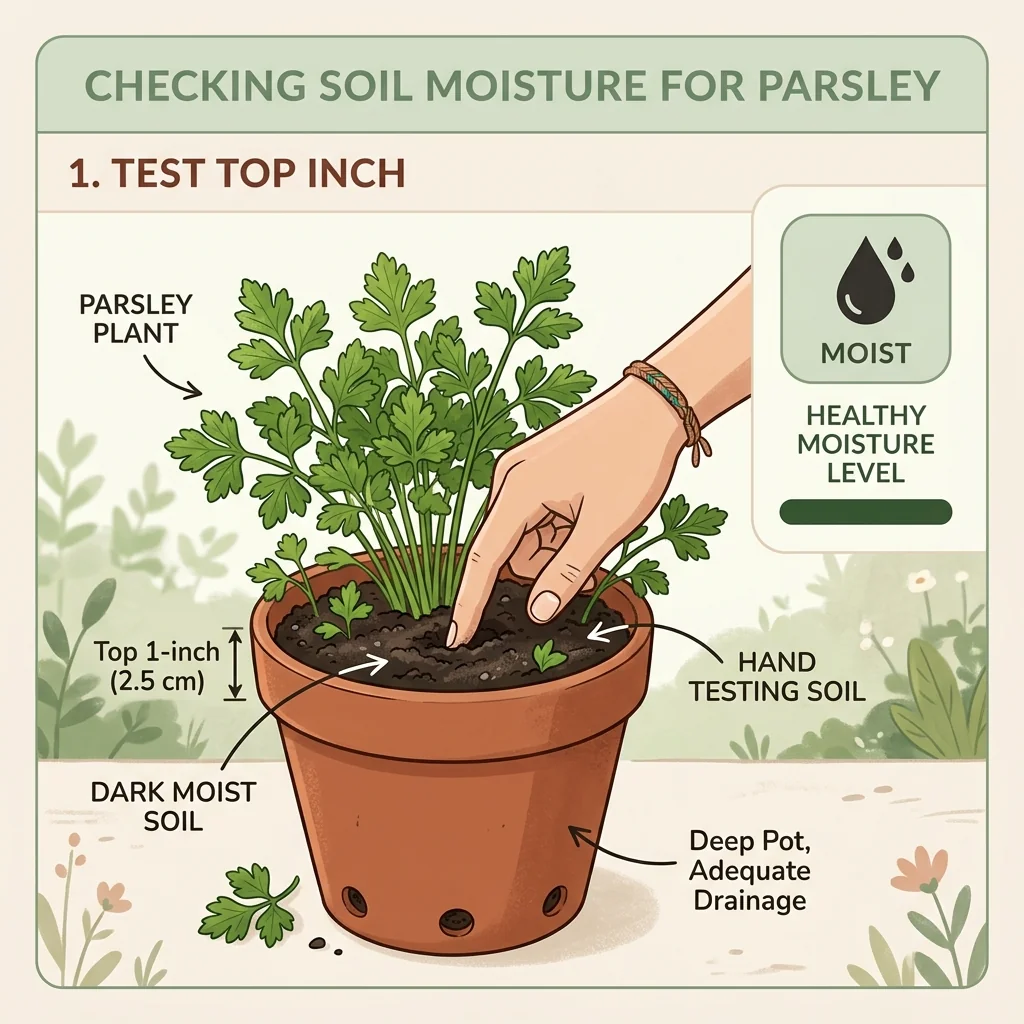
Parsley sits in the middle of the watering scale: it wants steady moisture for its taproot but not soggy soil. Water when the top inch dries and it stays lush.
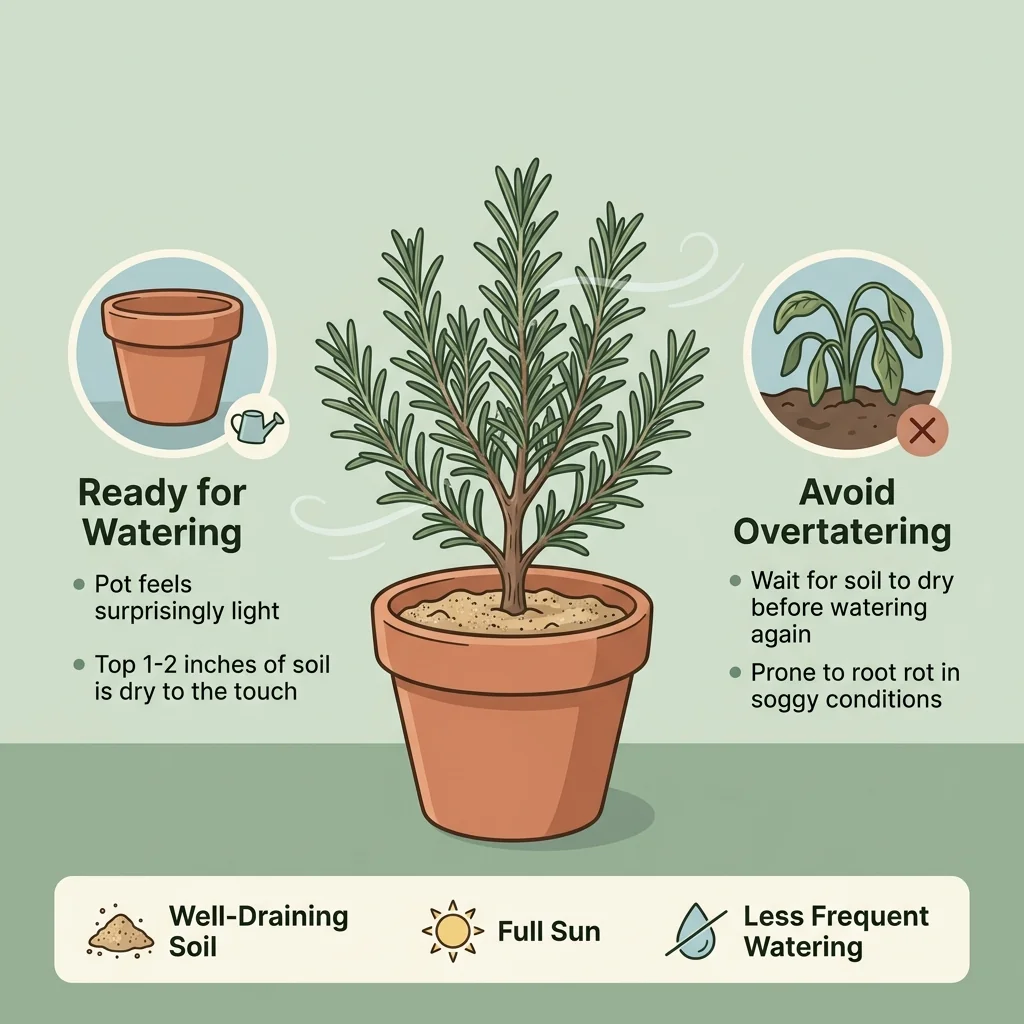
Rosemary kills more gardeners with kindness than neglect. Water it deeply but infrequently, only once the soil has dried, and it will thrive on the dry side.
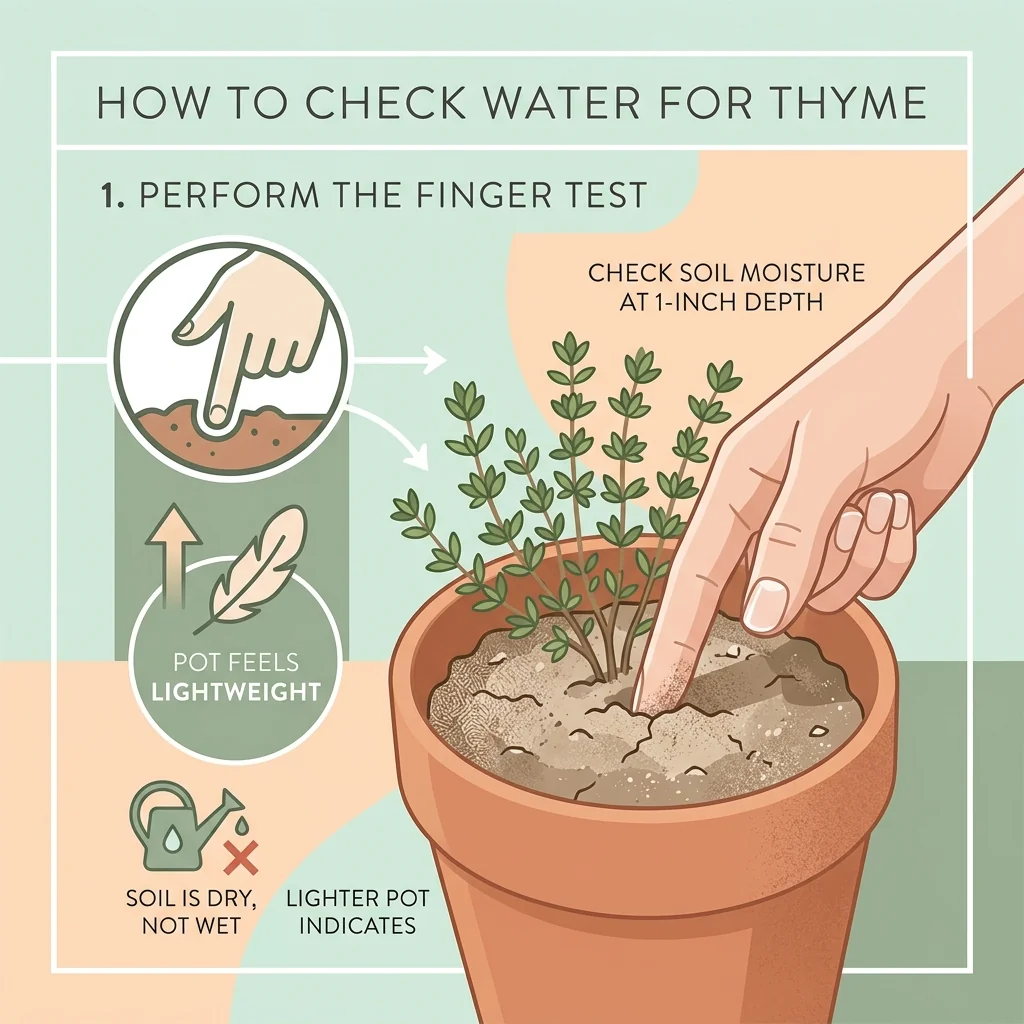
Thyme is a Mediterranean herb that hates wet feet. Water it only when the pot feels light and the soil is dry, and it will reward you for the neglect.
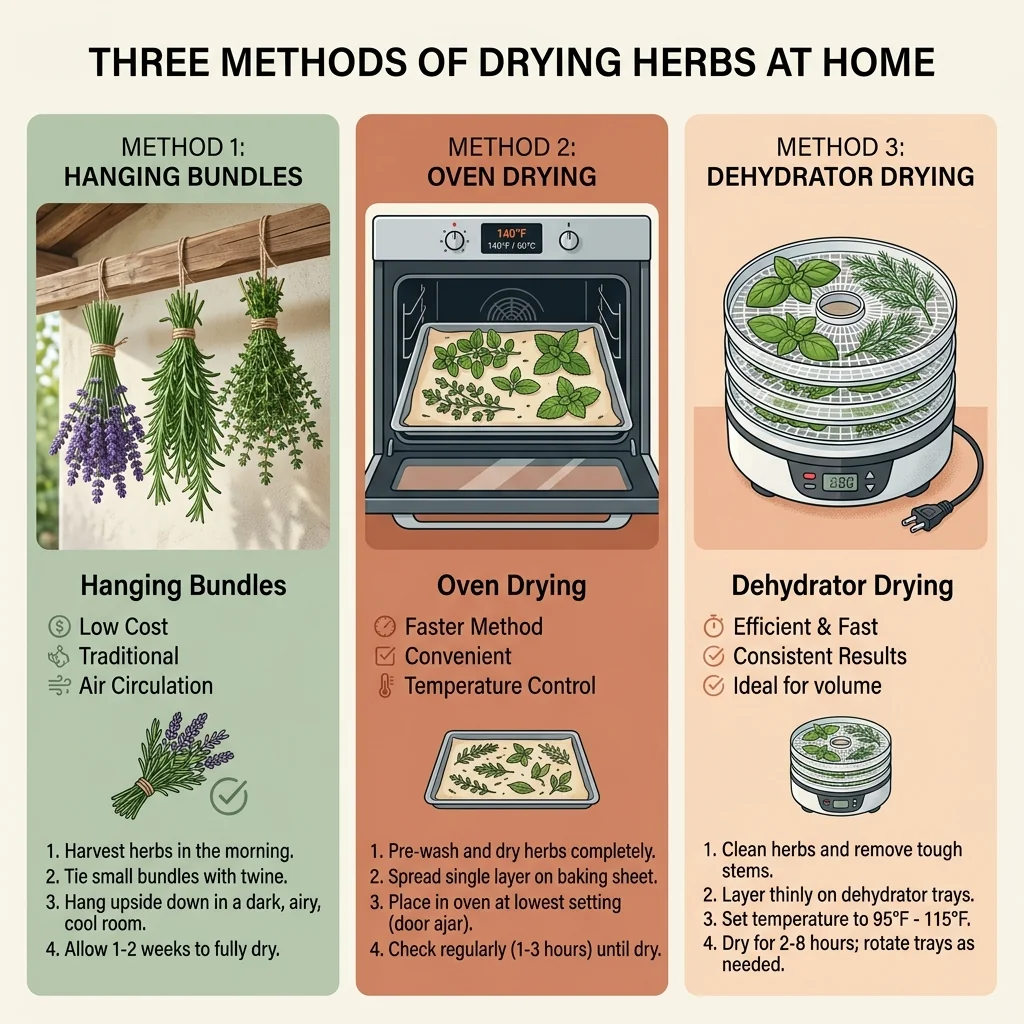
Drying is the best way to preserve woody herbs like rosemary, thyme, and oregano. Here are three methods, the temperatures to use, and which herbs to skip.
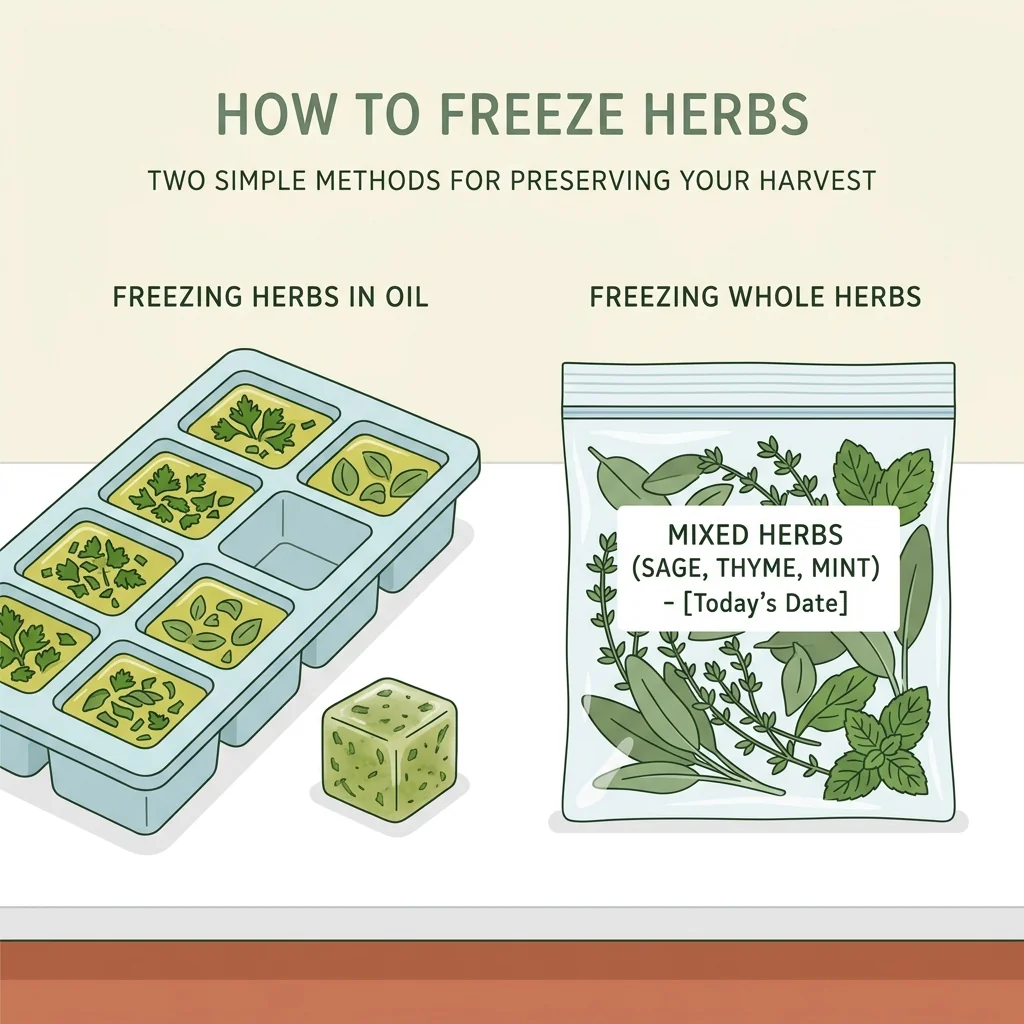
Freezing beats drying for soft herbs. Chopped into oil-filled ice cube trays or frozen whole, basil and parsley keep far more of their fresh flavor.
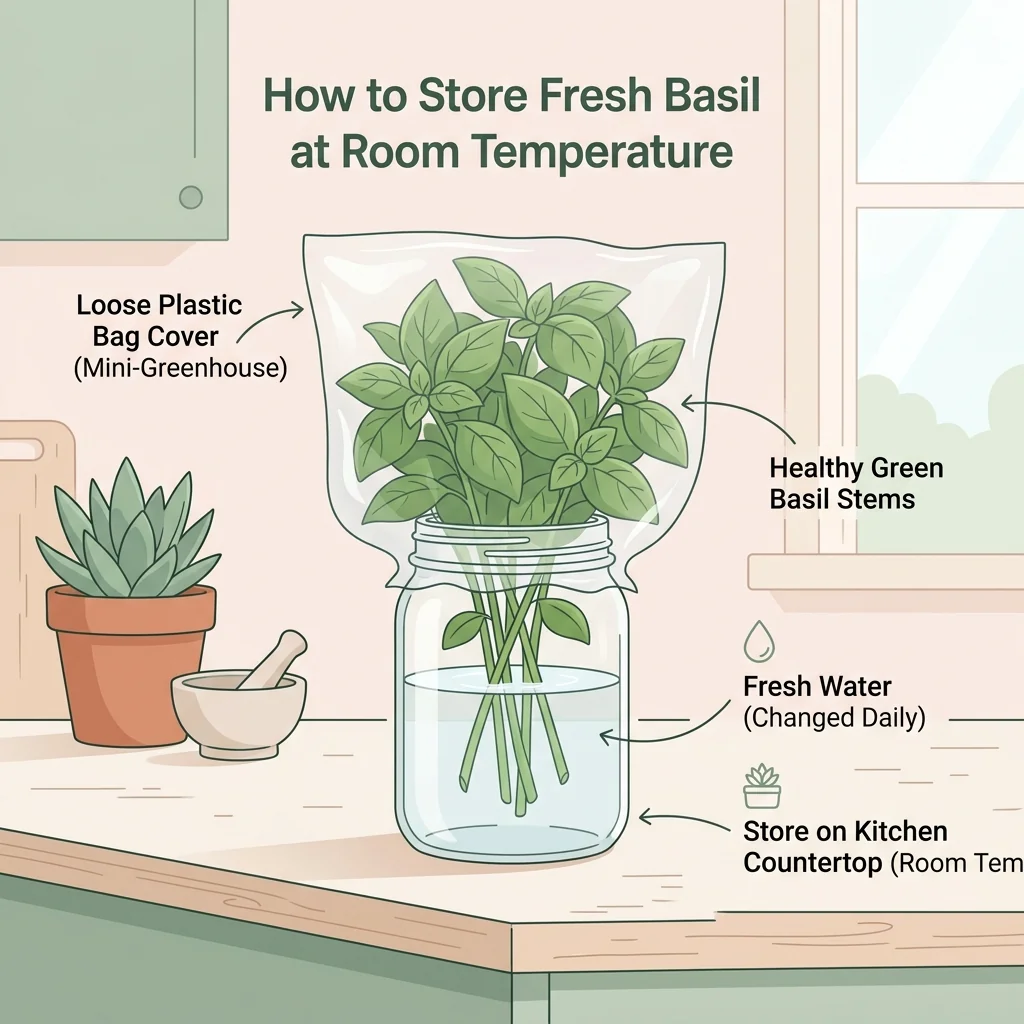
Basil is cold-sensitive, but storage also depends on whether it is a rooted plant, cut stems, or loose leaves. Use this test-and-inspect method.
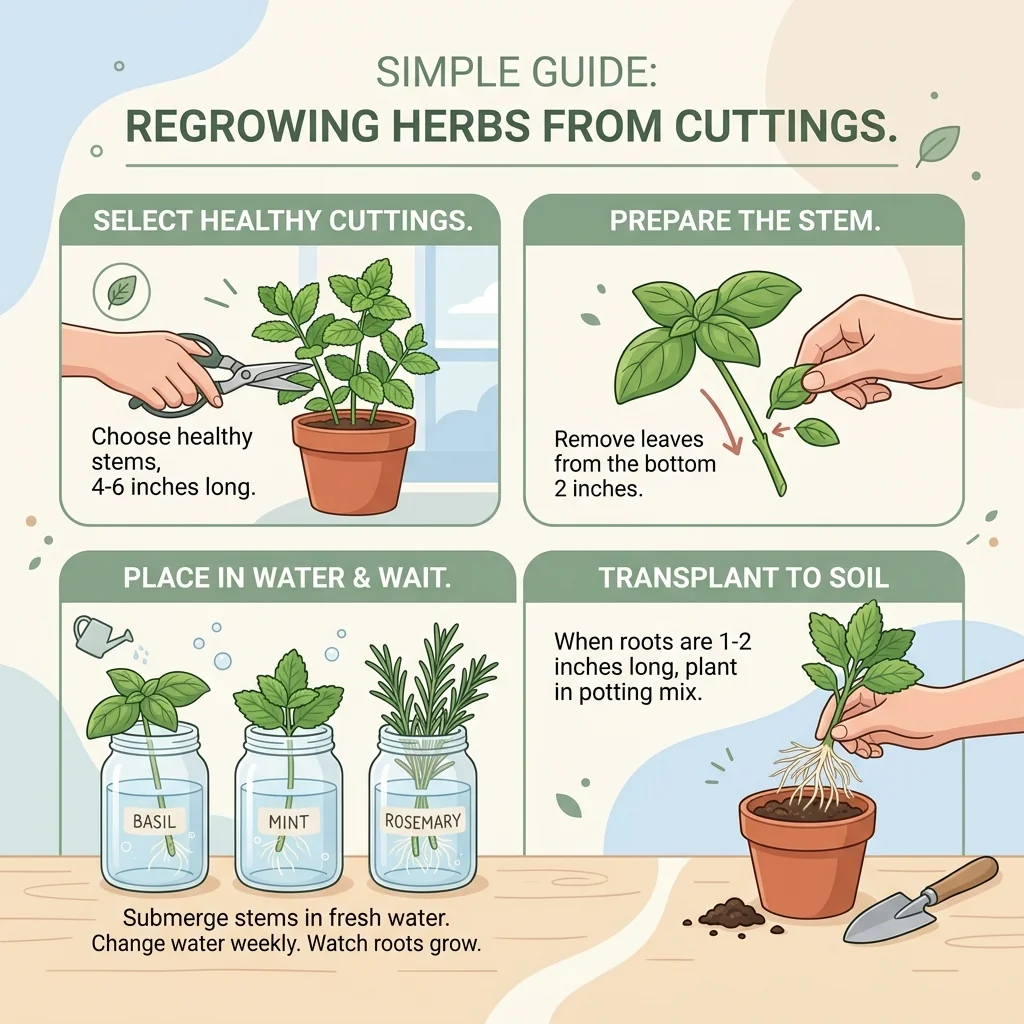
Many herbs root from a simple stem cutting in a glass of water. It is the cheapest way to turn one plant, or a supermarket bunch, into many.
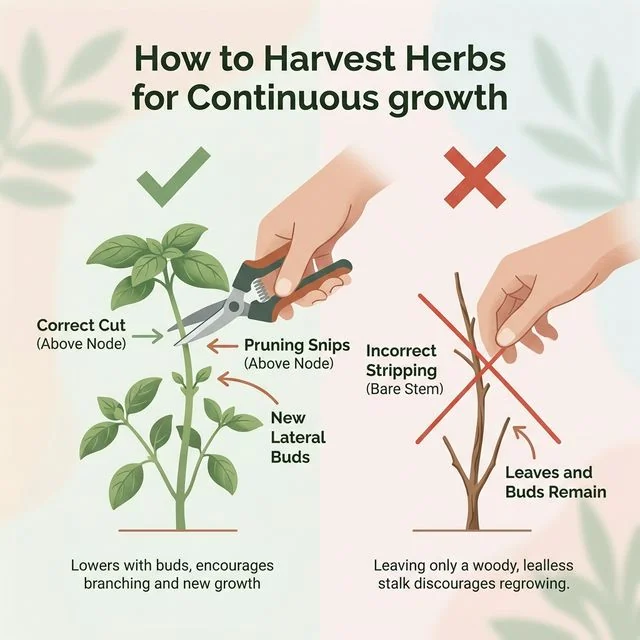
The fastest way to destroy an indoor herb plant is to harvest it incorrectly. If you just pull random leaves off the stem, the plant will eventually go bald and die. Here is the exact botanical method to harvest your herbs so they yield endlessly.
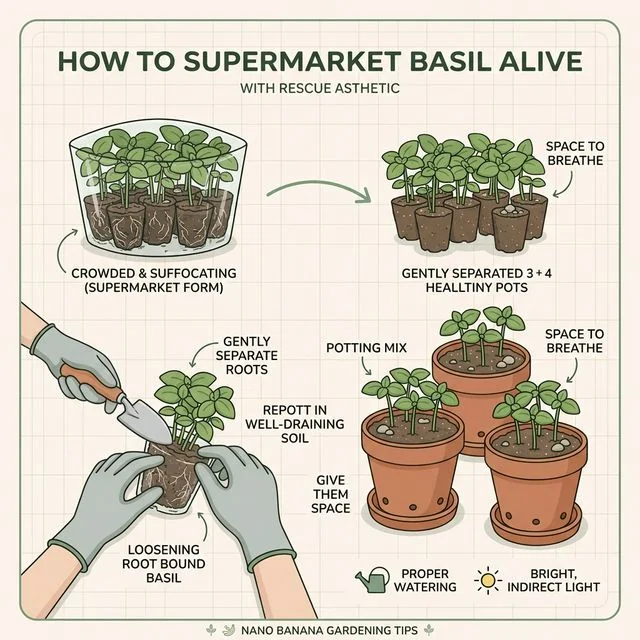
We have all done it. You buy a beautiful, lush basil plant from the produce aisle to make pesto. You put it on your windowsill, and exactly 12 days later, it collapses and dies. Here is why the supermarket set you up to fail, and exactly how to rescue the plant.
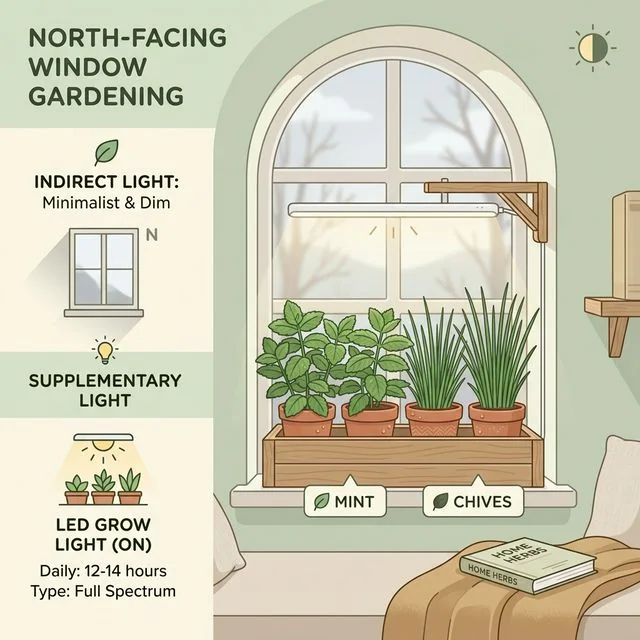
A north-facing window is widely considered the death sentence of an indoor garden. But with the right selection of shade-tolerant herbs and strategic placement, you can still harvest fresh greens year-round.
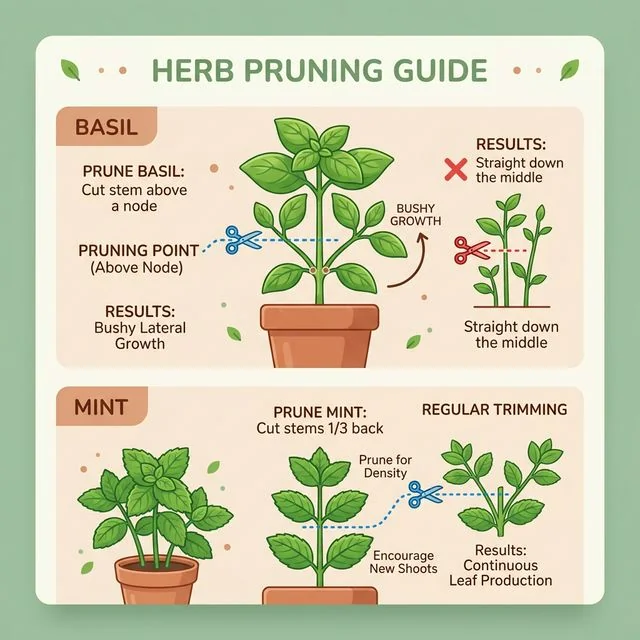
Basil and mint should be cut above a node, parsley should be harvested from the outer stems, and chives should be cut like a small patch of grass.
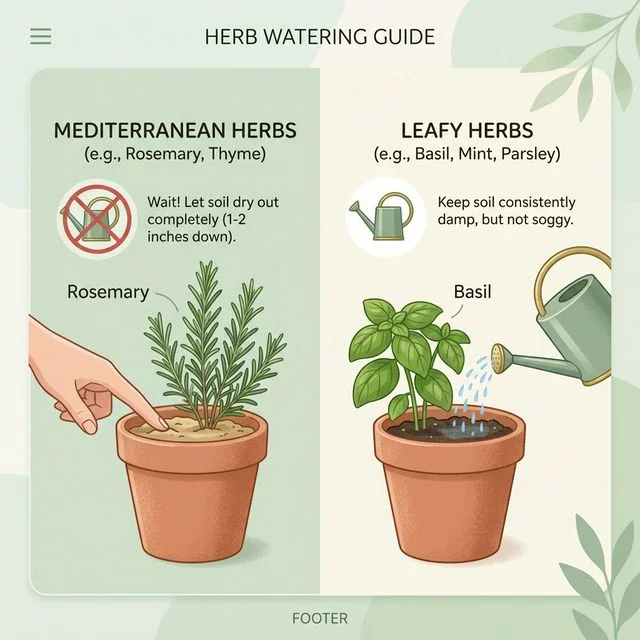
Most potted herbs should be checked often but watered only when the root zone is actually drying. Judge the pot instead of following a rigid calendar.
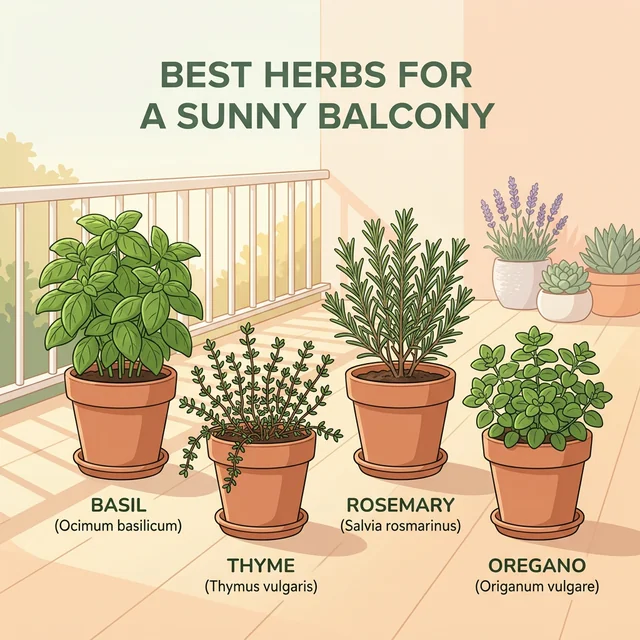
A sunny balcony is perfect for herbs, but the intense heat and wind require the right crop choices. Start with basil, thyme, and rosemary for reliable harvests.
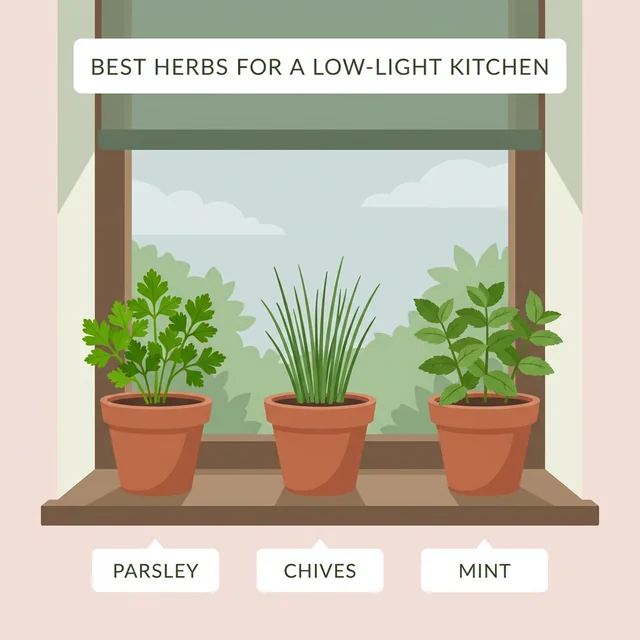
Stop trying to force basil to grow in the dark. If your kitchen gets limited indirect light, stick to these forgiving herbs like parsley, chives, and mint.
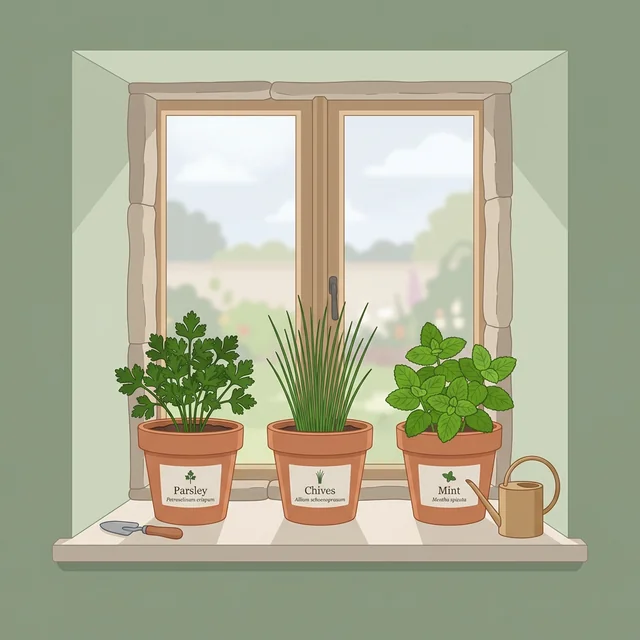
A practical windowsill herb guide for homes that feel bright enough to people but still struggle to keep basil and other herbs compact without extra help.
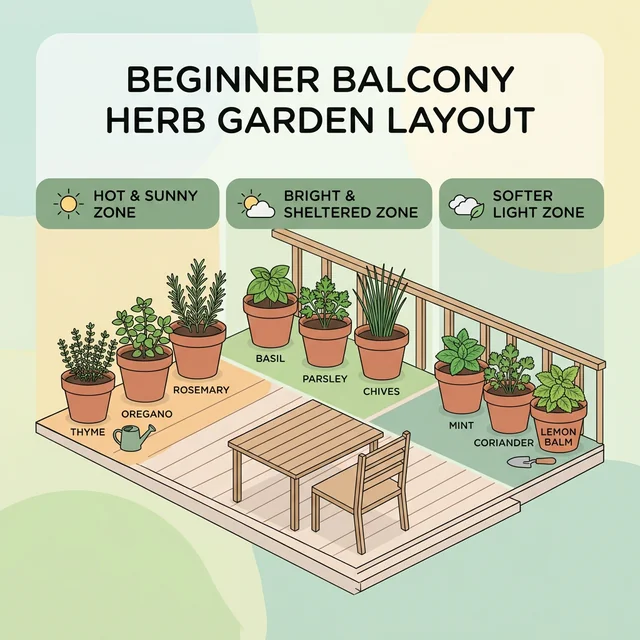
A practical beginner guide to starting a balcony herb garden that stays simple to water, easy to read, and realistic to maintain.

A practical apartment herb guide for people growing entirely indoors, with realistic advice on light, layout, containers, and everyday maintenance.
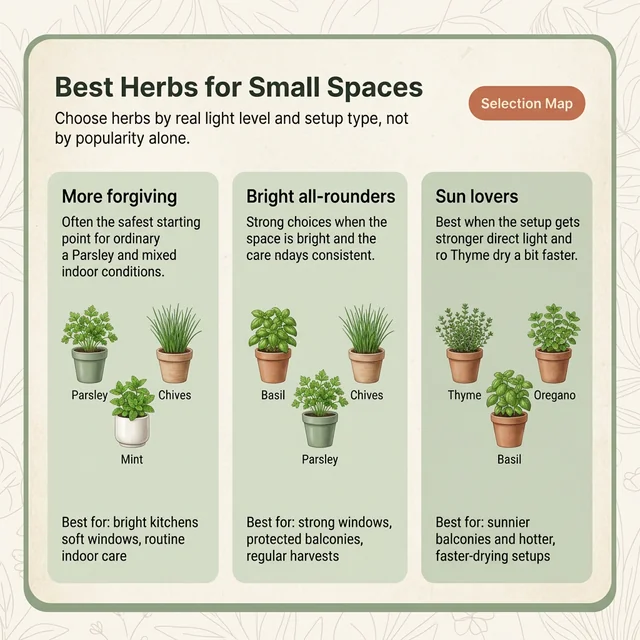
A practical guide to the herbs that actually perform well in compact homes, with selection logic for bright windows, balconies, and more forgiving low-space setups.
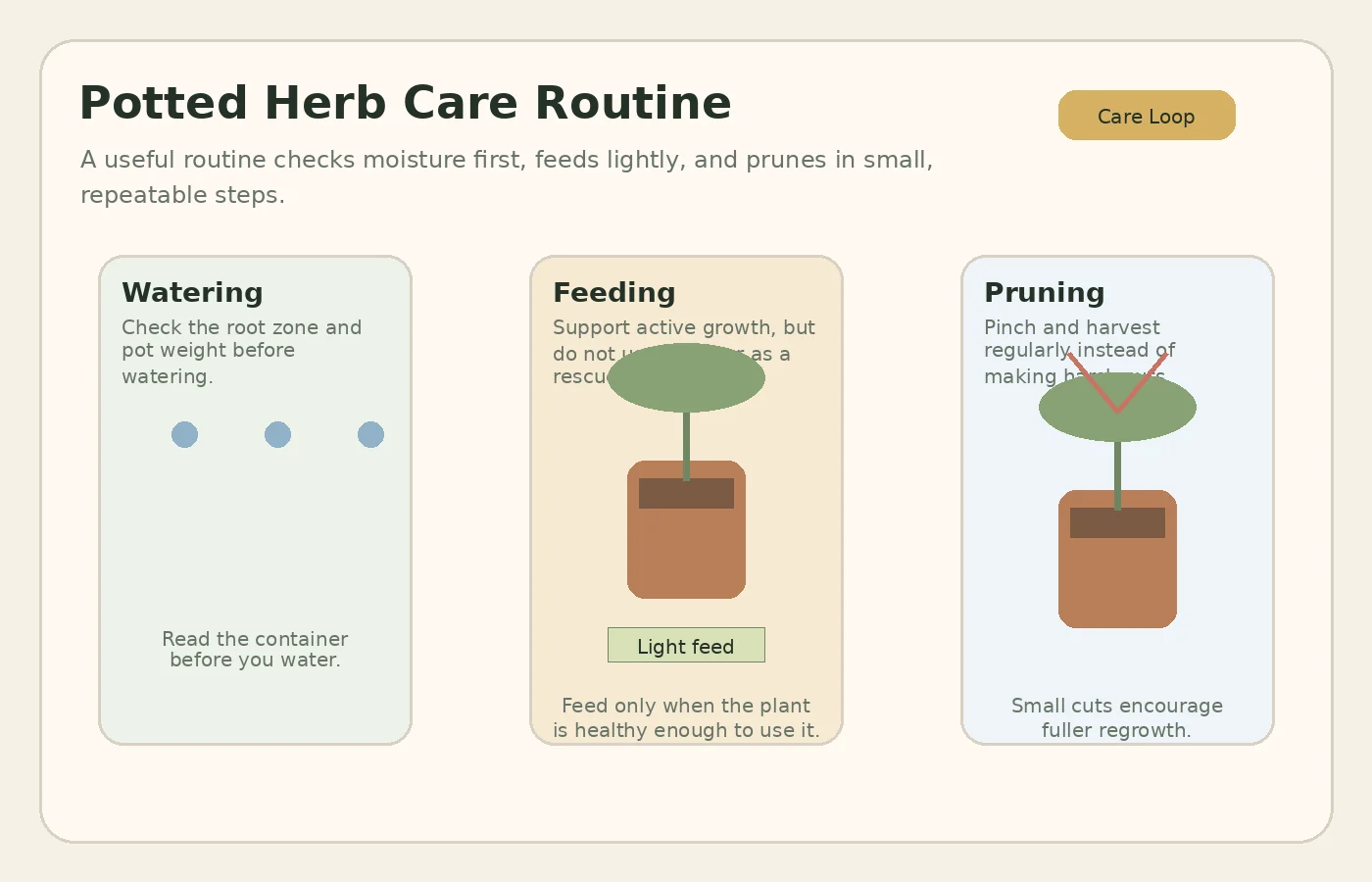
A practical guide to keeping basil, parsley, mint, thyme, and chives healthy by matching watering, feeding, and pruning to the setup.
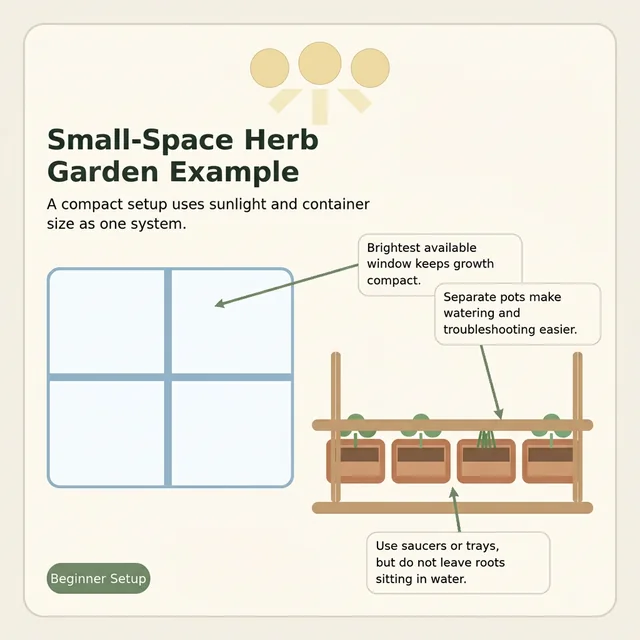
A calm, practical guide to starting a herb garden on a balcony, windowsill, or bright indoor corner without overbuying or overcomplicating the setup.
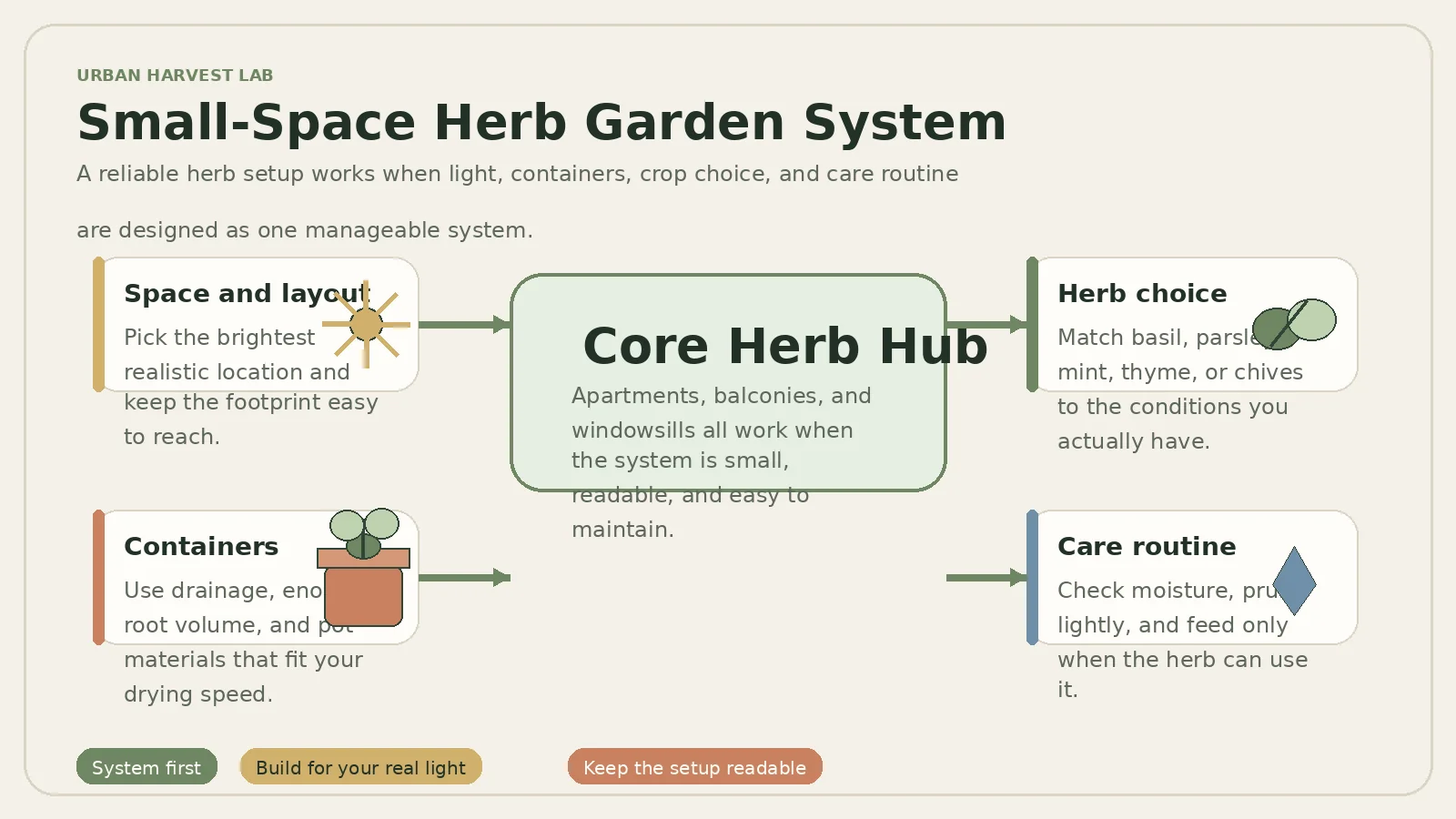
A navigation hub for apartment, balcony, and indoor herb gardening that connects the core setup, herb selection, light, container, and care guides in the right order.
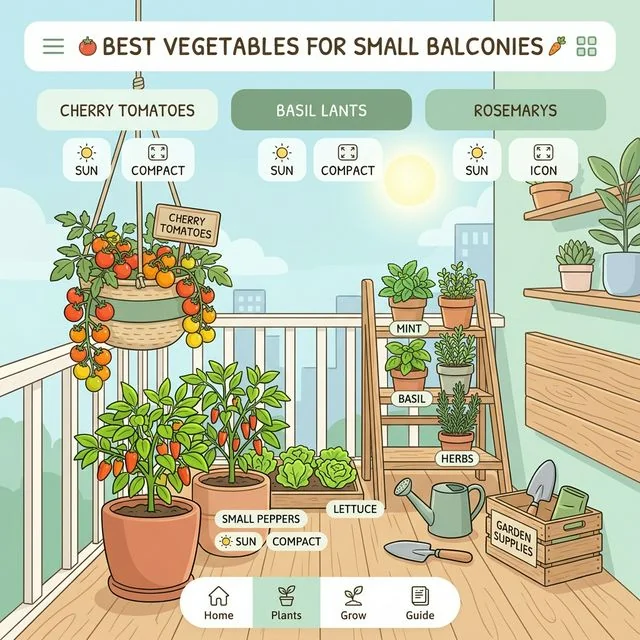
Not every vegetable belongs on a balcony. These are the crops most likely to reward limited square footage without turning watering and support into a daily headache.