
What changes when a hydroponic system moves from a shelf indoors to a balcony
| Problem | What happens outdoors | What to do |
|---|---|---|
| Reservoir heat | Sun warms the tank and the solution, and a dark bucket absorbs more | Shade it, insulate or reflect, use a larger volume, check mid-afternoon |
| Algae | Sunlight on standing, fertilised water | Opaque tank, sealed lid, wrap clear tubing, cover net pot gaps |
| Rain | Dilutes the solution and brings in a water source not safe for greens | Cover the lid and keep rain off the crop |
| Wind | Topples light, tall setups and dries leaves | Anchor low and heavy, use a windbreak |
| Light | Far more than a window, with no lamp or timer | Remove the grow light and check the plant is not scorched |
Hydroponics works on a balcony, and the sun saves you the grow light, but the reservoir becomes the thing to manage: shade it, close it to light, and keep rain out. Heat is the first problem, algae the second, rain the third.
What the sun gives you and what it takes
The University of New Hampshire Extension notes that plants indoors typically receive far less light than they would outdoors or in a greenhouse, and that even the sunniest window blocks a good deal of it. A balcony with real sun removes the light problem that limits most indoor systems.
What the sun takes back is your control of the root zone. Indoors the water follows room temperature. Outdoors it follows the sun, and a reservoir in direct light can run well above room temperature.
If you are still choosing a system, the beginner system comparison covers the options.
Reservoir heat is the main risk
Cornell’s lettuce handbook recommends nutrient solution no hotter than 25 °C (77 °F). The University of Florida gives 65 to 80 °F for small lettuce systems. Oklahoma State gives 72 to 75 °F as optimal. Those sources disagree by a few degrees, but none of them puts a lettuce crop comfortably above 80 °F.
A balcony can push past that. In the University of Florida’s summer lettuce work, nutrient film solution temperatures often passed 90 °F, which lowered oxygen and raised the risk of Pythium root rot. The same trial used a chiller to hold the tank near 72 °F overnight, and even so the solution reached 85 °F in the afternoon. That was a commercial greenhouse in north Florida with a 50% shade screen on the top and west side, so treat it as evidence of how hard summer heat pushes, not as a recipe for a bucket.
For a balcony reservoir, the practical levers are these:
- Shade the tank, not just the plants. Put the reservoir on the side of the balcony that is out of afternoon sun, or behind the plants and a screen.
- Pick the colour. The water temperature page explains why a black bucket absorbs heat. Wrap it in reflective tape or paint it white, and keep it off a hot floor or wall, as the heatwave guide advises for pots.
- Use more water. A larger reservoir warms and cools more slowly than a small one.
- Measure at the right time. A thermometer reading at breakfast says little. Read it mid-afternoon in warm weather.
- Cool without diluting. A sealed frozen bottle floated in the tank cools without changing the EC.
Heat shows up in the plants too. The University of Florida describes tip burn as most limiting during very high temperatures and bolting as common in greenhouse lettuce in the heat, and says lettuce grown at very high temperatures often tastes bitter. If you see it, bolting and bitterness covers the cause.
Light on the water means algae
Algae need sunlight, moisture and fertiliser, and the University of New Hampshire points out that a working hydroponic system has all three. Outdoors, every gap lets in far more light than a lamp would. Exclude light from the solution wherever possible, as the University of Minnesota and Cornell both advise: opaque walls, a sealed opaque lid, no clear tubing, and no gaps around net pots. The algae page goes through each light path and how to clean an outbreak.
Rain: dilution and water safety
Rain can enter through the lid or run down a stem into a net pot. Two separate questions follow.
The first is dilution. A University of Florida trial in 15 litre tanks added water to simulate rainfall, up to the equivalent of 7.62 cm of rain, and found no effect on yield, quality or nitrogen uptake in lettuce. The authors noted that managing outdoor floating systems around rain events is still uncertain, and this was a single greenhouse study, so it supports not panicking after a shower more than it supports ignoring your meter. Check EC after heavy rain.
The second is water safety. The University of Minnesota says rainwater harbours bacteria and parasites and is not a safe water source for leafy greens. So a cover is not only about EC. A lid that seals and a small roof over the system keep rain off the solution and off the leaves you will eat. Also rinse your harvest before eating it, as the FDA advises for all produce.
Rain is also why the University of Florida shows lettuce grown under a protected structure, a greenhouse or open-sided grow house that reduces the effects of excess rain. On a balcony, the floor above or an awning can do some of that work.
Wind and weight
A hydroponic system is top-heavy when full of water, and a light tall one will tip. Anchor it low and against the wall, and use a windbreak for the plants; the windproof balcony guide covers that. A filled reservoir is also heavy, so work out your total before you buy a large tank. The balcony weight limit calculator shows how to do it and why your building’s own documentation sets the limit.
If you are considering a tall build, see the vertical hydroponic tower page for what a tower adds in height and weight.
Which system and which crop
Choose for the conditions. A pumped system with a small reservoir has little thermal buffer and stops circulating in a power cut. The Kratky method uses no pump at all, and deep water culture uses one simple air pump; both hold more water.
For crops, lettuce is a cool-season plant, so on a hot balcony expect trouble from midsummer. The University of Florida’s trial found cultivars differ widely: Rex, Frank, Green Butter and Red Oakleaf tolerated bolting best, and it rated several others poorly. Heat-tolerant types suit a balcony better than a generic seed packet.
If your balcony faces a road, read balcony traffic pollution and food safety before eating from it.
Sources
- University of New Hampshire Extension, “Hydroponics at Home”
- Cornell University CEA Program, “Hydroponic Lettuce Handbook”
- UF/IFAS Extension, “Growing Lettuce in Small Hydroponic Systems” (HS1422)
- Oklahoma State University Extension, “Electrical Conductivity and pH Guide for Hydroponics”
- Hochmuth et al., “Yield, Market Quality, and Bitterness of Lettuce Cultivars Grown Hydroponically in a North Florida Greenhouse during the Summer” (University of Florida, 2017)
- Schnell and Hochmuth, “Managing Nutrients in Outdoor Floating Hydroponic Systems for Lettuce Production” (University of Florida, ASHS 2012)
- University of Minnesota Extension, “Small-scale hydroponics”
- U.S. FDA, “Selecting and Serving Produce Safely”
Make the outdoor reservoir work
The pages that cover the reservoir problems a balcony makes worse, and the balcony limits that sit outside hydroponics.
Common questions
Can you do hydroponics outdoors on a balcony?
Yes. The sun supplies the light, so you skip the grow lamp. What you take on is a reservoir that warms in the sun, algae that grow wherever light reaches the solution, and rain that can enter an uncovered tank. A shaded, lidded, opaque reservoir deals with most of it.
How hot is too hot for a balcony reservoir?
For lettuce, Cornell recommends no more than 77 °F (25 °C) and the University of Florida recommends 65 to 80 °F. University of Florida work in summer found solution temperatures over 90 °F lower oxygen and raise the risk of Pythium root rot. Check the water at mid-afternoon, not in the morning.
Does rain ruin a hydroponic system?
A short shower is not a disaster for a lettuce crop in a tank. A University of Florida trial diluted tank solution by up to the equivalent of 7.6 cm of rain with no loss of yield. But the University of Minnesota says rainwater is not a safe water source for leafy greens, so keep rain off the roots and off the leaves you will eat, and cover the lid.
Which hydroponic system suits a balcony best?
A bigger-volume, low-tech system. A larger reservoir changes temperature more slowly than a small one, and a system with no pump keeps working in a power cut. Kratky and deep water culture fit; a small pumped tower leaves little thermal buffer.
Related guides
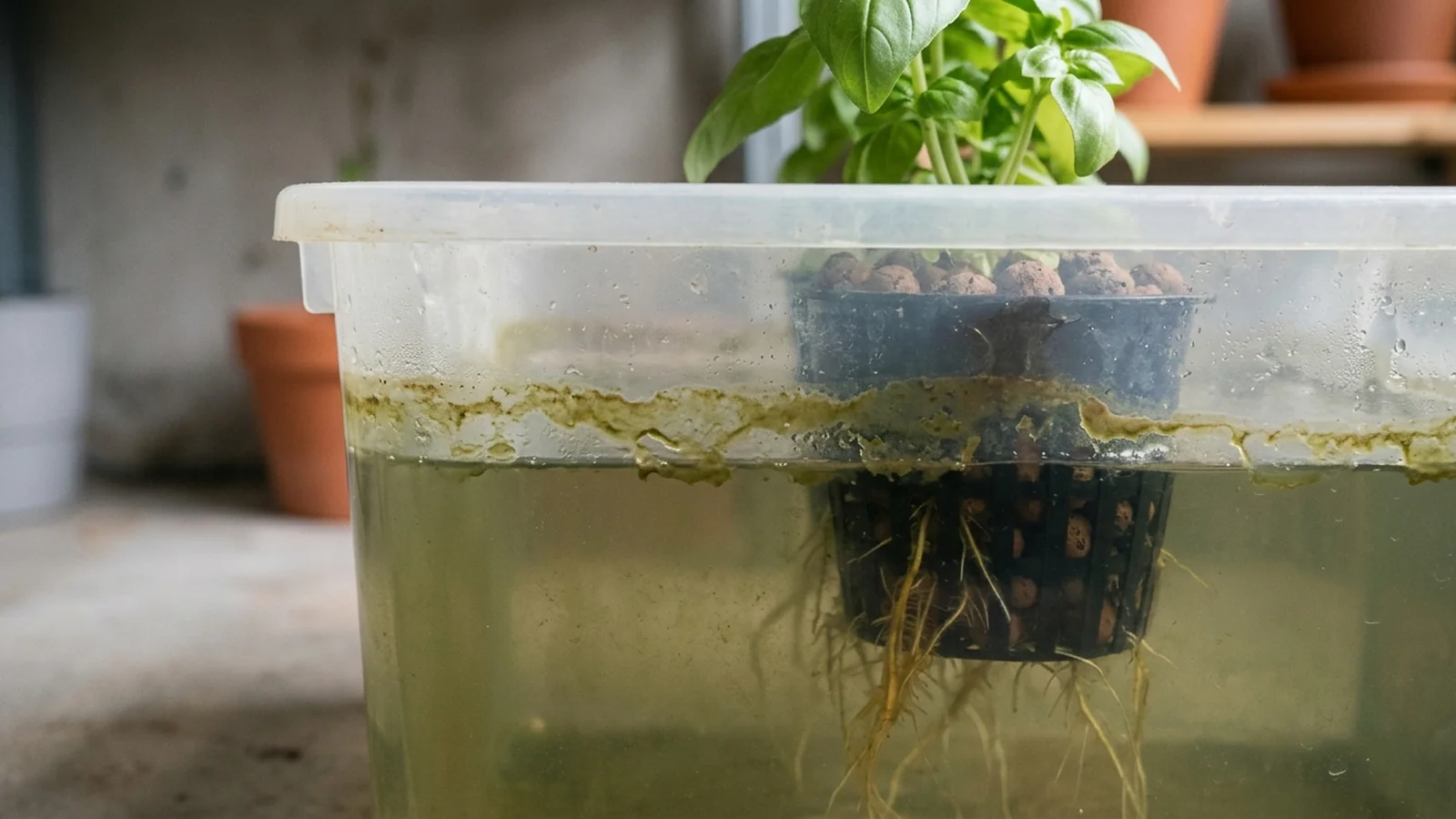
Algae in a hydroponic reservoir: why it grows and how to stop it
Algae needs light, water, and nutrients, and a hydroponic reservoir hands it all three. Block the light and the outbreak stops feeding itself.
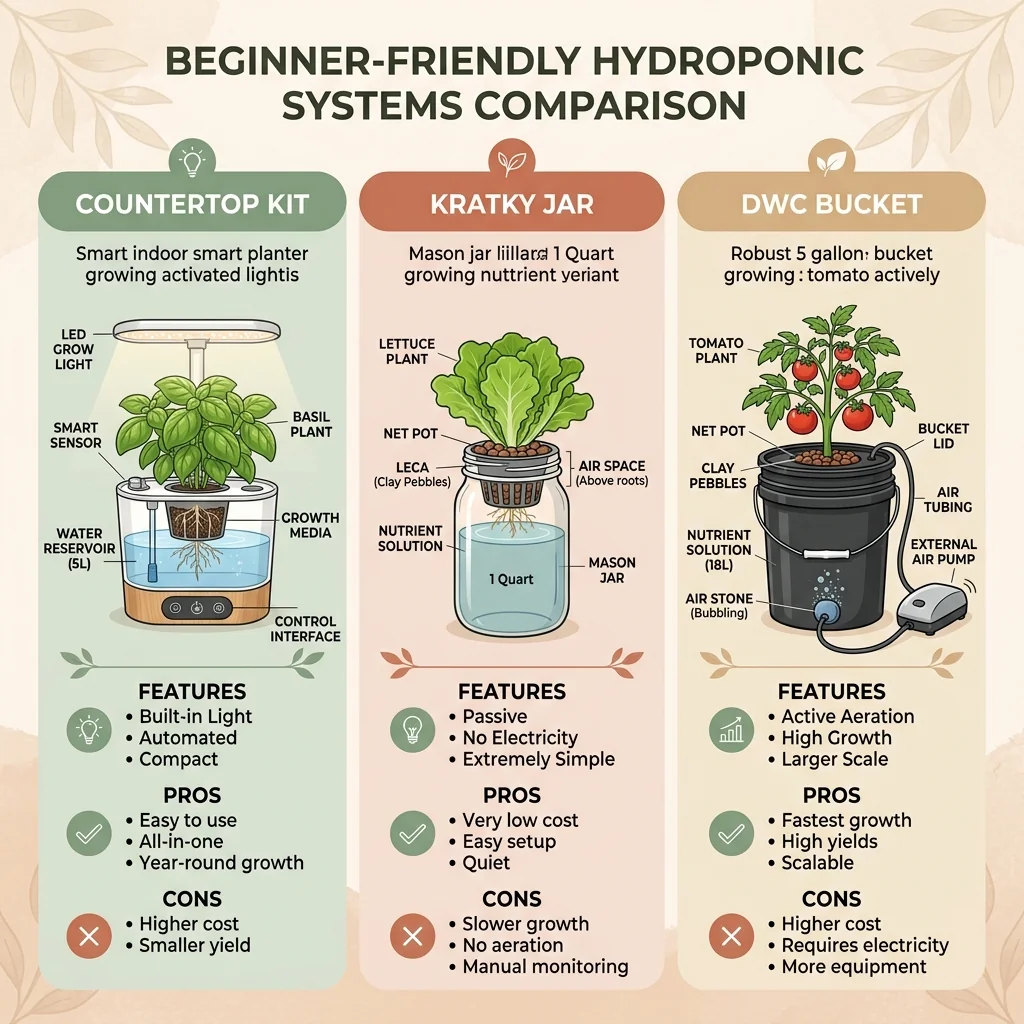
Best hydroponic systems for beginners
You do not need a complex rig to start hydroponics. These beginner-friendly systems, from all-in-one countertop kits to DIY Kratky jars, cover most first setups.
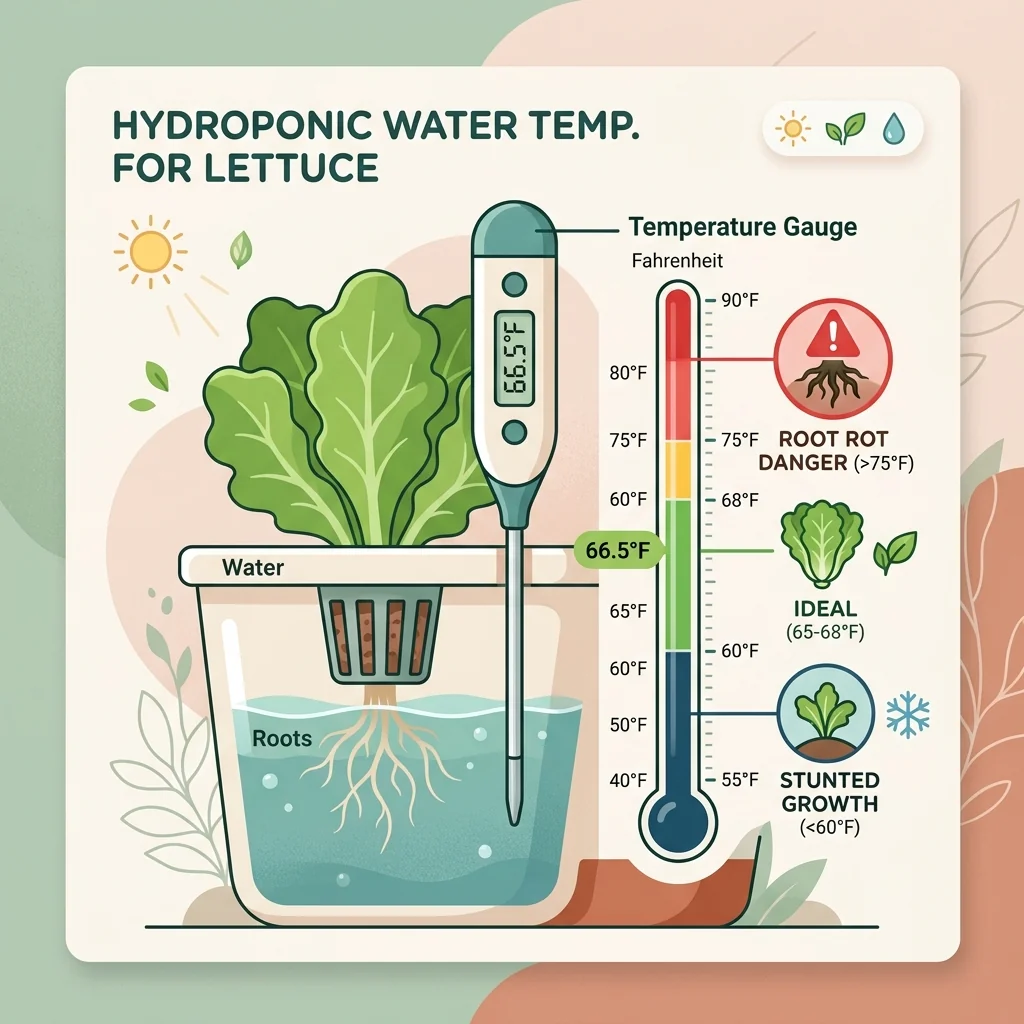
Hydroponic water temperature for lettuce: why 68°F is magic
You can have perfect pH, perfect nutrients, and a massive air pump. But if your hydroponic reservoir is sitting at 80°F, your lettuce is actively suffocating. Here is why water temperature dictates everything in hydroponics.