Troubleshoot the system before you change the inputs.
Symptoms
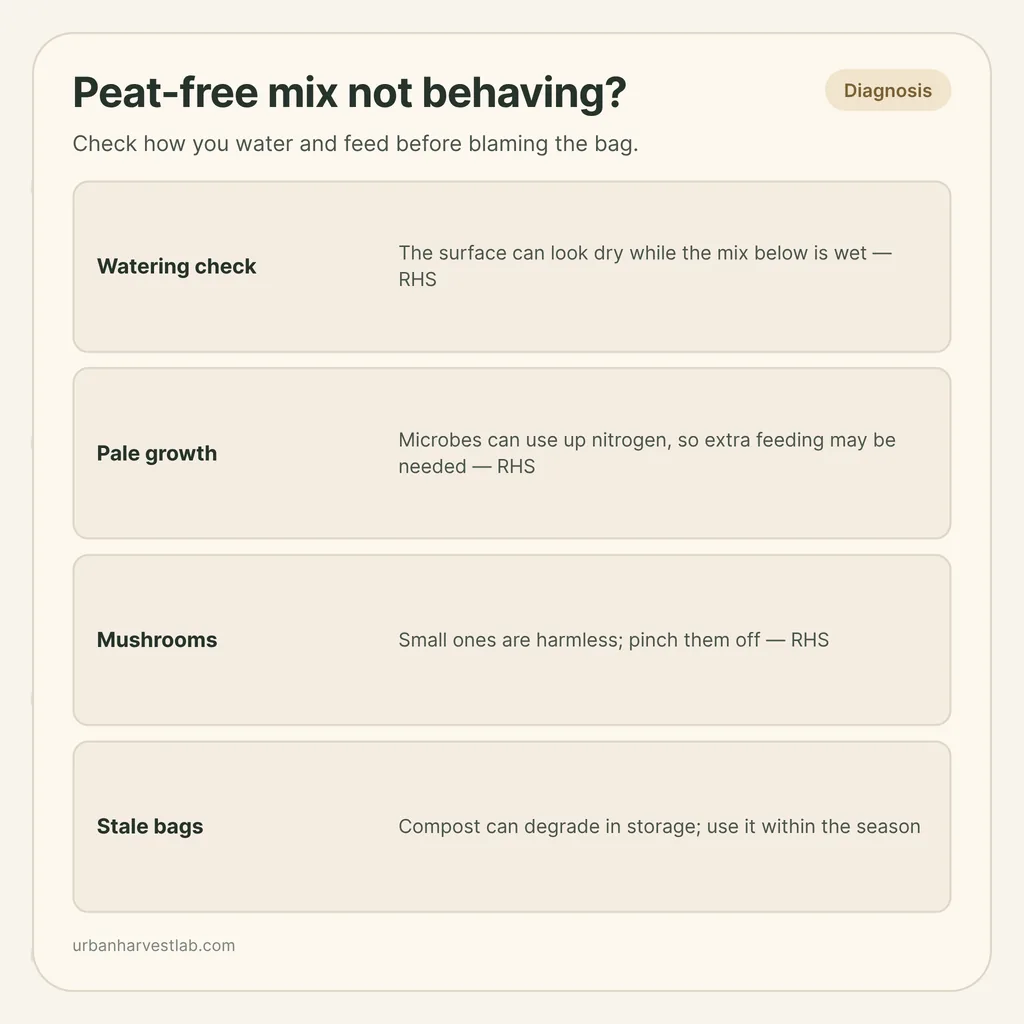
- The surface looks dry but the pot feels heavy and the plant wilts or yellows
- Growth is pale or stalled some time after potting up
- Small mushrooms appear on the surface
- The bag has sat outdoors or in storage for a long time and the plants are weak
Possible causes
- Bark or coir in the mix holds water longer than you expect, and the surface dries first
- Microbes in the mix are using up available nitrogen, and the mix supplies little feed on its own
- An old or badly stored bag has degraded
- A seed or cuttings mix used for established plants, or the reverse
Quick fixes
- Push a finger into the mix and lift the pot before watering; water only when it is dry lower down
- Start or increase feeding with a label-rate liquid feed and adjust to how the plant looks
- Use up bags within the season and replace any that have degraded
- Pinch off mushrooms; they are not a sign of harm
If a peat-free mix is behaving oddly, the usual causes are watering by the surface and under-feeding. The Royal Horticultural Society (RHS) says peat-free compost should not need more watering than peat, but it needs watering differently, and that container plants might need feeding differently too. Fix those two habits first, then check how old the bag is.
If you are still choosing between bases, coco coir vs peat moss compares the materials. What follows is for a bag you already own and a plant that is not happy in it.
Why the same routine stops working
Peat-free mixes are blends. The RHS lists composted bark, coir, wood fibre and composted green waste as common ingredients, sometimes with grit, sharp sand or loam, and says each has physical, chemical and biological properties different from peat. Its advice is that it is worth trying a few mixes to find one that suits you and your plants.
That is why a mix can look and feel like the peat bag you used last year and still behave differently. Composted bark, the RHS says, is stable and porous and adds air. Coir has excellent water-holding abilities, but the RHS adds that it does not hold nutrients as well.
Watering: stop trusting the surface
The RHS says peat-free composts, especially those containing composted bark, often hold water for longer, so they may need watering less often. They also tend to look dry on the surface, which makes overwatering easy.
So test below the surface.
- Push a finger into the mix. If it is damp lower down, wait.
- Lift the pot. The RHS suggests that a small pot’s weight tells you how much moisture is inside, so learn how yours feels when freshly watered and when light.
- Water in smaller amounts if you are used to flooding the pot. The RHS suggests a small watering can for seedlings so you control how much goes on.
Overwatering in a pot has its own signs; overwatered vs underwatered plants sorts them out, and how often to water potted herbs covers the rhythm once you can read the pot.
The opposite problem also happens. If water now runs straight through a pot that has dried out, the mix has gone water-repellent; hydrophobic potting mix explains how to rewet it. Iowa State University Extension, cited on that page, warns that peat and coir both turn water-repellent if they dry out fully, so a peat-free mix with a lot of coir can do it too.
Feeding: what changes without peat
On feeding, the RHS says that over time the microbes in peat-free compost can use up some of the available nitrogen, so extra feeding may be required. Its general advice for containers is to watch for signs of deficiency and use them to adjust how often and how much you feed, following the manufacturer’s instructions and choosing a feed suited to the plant.
Practically:
- Read the bag. The RHS says the packaging may recommend specific fertilisers for a compost, and that this is not a marketing ploy, because formulations have different nutrient balances. If you substitute, compare the NPK ratio and trace elements on the label.
- Know what was built in. Multi-purpose composts usually contain fertiliser released slowly over three to six months, according to the RHS. After that window, the pot relies on what you add.
- Seed mixes are the exception. Seed and cuttings composts contain very few nutrients, so start feeding once seedlings have their first true leaves, for example with a liquid seaweed feed. That reasoning is spelled out in seed-starting mix vs potting mix.
- Watch the plant, not the calendar. University of Maryland Extension advises monitoring plant appearance and growth and fertilizing with a soluble complete fertilizer if needed when working with coir and compost blends.
Amounts and timing for vegetables sit in the container vegetable feeding schedule. If feeding then overshoots and the pot develops a crust or tip burn, salt buildup in herb pots explains the flush.
Mushrooms and other surface oddities
Small mushrooms on top of a peat-free pot worry people more than they should. They are nothing to be concerned about: pinch them off and add them to your compost bin. For seedlings, a few toadstools are quite normal, the RHS says, especially in mixes containing composted bark. Gnats are a different matter, and fungus gnats in herb pots covers them.
Check the bag itself
Compost does not keep forever and can degrade when stored for a long time. Use a bag within the growing season you bought it, the RHS advises, ask how the shop stored it, and look for a production date, which some manufacturers print. A weak start from a bag that spent months outdoors is a poor test of peat-free as a whole.
Also match the mix to the job. The RHS recommends seed and cuttings mixes early on, followed by multi-purpose or potting compost, and specialist mixes for acid-loving or carnivorous plants. Reusing last season’s pot contents is a separate decision; see refreshing old potting soil.
Sources
Potting mix and feeding
Related pages on choosing a base, rewetting dry mix and setting a feeding routine.
Common questions
Does peat-free compost need more water than peat?
Not necessarily. The Royal Horticultural Society says its research shows peat-free compost should not need more watering than peat, but that it needs watering differently. Mixes with composted bark often hold water for longer and the surface can look dry when the mix below is wet, so check with a finger or by lifting the pot.
Do I need to fertilise more with a peat-free mix?
Often you need to feed differently. The RHS says container plants might need feeding differently and that microbes can use up some of the available nitrogen, so extra feeding may be required. It advises watching for deficiency signs, following the feed label, and adjusting frequency and amount.
Why are there mushrooms growing in my peat-free pot?
The RHS says small mushrooms on top of the pot are nothing to be concerned about and suggests pinching them off. It describes toadstools among seedlings as quite normal, especially in mixes that contain composted bark.
Does peat-free potting mix go off in the bag?
It can. The RHS says compost will not keep forever and can degrade if stored for a long time, so the fresher the better. It suggests using your compost within the growing season you bought it and checking how the retailer has stored bags.
Related guides
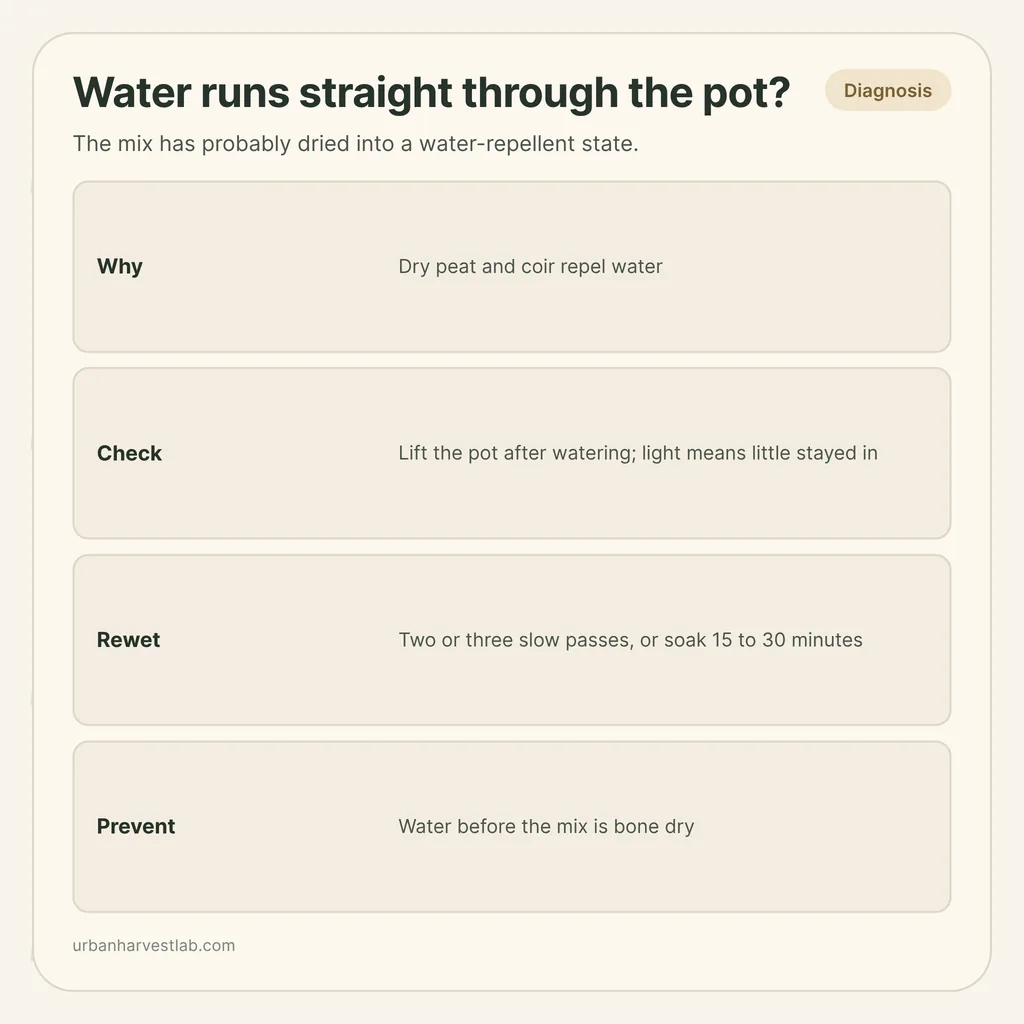
Hydrophobic potting mix: why water runs straight through the pot
When water runs straight through a pot without wetting the mix, the peat or coir has dried into a water-repellent state. A slow, patient soak fixes it, and a few habits keep it from coming back.
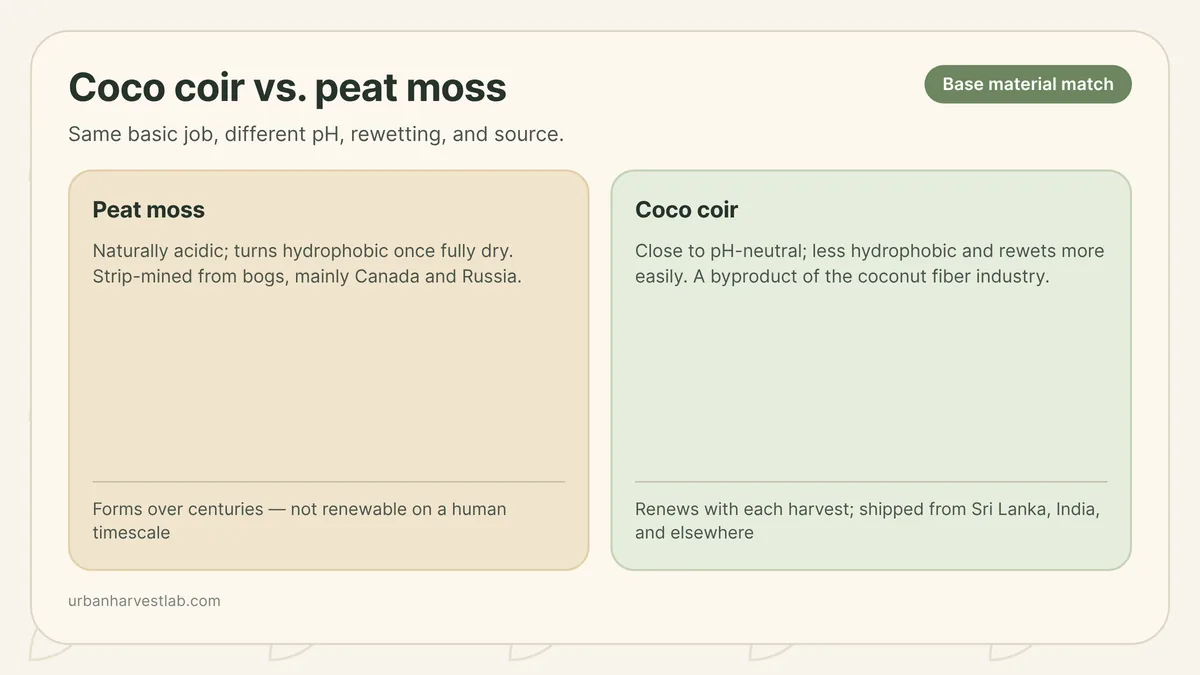
Coco coir vs peat moss: how the two potting bases really compare
Peat moss and coco coir do the same basic job in a potting mix, but they part ways on pH, on how they behave once they dry out, and on the environmental cost of getting the bag to your shelf.
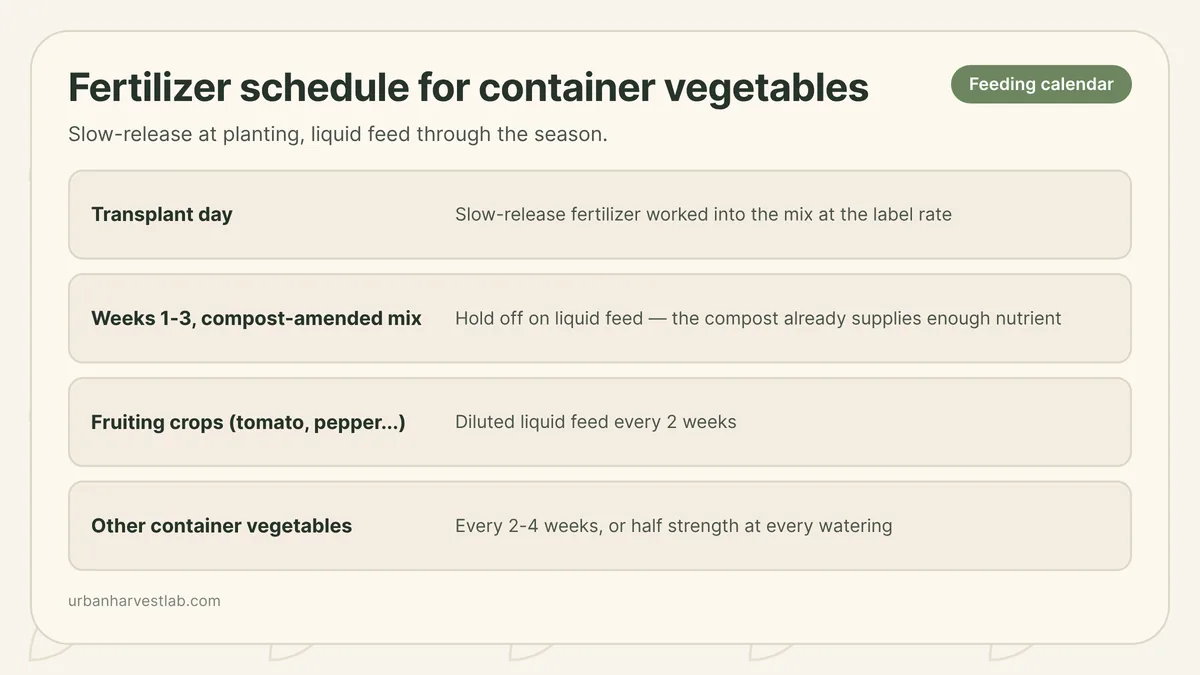
Fertilizer schedule for container vegetables: what to feed and when
A stage-by-stage feeding calendar for container vegetables, built from extension guidance on slow-release charges, liquid top-ups, and the intervals that keep fruiting crops producing.