
Blueberries in a pot: the numbers by source
| Question | Figure | Source |
|---|---|---|
| Soil pH | 4.5 to 5.0 | University of Wisconsin Extension |
| Soil pH | 4.5 to 5.5 | Oregon State Extension |
| Soil pH | 4.0 to 5.5 | University of Georgia Extension |
| Pot, highbush | At least 24 in deep and 24 to 30 in wide; or 15 to 20 gallons | Maryland Extension; Oregon State Extension |
| Pot, half-high | 10 gallons or more | Oregon State Extension |
| Starter pot | 5 gallons, then a 16 to 20 inch pot or barrel | University of Wisconsin Extension |
| Years to a full crop | About 5 | University of Maryland Extension |
Blueberries grow well in a pot if the mix is acidic, the container is large and the water does not push the pH back up. Oregon State Extension puts the target soil pH at 4.5 to 5.5, which is why a bag of ordinary potting soil or compost is the wrong starting point. Add a second variety that blooms at the same time and a patient first year, and a single balcony bush can fruit for years.
Most of the work is in the soil. The general logic of pH is in the container soil pH guide; blueberries are the plant that makes it matter.
Why a pot suits blueberries
Oregon State Extension notes that in parts of its region soil pH creeps back up after planting, even when the soil was adjusted beforehand. Its advice is to grow plants in raised beds or containers with an acidic potting mix, which keeps them growing well much longer than in native soil. University of Wisconsin Extension makes the same case for gardeners whose soil sits above pH 7.0: lowering the pH of a whole bed takes repeated sulfur applications, while a container filled with acidic soilless mix starts at the right number.
Oregon State Extension also says you can grow any type of blueberry in a container. The type decides the pot size and how hardy the plant is.
Pick the type, then the pot
Maryland Extension says a mature highbush blueberry needs a container at least 24 inches deep and about 24 to 30 inches wide, and that you can start a small plant in a smaller pot and repot as it grows, in late summer or early fall so the roots have time to grow before winter. Oregon State Extension gives volumes: half a wine barrel or a 15- to 20-gallon container for northern highbush, and 10 gallons or more for half-high cultivars.
University of Wisconsin Extension starts in a 5-gallon container with a single plant, then moves up to a 16 or 20 inch pot or a barrel. It suggests half-high cultivars for cold regions because they are hardier and shorter, and lists lowbush types such as ‘Top Hat’ for containers: a maximum height of 12 inches, with smaller fruit.
If the pot is going on a balcony, check the load first. A barrel of wet mix and a mature shrub weigh far more than a row of herb pots, and the balcony weight limit guide shows how to work it out.
Two details from Wisconsin Extension are worth acting on. Avoid black containers, which absorb heat and lose moisture faster. And a pot with drainage holes matters: Maryland Extension says to stand containers on bricks if they sit on a hard surface so the water can leave.
The acidic mix
The extension recipes agree on the idea and differ on the ingredients:
- University of Wisconsin Extension: one part sphagnum peat moss and one part shredded pine bark, or two parts coir, two parts peat moss and one part perlite.
- Maryland Extension: a 50-50 mix of potting soil and peat moss.
- Oregon State Extension: 50 to 80 percent well-aged fine bark, 10 to 40 percent peat moss, and 10 percent perlite or pumice.
Oregon State Extension adds two cautions. The mix should not contain lime or a high proportion of compost, because both raise the pH. And the higher the bark share, the faster the pot dries out and the harder it is to fertilize. Maryland Extension makes the compost point too: adding compost, especially animal manure compost, can raise soil pH.
Coir needs a note. It sits close to neutral, and the coco coir vs peat comparison covers the difference. Wisconsin’s coir recipe works because two parts of peat sit beside it. Coir on its own is not an acidic base.
If the leaves start to show yellow with green veins, especially the young ones, Oregon State Extension lists that as a sign of soil pH that is too high. Maryland Extension cautions that pH probes sold to gardeners are generally inaccurate, so a lab test is the better measure. For correcting a pot that has drifted up, its figure for a 15-gallon container is 3 tablespoons of sulfur mixed into the top few inches of mix to lower the pH by one unit, followed by a retest. Coffee grounds are not a reliable shortcut; the coffee grounds page explains why.
A second variety
Blueberries are less strict about partners than the old advice suggests, but a partner helps.
University of Wisconsin Extension says most cultivars are self-fruitful, with ‘St. Cloud’ and ‘Polaris’ as exceptions, and that growing more than one cultivar improves pollination and increases yield and berry size. Oregon State Extension says northern highbush types will fruit with their own pollen, but cross-pollination improves berry size and quantity. Half-high cultivars do not produce much fruit alone, so it advises more than one.
Maryland Extension spells out how to do it in pots: plant the other variety in a separate container, and choose one that blooms at the same time. Oregon State Extension notes that highbush cultivars ripen at different times but bloom together, so any two will cross-pollinate. If you are weighing other fruit for the same corner, see raspberries in containers.
Water: quantity and quality
Oregon State Extension describes a shallow, fibrous root system that is prone to drought injury, and Maryland Extension says blueberries are very sensitive to dry conditions. University of Wisconsin Extension asks for a mix that is moist but not wet or soggy, with frequent light watering and an occasional drench to flush out salts. Two inches of pine bark or chipped hardwood bark on top conserves moisture. The mulch guide for containers covers the surface layer, and the salt buildup guide explains why a drench helps. A hot summer balcony may need a drip system on a reservoir.
Quality is the second half. Maryland Extension says blueberries grow and produce best when irrigation water is below pH 7.0, and that the municipal water in its region typically runs pH 7.5 to 7.8 with high salts and bicarbonate. Its warning is that irrigation water can drive up soil pH. The University of Georgia puts numbers on the problem for commercial growers: it suggests acidifying irrigation water at pH 6.0 or above, and lists bicarbonate above 92 ppm and electrical conductivity above 1.0 dS/m as levels that call for corrective action. Wisconsin Extension calls collected rainwater ideal because it is typically not as hard and does not have as high a pH as well water.
For a balcony, that means a rain barrel or a few buckets set out in a storm if your building allows it, or a look at the alkalinity figure on your water utility’s report. The tap water alkalinity page explains why alkalinity, not pH, decides how hard water resists a correction.
Feeding
Oregon State Extension says the main nutrient blueberries need is nitrogen in the ammonium form, and that many all-purpose fertilizers such as 16-16-16 contain mainly nitrate, which blueberry plants cannot use. Maryland Extension agrees: avoid fertilizers with nitrates or chlorides, use an acidic fertilizer, and apply it in early spring before leaves expand. University of Wisconsin Extension combines a slow-release acid fertilizer with a fast-acting acid liquid feed about every two weeks from spring to midsummer, and cautions that blueberry roots are sensitive to fertilizer salt injury. Follow the label rates.
Sun, the first years and the harvest
Maryland Extension says to give containers full sun, with some protection from late afternoon sun where it is hot. Oregon State Extension says new plants should not fruit in their first season, and Maryland Extension says to pinch off the flowers on one-year-old plants so they put energy into roots. The same page says a full crop takes about five years. Plan for a small harvest in year two or three.
When berries begin to ripen, cover the plant with netting. Oregon State Extension says light plastic overhead netting with a small mesh is the most effective way to keep birds off, and Maryland Extension suggests bird netting or floating row cover.
Winter
Containers give the roots little insulation. University of Wisconsin Extension says to protect container blueberries to prevent root damage: bury the pots in the ground in mid- to late October where snow collects and the wind is blocked, mulch with four to eight inches of straw in mid-November or wrap the bushes in burlap, and fence against rabbits with chicken wire or hardware cloth. Without a garden bed to bury them in, Maryland Extension’s version is a sheltered location out of the winter wind from December to March. Heat in summer is a separate problem; see protecting container plants in a heatwave.
Sources
- Growing Blueberries in Containers, University of Wisconsin-Madison Division of Extension
- Growing Blueberries in Containers, University of Maryland Extension
- Growing blueberries in your home garden (EC 1304), Oregon State University Extension
- Blueberry Irrigation Water Quality (Circular 1105), University of Georgia Extension
- Blueberry success is all in the soil, Maryland Grows, University of Maryland Extension
Acidic mixes and fruit in pots
The soil, pH and watering pages behind a container blueberry.
Common questions
How do you grow blueberries in pots?
Plant one bush per container in an acidic mix such as equal parts peat moss and shredded pine bark (University of Wisconsin Extension). Start in a 5-gallon pot and move up to a 16 to 20 inch pot or barrel, or plant straight into a 15 to 20 gallon container (Oregon State Extension). Give it full sun, keep the mix moist but not soggy, and feed with a fertilizer made for acid-loving plants.
Do you need two blueberry plants to get fruit?
Not always. Wisconsin Extension says most varieties are self-fruitful, with St. Cloud and Polaris as exceptions, and Oregon State says half-high types do not produce much fruit alone. Both say a second variety improves pollination, berry size and yield. Maryland Extension adds that the two should bloom at the same time and can sit in separate containers.
What kind of soil do blueberries need in a pot?
Wisconsin Extension suggests equal parts sphagnum peat moss and shredded pine bark, or two parts coir, two parts peat and one part perlite. Maryland Extension uses a 50-50 mix of potting soil and peat moss. Oregon State recommends 50 to 80 percent fine bark, 10 to 40 percent peat and 10 percent perlite or pumice, with no lime and not much compost.
Can I water blueberries with tap water?
It depends on your water. Maryland Extension says municipal water in its region typically runs pH 7.5 to 7.8 with high bicarbonate and can raise soil pH over time. Georgia Extension lists bicarbonate above 92 ppm and pH above 6.0 as levels that call for correction. Wisconsin Extension calls collected rainwater ideal. Check your water report, and test the pot mix now and then.
Related guides

How to grow raspberries in pots: type, support and cane pruning
A container raspberry lives or dies on three choices: which type you buy, what holds the canes up, and which canes you cut. Here is each one, with the pot sizes and cane counts the extension services give.
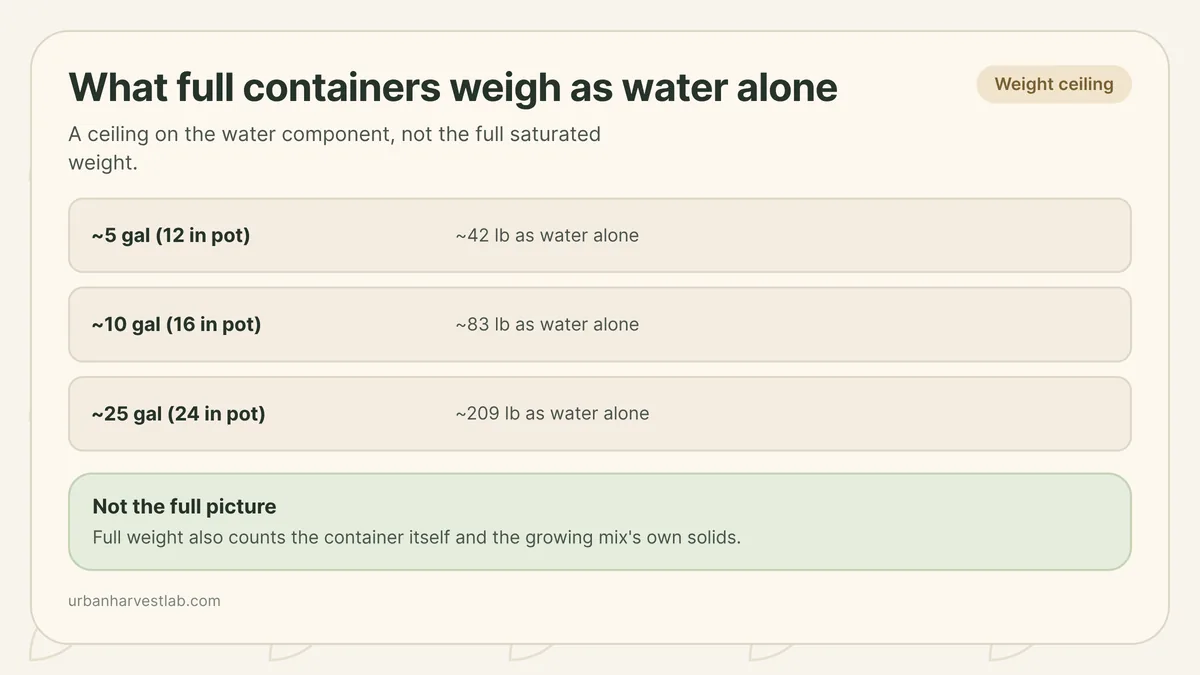
Balcony weight limit: calculate what your container garden really weighs
A balcony's real weight allowance comes from its own structural documentation, not a one-size figure online. What you can calculate yourself is exactly how much your containers weigh once every one of them is soaked through.
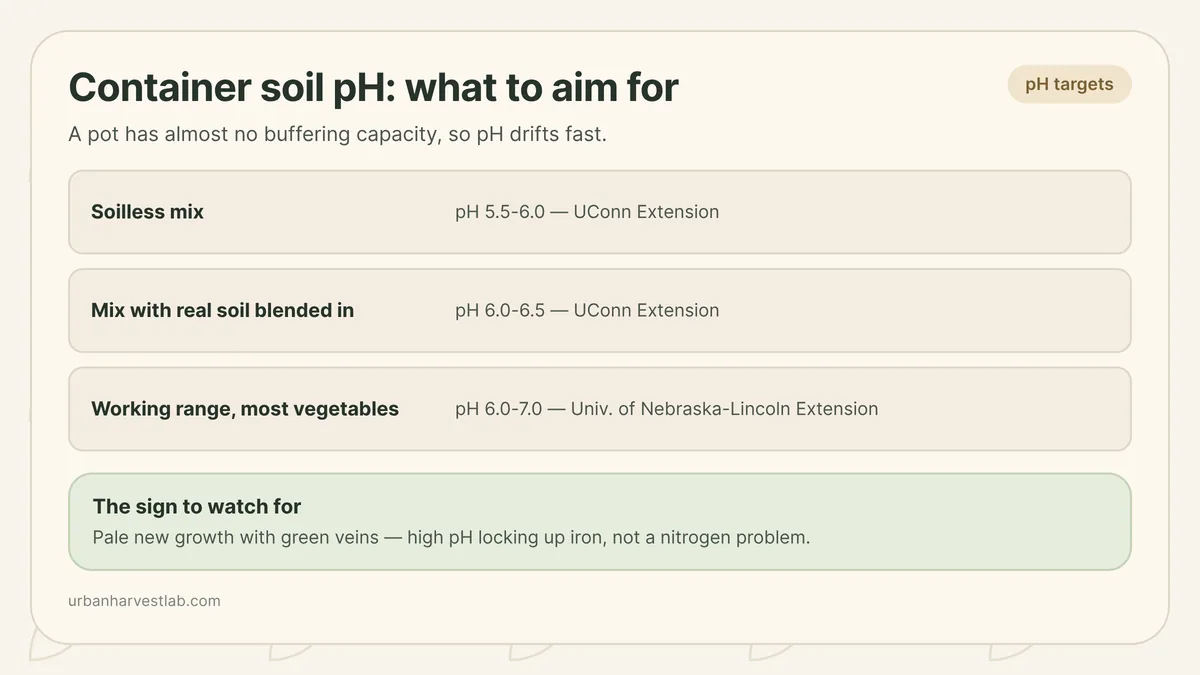
Container soil pH: when it matters and how to fix it
A container's small volume has almost none of the buffering capacity open ground has, so pH drifts faster and matters sooner. Here is when to test, what to aim for, and how to move it.