Celery by stage, from two university sources
| Stage | What the source says | Source |
|---|---|---|
| Seed to planting out | Sow seed 10 to 12 weeks before planting out; use transplants 10 to 12 weeks old | University of Maryland Extension; UC Master Gardeners of Riverside County |
| Seed germination | Greenhouse held at 70 to 75 °F until emergence; heat causes dormancy and seed will not germinate | University of Maryland Extension; UC Master Gardeners of Riverside County |
| Growing temperature | Ideal 55 to 65 °F; cool-season range 55 to 75 °F | Utah State Extension; University of Maryland Extension |
| Planting out to usable size | 85 to 100 days from transplanting | University of Maryland Extension |
| Harvest | Outer petioles when a foot or more long; whole plant at 3 inches or more across | Utah State Extension |
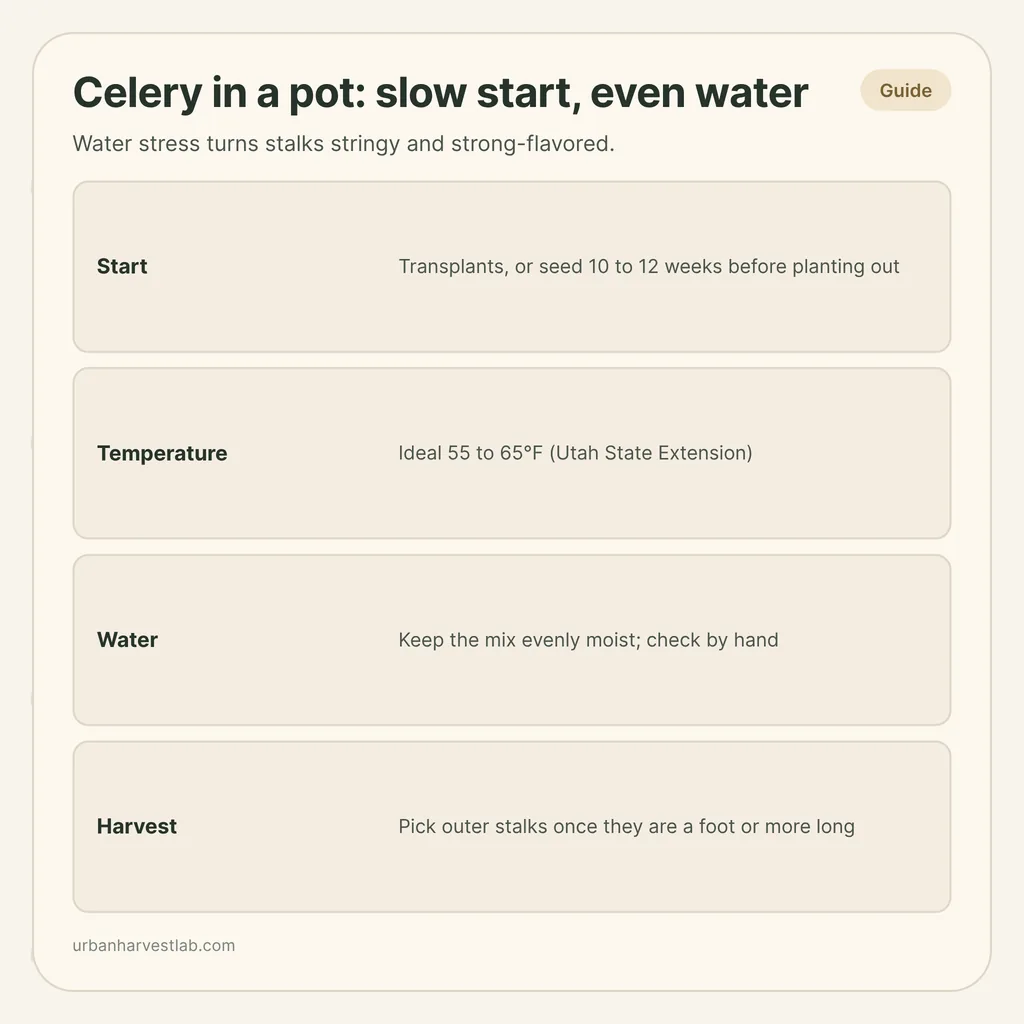
Grow celery in a pot from transplants, keep the mix evenly moist, and pick the outer stalks when they are a foot long. Utah State Extension calls celery a plant with a small, shallow root system, and says any water stress turns the stalks stringy and strong-flavored. Cool weather matters nearly as much as water, so celery suits spring and fall on a balcony better than midsummer.
It is a slow crop with a narrow comfort zone, which is why it gets a page of its own. The rewards are real: stalks you cut minutes before they reach the plate. But expect a long wait and a plant that complains about lapses.
Buy transplants or start seed ten weeks ahead
The table above lays out the timeline from two university sources. The short version is that celery spends a long time as a seedling. University of Maryland Extension sows seed 10 to 12 weeks before planting out, and the UC Master Gardeners of Riverside County say to use transplants that are 10 to 12 weeks old. Utah State adds that a transplant should have 3 to 4 mature leaves and a well-established root system before it goes into the garden.
If you buy nursery plants, you skip all of that. If you sow your own, two sources describe how touchy the seed is:
- Heat. The Riverside County master gardeners say heat causes seed dormancy and the seed will not germinate, so do not sow in hot weather. University of Maryland Extension holds its greenhouse at 70 to 75 °F until emergence.
- Natural inhibitors. Utah State says celery germinates better if you soak the seed in water and change the water every day.
Work backwards from the date you want to plant out. The seed-starting calculator turns your last frost date into sowing dates, and if you do not know yours, finding your frost dates takes a few minutes. Sow into fine seed-starting material rather than heavy compost: seed-starting mix versus potting mix explains the difference. Harden the seedlings off before they go outside; the hardening-off plan gives the day-by-day routine.
Keep it cool, but not cold
Utah State puts the ideal temperature at 55 to 65 °F. University of Maryland Extension gives a wider cool-season range of 55 to 75 °F for rapid growth and quality. Both sources also flag the cold edge. Utah State gives 36 °F as the minimum and says several weeks of cool temperatures make the plants flower, and University of Maryland says that after a number of days below 55 °F celery, which is a biennial, starts to form seed stalks. A transplant put out too early into a cold spell may bolt instead of thickening. Utah State also calls celery very susceptible to early and late season frosts and advises some protection, so keep a cover handy.
Heat is the other end. Utah State says that above 85 °F you should water more often to limit stress and fiber development, and that celery harvested in hot, dry weather may be tough, stringy and bitter. A pot lets you move the plant, so shift it into afternoon shade when a hot spell arrives. Protecting container plants in a heatwave covers shade cloth and pot insulation.
The pot, the mix and where it sits
No source tested celery in containers, so size comes from the in-ground figures. Utah State spaces plants 12 inches apart in the row and says a tight planting helps force tall growth and long petioles. Treat that 12 inches as the footprint one plant needs and choose a pot that gives each plant about that much room. The pot-size calculator turns footprint and depth into a container volume, and container depth for tomatoes, peppers and herbs explains why a bigger volume of mix steadies moisture.
Use a fertile, free-draining potting mix with plenty of organic matter; Utah State describes celery as preferring fertile, well-drained soils rich in organic matter. Its summary also recommends full sun, though in a hot spot the cooler-temperature advice above should win.
Blanching is optional in a pot. University of Maryland Extension says non-self-blanching cultivars are blanched by trenching or other mechanical means, which is awkward in a container. Utah State notes that Utah and Pascal types stay green when ready for eating, and the Riverside County list includes Golden Self Blanching. Check what your seed packet says.
Water: the part that decides the crop
Utah State’s field rule is at least 1 to 2 inches of water a week from rain or irrigation. A pot does not follow rainfall rules, so use that as a reminder that celery is thirsty, and check the mix by hand. Utah State also says to soak the soil thoroughly rather than sprinkle, because the root system is small and shallow. How often to water container vegetables gives the finger test that replaces a calendar.
Even moisture matters for more than texture. The dark centre rot called blackheart is a calcium problem that University of Maryland Extension links to water stress and says is reduced by avoiding wide fluctuations in moisture and nutrients and keeping growth steady. It names heavy rain or irrigation before drought as a trigger. Utah State agrees that avoiding water stress minimizes it. The cause is similar to the one behind blossom end rot in container tomatoes, and the same habit prevents both. University of Maryland adds that drip irrigation, which gives more even moisture, can help.
Feeding
Utah State describes celery as a poor nutrient forager with a small root system, so it needs a good supply of nutrients in the mix. In the ground it starts a nitrogen-rich feed about a month after planting and side-dresses at 4 and 8 weeks after transplanting, and it stops feeding once stalks start forming to prevent splitting. Those are bed rates, so for a pot follow your fertilizer’s label and use the container vegetable fertilizer schedule for timing.
Harvest
Utah State harvests by removing the outer petioles once they are a foot or more in length, and says whole plants are ready when 3 inches or more across. The inner stalks are the most tender and taste best uncooked, so leave the centre to keep growing. The Riverside County master gardeners harvest a whole plant by cutting below the ground through the taproot.
Do not wait too long. University of Maryland Extension says to harvest when stalks are of sufficient size but before any pithiness has developed. Utah State stores harvested celery in the refrigerator for up to 2 weeks.
Sources
Water, feeding and timing for pots
Celery depends on even moisture, a feeding schedule and the right start date, and these pages cover each one.
Common questions
Can you grow celery in a pot?
Yes, if you can keep the mix evenly moist and the plant cool. Utah State Extension describes celery as having a small, shallow root system, which suits a pot, but also says any water stress makes the stalks stringy. The demanding part is steady water, not space. Plan on transplants and a long season: University of Maryland Extension counts 85 to 100 days from transplanting to usable size.
How long does celery take to grow in a container?
Roughly five to six months from seed. University of Maryland Extension sows seed 10 to 12 weeks before planting out and counts 85 to 100 days from transplanting to usable size. Buying transplants removes the first stage.
Why is my container celery stringy or bitter?
Usually water stress or heat. Utah State Extension says any water stress causes stringy stalks with a strong flavor, and that celery harvested in hot, dry weather may be tough, stringy and bitter. Keep the mix evenly moist, and above 85 °F water more often.
How do I harvest celery from a pot without killing the plant?
Cut the outer stalks at the base once they are a foot or more long, as Utah State Extension describes, and leave the inner stalks to keep growing. The inner stalks are the most tender. Cutting the whole plant at the base is the alternative once it is 3 inches or more across.
Related guides
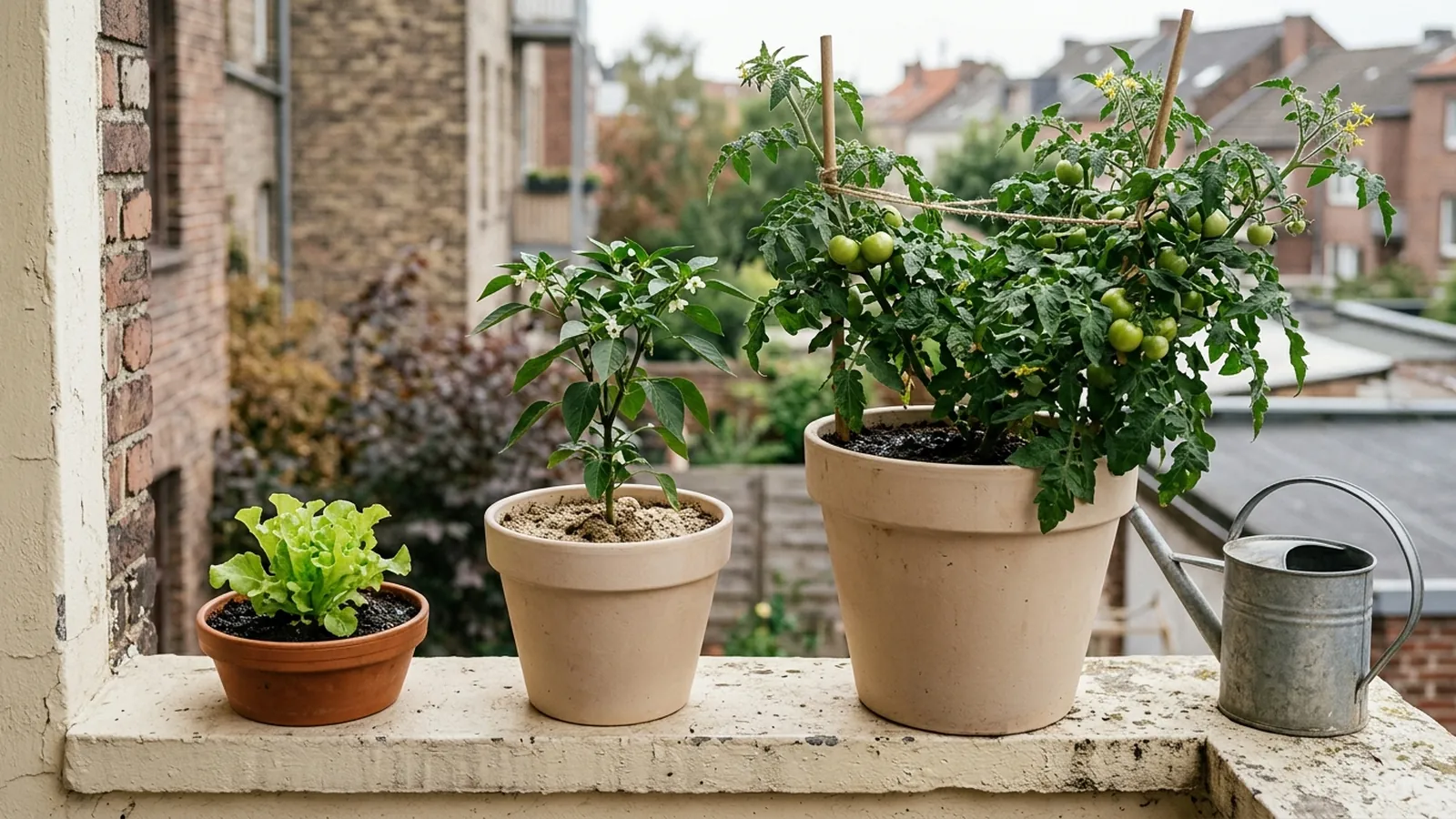
How often to water container vegetables: volume and crop stage set the interval
A pepper in a 2-gallon pot in May and the same pepper in the same pot in August are two different watering problems. Once you can see why, the question stops being how often and becomes how much mix you gave the plant, and what it is carrying right now.

How to protect container plants during a heatwave
Watering more is only one piece of getting containers through a heatwave. This is the wider plan: cutting the heat load, grouping and staging pots, and reviving one that has already dried out.
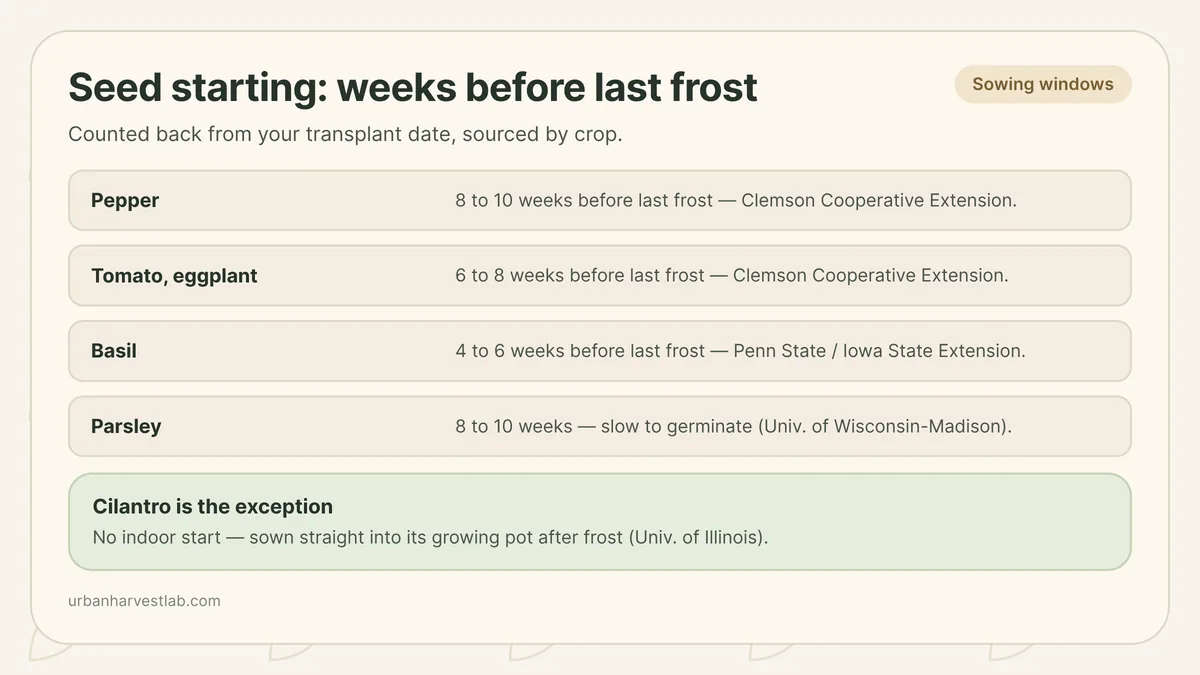
Seed starting calculator: sowing dates from your last frost date
A last frost date is only useful once you count backward from it. This works out that count crop by crop, instead of applying one week figure to everything in the seed drawer.