Which kitchen scraps regrow into something you can eat
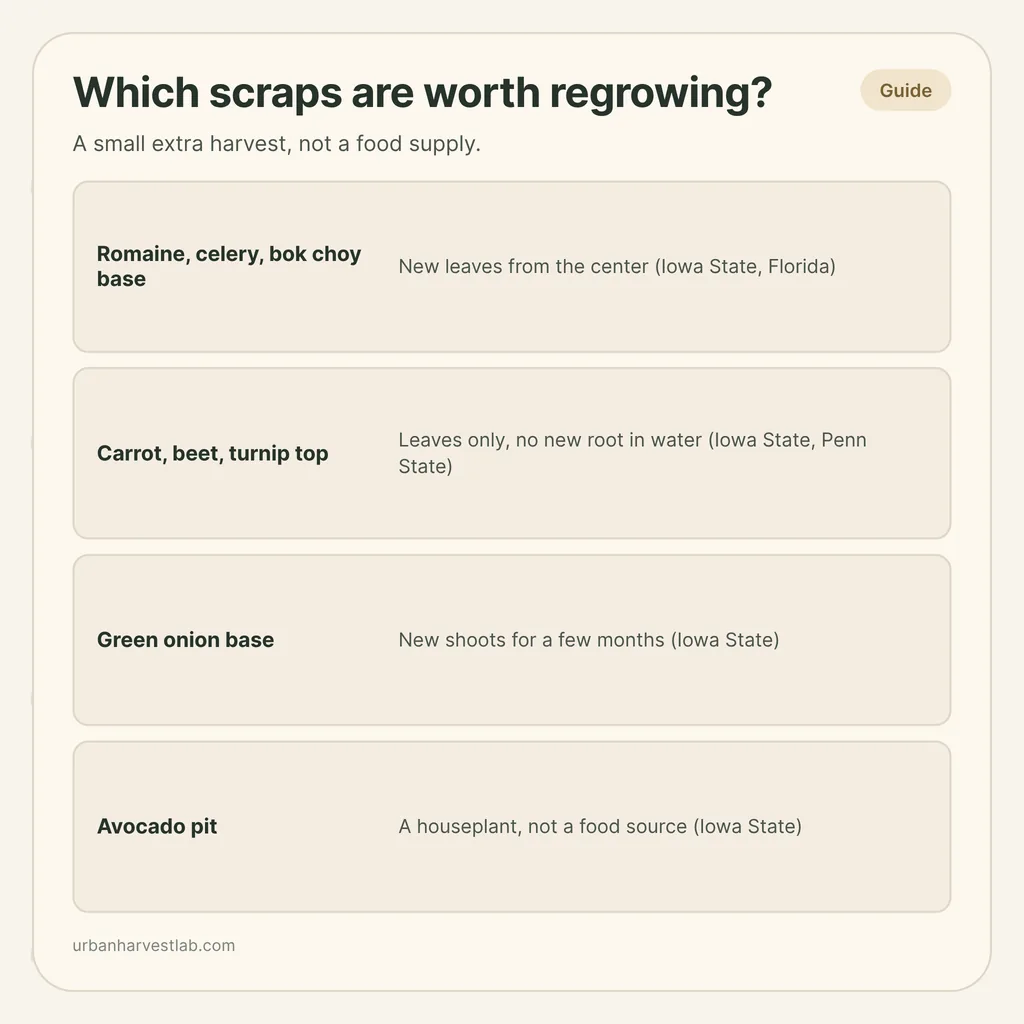
| Scrap | What you get | Verdict |
|---|---|---|
| Romaine, celery, bok choy, Napa cabbage base | New leaves from the center of the base (Iowa State, Florida) | Worth trying; moves to soil for more growth |
| Carrot, beet or turnip top | Leaves only, no new root in water (Iowa State, Penn State) | Good for greens and garnish |
| Green onion white base | New shoots for a few months (Iowa State) | Worth it; see the green onion guides |
| Bulb onion root end | Green shoots, or buds that can be separated and planted (Florida) | Possible; plant it in soil, not water |
| Garlic clove | Green shoots to snip, or a bulb if left to mature (Florida) | Works from planted cloves; supermarket garlic may be treated |
| Ginger or turmeric piece | Ginger sprouts in 1 to 2 months (Iowa State); UF/IFAS expects sprouts a few weeks after planting | Slow; may be treated to stop sprouting |
| Potato or sweet potato | Often will not sprout if treated (Iowa State) | Unreliable from supermarket stock |
| Avocado pit | A houseplant; Iowa State says not to expect any avocados | A project, not a food source |
| Pineapple top | A plant that matures in 2 to 3 years and may set one small fruit (Iowa State) | Years for one small fruit, if any |
The scraps worth saving are the root ends of romaine, celery, bok choy and Napa cabbage, the cut tops of carrots, beets and turnips, and the white base of a green onion. The first group regrows leaves from the center, the second gives you greens only, and the third resprouts for a few months. Everything else on the “regrow from scraps” lists is either slow, unreliable from supermarket stock, or a houseplant.
Set expectations first. Iowa State Extension puts it plainly: growing new plants from vegetable scraps “is not going to replace your weekly trip to the grocery store.” What you get is a few extra handfuls of leaves and a project for a windowsill. If you want a real harvest from a small space, the best vegetables for small balconies are a better use of the same sunny spot.
Leafy bases: romaine, celery, bok choy and Napa cabbage
These are sold with the crown still attached, and Iowa State says the root or basal plate “can be used to grow more leaves.” The method is the same for all four.
- Cut off the edible part. Iowa State says to keep the bottom two inches of the root end; Penn State also cuts about two inches up from the base.
- Stand the base in a shallow dish. Iowa State covers the bottom inch or so with water. Penn State uses about half an inch, and the University of Florida says half an inch of the base should be submerged, with a jar suiting celery and a bowl suiting romaine and bok choy.
- Put it in a warm, sunny spot, such as a kitchen windowsill.
- Keep the water clean. Iowa State says to change it every 2 to 3 days to prevent fungal or mold growth in the water. Penn State says to rinse the container every 3 to 4 days with warm water, without soap, because soap can harm the plants.
- Wait. Iowa State says new leaves emerge from the center of the rosette after several days to weeks. The University of Florida gives the same spread, a few days or weeks depending on the plant.
Once roots appear, you can keep harvesting from the dish, but Iowa State says that in soil the plant will be more productive, and the University of Florida says to move it on once a strong root system appears for better yields. A pot of ordinary potting mix is the simplest next step. If you end up wanting a full celery crop, the celery in containers guide covers growing it properly from seed or a plant. NC State adds that the butt end of a lettuce head can also be planted shallowly in soil and will grow new leaves, so you can skip the water stage.
Root tops: carrots, beets and turnips
Cut the top of the root, set it cut-side down in a shallow dish and change the water. Iowa State says to cut the upper two inches of the root; Penn State cuts one inch from a carrot and says to use whole carrots, not pre-cut baby carrots.
What comes back is foliage. Penn State says a carrot top grows roots but not the long part of the carrot known as a taproot, and Iowa State says that for beets and turnips you will get leaves only, not a new root. Treat the result as carrot greens or beet greens for a salad or garnish. Iowa State suggests a layer of pebbles or marbles under the root top so you can add water without submerging the whole thing.
The University of Florida describes one variation: plant a beet or turnip top in soil, cut side down, if you want roots rather than greens. Iowa State and Penn State only describe the water method, and none of the three gives a root size, so judge it as an experiment. If beets are what you want, plant seed.
Green onions and bulb onions
A green onion base is the most reliable scrap on the list. Iowa State says the shoots keep coming for a few months before the base depletes its reserves, and you can plant it once the shoots reach 4 to 5 inches. The full method, with the water-versus-soil comparison, is in how to regrow green onions, and the hydroponic green onions guide covers keeping them going in a nutrient setup.
Bulb onions work differently. The University of Florida says to cut a third of the bulb off from the root end, let it dry for a day or two until the surface begins to shrivel, then plant it root-side down and cover it with an inch of soil. You can harvest the green shoots, or separate the buds at the base of each shoot and plant them. Growing a proper bulb is a different job; see bulb onions in containers.
Garlic, ginger and potatoes: check for sprout inhibitors
Iowa State warns that potatoes, sweet potatoes and garlic are frequently treated with a hormone before they reach the grocery store to prevent sprouting. That helps storage and hurts growing. If a supermarket clove or potato does nothing, the cause is more likely the treatment than your care, and Iowa State says not to be discouraged.
- Garlic. The University of Florida says to plant each clove a couple of inches deep and snip the greens as needed if you only want greens. For bulbs, see garlic in containers.
- Ginger and turmeric. Iowa State says ginger is slow, often taking 1 to 2 months to sprout. The ginger and turmeric in pots guide covers the treated-rhizome problem and harvest.
- Potatoes and sweet potatoes. NC State lists both as regrowable from a piece of the vegetable.
- Lemongrass and fennel. NC State also lists these. Lemongrass roots from a stalk in water, covered in lemongrass in pots.
Pineapple and avocado: long projects, not a harvest
Neither of these gives you a meal any time soon. Iowa State says you should not expect to harvest any avocados from the new plant, and to discard a pit that has not sprouted within 2 months. For pineapple, Iowa State says most plants mature in 2 to 3 years and may then set one fruit, which will be quite small. Both have their own pages: pineapple from the top and growing an avocado from a pit. Herb stems are the other scrap that really pays off, and they root as cuttings rather than from a base: see regrowing herbs from cuttings.
Keeping regrown food safe
A scrap in a dish of water is a plant you will eat, so handle the water and the harvest sensibly. Change the water on the schedule above, since both Iowa State and Penn State tie it to preventing mold and keeping the water clean. If a base or its new leaves look rotten, throw them away; the FDA gives that advice for any produce. Wash the leaves you harvest under running water before eating, which the FDA says applies to produce grown at home too. The FDA does not recommend washing with soap, detergent or commercial produce wash.
Sources
- Iowa State University Extension: How to Grow Vegetables from Kitchen Scraps
- Penn State Extension: Growing Gardeners, Growing Veggies from Veggies
- University of Florida IFAS Gardening Solutions: Grocery Store Starts
- NC State News (Chris Gunter, NC State Extension vegetable specialist): No Seeds, No Problem: Growing Vegetables From Scraps
- U.S. FDA: Selecting and Serving Produce Safely
Scraps with their own guides
The single-crop pages for the scraps that need more than a dish of water, and the herb cuttings that root the same way.
Common questions
What vegetables can you regrow from scraps?
Romaine lettuce, celery, bok choy and Napa cabbage regrow leaves from the root end. Carrots, beets and turnips regrow leaves from the cut top. Green onions regrow shoots from the white base. Iowa State and the University of Florida describe most of these; Penn State covers romaine, celery and carrots.
Can you regrow a carrot from a carrot top?
You get greens, not a carrot. Penn State Extension says a carrot top grows roots but not the long taproot, and Iowa State says the same for beet and turnip tops. Use whole carrots, not pre-cut baby carrots, if you want to try the greens.
How long does it take to regrow lettuce or celery from the base?
Iowa State says new leaves appear after several days to weeks, and the University of Florida says growth may show in a few days or take weeks. Penn State describes romaine, celery and carrots as almost ready to harvest after a few weeks.
Is it safe to eat vegetables regrown in water?
Wash them like any other produce. The FDA says to wash all produce under running water, including produce grown at home, and to throw away anything that looks rotten. Skip soap or produce wash, which the FDA does not recommend. Extension pages on regrowing say to change the water often to prevent mold.
Related guides
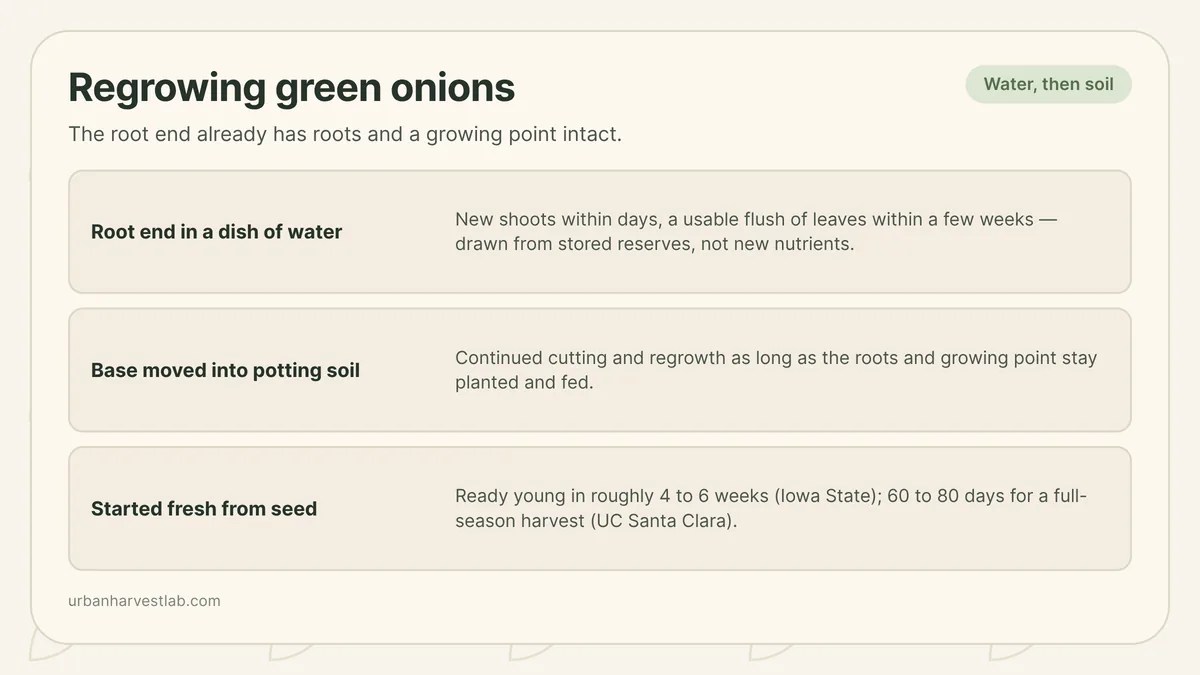
How to regrow green onions in water, then soil
The white root end of a green onion still has its roots and growing point attached, so it resprouts in a dish of water within days. Water alone only carries it so far.
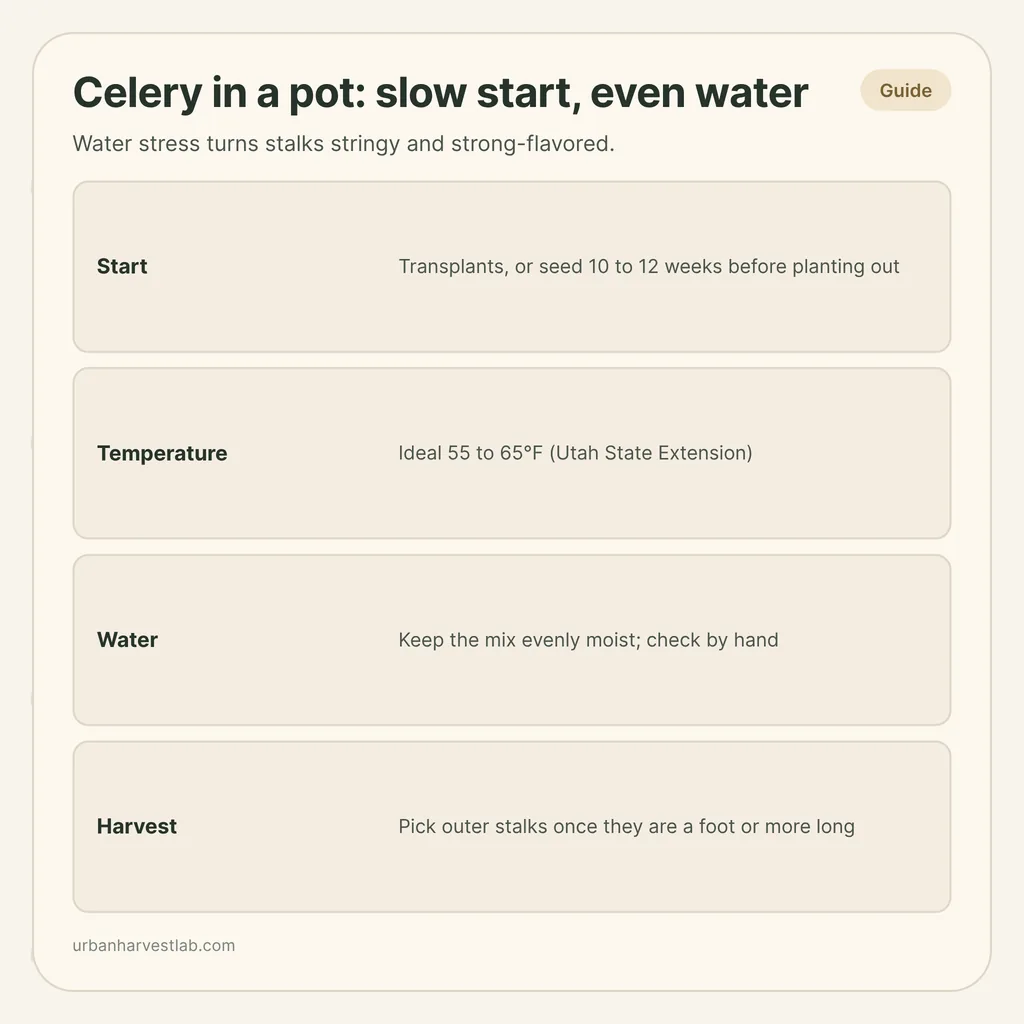
How to grow celery in pots: slow seed, steady water and picking by the stalk
Celery is a cool-season crop with a small, shallow root system. In a pot that means starting early, avoiding swings between wet and dry mix, and harvesting a stalk at a time.
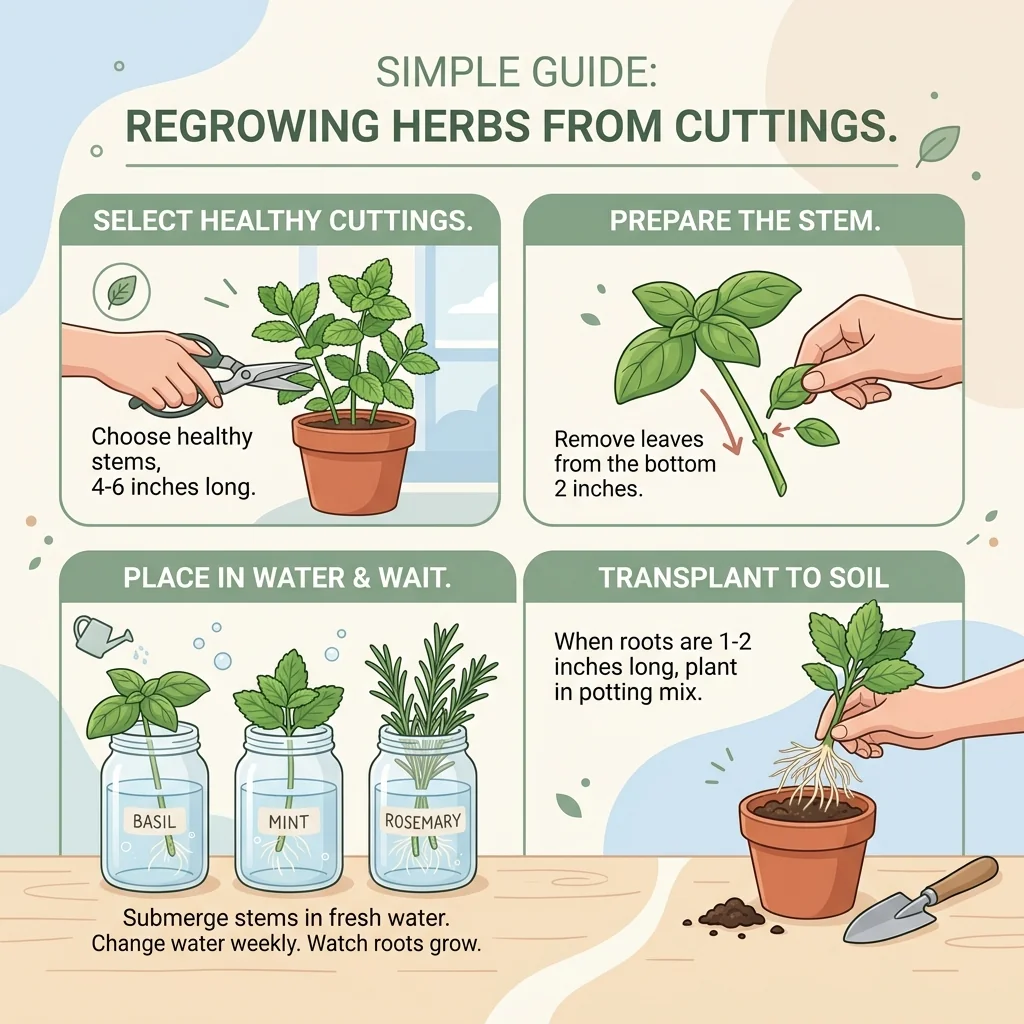
How to regrow herbs from cuttings (basil, mint, rosemary)
Many herbs root from a simple stem cutting in a glass of water. It is the cheapest way to turn one plant, or a supermarket bunch, into many.