
Saving seed from container vegetables, crop by crop
| Crop | When to take the seed | Preparation | Source |
|---|---|---|---|
| Tomato | Fruit fully ripe | Scoop out seed and gel, ferment in water, discard floaters, dry | UVM, UGA |
| Pepper | Ripe to final color; wrinkling begins | Cut open, separate seed from flesh, dry | UVM, UGA |
| Bean | Pods dry, brown, seeds rattle | Dry pods indoors, then shell | UVM, UGA |
| Pea | Pods dry, brown, seeds rattle | Dry pods indoors, then shell | UVM, UGA |
Save seed from open-pollinated or heirloom varieties, and start with tomatoes, peppers, beans and peas. University of Vermont Extension says seed from hybrid or F1 plants will not produce true-to-type plants, so those are not worth the effort. The four crops above have self-pollinating flowers, which means a pot on a balcony is enough to produce seed that grows into a plant much like its parent next year.
If you are still deciding what to grow, the apartment vegetable garden plan and the guide to compact vegetable varieties cover the choice of crop and variety first.
Which seed is worth saving
Seed packets sort varieties into two groups that matter here. Hybrid seed is a cross of two parent varieties and will not breed true, according to University of Georgia Extension: the plant that grows from saved seed may not look or taste like the one you took it from. University of Illinois Extension makes the same point from the other side, saying open-pollinated vegetables have traits that reliably carry through to the next generation. Georgia’s advice is blunt: open-pollinated seeds are the only seeds recommended for saving.
Open-pollinated includes heirlooms, though University of Illinois Extension notes that there can still be some minor variability even within a single named variety. Expect plants that are alike, not identical.
Check the packet or the plant tag before you commit. If it says F1, or hybrid, buy new seed instead.
Self-pollinating or not
Open-pollinated is half the question. The other half is whether a neighbouring variety can cross with yours.
Peas, beans, tomatoes and peppers are the easy ones. University of Illinois Extension says they have self-pollinating flowers and need little to no special care for seed saving. UNH Extension adds that they are the easiest to save because they are less likely to have crossed with other varieties in the garden.
Cross-pollinating crops are a different project. University of Georgia Extension lists broccoli, cabbage, kale, collards, corn, carrots, beets, squash, cucumbers and melons as needing isolation to produce seed that is true to type. That means either keeping other plants of the same family a prescribed distance away, or tying flowers shut and pollinating them by hand. UNH Extension says squash and corn will readily cross with other varieties of the same species. On a balcony, where pots sit a few feet from each other and from the neighbours’, that is a lot to manage. Learn on the four easy crops first.
Choose the plant before you choose the fruit
The point of saving seed is to get more of the plant that did best. University of Vermont Extension suggests choosing the cherry tomato with the best flavor, fruits that ripened earlier and skins that did not crack in the rain. A pea variety that was slow to mature, tasted flat, got diseased or did not produce well is a poor candidate: the less desirable traits will be perpetuated in its seeds.
Decide this while the plants are still growing. Tie a strip of cloth or a label around the stem of the plant you are choosing, so the fruit does not get eaten, then forgotten, before you have taken seed from it.
Tomatoes
University of Vermont Extension says to take seed from fully ripe fruit. Cut the tomato open, scoop out the seeds and gel, and put them in a glass jar with some water. Tomato seeds are surrounded by a gel, and the next step is fermenting it away.
The two extension sources disagree on how long that takes:
- University of Vermont Extension: agitate the mixture twice a day for five days. The seeds sink to the bottom.
- University of Georgia Extension: keep the container warm, at 72-86°F, and stir 2-3 times a day. Fermentation takes 48 to 72 hours.
Georgia’s finish sign is the more useful one to go by: if the gel around the seeds is completely gone, the process is finished. You may see a little white mold on the surface, which Georgia says is not harmful and can be stirred in. Watch for sprouting. That means the seed has soaked too long. Georgia also says fermentation can increase germination rates and kill some seed-borne pathogens.
Discard any seeds that float, which University of Vermont Extension describes as non-viable. Rinse the rest in a strainer, then dry them (see below).
Peppers
Seed quality depends on ripeness. University of Vermont Extension says to let the pepper ripen to its final color before harvesting, and University of Georgia Extension says to leave fruit on the plant until it is fully ripe and starts to wrinkle. Vermont also suggests choosing your seed pepper from the first few fruits the plant produces, as those seeds may have the highest viability.
Cut the pepper open and separate the seeds from the flesh. For hot peppers, University of Vermont Extension recommends gloves and goggles to avoid exposure to the capsaicin. It also suggests putting the seeds in a jar of water and discarding any that float to the top, then rinsing the rest before drying.
If you are keeping a pepper plant going through the winter, the overwintering guide covers that, so you can take seed from a plant you already know.
Beans and peas
These are the least fiddly. University of Vermont Extension says to leave the pods on the vine until they are dry, begin to turn brown and the seeds rattle inside. Pick them and bring them indoors to carry on drying. Seeds are dry enough when you cannot dent them with a fingernail, which Vermont puts at about one to three weeks.
University of Georgia Extension suggests drying pods for at least two weeks before shelling, or leaving the seeds in their pods until planting time. Sort as you shell: Georgia says to keep only the largest, plumpest seeds, because small deflated seeds are not viable.
Both crops are covered as growing guides in beans in containers and peas in containers. If you leave pods to dry, you stop picking them, so set aside a plant or two for seed rather than waiting until the end of the harvest.
Drying and labelling
Wet seed must dry before it goes anywhere. University of Georgia Extension spreads it in a single layer on a plastic, glass or ceramic plate and says not to use paper towels or wax paper. It asks for an airy, dry spot with humidity between 20% and 40%, and says drying usually takes 2 weeks or more. University of Vermont Extension is more relaxed about the surface, listing newspaper, coffee filters, paper plates or a screen.
Label everything with the plant name, variety and the date of seed harvest, which University of Vermont Extension recommends. This matters most if you save from two varieties of the same crop, since dry tomato seeds look alike.
When the seed is completely dry, University of Vermont Extension says to store it in a cool, dry, dark place. How long it then stays good, and how to test it, is covered in seed storage and viability.
Sources
- University of Vermont Extension, “Saving Seeds from Vegetable Crops”
- University of Illinois Extension, “Open-Pollinated vs. Hybrid: Important Distinction When Saving Seeds”
- University of Georgia Extension (Camden County), “Seed Saving Basics”
- UNH Extension, “How do I save seeds for next year’s garden?”
Grow the crops you will save from
Container guides for the vegetables that are easiest to save seed from.
Common questions
Can you save seeds from store-bought vegetables?
Only if the variety is open-pollinated. University of Vermont Extension says seed from hybrid or F1 plants will not produce true-to-type plants, and University of Georgia Extension says open-pollinated seeds are the only ones recommended for saving. Supermarket produce rarely names its variety, so you usually cannot tell which kind it is. Seed from a packet labelled open-pollinated or heirloom is the safe starting point.
What is the easiest vegetable seed to save?
Peas, beans, tomatoes and peppers. University of Illinois Extension says their flowers are self-pollinating and need little to no special care for seed saving, and UNH Extension calls them the easiest to save because they are less likely to have crossed with other varieties.
How long do you ferment tomato seeds?
The two extension sources differ. University of Vermont Extension stirs the seed and gel in water twice a day for five days. University of Georgia Extension keeps the mix at 72-86°F, stirs it 2-3 times a day, and says fermentation takes 48 to 72 hours. Georgia says it is finished when the gel around the seeds is completely gone, and warns that sprouting means the seed has soaked too long.
How do I know when bean seeds are ready to pick?
Leave the pods on the plant until they are dry and brown and the seeds rattle inside (University of Vermont Extension). Vermont says seeds are dry enough when you cannot dent them with a fingernail, about one to three weeks after picking. Georgia says to dry pods for at least two weeks before shelling.
Related guides

Overwintering pepper plants: how to carry one through to spring
Frost kills a pepper plant back every winter, but the plant itself is not actually an annual. Here is the tender-perennial method for carrying one over instead of starting from seed again.
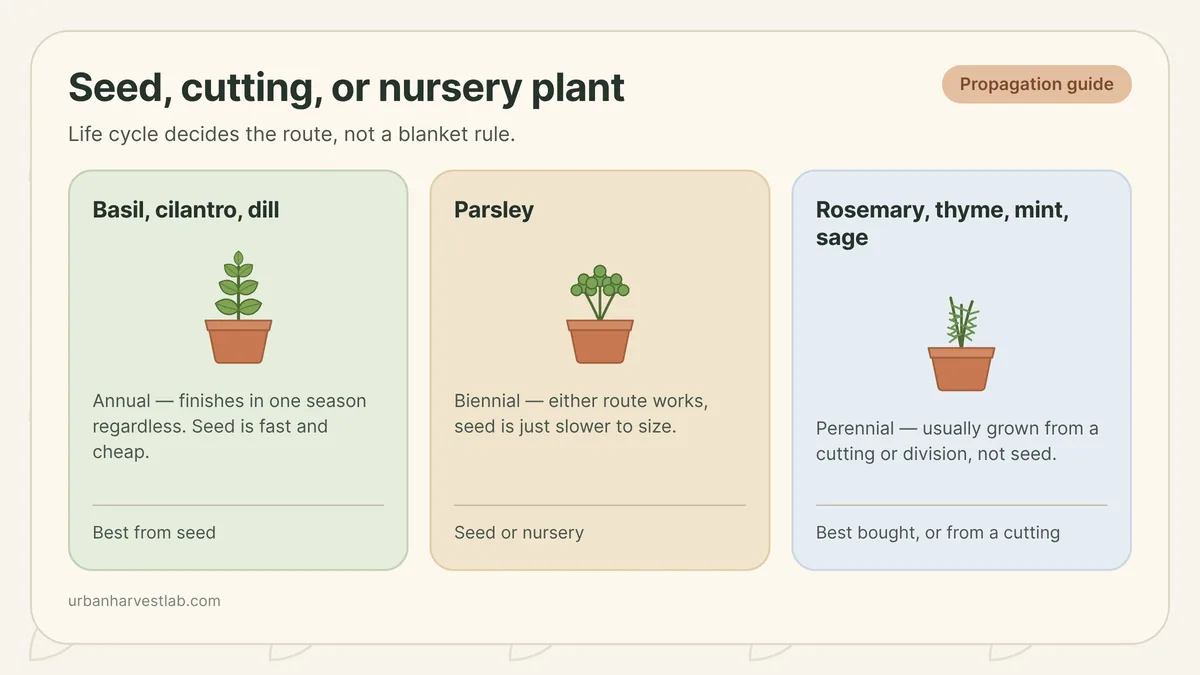
Herbs from seed or buying plants: how to decide
Some herbs finish a whole life cycle from seed in a matter of weeks; others are slow, woody, or simply propagated a different way. The life cycle of the herb, not a blanket rule, is what actually decides which route makes sense.
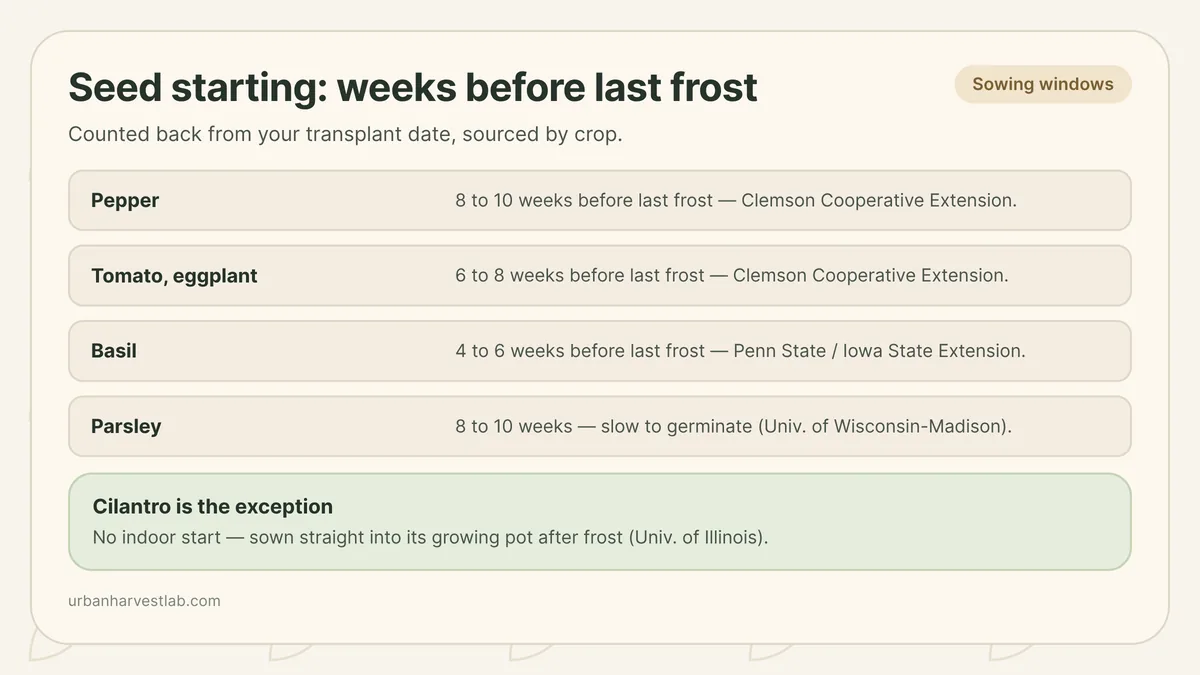
Seed starting calculator: sowing dates from your last frost date
A last frost date is only useful once you count backward from it. This works out that count crop by crop, instead of applying one week figure to everything in the seed drawer.