
Penn State measured yield per 10-row tray, greenhouse, two-week cycle
| Microgreen | Yield per tray (g) |
|---|---|
| Red cabbage | 106.1 |
| Kale (Toscano) | 117.9 |
| Chinese cabbage (Kogane) | 119.8 |
| Arugula | 147.6 |
| Kale (Russian) | 154.6 |
Red cabbage microgreens grow on the same fast brassica schedule as broccoli and kale; what sets them apart is the purple stem and the fact that you are growing them to look at. Penn State Extension lists cabbage among the brassicas with “a very short growth cycle (7-8 days maximum)”. Everything about sowing, blackout and watering is the standard brassica routine, so the crop-specific questions are colour, light, yield and what the nutrition headlines really claim.
If this is your first tray, start with the beginner’s method for growing microgreens. The broccoli grow log gives the day-by-day timeline, and it applies to red cabbage with one change: you will be watching the stems.
Where the purple comes from
The colour is anthocyanin. A 2023 review of Brassicaceae microgreens in Current Research in Food Science names red cabbage among the species with high anthocyanin content, next to purple radish, kohlrabi, komatsuna and pak choi. The same review notes that this knowledge is useful for choosing purple-leaf species for their “visual attractiveness”, which is the real case for red cabbage at home: it makes a tray and a plate look different from green broccoli.
Two things follow from that.
- Pale seedlings out of blackout are normal. Seedlings that come out of the dark pale or yellow-white are going through etiolation, not failing. See why microgreens turn yellow before you throw a tray out.
- Colour is a light question. The review reports that increasing light intensity enhanced anthocyanin content in kohlrabi, kale, cabbage, arugula, mustard, wild rocket, red pak choi and tatsoi. It also warns that responses are species-specific and should be evaluated for each species. So brighter light is a reasonable thing to try for deeper colour; it may not work as a dial for red cabbage in particular.
Light for the purple
Put the tray under light once the cover comes off and keep it close. The microgreens light setup covers fixture height, hours and the lamp choices; UC Cooperative Extension in Sonoma County gives 6-8 hours of natural light, or a fixture 6-12 inches above the canopy with a timer at 12-16 hours.
For a crop grown partly for its colour, a lamp is the more dependable route than a window.
Timing, soaking and blackout
Seed to harvest is 7 to 21 days in Penn State’s general range, and cabbage sits at the fast end under good conditions. Cool rooms and weak light stretch it. For the sowing density, the seed density chart owns the grams-per-tray math. Utah State’s per-crop tables do not list red cabbage, so use the figure for a small-seeded brassica and scale by tray area. The blackout page covers the covered period for the whole brassica group, and the soaking rules sit in the seed soaking guide.
Harvest
Purdue Extension says most crops are harvested at 2 to 4 inches tall with any true leaves just emerging. Cut at the base with clean scissors at that stage. Cutting removes the growing point, so a red cabbage tray does not give a useful second crop; can microgreens regrow explains the exceptions. Washing, drying and storing follow the general routine in how to harvest and store microgreens.
What to expect from a tray
Penn State Extension measured yields across seventeen varieties in a greenhouse without supplemental light, using 10-15 g of seed per 10-row tray and a two-week cycle. Red cabbage averaged 106.1 g (0.23 lb) per tray. The table above shows how that compares with the other brassicas Penn State measured; the spread across the whole table runs from about 47 g for cilantro to 201 g for mustard. Those are greenhouse figures from one trial, so treat them as a way to compare crops rather than a promise for a windowsill. For other tray sizes, see microgreens yield per tray.
If volume matters more than colour, Russian kale outyields red cabbage on Penn State’s numbers.
The nutrition claim, stated carefully
Red cabbage turns up in microgreen nutrition headlines because of a 2012 study by Xiao, Lester and colleagues in the Journal of Agricultural and Food Chemistry. The study measured vitamins and carotenoids in 25 commercially available microgreens. The abstract reports that red cabbage had the highest concentration of ascorbic acid (vitamin C) among them, with cilantro, garnet amaranth and green daikon radish leading for carotenoids, phylloquinone and tocopherols.
The USDA Agricultural Research Service summary of the work says microgreens contained “about five times greater” levels of vitamins and carotenoids than their mature counterparts. That is the general finding. The famous 40 times figure is narrower: one vitamin, in one crop, which the microgreens nutrition evidence page unpacks. The study measured concentrations; it does not show a health outcome for anyone eating a tray.
Sources
- Penn State Extension, Growing Microgreens (measured yields)
- Penn State Extension, The ABCs of Microgreens
- Alloggia et al. (2023), Brassicaceae microgreens: a novel and promissory source of sustainable bioactive compounds, Current Research in Food Science
- Xiao, Lester et al. (2012), Assessment of vitamin and carotenoid concentrations of edible microgreens, J. Agric. Food Chem.
- USDA ARS, Specialty Greens Pack a Nutritional Punch
- Purdue Extension, Grow Microgreens at Home
- UC Master Gardener Program of Sonoma County, Growing Microgreens
Grow the rest of the brassica family
The day-by-day brassica timeline, the light setup that colours the tray, and the nutrition evidence behind the red cabbage headlines.
Common questions
How long do red cabbage microgreens take to grow?
Penn State Extension puts cabbage among the brassica microgreens with a very short growth cycle of 7-8 days maximum. Expect the longer end of the general 7 to 21 day window on a cool windowsill, and cut on leaf stage (2 to 4 inches, first true leaves just emerging) rather than on a date.
Why are my red cabbage microgreens not very purple?
The colour is anthocyanin, and its expression depends on the seed lot and on light. A 2023 review reports that higher light intensity raised anthocyanins in several brassicas, while stressing that responses are species-specific. Pale stems out of the dark are normal etiolation; give the tray bright light for a day or two before judging the colour.
Do red cabbage microgreens have 40 times more nutrients than red cabbage?
Not as a general rule. The popular 40 times figure comes from one vitamin (vitamin E) in red cabbage in a 2012 study. Across vitamins and carotenoids, the USDA summary of that study says microgreens had about five times the levels of mature plants.
How much do red cabbage microgreens yield per tray?
Penn State Extension measured an average of 106.1 g (0.23 lb) per 10-row tray in a greenhouse, with 10 to 15 g of seed and a two-week cycle. That is below Russian kale at 154.6 g and arugula at 147.6 g in the same table.
Related guides
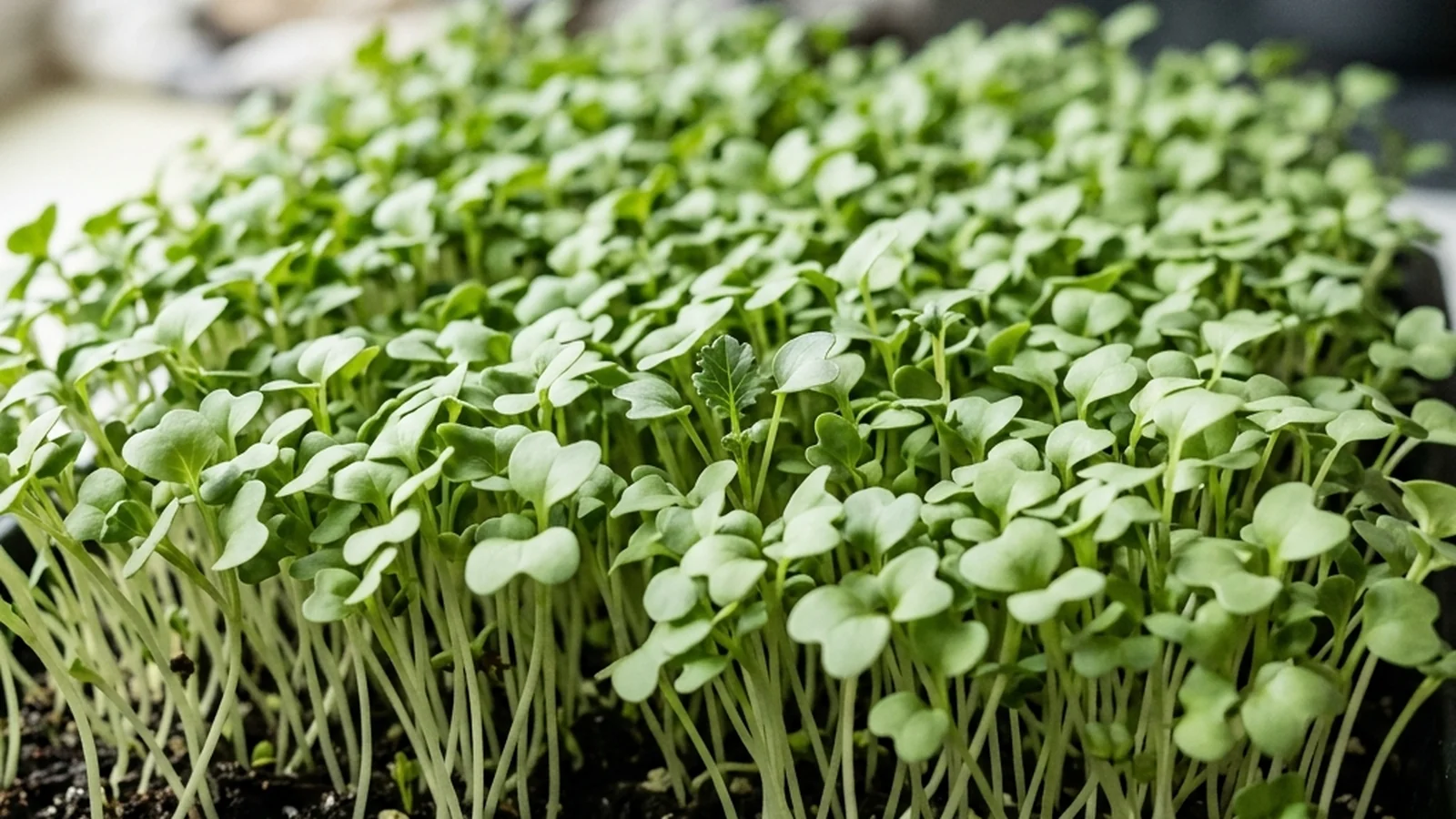
Broccoli microgreens grow log: a day-by-day timeline
Broccoli microgreens follow the same fast brassica schedule as radish, but the reason people search for them is different. Here is the typical timeline, and what the nutrition claims actually support.

Kale microgreens: the earthier alternative to broccoli
Kale and broccoli microgreens grow the same way, on the same clock. The reason to pick one over the other is what you do with the tray after you cut it.
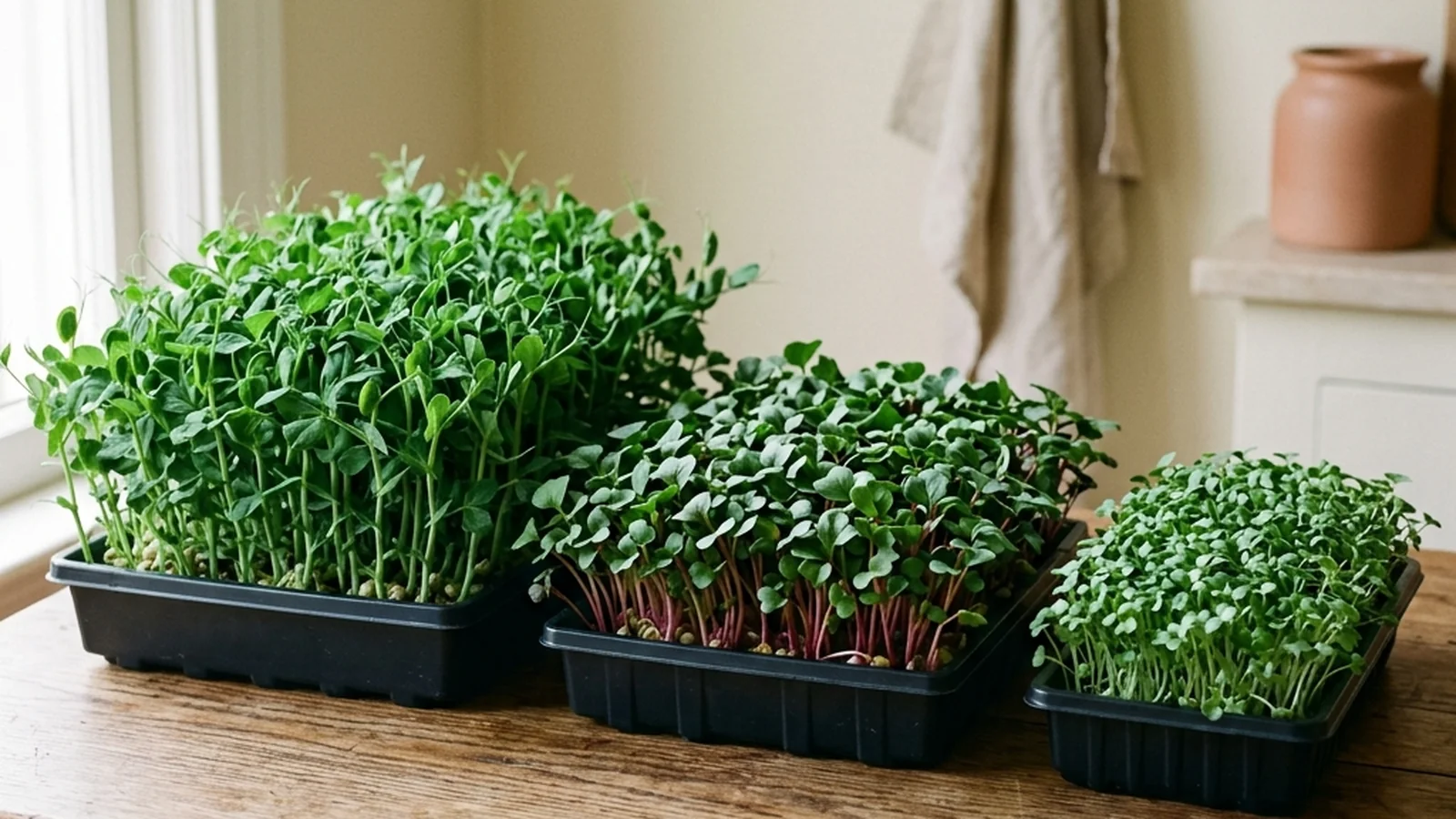
How much microgreens yield per tray, by crop and tray size
One tray of microgreens can weigh anywhere from 47 to 201 grams at harvest depending on the crop, and the tray size behind that figure matters as much as the crop itself.