
Kale microgreens vs. broccoli microgreens
| Trait | Kale microgreens | Broccoli microgreens |
|---|---|---|
| Days to harvest | 7-8 days, fast brassica group | 7-8 days, fast brassica group |
| Presoak needed | No, small seed | No, small seed |
| Flavor profile | Earthier and more assertive, closer to the mature vegetable | Mild, often described as a light cabbage or mustard note |
| Best kitchen use | Garnish for heartier dishes, grain bowls, green smoothies | All-purpose topping that blends into sandwiches, eggs, salads |
Kale microgreens are ready to harvest 7 to 8 days after sowing, in the same fast brassica group Penn State Extension puts broccoli, radish, arugula, and mustard in — which is exactly the problem, because it makes kale and broccoli near-identical to grow. Both skip the presoak and both finish under the same soil and light conditions. What actually separates them is what happens after the scissors come out: flavor, texture, and how each one gets used at the table.
If you have not grown a microgreens tray before, the complete beginner method covers the setup assumed here — a tray, a growing medium, and a light source. The broccoli microgreens grow log has the full day-by-day cycle; it applies to kale unchanged.
Where kale sits in the microgreens timeline
Kale belongs to Penn State Extension’s fast brassica group, alongside broccoli, radish, arugula, and mustard, with a typical seed-to-harvest window of 7 to 8 days under indoor conditions. Soil held at 60-75°F and air at 60-70°F are the same ranges extension guidance gives for microgreens generally, and kale does not carry a documented exception to either figure. As with any fast brassica, a cooler room or weaker light source will stretch that window rather than stop growth outright.
Not every extension source frames the timeline the same way. Penn State’s 7-to-8-day figure covers the fast brassica group generally, without singling kale out; UC Cooperative Extension in Sonoma County works from a slower, home-windowsill baseline of two to three weeks to reach 2-3 in. tall. The two are not really in conflict — a bright windowsill in a cool room runs closer to UC’s timeline, while a dedicated grow light over soil held in the 60-75°F range runs closer to Penn State’s — and kale does not behave differently from the rest of the fast brassica group under either setup.
Kale seed is small, in the same category as broccoli seed, so it falls outside the 6-12 hour presoak that extension guidance recommends for large seed. Sow it directly onto a moist growing medium at about 1/8 in. deep rather than soaking it first — soaking small brassica seed mostly produces a clumped, hard-to-spread batch without a documented germination benefit. For tray setup, medium choice, and the full supply list, what you need to grow microgreens covers the options that apply equally to kale and broccoli.
Blackout and light: the same tradeoff as any fast brassica
Blackout for kale follows the same logic covered for other fast brassicas: a covered period while the seed germinates in humid darkness, and an optional second dark stage some growers add afterward to encourage the stems to stretch before cutting. Because kale’s total cycle is only 7-8 days, stacking a long version of both stages can leave very little time for the canopy to green up under light before harvest. See the blackout period by crop for how that tradeoff plays out across the cluster — the reasoning there applies to kale exactly as it does to broccoli.
Once sprouts lift the cover, move the tray to light and keep airflow moving across the canopy. Seedlings that look pale or yellow coming out of blackout are going through normal etiolation from lack of light, not disease; they green up once light reaches them.
Harvest: size, cut, and no second tray
Cut kale microgreens once the canopy reaches 2-4 in. tall and the first true leaves are just emerging, the same target extension sources give for fast brassicas generally. Cut at the base with clean scissors rather than pulling, and refrigerate promptly — see how to harvest and store microgreens for the washing and storage sequence, including why washing happens right before use rather than before storage.
That base cut removes the growing point, so a kale tray does not produce a useful second harvest, the same rule that applies to broccoli and to nearly every microgreen crop except pea shoots, which are cut higher up the stem specifically to leave nodes behind for a second cut.
Kale vs. broccoli microgreens: flavor, texture, and kitchen use
Kale microgreens carry the character of the mature vegetable in miniature: an earthy, mildly bitter, vegetal note that holds its own next to strong flavors — cured meats, sharp cheese, a heavier grain bowl, or a smoothie where you want a green top note without much sweetness competing against it. Broccoli microgreens run milder, often described as a light cabbage or mustard note, which is part of why they disappear more easily into a sandwich, a taco, or a plate where the goal is texture and a fleck of green rather than a flavor that announces itself.
Texture tends to get described the same way by growers: kale is usually called the more substantial leaf of the two, which is part of why it works as a visible garnish on a heartier dish rather than disappearing into it, while broccoli’s finer, milder profile is the one people reach for when the microgreens are meant to blend in rather than stand out.
None of this comes from a measurement. The extension sources cited throughout document timing, temperature, and handling in detail, but none of them test flavor or leaf texture for any crop — kale included. The taste and texture descriptions above are culinary convention, the language growers and cooks commonly use for these two crops, not a finding from the same research that backs the day counts and temperatures above. That is not a reason to distrust them — market growers and home cooks have described these two crops the same way for a long time — but a specific tray, grown under a specific light and cut on a specific day, can still taste milder or sharper than any general description promises. Treat the comparison as a starting point for your own tray, not a fixed spec.
Growing difficulty is not part of this decision: both crops share the fast brassica timeline, the no-presoak rule, and the same setup, unlike the gap between a fast brassica and a slow, gel-seeded crop like basil. If speed matters more than flavor, radish is the more common benchmark tray for that comparison, and if more heat than either kale or broccoli offers is the goal, mustard microgreens sit at the sharper end of the same brassica family.
Common problems on a kale tray
A kale tray runs into the same trouble any fast brassica does over a short, humid cycle: seed that fails to break the surface or seedlings that collapse near the soil line (damping-off), fuzzy white root growth that looks alarming but is usually harmless and worth checking before you toss the tray (mold vs. root hairs), and the sanitation basics that matter more for something eaten raw and young than for kale you cook (food safety and sanitation). None of it is specific to kale — it comes with growing any brassica this way, and the linked pages cover the fixes.
Sources
Compare kale to its brassica siblings
See the full fast-brassica timeline, the blackout schedule that applies to kale too, and how to handle harvest and storage.
Common questions
How long do kale microgreens take to grow?
Kale is in the fast brassica group with broccoli, radish, arugula, and mustard, typically ready 7 to 8 days after sowing with soil held around 60 to 75 degrees F. UC Cooperative Extension in Sonoma County frames a home-windowsill expectation of two to three weeks to reach 2-3 in., and the gap between that and Penn State's 7-8 days is light and temperature, not a different definition of done.
Do you need to presoak kale microgreen seed?
No. Extension guidance recommends a 6 to 12 hour presoak for large seed to speed germination, and kale seed does not fall into that category. Sow it directly onto a moist growing medium instead; soaking small brassica seed mostly produces a clumped batch that is harder to spread evenly.
What is the actual difference between kale and broccoli microgreens?
Almost nothing on the growing side. Both are fast brassicas on the same 7 to 8 day schedule, with the same no-presoak rule and the same harvest cue. The difference that matters is flavor and kitchen use: kale carries an earthier, more assertive note that holds up next to rich or salty food, while broccoli is milder and blends into a dish rather than standing out in it.
How tall should kale microgreens be at harvest?
Cut at 2 to 4 inches once the first true leaves are just emerging, the same target extension sources give for fast brassicas generally. Cut on leaf stage rather than a specific day number, since temperature and light shift the timeline from one tray to the next.
Related guides
Broccoli microgreens grow log: a day-by-day timeline
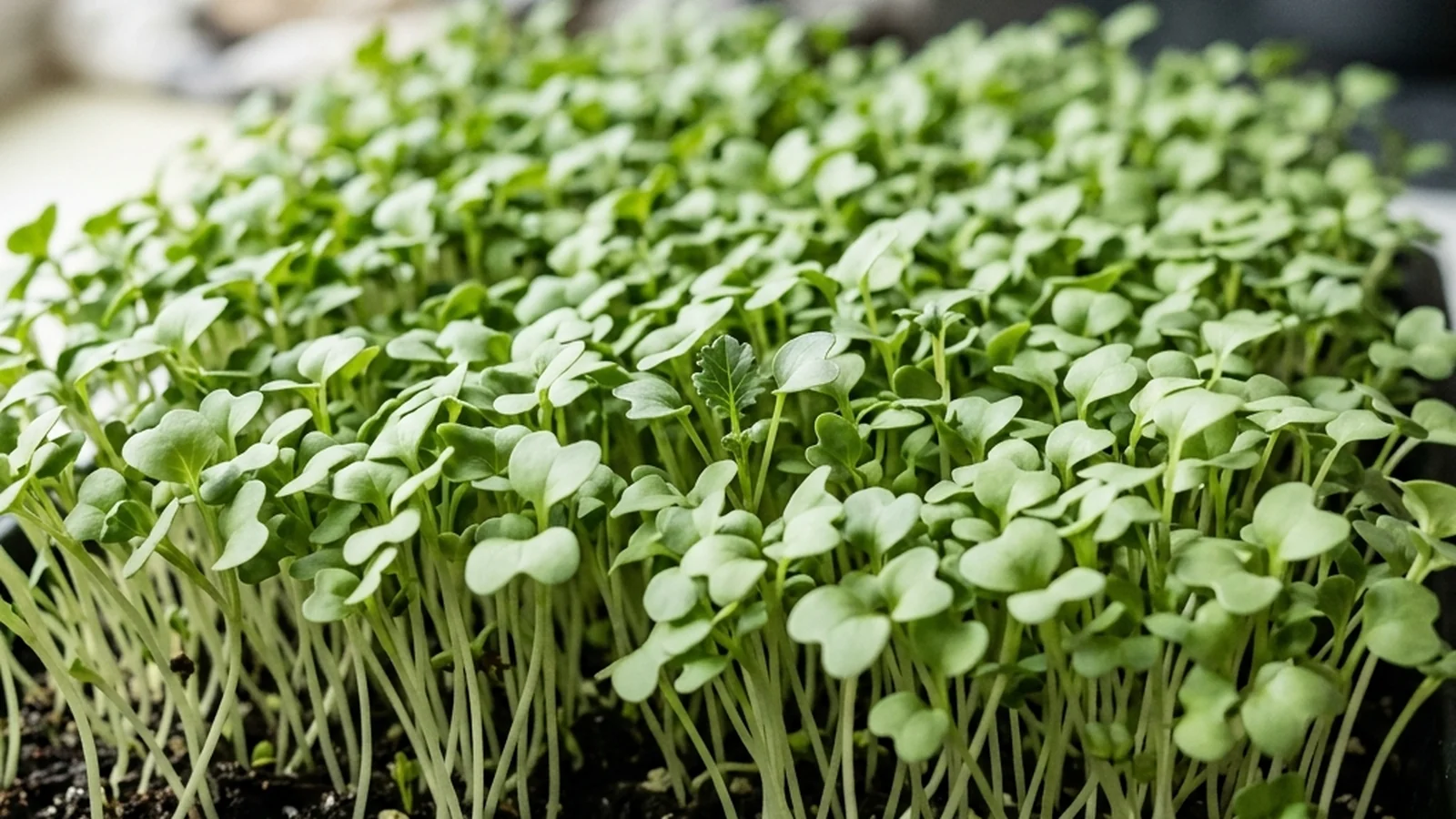
Broccoli microgreens follow the same fast brassica schedule as radish, but the reason people search for them is different. Here is the typical timeline, and what the nutrition claims actually support.

Mustard microgreens: the fast brassica grown for heat
Mustard is the brassica people either love or badly over-sow. Sown like broccoli, a full tray delivers far more heat than most first-timers want.
Radish microgreens grow log: a day-by-day timeline
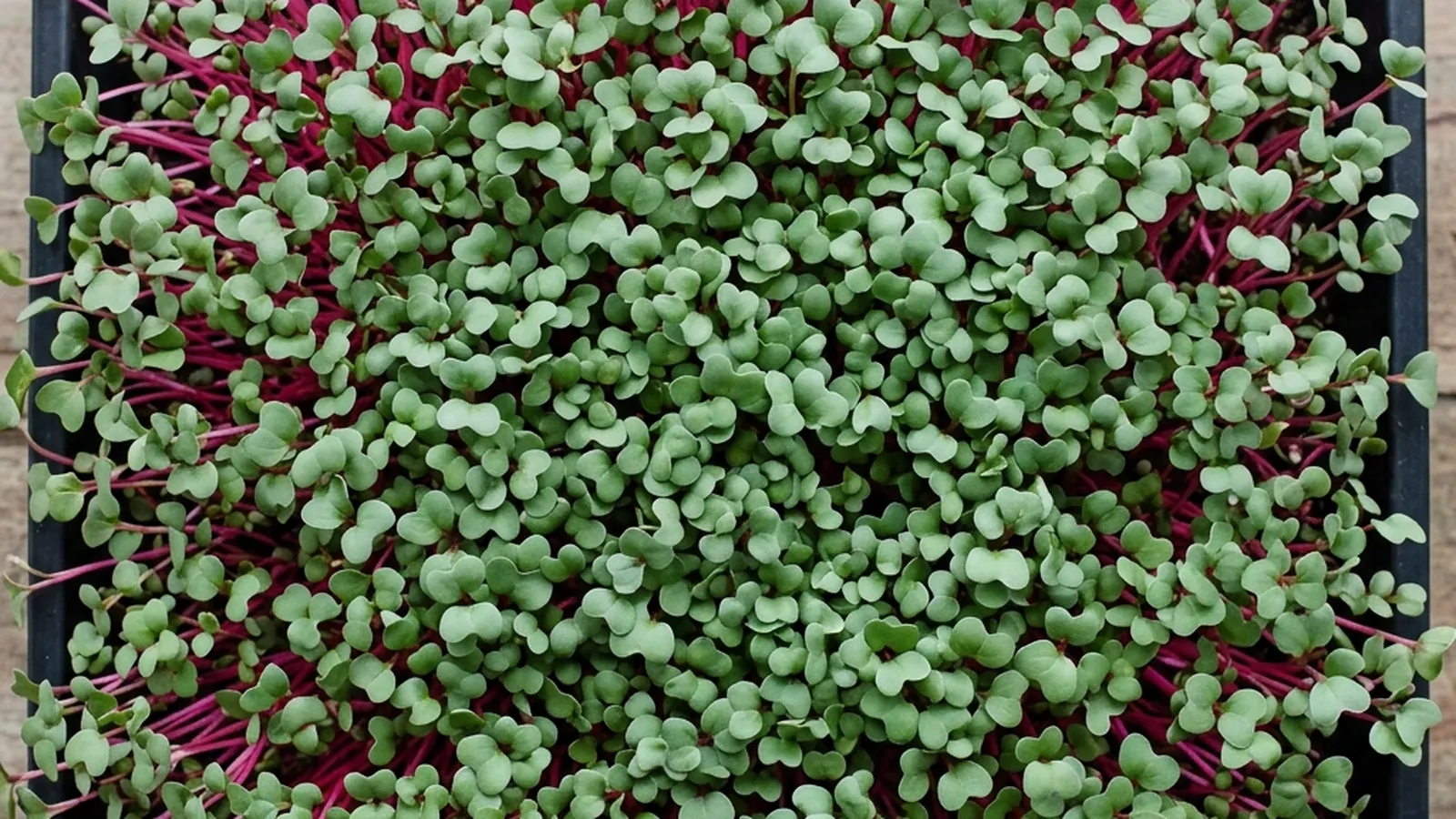
Radish is one of the fastest common microgreens, which is why it works as the benchmark crop for beginners. Here is the realistic week it takes, stage by stage.