
Edibles for hanging baskets, ranked by how well they fit
| Crop | Minimum container (University of Maryland Extension) | Basket verdict | What to watch |
|---|---|---|---|
| Leaf lettuce and salad greens | Half a gallon for leaf lettuce | Best fit | Cool-season crops need 3 to 5 hours of direct sun, so a lightly shaded hook is fine |
| Trailing cherry tomato | 2 gallons for cherry tomatoes | Good fit in a large basket | Needs 6 to 8 hours of direct sun; stems may need support when loaded with fruit (RHS) |
| Thyme, oregano, marjoram, basil | 2 to 5 gallons for small-statured herbs | Good fit, one herb per basket or compatible pairs | The RHS says thyme thrives in full sun and free-draining conditions |
| Bush beans | 2 gallons | Works in a large basket | Compare your basket's capacity with the 2-gallon minimum |
| Vining beans | Not in the Maryland table | Possible with support | Oregon State says vining crops can be grown in baskets if trained up a trellis, stake or railing |
| Strawberries | Not in the Maryland table | Contested | Dries out and heats up (Iowa State); RHS lists baskets as suitable |
| Mint | 2 to 5 gallons for small-statured herbs | Own basket only | Vigorous and spreading (RHS), so it crowds out anything planted with it |
| Peppers | 5 gallons | Poor fit | Compare your basket's capacity with the 5-gallon minimum |
| Summer squash | 10 gallons | Poor fit | Oregon State says squash can be grown in a basket, but Maryland's minimum is 10 gallons |
The edibles that suit a hanging basket are trailing cherry tomatoes, leaf lettuce and small herbs such as thyme. University of Maryland Extension puts peppers at 5 gallons and summer squash at 10, so check your basket’s capacity before planting either. Whatever you plant, expect to check the basket every day in summer, because a basket dries out faster than other containers, according to the RHS. The rest of the decision comes down to three things: the crop’s volume, the sun your hook gets and whether you can reach the basket with a watering can every day.
If you are still weighing up which crops belong on a small balcony at all, the best vegetables for small balconies sorts the options by yield and space.
Match the crop to the basket
University of Maryland Extension publishes a minimum container volume for each vegetable, and that figure is the quickest filter. Its table gives half a gallon for leaf lettuce, 2 gallons for bush beans, Swiss chard and cherry tomatoes, 5 gallons for peppers and 10 gallons for summer squash. It adds that varieties sold as bush, dwarf or compact can go in smaller containers than their full-size counterparts.
Read your basket’s capacity off its label, or work it out from its diameter with the pot size calculator. Then compare. Anything with a minimum above your basket’s capacity belongs in a pot on the floor.
Trailing tomatoes
The Royal Horticultural Society says trailing tomatoes can be grown in windowboxes and hanging baskets, with the stems cascading over the sides, and calls them the easiest type to grow with little maintenance. It adds that the stems may need support when heavily laden with fruit. The RHS also lists tumbling tomatoes among its summer basket plants. University of Maryland Extension shows a single cherry tomato plant in a basket hung from the underside of a deck.
Buy the plant labelled trailing, tumbling or basket. A tall cordon or indeterminate plant is the wrong shape. If you want a compact tomato for a pot instead, dwarf tomatoes for a small balcony covers the varieties.
Tomatoes also want the most sun of anything in the basket. Maryland puts warm-season crops at 6 to 8 hours of direct sun. The RHS warns that fluctuating moisture can split the fruit or cause blossom end rot, which is the main reason a tomato basket needs a steady daily routine.
Strawberries: the sources disagree
The RHS lists hanging baskets among the containers where strawberries are easy to grow, and names strawberries as a plant for long-term baskets. Iowa State University Extension is less keen. It says baskets are difficult to maintain through the growing season because they dry out quickly and can have high soil temperatures, and strawberries need consistent moisture. Iowa State also notes that runners left to dangle from a basket cannot root and take resources from the parent plant at the expense of flowers and fruit.
Both can be true. A strawberry basket works if you water it daily and keep it out of the hottest, most exposed spot. If your balcony gets afternoon sun on a railing, the strawberry container guide covers pot sizes and the alternatives in detail.
Herbs
For small herbs the Maryland guidance is 2 to 5 gallons, and it names basil, cilantro, thyme, mint, oregano, tarragon and marjoram in that group. Rosemary, bay, sage, parsley, lavender, dill and fennel are in its large-statured group, which wants 5 gallons or more. The RHS nonetheless lists thyme and sage among plants for long-term baskets, so the two sources use different yardsticks. Thyme is the dependable choice; check sage against the larger volume before you commit.
Mint is the exception to sharing. The RHS describes mint as vigorous and spreading, and best grown in pots to keep it contained. Give it a basket of its own. For the wider picture on herbs on a balcony, the small-space herb gardening hub points to the individual herb guides.
Salad greens and beans
Leaf lettuce is the easiest filler. Its half-gallon minimum fits almost any basket, and University of Maryland Extension says cool-season crops such as lettuce, spinach and Asian greens need only 3 to 5 hours of direct sun. That makes greens the answer for a basket on a hook that gets morning sun and afternoon shade.
University of Maryland Extension gives 2 gallons for bush beans, which fits a large basket. Oregon State University Extension says vining beans can be grown in a basket if they are trained up a trellis, stake or railing. Oregon State also mentions squash, but Maryland’s 10-gallon minimum for summer squash makes it the harder choice.
Choosing and filling the basket
A wire basket needs lining, according to the RHS. Its examples are ready-made cardboard liners and fibrous materials sold for the purpose. The liner is what holds the mix in the frame.
For the mix, the RHS says a good-quality multipurpose compost (what US gardeners call potting mix) is fine for a display that only has to last one year, which covers a tomato or lettuce basket. A heavier loam-based mix helps long-term plantings, but the RHS warns about the extra weight it adds to the basket.
Weight matters more than it seems. A basket is wet most of the time, and it hangs from a single hook or bracket. Check what that fixing is rated for before you hang it. The balcony weight limit guide shows how to work out what a wet container weighs, and a renter should read the renter’s checklist before fixing anything to a railing or ceiling.
Watering a hanging basket
Water is where baskets fail. The RHS says hanging baskets tend to dry out more quickly than other containers, and that drying is an increasing risk as the plants grow and the days stay warm or windy.
- Check every day in summer. The RHS advises checking daily and watering unless the mix is already moist.
- Lift the basket. The RHS suggests gently lifting or nudging a basket to judge its weight: a really light basket needs water. Lift it straight after watering once, so you know what a wet basket feels like.
- Do not wait for wilting. Maryland points out that wilting is not a reliable sign of dryness, because plants wilt when they are kept too wet as well as too dry. Lift first, then water.
- Water slowly. If a basket has dried out, the RHS says very dry mix is hard to rewet, so add water slowly so it seeps in. If the plants have already wilted, it suggests placing a bucket under the basket to catch the runoff and pouring it back.
- Expect more in a heat spell. The RHS says tomatoes in containers may need water daily in hot weather. Iowa State says strawberries in containers can need water daily and sometimes twice a day in summer. Maryland says some containers need daily water when the weather is hot and dry. The heatwave guide covers what to do beyond watering.
If you grow several baskets, a drip line with a timer takes over the routine. The RHS says drip systems deliver water slowly and directly to the roots, with less waste, and that they need adjusting as plants grow and the weather changes, so a timer does not remove the need to look. Balcony drip irrigation explains how to size emitters and a reservoir.
Feeding
The RHS says edibles in baskets benefit from occasional liquid fertiliser in spring, summer and early autumn, and advises watering the basket first and then using diluted feed. Follow the dilution on the pack.
Where to hang it
Sun decides the crop. Maryland’s figures are 6 to 8 hours of direct sun for tomatoes, peppers and other warm-season crops, and 3 to 5 hours for lettuce, spinach and Asian greens. The balcony sunlight method shows how to count the hours your hook gets.
Wind is the second filter. The RHS names warm or windy days as the thing that speeds drying, so a basket on an exposed railing needs more attention than one against a wall. The windproof balcony garden guide covers anchoring and windbreaks.
If a basket is more than you can water daily, a larger container on the floor is the better answer. A pocket wall has the same drying problem in a different form, and the vertical pocket planters guide compares it with a shelf of pots.
Sources
- RHS: Hanging baskets
- RHS: How to grow tomatoes
- RHS: How to grow strawberries
- RHS: How to grow thyme
- RHS: How to grow mint
- Iowa State University Extension: How to grow strawberries in containers
- University of Maryland Extension: Growing vegetables in containers and salad tables
- Oregon State University Extension: Container gardening, grow vegetables even without yard space
More ways to grow up and out
Guides for the other ways to use vertical space on a balcony, and for keeping containers watered.
Common questions
What vegetables grow well in hanging baskets?
Trailing or compact cherry tomatoes, leaf lettuce and other salad greens, and small herbs such as thyme, basil and oregano. The Royal Horticultural Society says trailing tomatoes can be grown in hanging baskets and are the easiest type to grow. University of Maryland Extension lists a half-gallon minimum for leaf lettuce and 2 gallons for cherry tomatoes, so check your basket's capacity against those figures.
How often do you water a hanging basket?
Check it every day in summer. The Royal Horticultural Society advises daily checks and watering unless the compost is already moist, and says drying out becomes a bigger risk as the plants grow and the days stay warm or windy. For tomatoes the RHS says containers may need watering daily in hot weather. Iowa State University Extension says strawberries in containers can need water daily and sometimes twice a day in summer heat.
Can you grow strawberries in a hanging basket?
You can, but the sources split. The Royal Horticultural Society lists hanging baskets among the containers strawberries grow well in. Iowa State University Extension says baskets are difficult to maintain through the season because they dry out quickly and can reach high soil temperatures, and strawberries need consistent moisture. A basket works only if you can water it every day.
Do hanging baskets need feeding?
Yes. The Royal Horticultural Society says edibles in baskets benefit from occasional liquid fertiliser in spring, summer and early autumn, and advises watering the basket first before using diluted feed.
Related guides

Vertical pocket planters: pros, cons and when they pay off
A wall of pockets looks like free growing space. Whether it is depends on how often you can water, how much light the wall gets and what you plant in it.
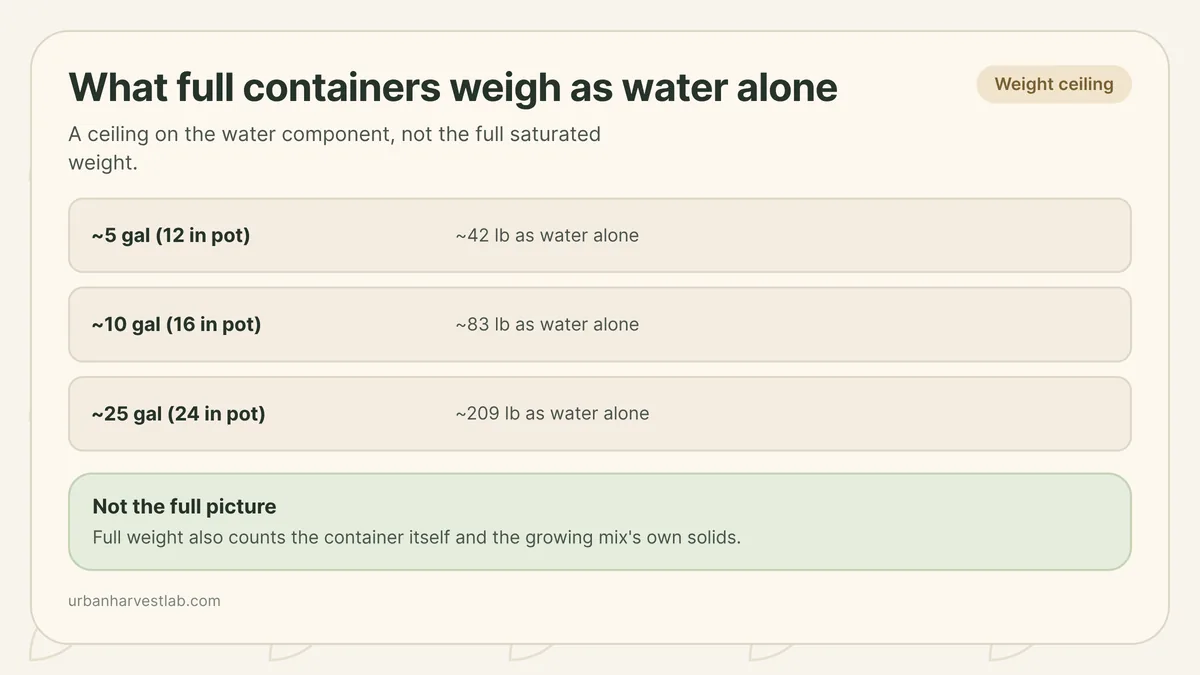
Balcony weight limit: calculate what your container garden really weighs
A balcony's real weight allowance comes from its own structural documentation, not a one-size figure online. What you can calculate yourself is exactly how much your containers weigh once every one of them is soaked through.
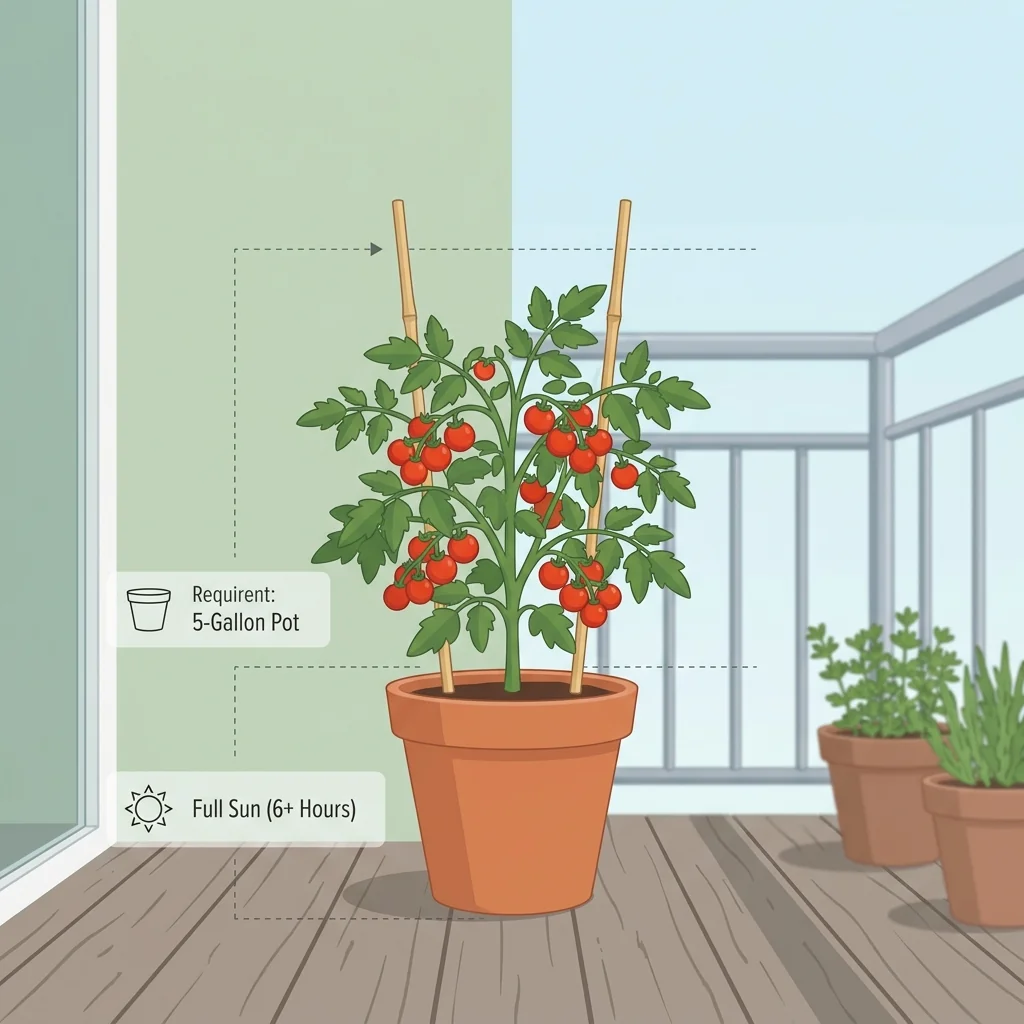
How to grow dwarf tomatoes in pots on a small balcony
Traditional tomato plants grow into massive, untameable 8-foot jungle vines that require giant cages and take over your entire balcony. But with modern 'micro-dwarf' or patio tomato varieties, you can grow heavy yields of sweet cherry tomatoes on a plant that stays under 2 feet tall. Here is the dwarf tomato container blueprint.