Pumpkin choices for a pot at a glance
| Decision | What the extension sources say | In a container |
|---|---|---|
| Type | Wisconsin: vining pumpkins impractical, bush-type squash ideal. Sonoma: Baby Bear and Bushkin suit a container | Bush or mini only |
| Support | Minnesota: large pumpkins too heavy to trellis. Sonoma: minis on a fence or cage, slings for larger fruit | Cage or trellis for minis; ground or low pot for anything bigger |
| Pot | Wisconsin: 5 gallons or more for larger plants such as summer squash | Start at 5 gallons and go bigger if the floor allows |
| Pollination | Nebraska: needs bee pollination. Florida: best done in the morning | Brush male pollen onto female flowers |
| Season | Nebraska: 75 to 100 days. New Hampshire: 90 to 120 days | Check your frost date before sowing |
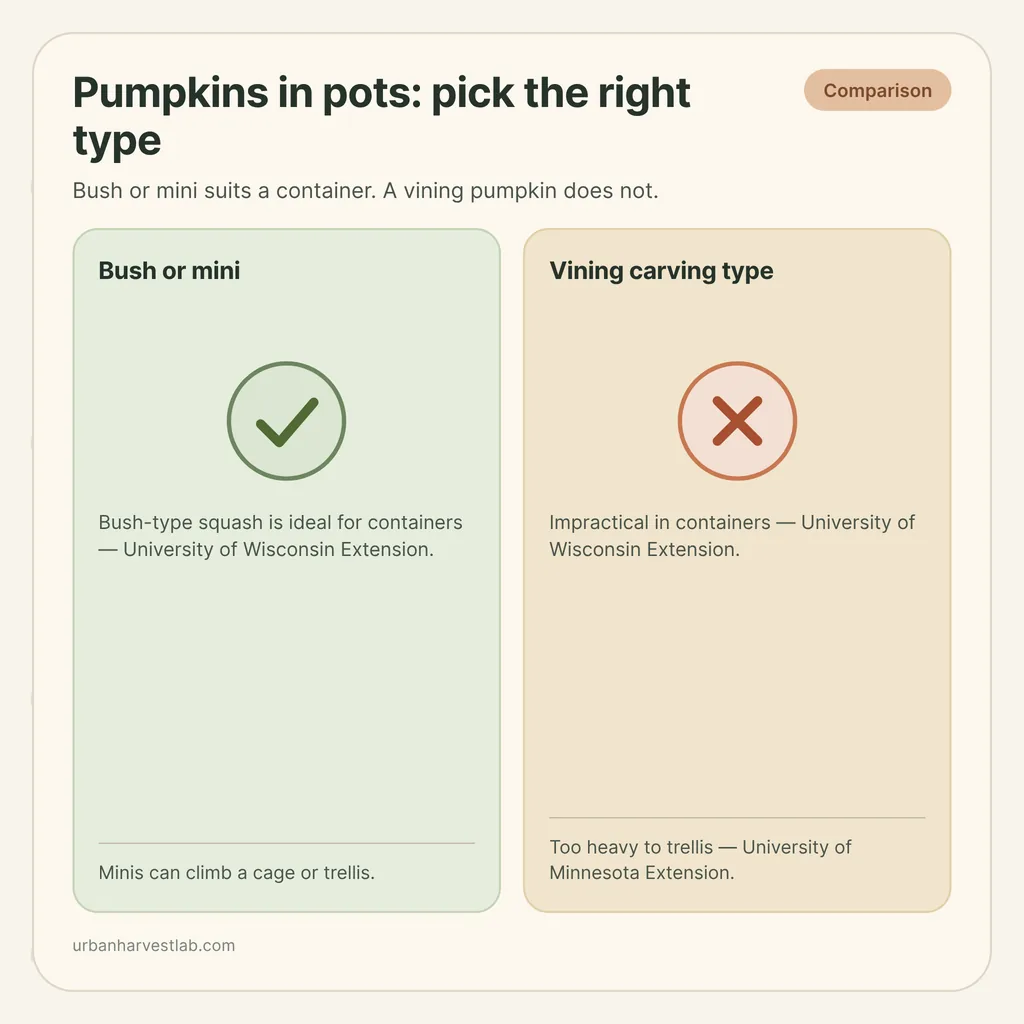
You can grow a pumpkin in a pot if you choose a bush or miniature variety, give it a large container in full sun, and move pollen between flowers by hand. A full-size vining carving pumpkin is the wrong plant for a balcony. University of Wisconsin Extension lists pumpkins among the vining crops that are impractical in containers because of size, and calls the newer bush-type squash ideal for small spaces and containers.
Decide first: is a pumpkin worth the space?
A pumpkin takes a big pot, a sunny spot and most of a season, and the fruit is small: Utah State puts the mini types at 0.5 to 1.5 pounds. It makes sense when you want a decorative or pie-sized pumpkin and have a balcony or patio with 6 or more hours of sun. University of Nebraska says pumpkins need full sun, at least 6 to 8 hours of direct light a day.
It does not make sense when:
- the spot gets less sun than that; the crops in the shady balcony guide suit that spot better;
- you want a large jack-o’-lantern pumpkin, since those need ground space;
- the balcony cannot carry a big pot of wet soil, which the balcony weight limit guide helps you check;
- your season is short. University of Nebraska gives 75 to 100 days to mature, and University of New Hampshire Extension says most varieties need between 90 and 120 days. Count from planting day to your first autumn frost.
If one of those rules you out, a zucchini is the easier squash in a pot. See the zucchini container size guide.
Pick a bush or mini type
Cornell says most pumpkin varieties produce sprawling vines, with a few bush or semi-bush varieties that take less space. Even so, it warns that even smaller bush types spread 5 feet or more and that even some mini-fruited pumpkins grow on very large vines. The label on the packet matters more than anything else you decide.
UC Master Gardeners of Sonoma name ‘Baby Bear’ and ‘Bushkin’ as bush pumpkins suitable for growing in a container, with compact vines only a few feet long and small to medium fruit. University of New Hampshire Extension says bush varieties suit small spaces or raised beds. Cornell lists Baby Boo, Jack-be-Little and Munchkin as mini types.
Fruit size sets the weight your support and pot must handle. Utah State describes Jack Be Little, Wee-B-Little and Baby Bear as small orange pumpkins of 0.5 to 1.5 pounds, and puts Autumn Gold, Connecticut Field and Spirit Hybrid at 18 to 25 pounds. For a pot, the first group is the sensible one. The compact vegetable varieties guide explains what words like “bush” and “patio” promise on a seed packet.
Pot size and weight
No extension source quoted here gives a pumpkin-specific volume. University of Wisconsin Extension says containers holding at least 2 gallons work best in general and that larger plants, including summer squash, grow best in at least 5 gallons. Pumpkins do not appear in that group, so treat 5 gallons as the least you would give one bush or mini plant, and choose the bigger pot when in doubt, as Wisconsin advises. The zucchini container guide compares the 5 to 10 gallon figures for a closely related squash and covers drainage and food-safe buckets.
Large pots of wet soil are heavy. Work out the load before you fill one with the balcony weight limit calculator, and add anything you plan to hang from a trellis. A tall plant in a light pot also blows over; windproofing a balcony garden covers anchoring.
Timing and sun
Pumpkins are tender. Cornell says to wait until danger of frost has passed and soil has warmed to about 70 F, or about 2 weeks after the last frost date. It adds that there is no real need to start them indoors unless you grow a long-season variety in an area with early frosts. University of New Hampshire Extension says they do not like to have their roots disturbed, so if you start seed early, handle the root ball gently. Find your date with the frost dates guide.
Support: only minis climb
Vertical growing is how a pumpkin fits on a balcony, and size decides whether it works. University of Minnesota Extension says you can train small-fruited squash such as delicata or acorn to a trellis to save space, and that larger squash and pumpkins are too heavy to trellis and belong on the ground.
UC Master Gardeners of Sonoma add the practical detail. Mini-pumpkin vines can be trained on a wire fence or tomato cage, and larger fruit grown on a trellis may require supports, with slings made from old t-shirts or nylon stockings working well.
Minis go on a cage or trellis; anything heavier stays low. A renter can build the frame without drilling; the no-drill trellis guide shows free-standing options. Weight the base, because a vine full of fruit catches wind.
Moving the pollen yourself
Pumpkins make separate male and female flowers. University of Nebraska says squash and pumpkin require bee pollination, and that each cucurbit flower remains open for a single day, after which an unpollinated flower aborts and drops. Few bees may reach a high balcony, and University of Minnesota Extension notes that cold, rainy and cloudy weather may decrease pollination.
The University of Florida (IFAS) hand-pollination guide for squash gives the method:
- Find a male flower. Only female flowers bear fruit, and males have a plain stem beneath the flower.
- Peel back the petals to show the anther, which rubs off bright orange-yellow pollen.
- Touch the anther to the stigma in the centre of an open female flower, the one with a tiny pumpkin just below the petals. Pollen does not travel by wind, so it needs direct contact.
- Work in the morning. Florida says pollination is best done then, when high humidity helps activate the pollen, and that one male flower can pollinate several females.
Unlike a tomato flower, which can be shaken, a pumpkin flower needs pollen carried from a male bloom to a female one. The tomato and pepper pollination guide shows a brush technique you can adapt. Melons need the same handling, so the two crops can share a routine.
Water and harvest
University of New Hampshire Extension says pumpkins appreciate consistent soil moisture, and Cornell wants plentiful, consistent moisture from emergence until fruits begin to fill out. A pot dries faster than soil, so check it daily in warm weather; how often to water container vegetables covers how to check a pot.
Utah State says to harvest when the skin is hard and not easily broken when pressed with a fingernail. University of Minnesota Extension says to cut the fruit from the vine, leaving a few inches of stem attached.
Sources
- University of Wisconsin Extension: Container Gardening (A3382)
- UC Master Gardeners of Sonoma County: Pumpkins
- University of Minnesota Extension: Trellises and cages to support garden vegetables
- University of Minnesota Extension: Growing pumpkins and winter squash in home gardens
- Cornell Home Gardening: Pumpkins growing guide
- Utah State University Extension: How to Grow Pumpkins in Your Garden
- University of New Hampshire Extension: Growing pumpkins
- University of Nebraska-Lincoln Backyard Farmer: Pumpkins
- University of Nebraska-Lincoln Extension: Bee Pollination of Cucurbit Crops (G1754)
- UF/IFAS Extension: Hand Pollination of Squash and Corn in Small Gardens (HS1149)
Growing a pumpkin on a balcony? Start here
A pumpkin vine needs a big pot, a sturdy frame for minis and a morning pollen routine; these guides cover each.
Common questions
Can you grow pumpkins in pots?
Yes, with the right type. University of Wisconsin Extension says vining pumpkins are impractical in containers but bush-type squash are ideal, and UC Master Gardeners of Sonoma name the bush pumpkins Baby Bear and Bushkin as suitable for a container, with compact vines only a few feet long. A full-size vining carving pumpkin is a poor fit.
What size pot does a pumpkin need?
Use a large pot and size up when unsure. University of Wisconsin Extension gives at least 5 gallons for larger plants such as summer squash and does not list pumpkins in that group, so treat 5 gallons as the floor for a bush or mini pumpkin, not a target. A heavier pot also resists wind better once the vine is big.
Can you grow a pumpkin on a trellis in a pot?
Only a small one. University of Minnesota Extension says large pumpkins are too heavy to trellis and should be grown on the ground, while UC Master Gardeners of Sonoma say mini-pumpkin vines can be trained on a wire fence or tomato cage and larger fruit on a trellis may need a sling made from old t-shirts or nylon stockings.
How long do pumpkins take to grow?
University of Nebraska gives 75 to 100 days to mature and University of New Hampshire Extension says most varieties need between 90 and 120 days. Count from your planting date to your first autumn frost before you commit a pot to one.
Related guides

How to grow melons in containers on a balcony
Most melon vines are too big for a balcony. A bush or small-fruited variety, a large pot, a trellis with fruit slings and a paintbrush make it workable.
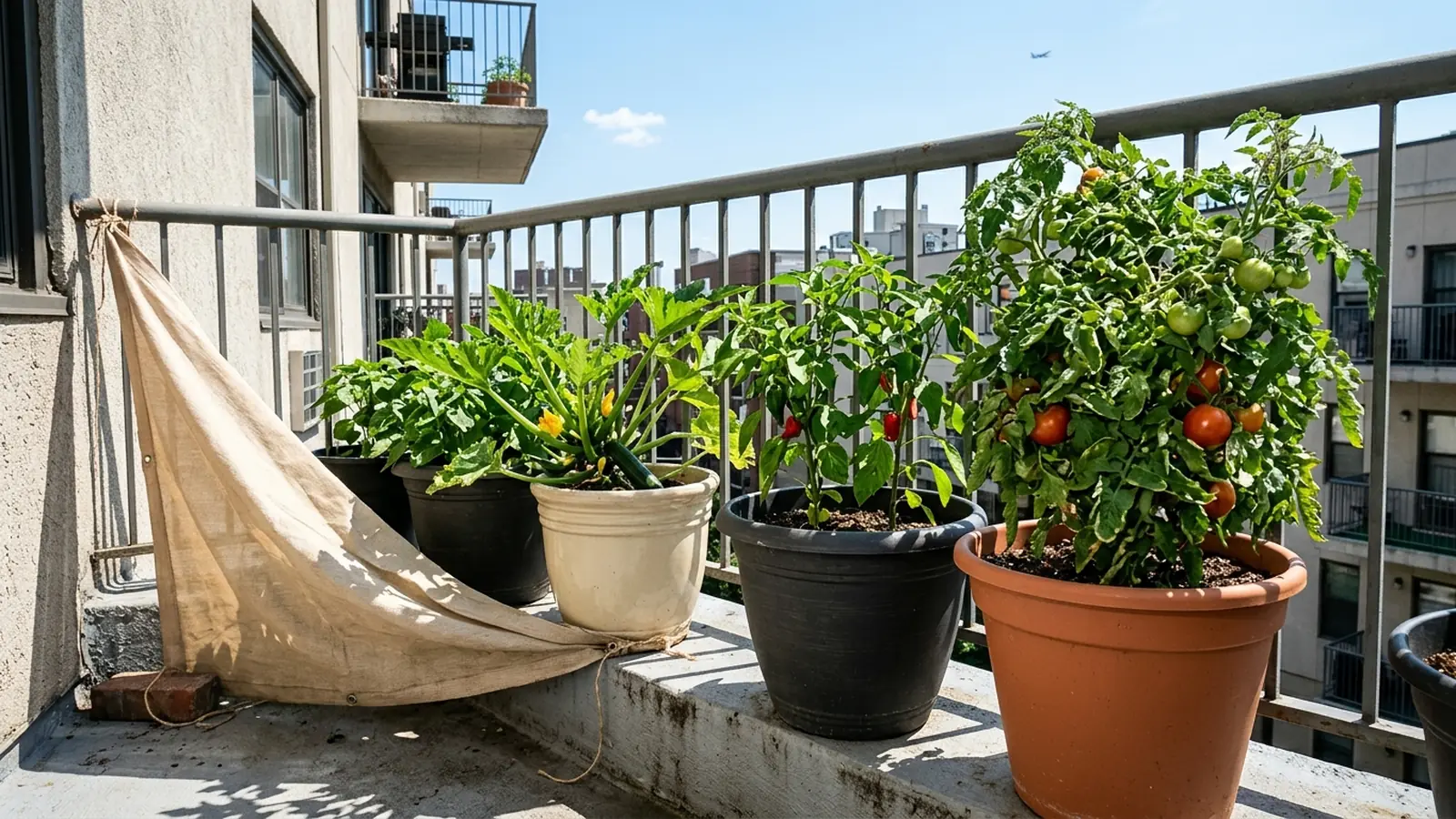
Best vegetables for a full-sun balcony: what to grow in 6 or more hours of direct light
A balcony that tracks 6 or more hours of direct sun can carry the fruiting crops every shadier balcony has to skip. The trade is a container that heats up far faster than garden soil, and managing that trade is the real work.

What 'patio', 'bush', 'dwarf' and 'determinate' mean on a seed packet
Four words on a seed packet decide whether a plant fits your balcony, and they do not mean the same thing. Here is what each one tells you and what it leaves out.