
Grow one eggplant per 5-gallon pot, set it out only once nights are reliably above 55 °F, keep it in the sunniest spot you have, and give it a cage and steady water. Most varieties give fruit about 65 to 80 days after transplanting, according to Clemson and Penn State Extension.
Eggplant sits in the same family as tomatoes and peppers and shares their container habits, with one big difference. It is fussier about cold. A tomato shrugs off a chilly week in May. An eggplant sulks, and Clemson Extension notes that it grows slowly in cool weather.
Pot size and mix
Texas A&M AgriLife, UGA Extension, University of Maryland Extension and North Carolina A&T all land on the same figure: 5 gallons, one plant. University of Kentucky Extension (Daviess County) lists a 4 to 5 gallon bucket for a single plant. Texas A&M AgriLife rates 5 gallons the most suitable size for eggplant but says dwarf or patio types can work in 1 to 2 gallons. Treat 5 gallons as the working size, and see container depth for tomatoes, peppers and herbs if you are weighing a larger pot against more frequent watering.
Two practical details from North Carolina A&T. Choose a light-coloured plastic pot, because dark plastic holds heat and can damage roots in summer. And skip mixes heavy in peat, which compresses over the season. A mix of composted pine bark, peat and perlite, or one with coir, works.
Heavy pots add up fast on a balcony; check the balcony weight limit before you line up several.
Choosing a variety
Small-fruited and slender types suit pots best. North Carolina A&T suggests compact varieties and lists Orient Express, Ichiban, Fairy Tale, Gretel, Hansel, Bambino and Crescent Moon among others. Penn State Extension flags Calliope, Fairy Tale, Gretel, Kermit and Patio Baby as container varieties, and gives days to maturity for each.
| Variety (Penn State Extension) | Fruit | Days to maturity |
|---|---|---|
| Patio Baby | Purple-black globe | 45 |
| Fairy Tale | Small, elongated, white and purple | 49 |
| Gretel | Petite, elongated, white | 55 |
| Kermit | Small, round, green and white | 60 |
| Calliope | Oval, white and purple | 64 |
| Black Beauty | Large globe, purple-black | 80 |
Penn State lists Black Beauty as suitable for a bed or a container, so a large Italian type is possible in a 5-gallon pot, but the faster, smaller types are easier to bring to fruit in a short balcony season.
Timing: warmth decides everything
Clemson Extension puts eggplant’s best growth at 70 to 85 °F and recommends planting after the last frost, once the soil has thoroughly warmed. University of Maryland Extension adds that cold stops plant and root growth, cuts yield and makes plants more vulnerable to flea beetles.
- Starting from seed. Penn State Extension says to start indoors at least 6 to 8 weeks before the last frost and keep the mix around 70 °F; it recommends a heat mat while watching the mix does not dry out. Treat 70 °F as the floor to hold, not the ideal: Clemson Extension says seeds germinate quickly at soil temperatures of 70 to 90 °F, and the Alabama Extension table in the heat mat guide puts eggplant’s best germination temperature at 85 °F. The seed starting calculator turns that into dates, and the heat mat guide covers the equipment.
- Buying plants. Clemson Extension advises against tall, spindly transplants and plants already in blossom, because blossoms slow growth after transplanting.
- Going outside. Penn State Extension: plant once nights are consistently above 55 °F. North Carolina A&T plants eggplant about five to seven days after tomatoes. Penn State Extension’s hardening-off step: water a little less and give plants a few hours of sun in a protected spot first.
If a cold snap follows, bring the pot in or cover it, since University of Maryland Extension links cold to stalled growth and lower yield.
Sun, water and feeding
University of Maryland Extension asks for at least 6 hours of direct light and prefers 8 to 10. If your balcony is borderline, the full-sun balcony vegetables page helps you judge.
North Carolina A&T says to keep the mix moist but not soggy, check daily, and water when the top 2 inches are dry. Clemson Extension names fruit set and fruit development as the critical period for soil moisture. Mulch helps keep the moisture even. For how watering intervals shift with pot volume and weather, see how often to water container vegetables.
For feeding, University of Maryland Extension lists eggplant among the long-season fruiting crops that need light feeding about every two weeks. North Carolina A&T is more frequent: after the potting mix’s starter charge runs out (about two weeks), feed weekly with a 1:1:1 soluble fertilizer such as 20-20-20, then switch at flowering to a high-potassium formula such as 9-15-30. Penn State Extension warns that too much nitrogen increases leafy growth rather than blooms. The container vegetable fertilizer schedule gives the full routine.
Support and pruning
Plants get top-heavy once fruit sets. North Carolina A&T suggests a small two-ring tomato cage for taller varieties, or a short stake with trellis clips, and adds that compact plants may not need support. Put it in early, while the plant is small. University of Maryland Extension recommends cages or a trellis to stop plants falling over. If you cannot drill into a railing, trellis without drilling shows how.
Advice on pruning differs. University of Maryland Extension says to nip back the growing tip when plants are 12 inches tall to encourage branching. North Carolina A&T says to prune to three main stems by removing suckers. Either is workable; pick one and stay with it. For the separate early-flower pinch on young transplants, see pruning container vegetables.
Pollination
An eggplant flower holds both anthers and pistil. A UC Cooperative Extension Master Gardener write-up from El Dorado County notes that a light breeze or flying insects usually move the pollen, and that on a still, insect-poor day it hand-pollinated its plants. The easiest method there was to tap open flowers gently a few times, in the morning, once the flowers are fully open, and to repeat daily while the plant blooms. A cotton swab or fine brush also works. The same write-up, citing UC Davis, names insufficient water and lack of pollination as the likely causes of blossom drop.
Tools and timing for the related tomato and pepper flowers are in the hand-pollination guide.
Pests
North Carolina A&T lists flea beetles, Colorado potato beetle and spider mites, and says young plants are very prone to flea beetle damage. Penn State Extension describes the damage as small, recognisable holes in the leaves, which hurt small plants with few leaves most. Its suggestions: clear debris, control weeds and, if possible, transplant a week or so later than usual so the plant is sturdier. University of Maryland Extension adds floating row covers as protection. North Carolina A&T also lists blossom end rot among eggplant diseases; in a pot it usually comes from uneven watering, the same as in tomatoes. See blossom end rot in container tomatoes.
Harvest
Penn State Extension says eggplants are mature when the skin is shiny and the fruit feels firm when gently squeezed. Wait too long and the skin dulls, the seeds turn hard and brown, and the flesh becomes pithy and bitter. Clemson Extension says a slight thumbnail press that leaves an indentation signals ripeness, and that Japanese types can be ready at about the size of a finger.
Cut the fruit with pruners and leave about an inch of stem, because the stems are bristly and tough. University of Maryland Extension notes that leaving mature fruit on the plant reduces overall productivity. For harvest cues across other crops, see when container vegetables are ripe.
Sources
- Penn State Extension, “Eggplant in the Garden and the Kitchen”
- Clemson HGIC, “Eggplant” (HGIC 1310)
- University of Maryland Extension, “Growing Eggplant in a Home Garden”
- North Carolina A&T Cooperative Extension, “Growing Fruiting Vegetables in Containers: Tomato, Pepper and Eggplant”
- UC Cooperative Extension Master Gardeners of El Dorado County, “Tips for Hand Pollinating Eggplant”
- UGA Fulton County Extension, “Container Gardening: Thinking Outside the Box”
- University of Maryland Extension, “Growing Vegetables in Containers and Salad Tables”
- University of Maryland Extension, “Maintaining Container Grown Vegetables”
- Texas A&M AgriLife Extension, “Vegetable Gardening in Containers” (E-545)
- University of Kentucky Cooperative Extension, Daviess County, “Vegetables Grown in Containers Improves Accessibility”
Growing fruiting vegetables on a balcony
Pot size, pollination and feeding for the crops that share eggplant's needs.
Common questions
What size pot does an eggplant need?
A 5-gallon container with drainage holes, one plant per pot. Texas A&M AgriLife, UGA Extension, University of Maryland Extension and North Carolina A&T all give 5 gallons for one plant, and University of Kentucky Extension (Daviess County) lists 4 to 5 gallons as workable.
When can I put eggplant outside?
Penn State Extension says to plant once night temperatures are consistently above 55 degrees F. North Carolina A&T plants eggplant about five to seven days later than tomatoes, and Clemson Extension recommends waiting until the soil has thoroughly warmed.
How long does eggplant take to produce fruit in a pot?
Clemson Extension and Penn State Extension both give about 65 to 80 days from transplanting for most varieties, and University of Maryland Extension gives 55 to 80. Clemson adds 100 to 120 days when starting from seed. Penn State lists small container varieties such as Patio Baby (45 days) and Fairy Tale (49 days) as faster.
Do eggplant flowers need hand pollination?
Not strictly. The flowers carry both male and female parts and self-pollinate with a little air movement. On a sheltered balcony, gently tapping open flowers each morning, as a UC Cooperative Extension Master Gardener write-up suggests, helps pollen move.
Related guides
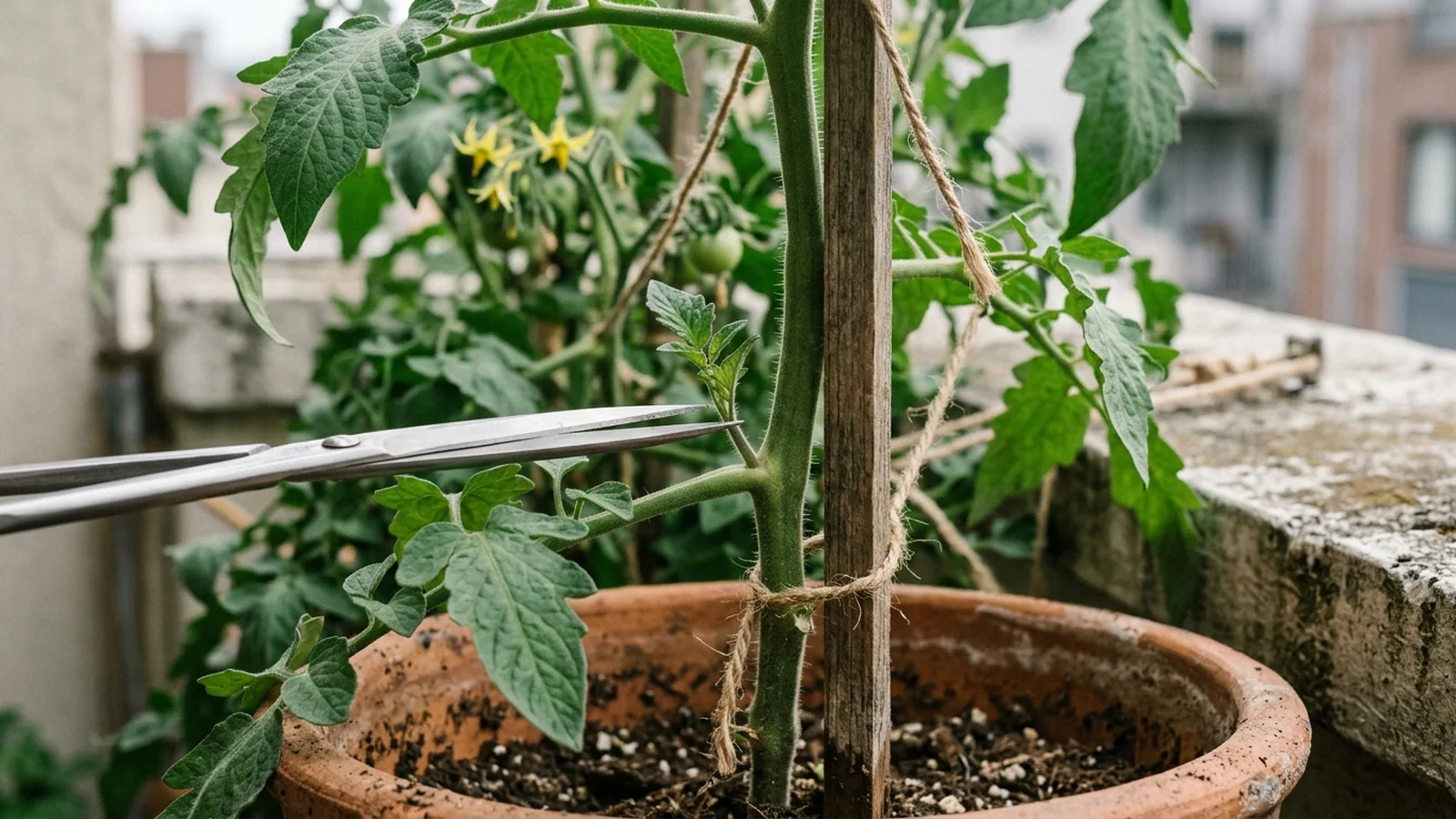
Pruning container vegetables: what to cut, what to leave alone
Cut a leafy herb and it branches back thicker. Cut a container tomato the same way and you are managing how much plant a bucket of potting mix can actually support. Same scissors, opposite goal.
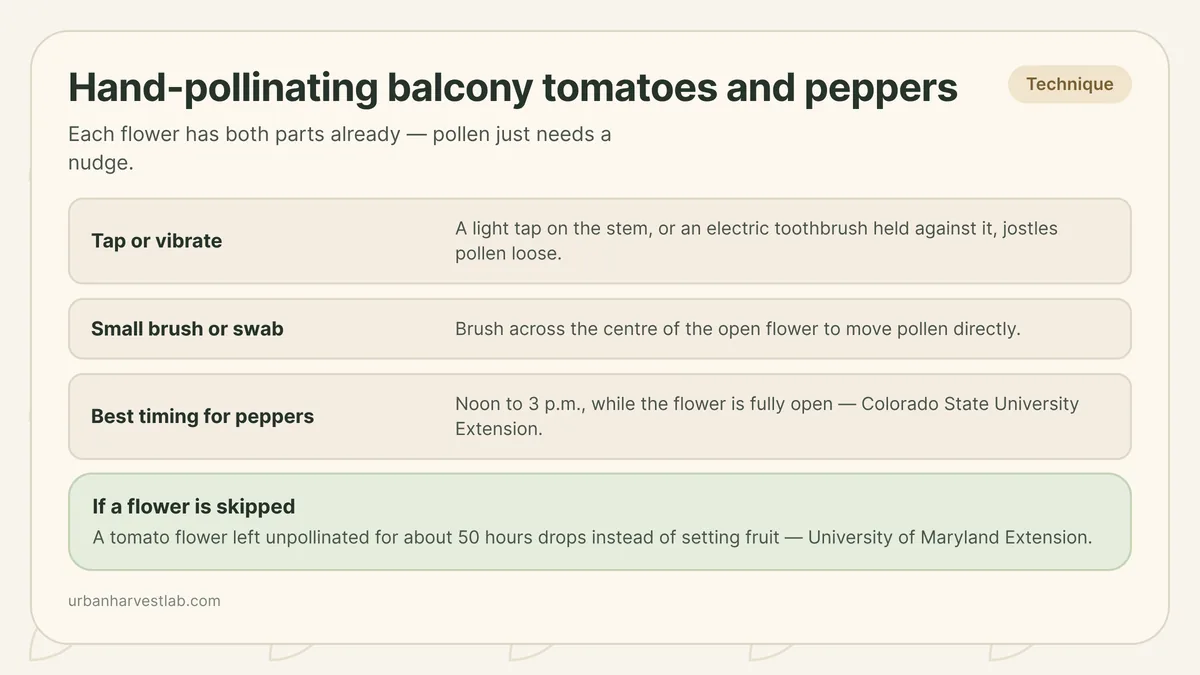
How to hand-pollinate tomatoes and peppers on a balcony
A tomato or pepper flower already carries both male and female parts, but nothing on a balcony reliably moves the pollen between them. This is the tap, brush, or vibrate technique that stands in for a bee.
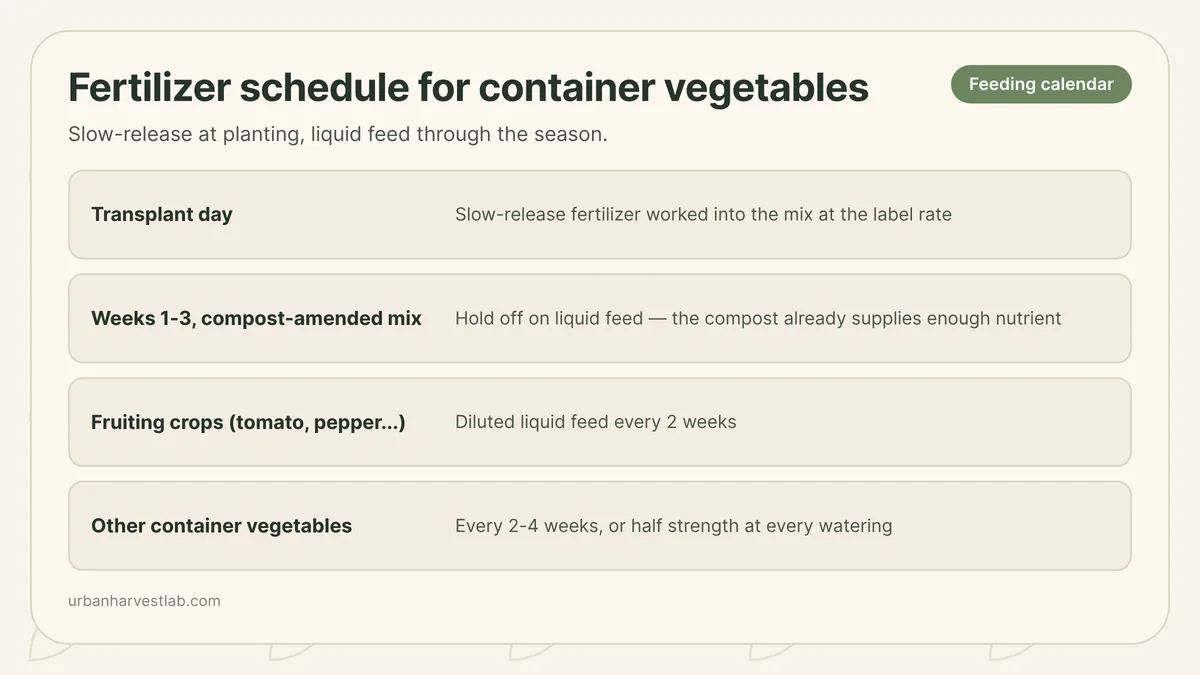
Fertilizer schedule for container vegetables: what to feed and when
A stage-by-stage feeding calendar for container vegetables, built from extension guidance on slow-release charges, liquid top-ups, and the intervals that keep fruiting crops producing.