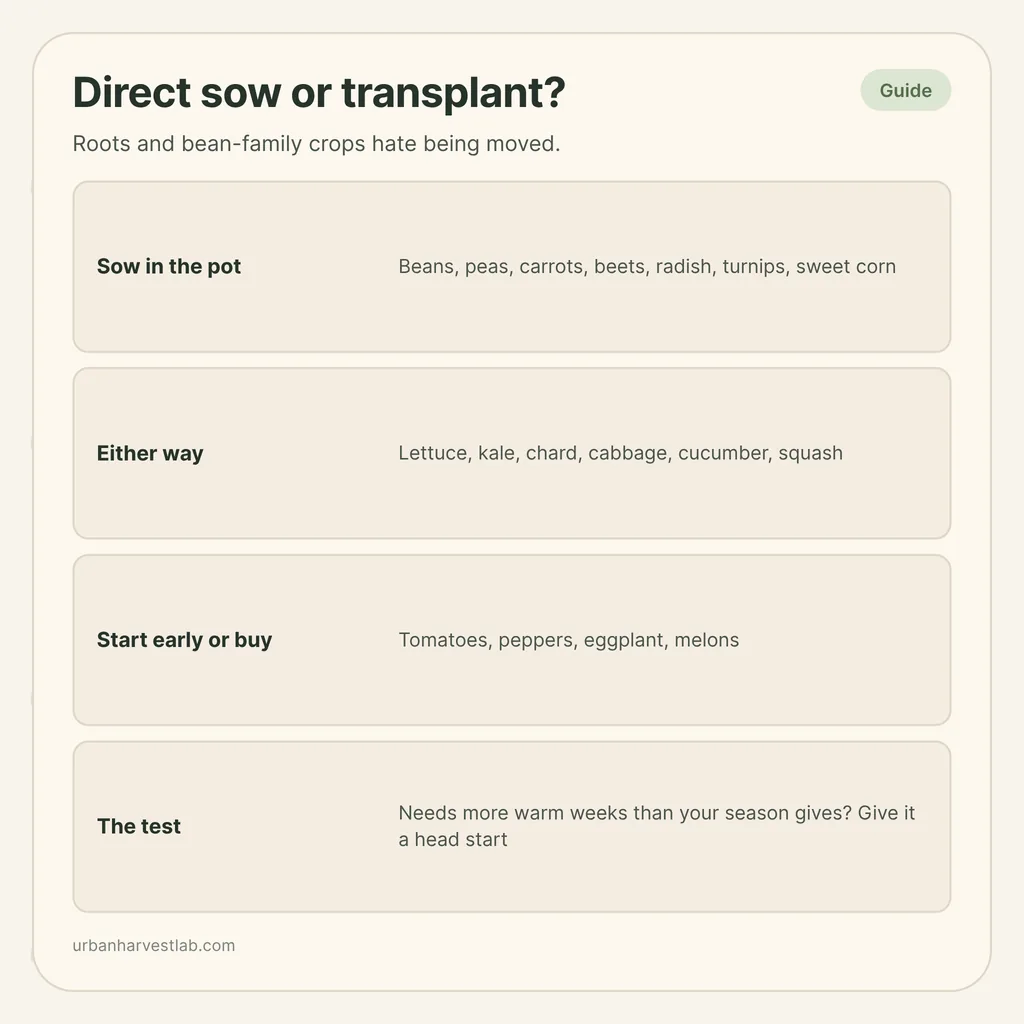
Direct sow or transplant, by crop (Cornell University grouping)
| Method | Crops | Why | In a pot |
|---|---|---|---|
| Sow in the pot | Carrots, beets, turnips, parsnips, radish, rutabagas | The taproot is the harvest and is often lost in a move | Sow in the pot they will finish in, then thin |
| Sow in the pot | Beans, peas, sweet corn | Transplant shock leaves weak, poor-yielding plants | Put the support in at sowing |
| Either way | Lettuce, spinach, kale, chard, cabbage, broccoli, collards, endive | Season and soil temperature decide | Transplant in cool spring, sow in late summer |
| Either way, gently | Cucumber, squash, pumpkin | A head start gives an earlier harvest, but the roots are fragile | Start 2 to 4 weeks ahead in a pot that plants out whole |
| Start indoors or buy | Tomato, pepper, eggplant, tomatillo | Long season; seed needs warm soil, at least 60F | Start 6 weeks ahead (tomato, eggplant) or 8 to 10 (pepper) |
| Start indoors or buy | Celery, leeks, Brussels sprouts, melons | Slow to mature before the season ends | Buy plants if you have no bright, warm spot |
Sow roots, beans, peas and sweet corn directly in the pot they will finish in, and start tomatoes, peppers, eggplant and melons indoors or buy them as plants. Lettuce, kale, chard, cabbage and their relatives work either way. Cucumbers and squash sit in between: worth a short head start, but only if you handle the roots gently. That grouping comes from Cornell University’s horticulture section, and Iowa State and Maryland extension pages back the reasoning.
Two questions sort almost every vegetable. Is the part you eat underground, or does the plant sulk when its roots are disturbed? Then sow in place. Does the crop need more warm weeks than your season gives it? Then give it a head start. The seed starting calculator turns that head start into dates from your last frost.
Crops to sow where they will grow
Cornell University says some crops respond poorly to transplanting: “Beans and peas for example, often succumb to transplant shock and even those that survive will be weak and poor-yielding.” Root crops have a different problem. For carrots, beets and turnips, Cornell explains, the large taproot is often lost, and you are left with a fibrous root system that is fine for the plant and no use to you.
Iowa State Extension draws the same line. Direct seeding, it says, suits crops that are quick to maturity, like radishes, and those that are not easy to transplant, like carrots, beets and turnips.
Cornell’s direct-seed list is short enough to remember: beans, beets, carrots, parsnips, peas, radish, rutabagas, sweet corn and turnips.
In a pot this has a practical meaning. Choose the container the crop will finish in, fill it with fresh mix, and sow there. A carrot pot has to be deep enough for the root, and the carrot container depth guide works that out. Peas and pole beans want their support in at sowing, and the pages on peas and beans cover timing and trellis. Sweet corn does best in a block rather than a single pot; see corn in containers.
Sowing in place means you will end up with more seedlings than you need. Thin them by snipping the extras, not by pulling and replanting, which brings back the root damage you were avoiding. Thinning seedlings shows what to cut and when. For depth and spacing at sowing, see how deep to plant seeds.
Crops that work either way
Cornell’s “direct seed or transplant” group is: broccoli, cabbage, collards, cucumber, endive and escarole, kale, lettuce, pumpkin, spinach, squash and Swiss chard. Here the season decides.
Lettuce is Cornell’s example. In spring, when the soil is cool, it is best to use transplants. If you are planting in late August for a fall crop, feel free to direct seed. The reason is germination speed: Cornell says lettuce seed takes two weeks to germinate in cold April soil but 3 to 4 days in summer. A fast seed in warm soil has little to gain from a head start; a slow seed in cold soil sits exposed. For the soil temperatures behind that, see seed germination temperature.
Cold soil is also a disease risk, not just a delay. Cornell notes that slow emergence in cold soil exposes the seed to more plant diseases, and the seed may rot before it germinates.
Maryland Extension adds the upside of transplants: they fill a space quickly, with no need to thin out excess seedlings compared with direct-sown seed. In a small pot that is worth something. A bought or home-started cabbage or kale seedling goes in at the spacing you want, with no surplus to cull.
Cucumbers and squash: the middle case
Cornell suggests starting cucumbers and squash indoors 2 to 4 weeks before transplanting, after all danger of frost has passed, for an extra-early harvest. It follows with a warning: use care, as their root systems are fragile.
Utah State Extension has a practical answer. Biodegradable pots are useful for crops with roots sensitive to transplanting, such as cucumbers, melons and squash, because you do not have to remove the plant from the pot. Utah State also flags two catches. In its dry climate the pots often do not degrade quickly enough, and they can dry out faster. Its fix is to cut three or four slits in the sides of the pot before planting so the roots can grow through. Which homemade or bought pot types suit this is the subject of DIY seed starting containers.
Do not start them too early. Cornell calls starting seeds too early one of the biggest mistakes new seed starters make. A squash seedling that outgrows its cell is harder to move than a young one, and a late frost date on a balcony does not reward a head start you cannot use. If you have no bright spot indoors, sow cucumbers and squash in the pot once the nights are warm. Cornell lists them as either direct-seed or transplant crops, so sowing in place is a normal option, not a fallback.
Crops to start indoors or buy
Cornell’s “use transplants” list: Brussels sprouts, celery, eggplant, leeks, melons, peppers, tomatillo and tomato. Maryland Extension gives the general rule: vegetable plants with a relatively long period from seed to harvest should be started indoors and transplanted outside as seedlings. Iowa State says the same thing differently. They need a “jump start” to reach maturity before the end of the growing season.
Warmth is the other reason. Cornell says tomatoes and peppers each require a minimum soil temperature of 60F and prefer it ten degrees warmer. Cold seed-bed soil is not where they germinate well. Alabama Cooperative Extension System’s germination table puts tomato’s minimum lower, at 50F, but seed there is very slow to sprout. The two figures measure different things, and the seed germination temperature chart has both.
The timing is shorter than most beginners expect. Cornell says tomatoes and eggplant need only about 6 weeks before transplanting, and peppers 8 to 10 weeks. Eight weeks of indoor growing before a June planting date means starting in April, not February. The calculator gives the date for your frost, though it uses Clemson’s figures, which run a little longer: 6 to 8 weeks for tomato and eggplant; the hardening off plan covers the week before the move, and potting up seedlings covers the step between the tray and the final pot if they outgrow the cell.
When buying plants is the better call
Cornell is blunt that starting seeds indoors “requires expertise and special conditions”. Gardeners, it says, often underestimate light and end up with tall, spindly plants that struggle outdoors. Without a bright window or a grow light, a bought transplant is a reasonable choice for tomatoes, peppers and eggplant, and you lose only the variety choice. Cornell points out that a garden center may stock no more than 15 or 20 varieties of tomatoes, while starting from seed can give you a choice of hundreds.
For herbs the same question has its own answer: herbs from seed or buying plants sorts the slow, fussy ones from the easy ones.
Moving a transplant into a pot
A transplant in a container dries out quickly. Iowa State Extension advises checking transplants frequently in the first 7 to 14 days, because the small root ball can dry out before the surrounding soil does. Maryland Extension warns that a pot rim sticking up out of the soil acts as a wick for soil moisture and dehydrates the root zone, so bury the rim of any peat or paper pot. It also suggests planting on a cloudy, calm day.
Maryland adds that hardening off matters less for warm-season transplants such as pepper, squash, tomato and eggplant if you plant after any danger of frost, once the soil is above 60F and the plants get the water, spacing and nutrients they need. Cool-season transplants such as cabbage, broccoli and cauliflower need it more. A plant that droops for a few days after the move is usually adjusting; transplant shock in seedlings covers what to wait for and when to replace it.
Sources
Start seeds well
Dates, hardening off and the first move up for the crops you do start indoors.
Common questions
Which vegetables should be direct sown?
Cornell University lists beans, beets, carrots, parsnips, peas, radish, rutabagas, sweet corn and turnips as crops to seed directly outdoors. Iowa State Extension adds that direct seeding suits quick crops like radishes and those that are not easy to transplant, such as carrots, beets and turnips.
Which vegetables are better as transplants?
Cornell University puts Brussels sprouts, celery, eggplant, leeks, melons, peppers, tomatillos and tomatoes in the start-indoors group. University of Maryland Extension says vegetables with a relatively long period from seed to harvest should be started indoors and transplanted.
Can I transplant carrots or beets if I thin them out?
Cornell University says carrots, beets and turnips do not transplant well because the large taproot is often lost, leaving a fibrous root system and nothing worth harvesting. Thin the extras in place instead.
Do cucumbers and squash transplant well?
They can, with care. Cornell University lists both as direct-seed-or-transplant crops, suggests starting them indoors 2 to 4 weeks before planting out, and warns that their root systems are fragile. Utah State Extension recommends biodegradable pots for crops with roots sensitive to transplanting, such as cucumbers, melons and squash.
Related guides
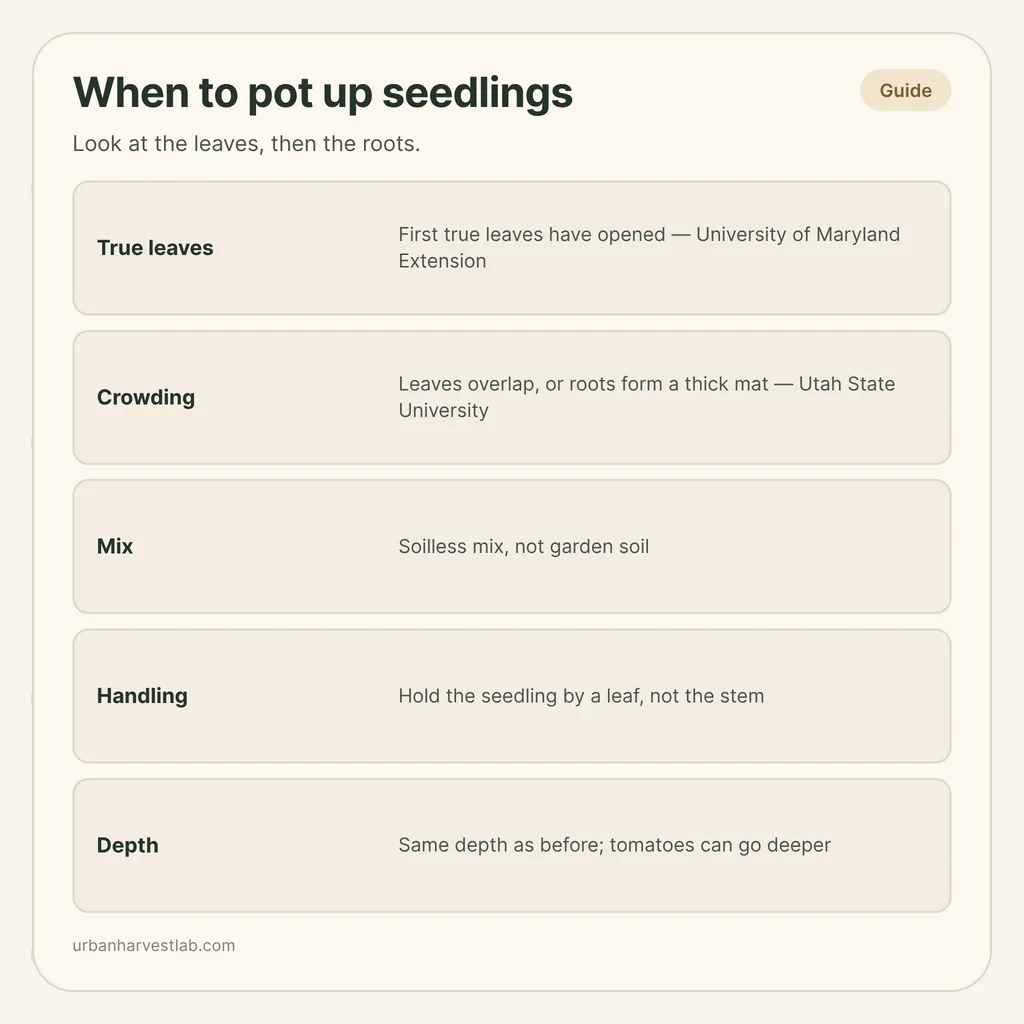
When to pot up seedlings: signs, depth and the first move
Seedlings left in the starter tray too long stall. Here is the moment to move them into their own pots indoors, how to lift them without damage, and when tomatoes can go deeper.
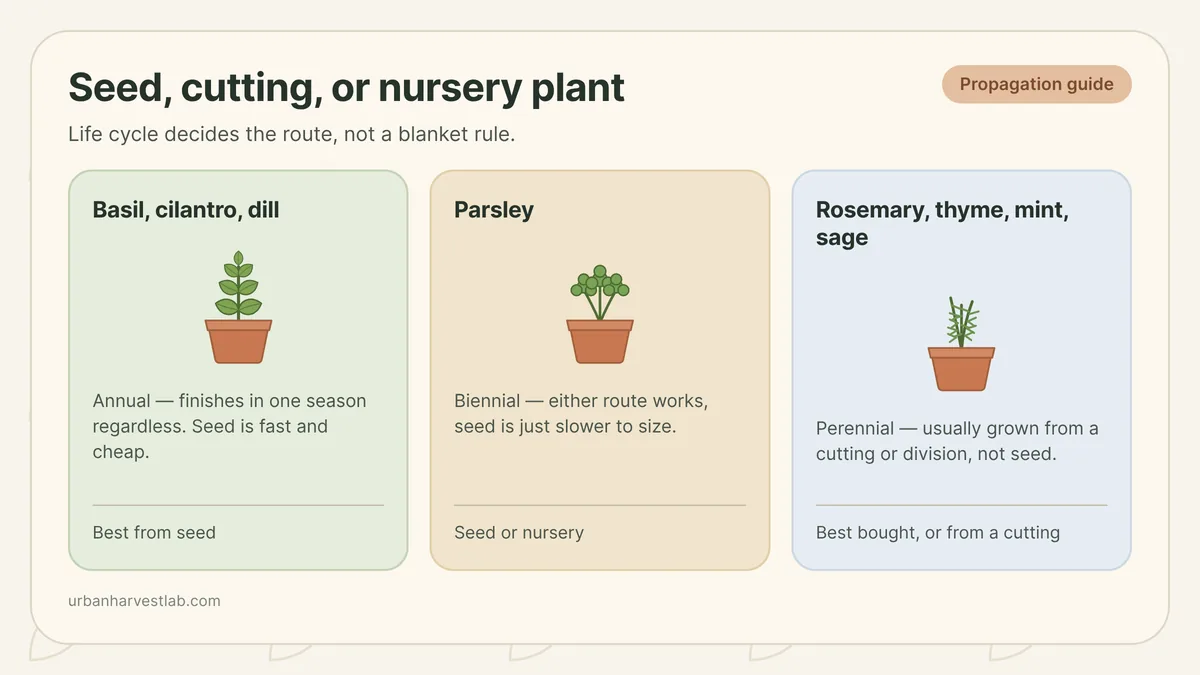
Herbs from seed or buying plants: how to decide
Some herbs finish a whole life cycle from seed in a matter of weeks; others are slow, woody, or simply propagated a different way. The life cycle of the herb, not a blanket rule, is what actually decides which route makes sense.
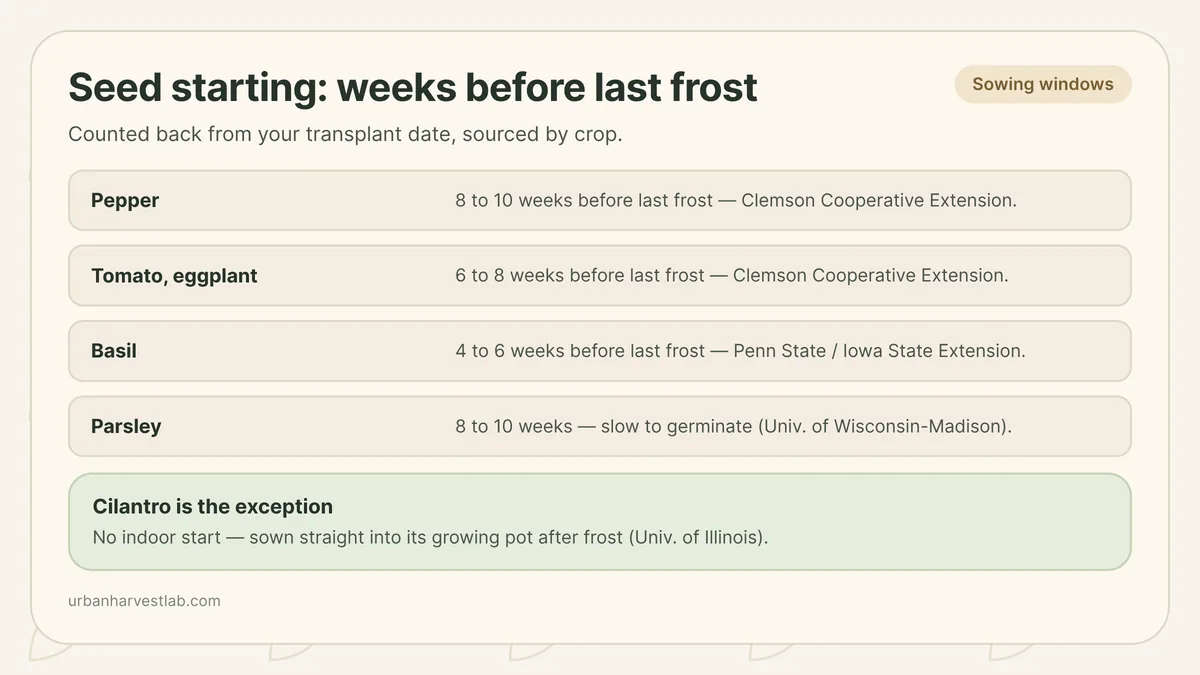
Seed starting calculator: sowing dates from your last frost date
A last frost date is only useful once you count backward from it. This works out that count crop by crop, instead of applying one week figure to everything in the seed drawer.