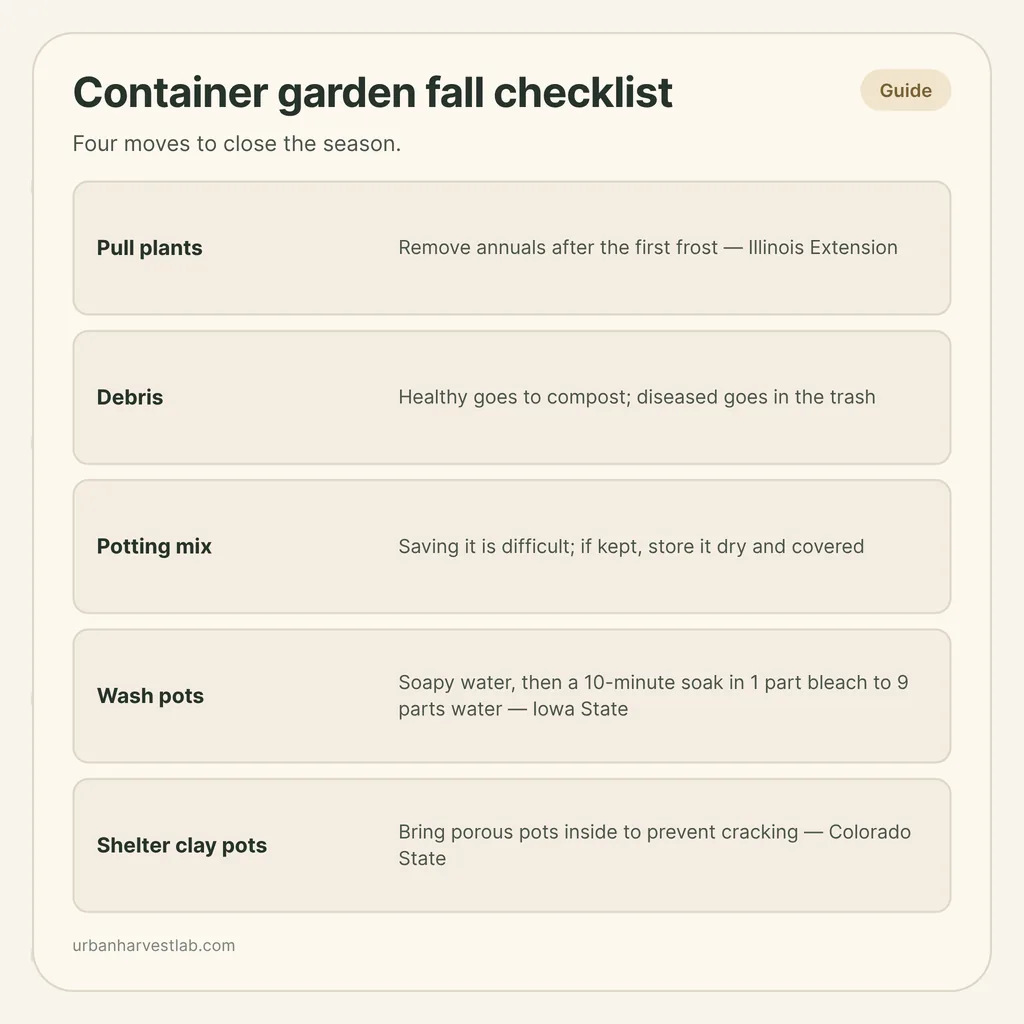
Close the season in four moves: pull what frost has finished, send healthy debris to compost and sick plants to the trash, decide what happens to the mix, then wash and shelter the pots. The whole job fits into an afternoon, and it is worth doing, because Iowa State Extension notes that disease-causing fungi and insects can remain in old containers and the debris that collects in them.
Decide which plants are actually finished
Not every pot is done. Illinois Extension says to remove annuals after the first frost, so wait for it rather than clearing a pot that is still producing. SDSU Extension points out that peppers, tomatoes and other vegetables are sometimes overlooked beneath the foliage and may remain usable after a light frost, so pick over the plant before you pull it.
Three groups come out of that sort:
- Frost-killed annuals (tomato, basil, cucumber, squash): pull them.
- Perennials that survive your winter: leave them potted and protect the pot. Overwintering perennials in pots sets out the rules, and rosemary and thyme have their own page.
- Plants you want to keep alive: Montana State Extension says to bring container plants indoors for the winter. Bringing potted plants indoors covers timing, pests and light.
Pots can also keep working. Cool-season sowings and fall planting belong in salad greens in containers this fall and garlic in containers, so you may be replanting rather than emptying.
Tender bulbs such as gladioli, dahlias and cannas are a separate case. Illinois Extension says to dig them up, dry them and store them over winter in a cool, frost-free area.
Compost it or bin it
Illinois Extension says container plants should be pulled and added to the compost pile, with one condition: diseased plants should be completely removed, and healthy debris goes to the compost. SDSU Extension illustrates the point with infected tomato and squash plants, which should leave the garden.
| What you pulled | Where it goes | Source |
|---|---|---|
| Healthy stems, leaves and roots | Compost | Illinois Extension |
| Plants with fungal or bacterial disease | Trash, not compost | SDSU Extension: many of these pathogens survive on decaying debris |
| Plants with a virus | Can be composted | SDSU Extension: these pathogens cannot live outside a living host |
| Seed from a diseased plant | Do not save | SDSU Extension: some pathogens can be seedborne |
Montana State Extension gives the reason for the second row: composting diseased plant material can keep pathogens alive and bring them back the following season. If you are unsure what a spotted plant had, it is cheaper to bin it. Late blight on tomatoes is the one to recognise before you compost a tomato. To save seed from the plants that were healthy, see saving seeds from container vegetables.
If you add the compost to pots next spring, check where it came from; safe compost for edible containers covers herbicide carryover.
Keep the mix, refresh it or empty it
Illinois Extension is cautious here. It says saving potting mix to replant next year is difficult: the roots will not disappear over winter, and the mix loses organic matter as it breaks down through the growing season. Its advice for that case is to put roots and mix in the compost pile.
That does not mean every pot has to be emptied. Whether last season’s mix is safe to reuse depends on what grew in it and why the plant left, and can you reuse potting soil walks through that decision. If the mix passes, refreshing old potting soil rebuilds it in spring. Anything with root rot, a soilborne disease or a pest population in it is the case for emptying.
If you do keep it, Illinois Extension says to store it in a dry area or cover it with plastic to keep out debris and stop it becoming waterlogged. A lidded bin or a tied bag in a sheltered corner does that job on a balcony.
Wash the empty pots
Once a pot is empty, clean it before it goes into storage. Iowa State Extension gives the sequence:
- Brush or rag off the loose soil.
- Wash in soapy water and rinse.
- Soak for a minimum of 10 minutes in one part household bleach to nine parts water, then rinse, as Iowa State specifies.
Add the bleach to the water, not the water to the bleach, to avoid splashing, and protect your skin and clothes. Use the solution within two hours of mixing it. Illinois Extension gives a near-identical mild solution: 10 parts water to one part bleach.
For a single pot, Iowa State says to wipe the whole container, inside and out, with a cloth soaked in undiluted 70% isopropyl alcohol instead. The same page does not recommend TSP cleaners for containers.
White crust. Iowa State says mineral salts can build up around pot rims and dehydrate stems that rest on them. A scouring pad removes it from plastic and glazed ceramic, and steel wool or a wire-bristle brush works on clay. Salt buildup in herb pots explains where it comes from.
Clay pots. Iowa State says dry clay pots can wick moisture away from the potting medium and dehydrate newly potted plants, so soak them in clean water before you plant in them in spring.
Store the pots dry and out of the freeze
Colorado State Extension says porous containers should be brought inside to prevent cracking during the winter months, and Montana State Extension warns that clay and ceramic pots left outside can crack and break. Empty, dry pots stacked in a shed, garage or storage cupboard are safe. Pots that must stay out, and the signs of frost damage, are covered in terracotta pots cracking in winter.
Sources
- University of Illinois Extension: Fall garden cleanup lays groundwork for a successful spring
- Iowa State University Extension: How to clean and disinfect plant containers
- Montana State University Extension: Fall garden care and winter preparation checklist
- SDSU Extension: Fall vegetable garden cleanup
- Colorado State University Extension: Container gardens
After the pots are put away
These cover what to do with the mix, the pots and the plants that are still alive.
Common questions
What do I do with container plants in fall?
Sort them into three groups. Illinois Extension says frost-tender annuals come out after the first frost; perennial herbs and fruit that survive your winter stay in their pots, and plants you want to keep alive go indoors. Healthy debris can be composted, and the empty pots are scrubbed and stored.
Can I put old tomato plants in the compost?
Only if they were healthy. Illinois Extension says healthy plant debris can go in the compost pile, while Montana State Extension warns that composting diseased material can keep pathogens alive and reintroduce them the following season.
Should I clean pots before storing them?
Yes. Iowa State Extension says fungi, insects and other organisms can remain in old containers and the debris in them. Brush out the soil, wash with soapy water, then soak for at least 10 minutes in one part bleach to nine parts water and rinse.
Can I leave potting soil in pots over winter?
Illinois Extension says saving mix is difficult, because roots stay in it and organic matter breaks down. Colorado State Extension says porous pots deteriorate when exposed to moisture and freezing and should be brought inside to prevent cracking, so empty and shelter them.
Related guides
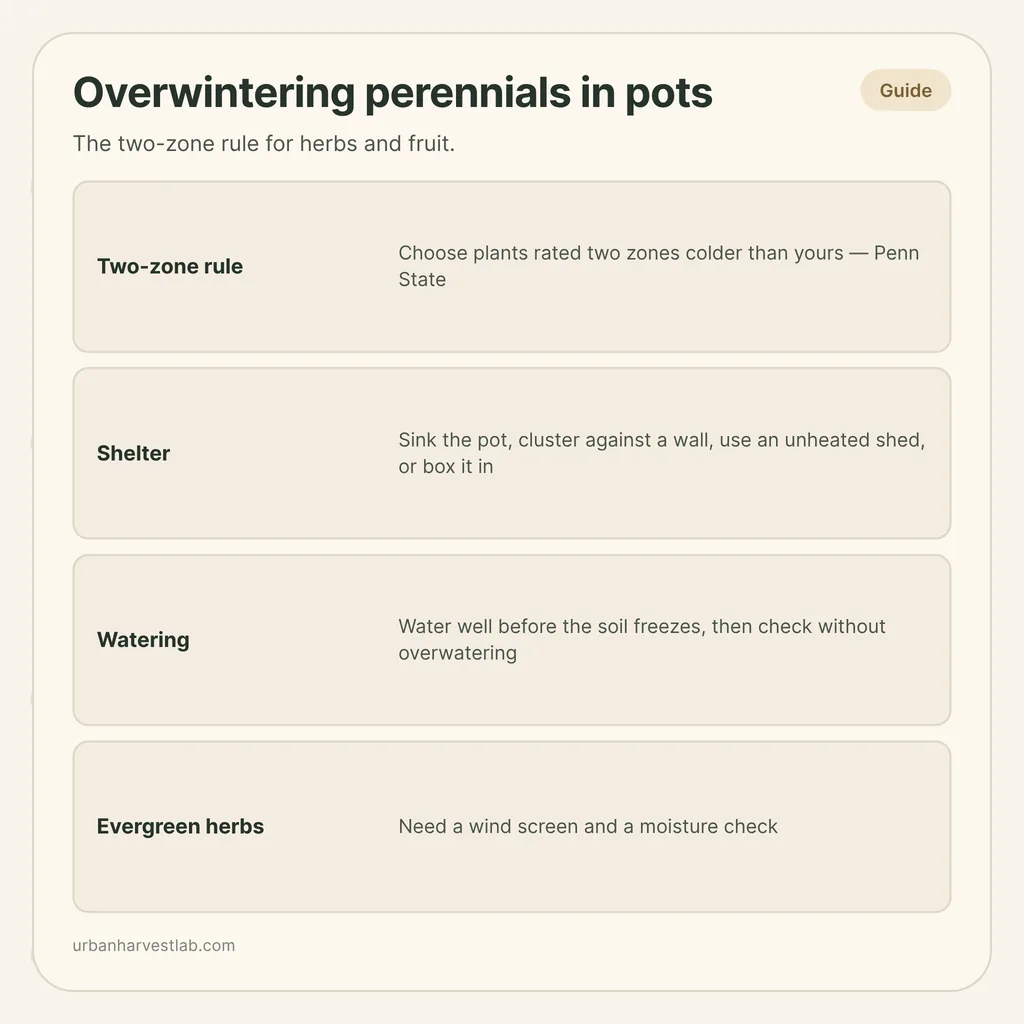
Overwintering perennials in pots: the two-zone rule for herbs and fruit
The hardiness zone on a plant tag assumes the roots are in the ground. In a pot they are not, so the rule, the shelter and the winter watering all change.
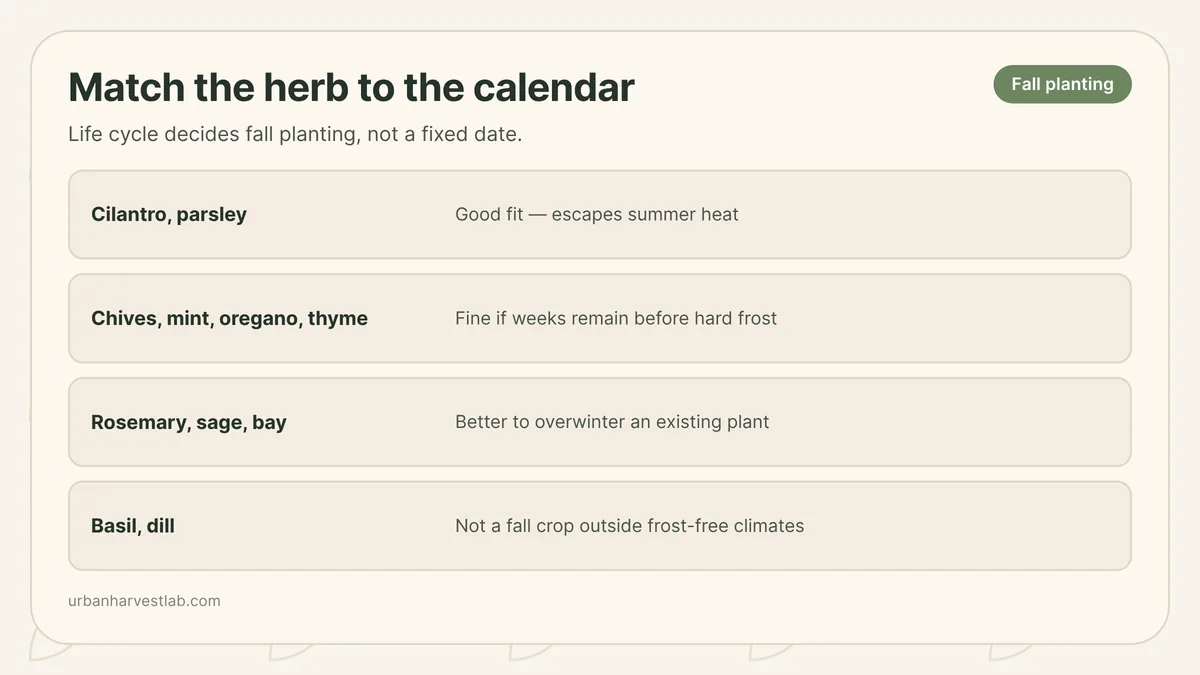
Herbs to plant in fall: what to sow now and what should wait
Fall planting suits herbs by life cycle and climate, not by calendar date. Cool-season herbs, cold-hardy perennials, and heat-loving annuals each answer the question differently.
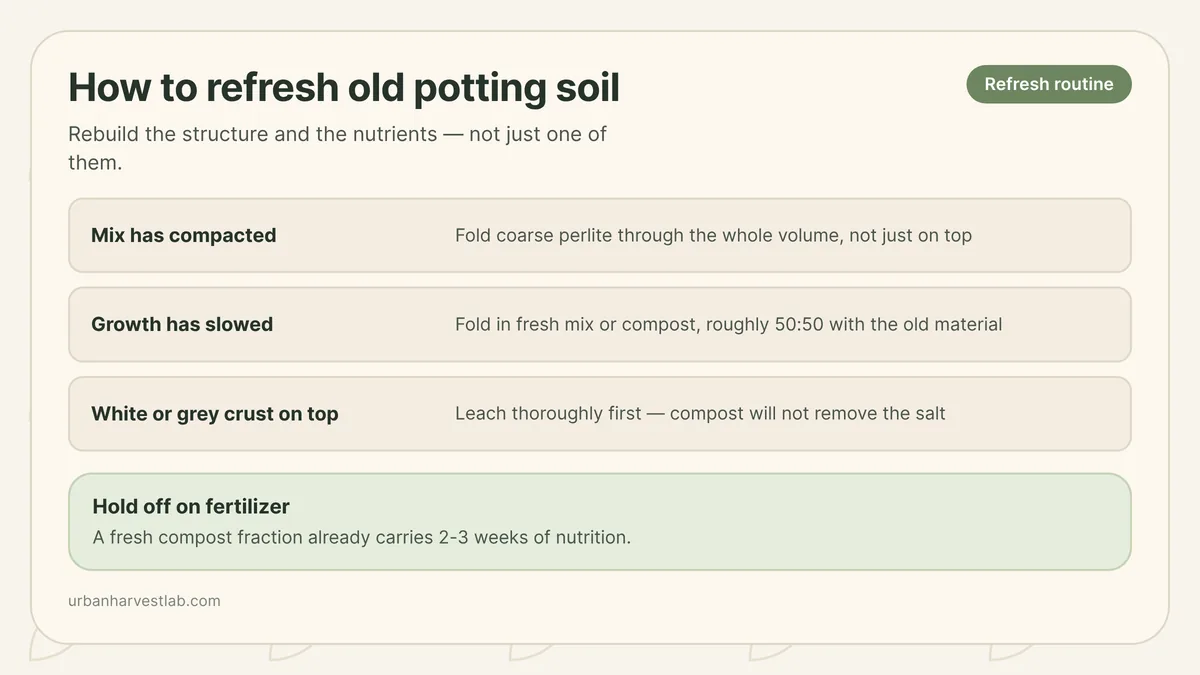
How to refresh old potting soil for another season
Old potting mix has usually lost two things at once: its air-filled structure and its nutrients. Fixing one without the other is why a refreshed pot still underperforms.